
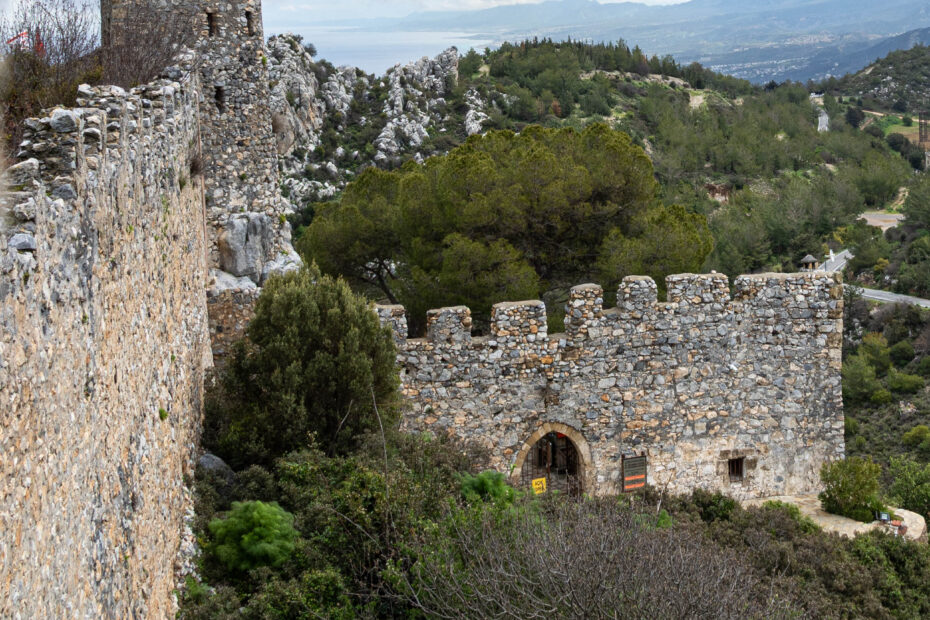
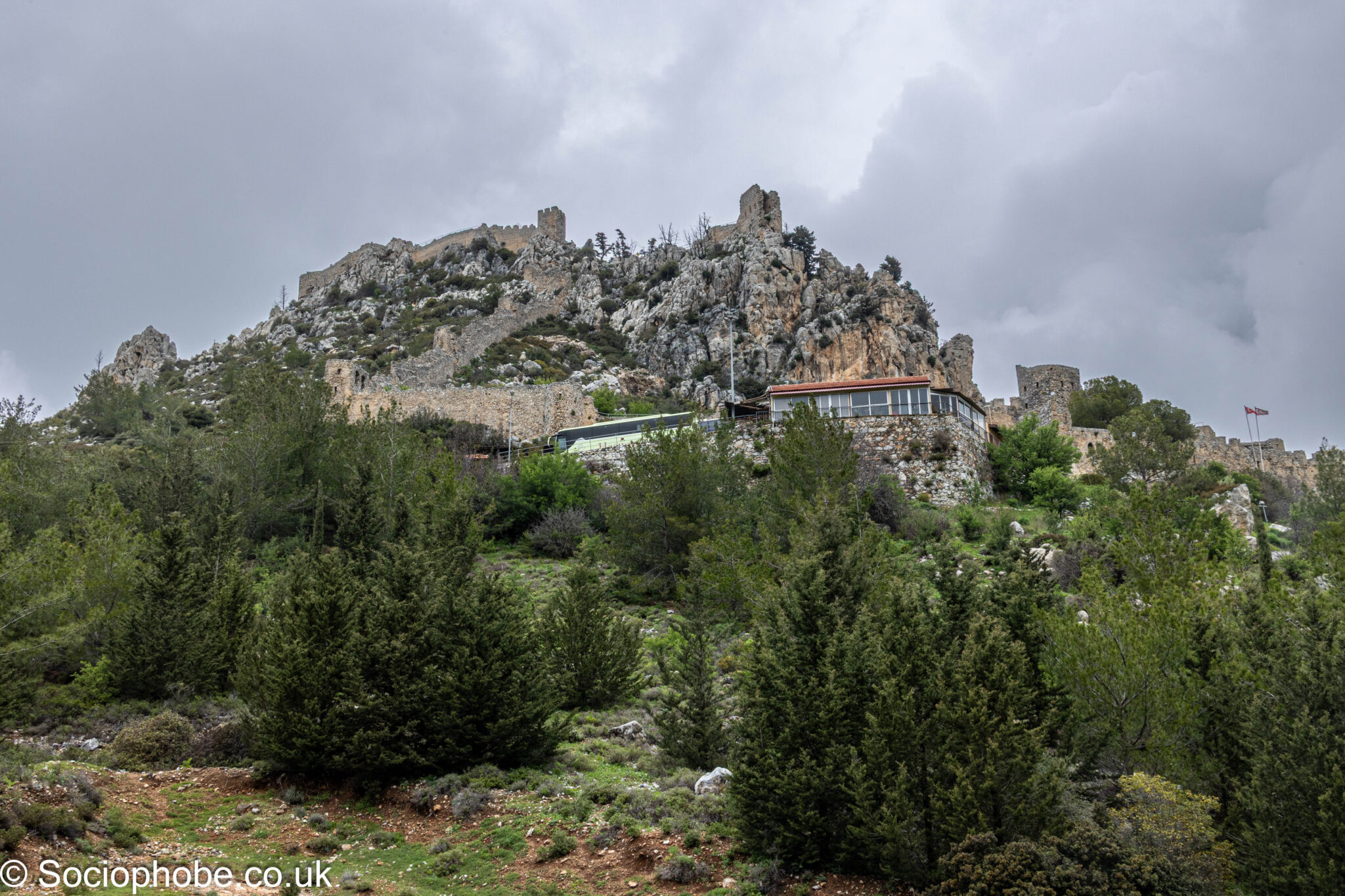
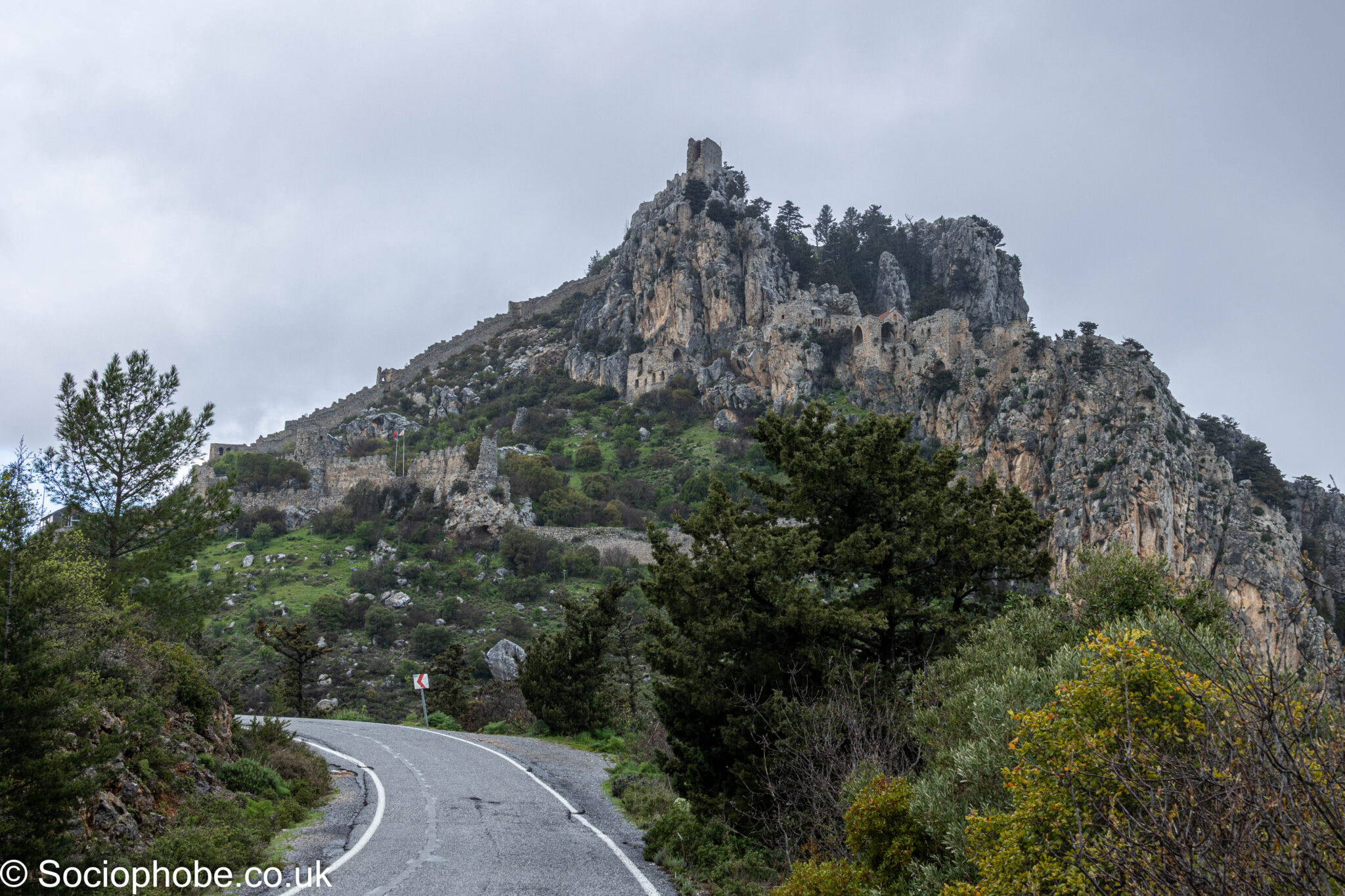
The ruined Byzantine and Lusignan castle of St Hilarion, in northern Cyprus, dominates a rocky hilltop and commands the Kyrenia – Nicosia road. Built over four hundred years the castle was partially dismantled by the Venetians in the 15th century to save the cost of garrisoning it.

Visiting St Hilarion Castle
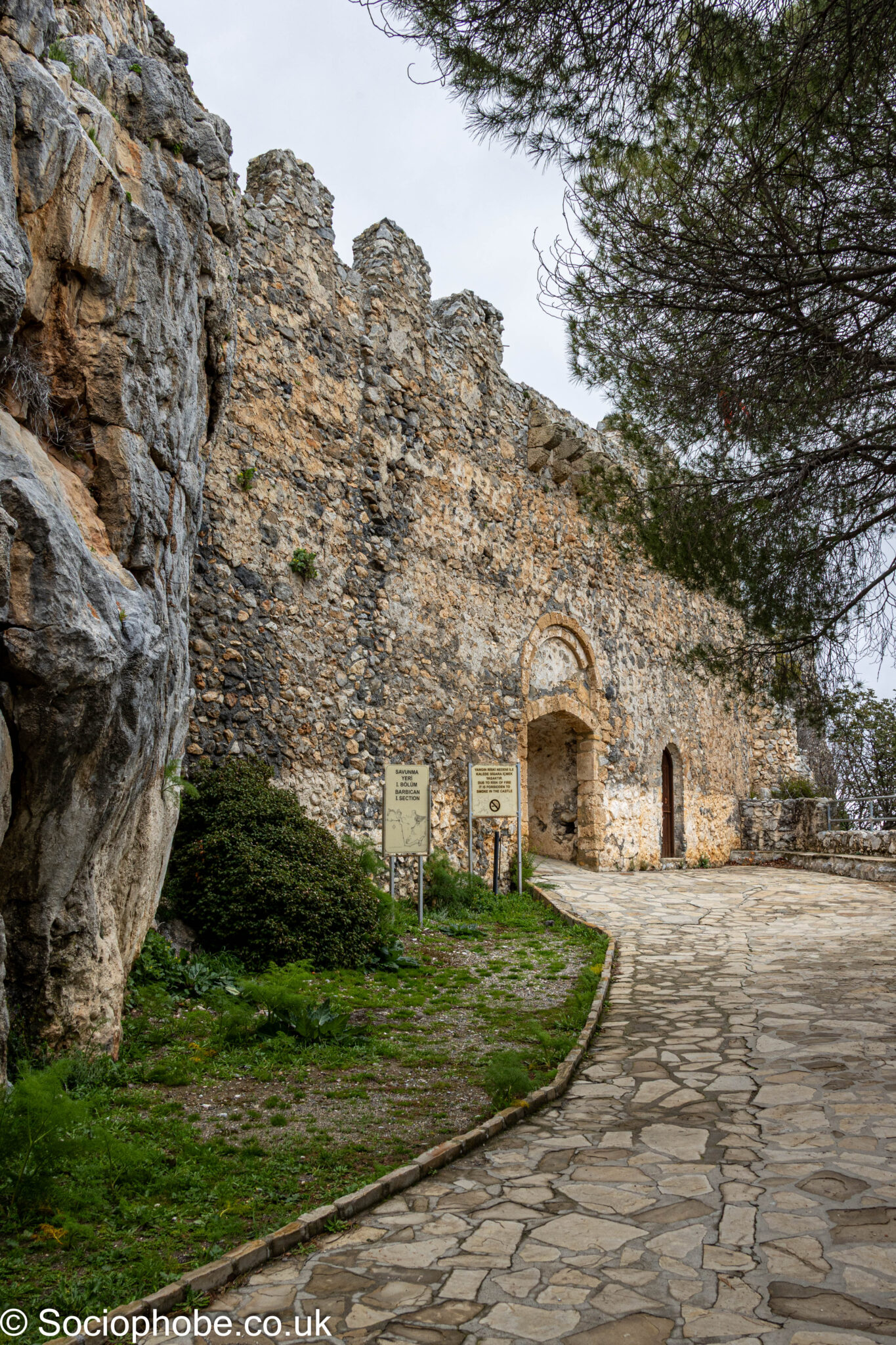
The castle is well signposted from the road and has a small car park with more parking available down the hill. I would recommend arriving early! Also, you have to pass through a military area which has variable opening times so if you are driving yourself, check this first.
Cyprus is a divided island so it’s worth having your passport on you at all times. If visiting from the south you’ll have to walk across a checkpoint in Nicosia then either meet your guide or your hire car, cars from the south do not have valid insurance to visit the north.
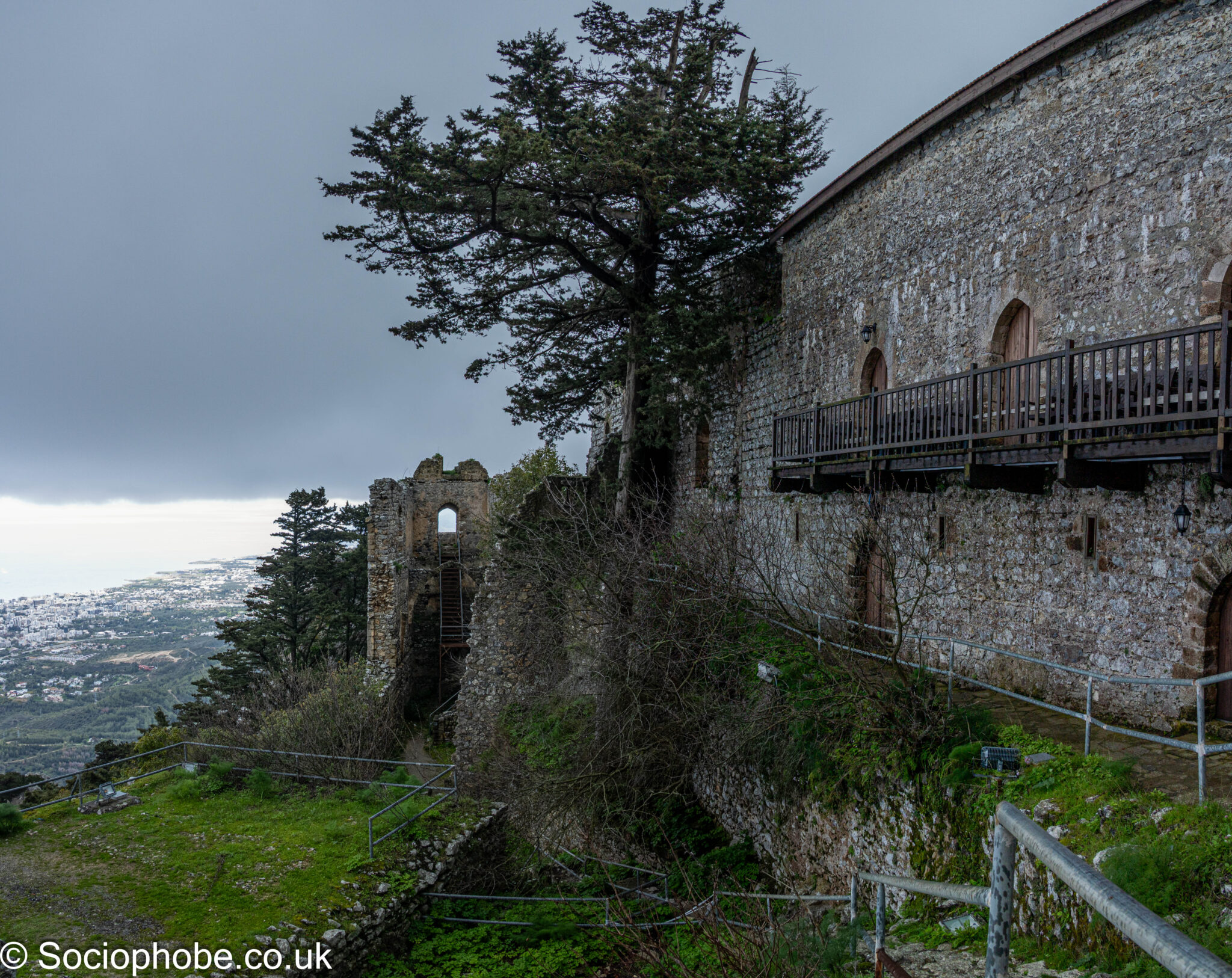
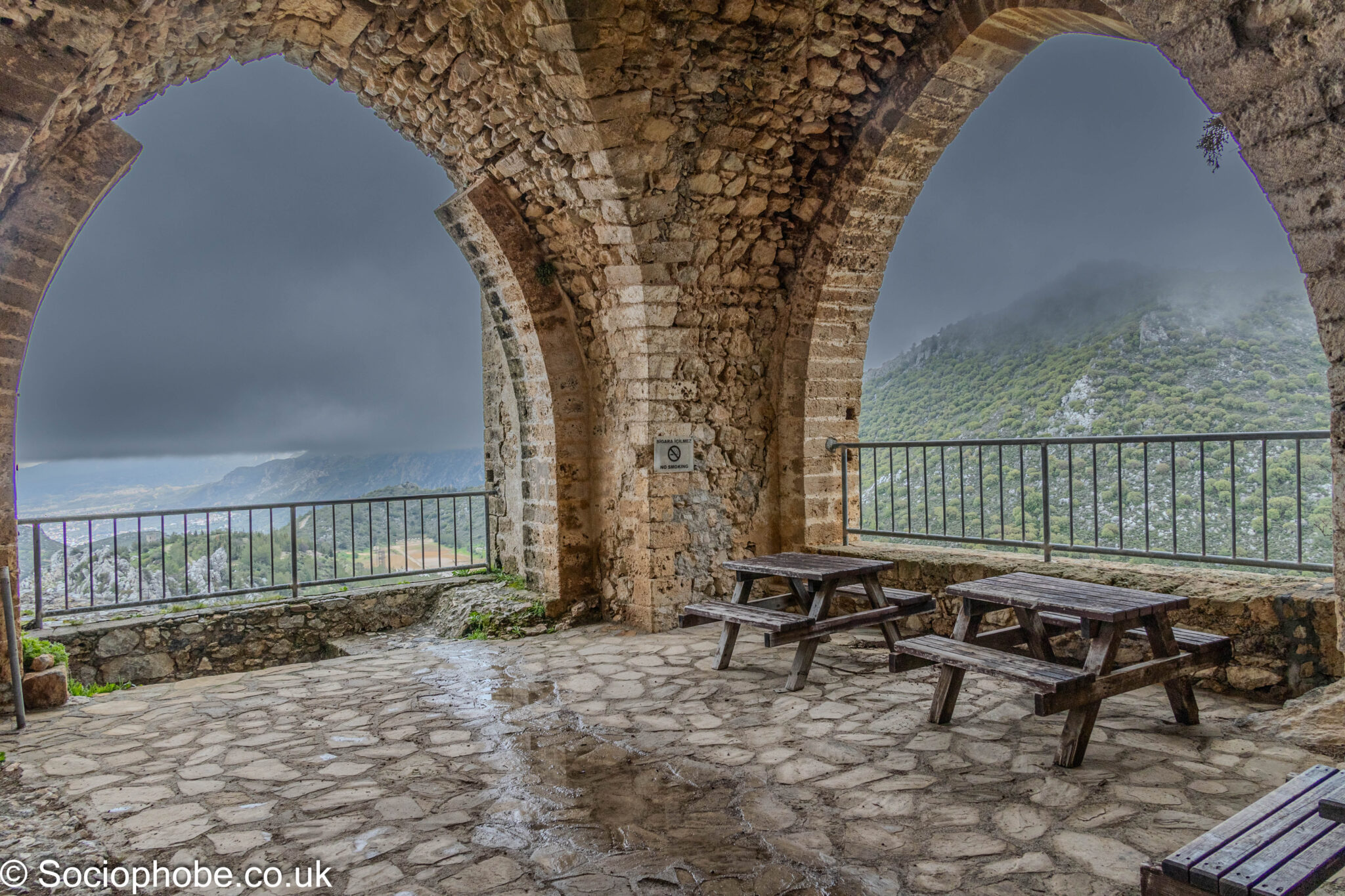
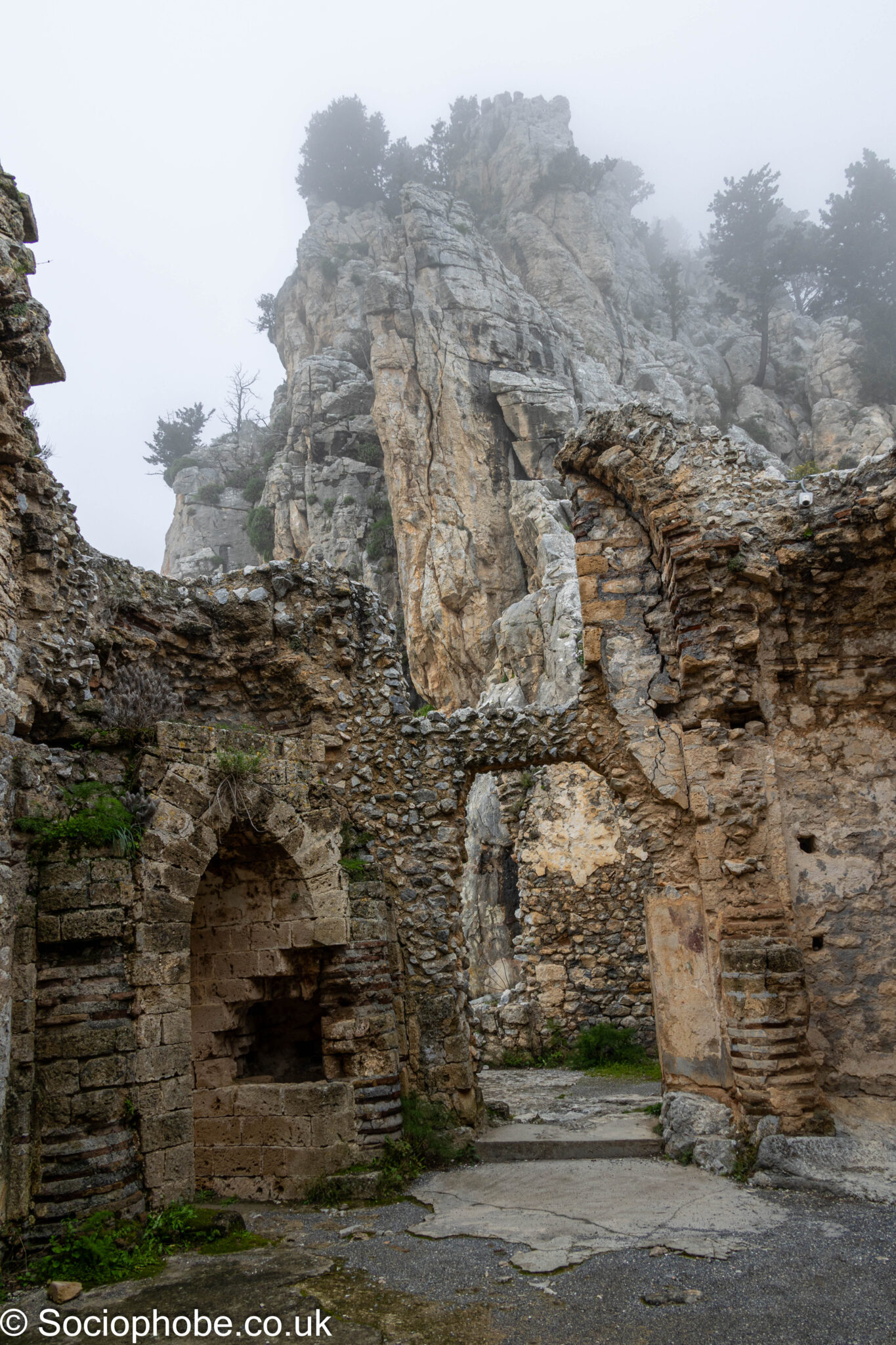
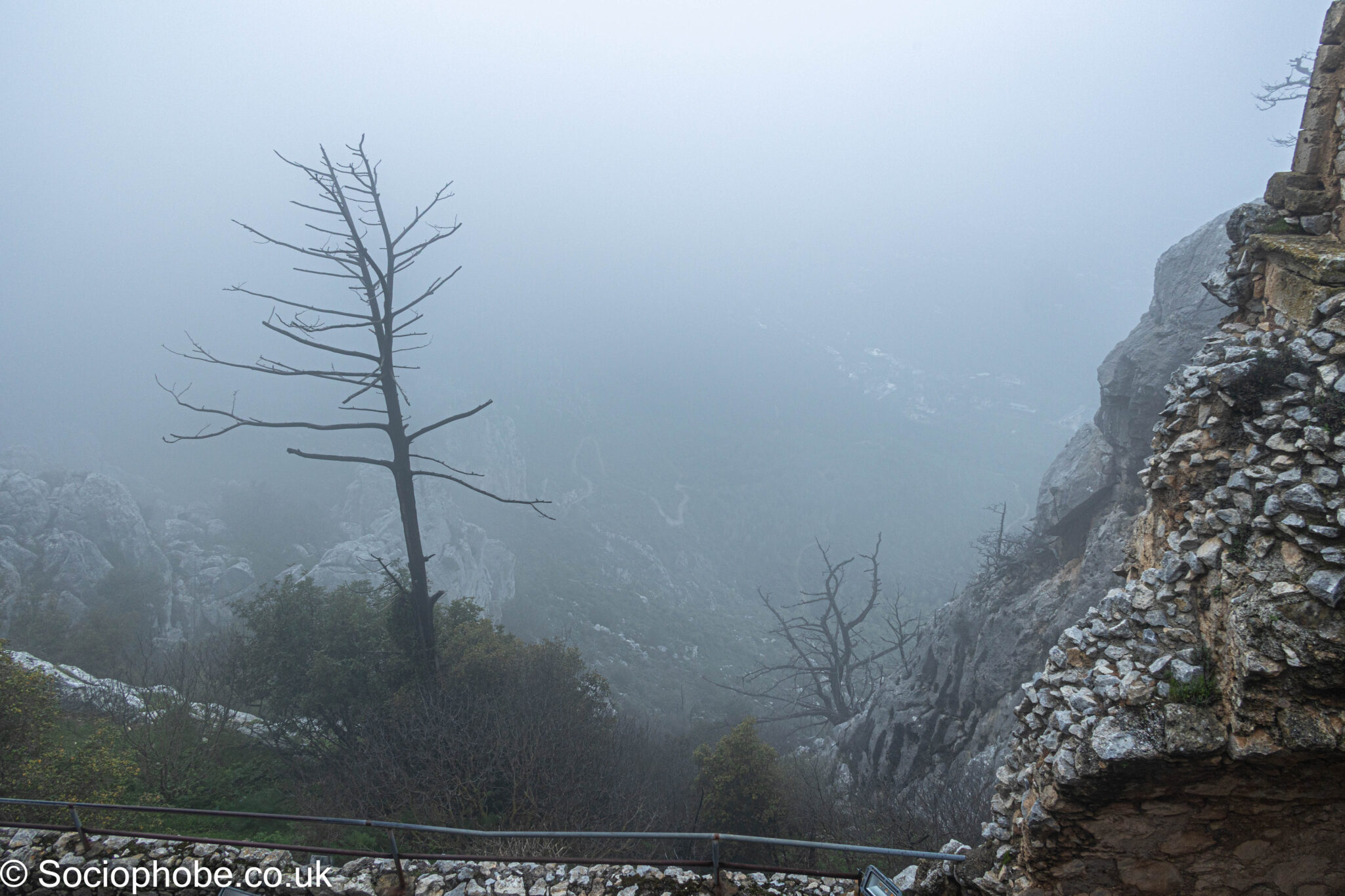
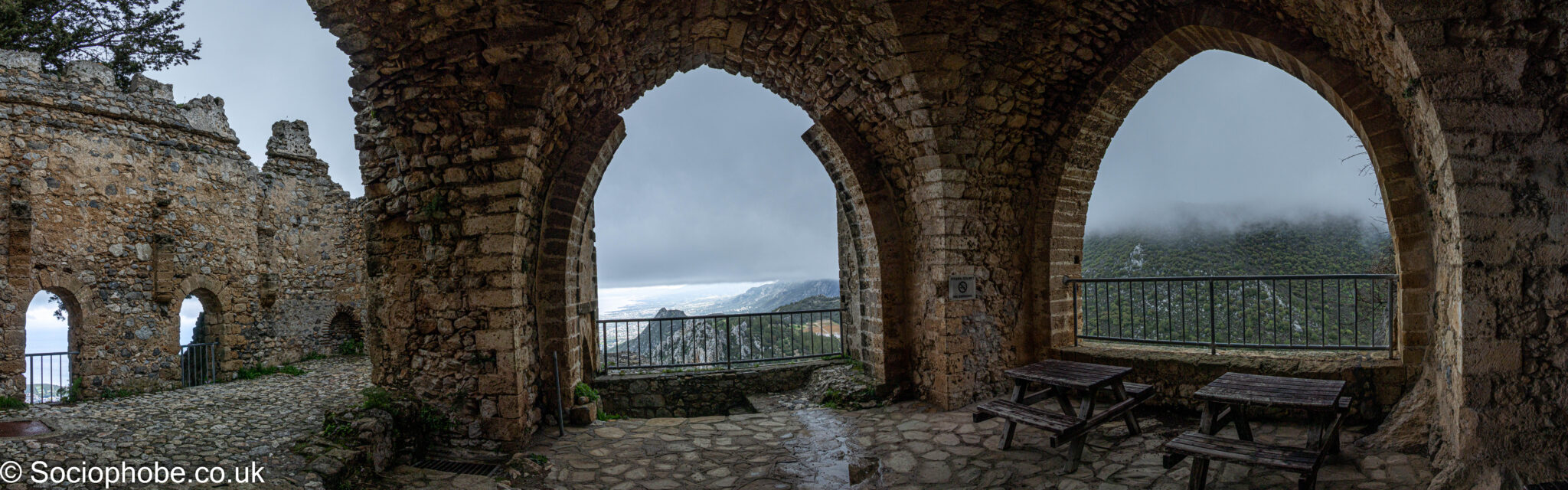
When we visited the cafe in the castle was closed but the cafe/shop outside was open. Finally, as my pictures show, allow for the weather changes, this is a mountain castle!
My Experience
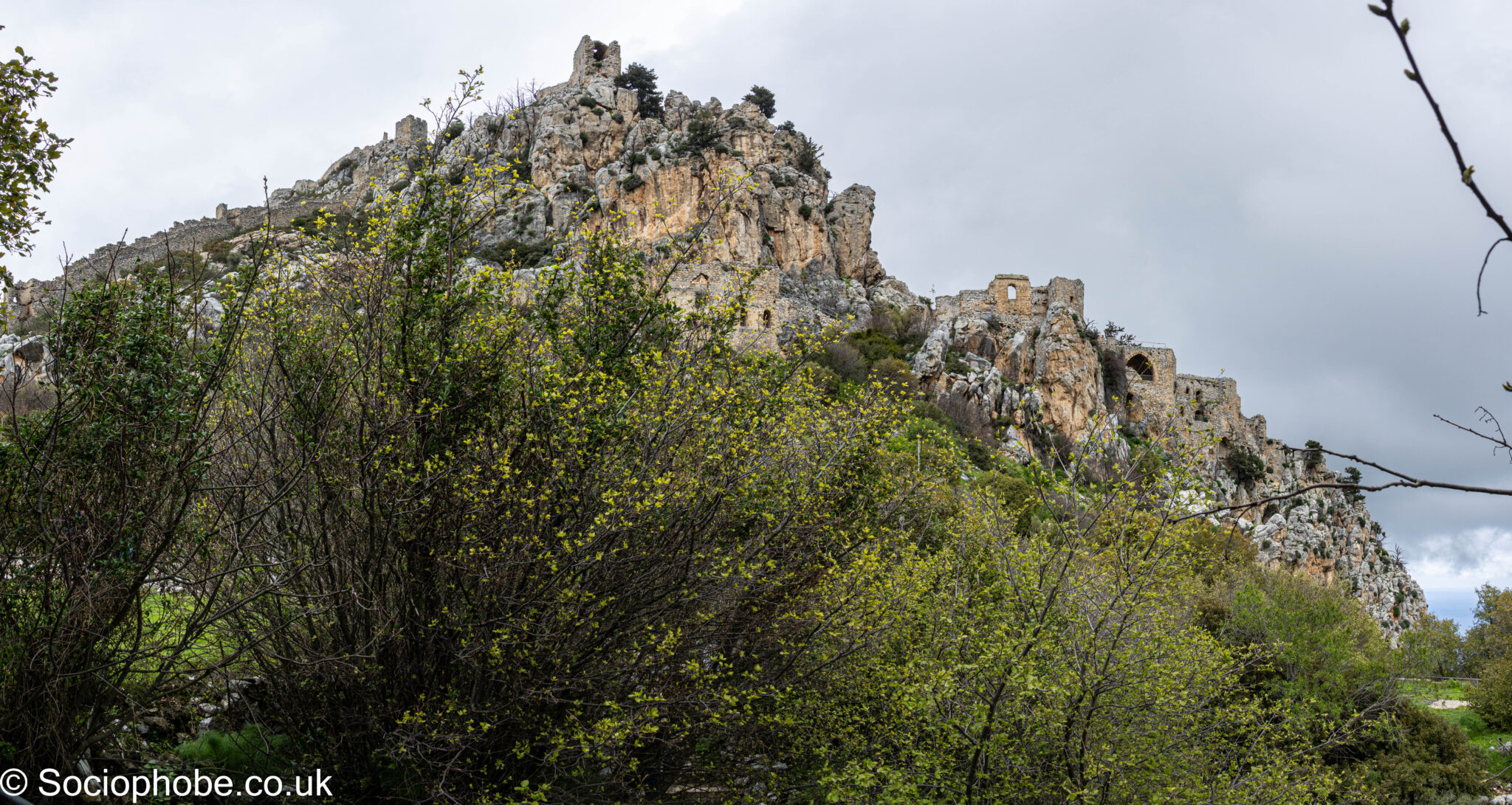
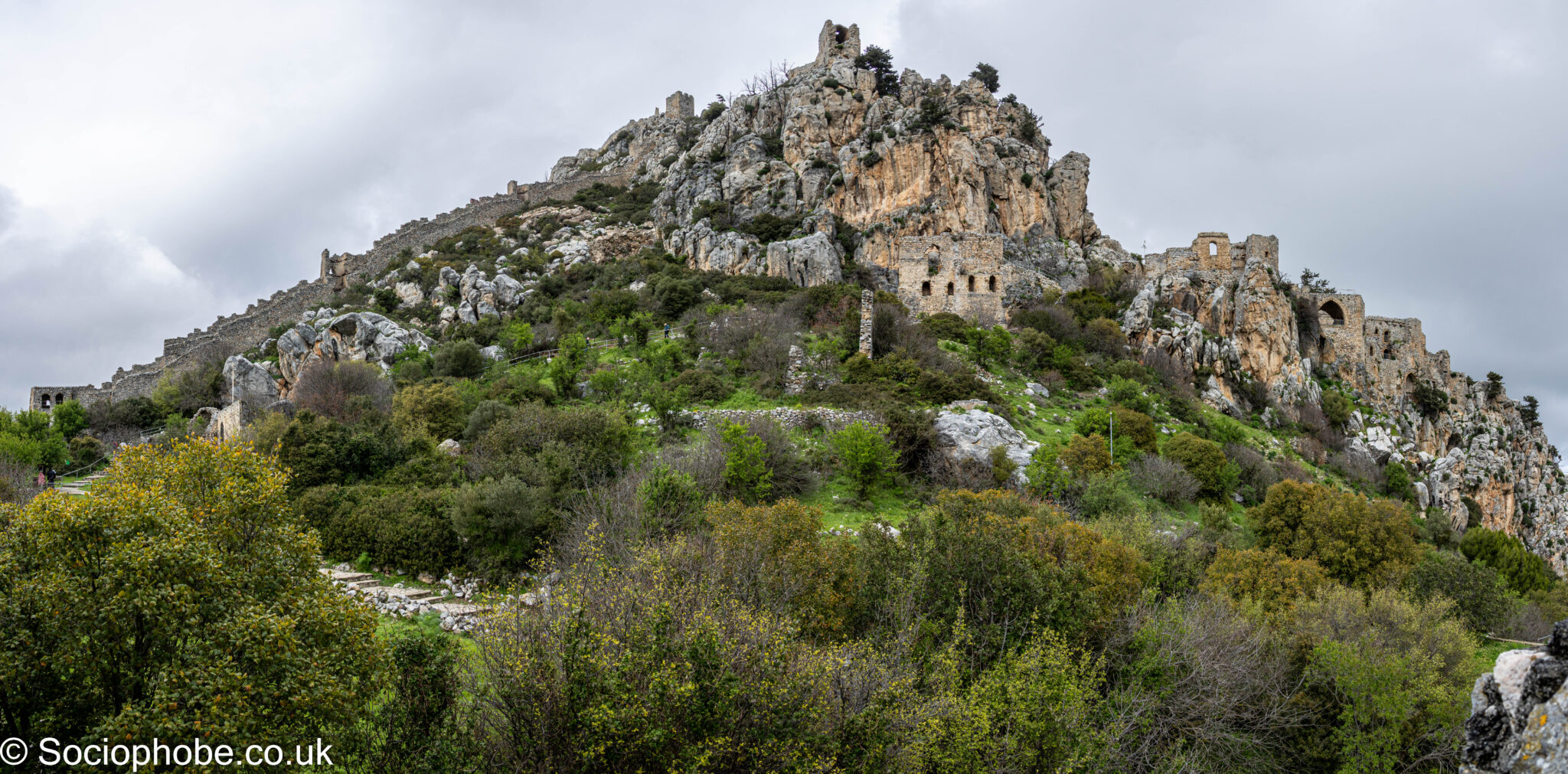
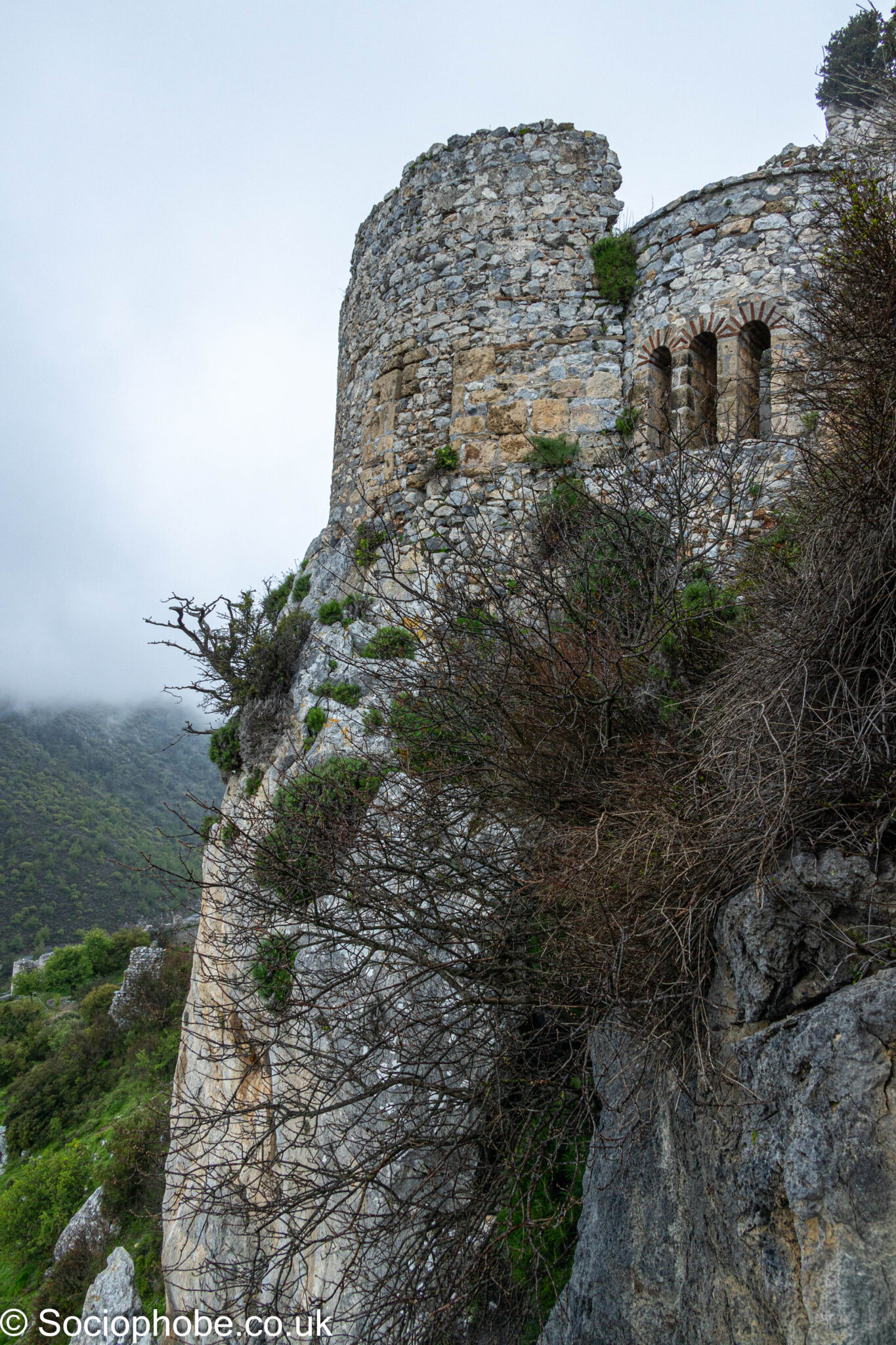
The first stop on our tour of the Kyrenia region was St Hilarion Castle, built by the Byzantines as a defence against Arab raids and expanded by the Lusignans to include a summer palace. The castle guarded the Nicosia – Kyrenia road and we drove past various war memorials too from recent events as well as a Finnish UN base. The castle was high up in the mountains and built on 3 levels, the first two for defence and the top level was used as a summer palace by the Lusignans.
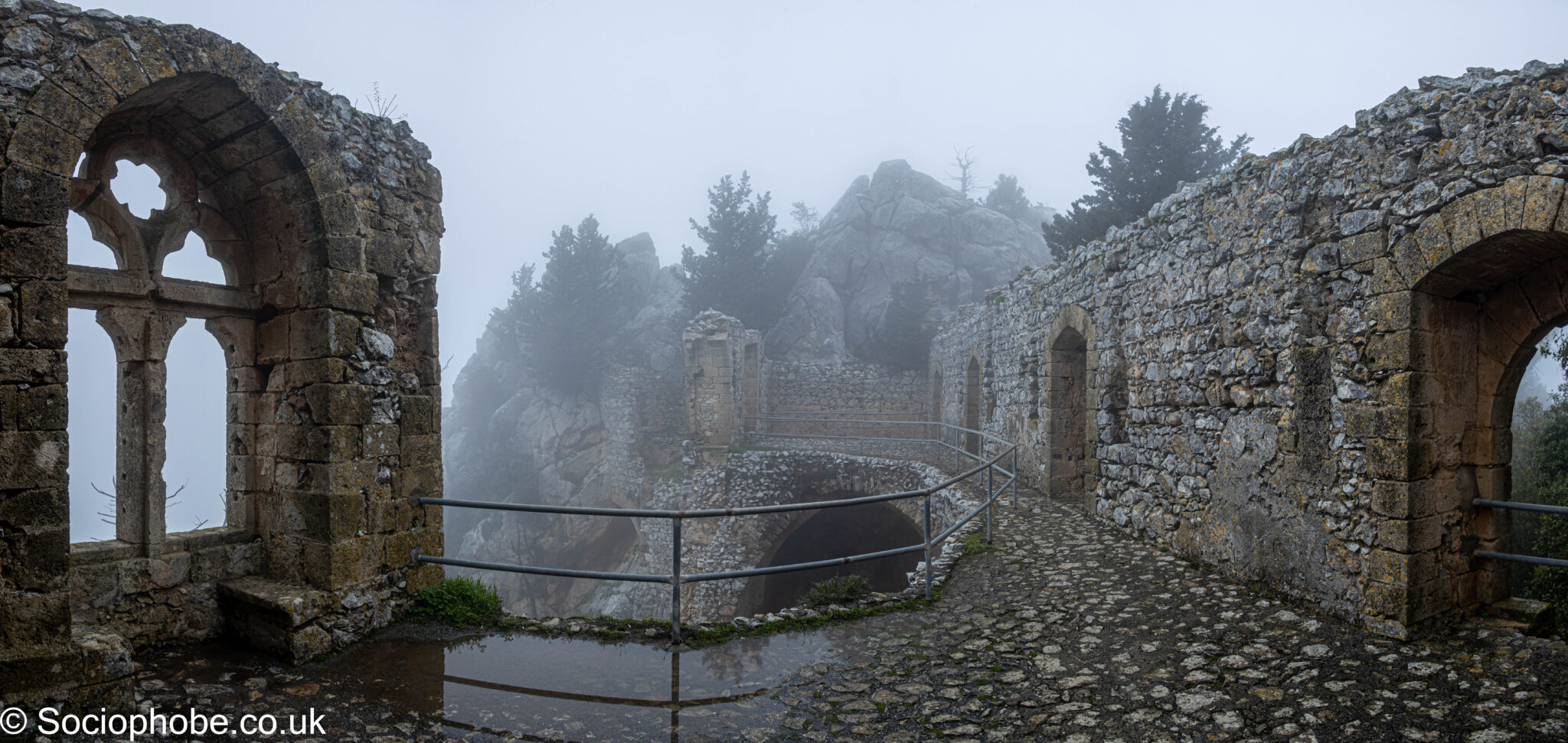
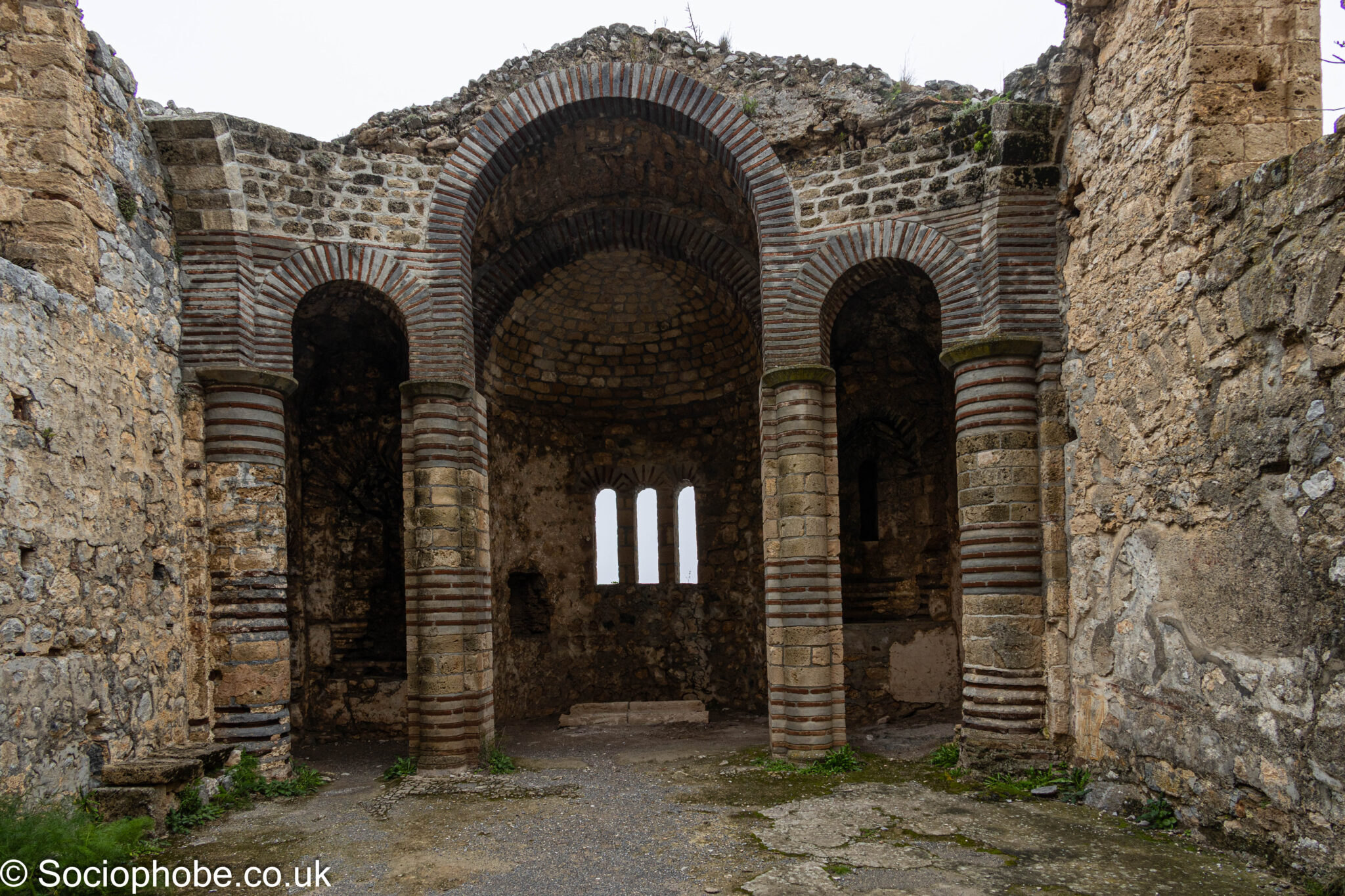
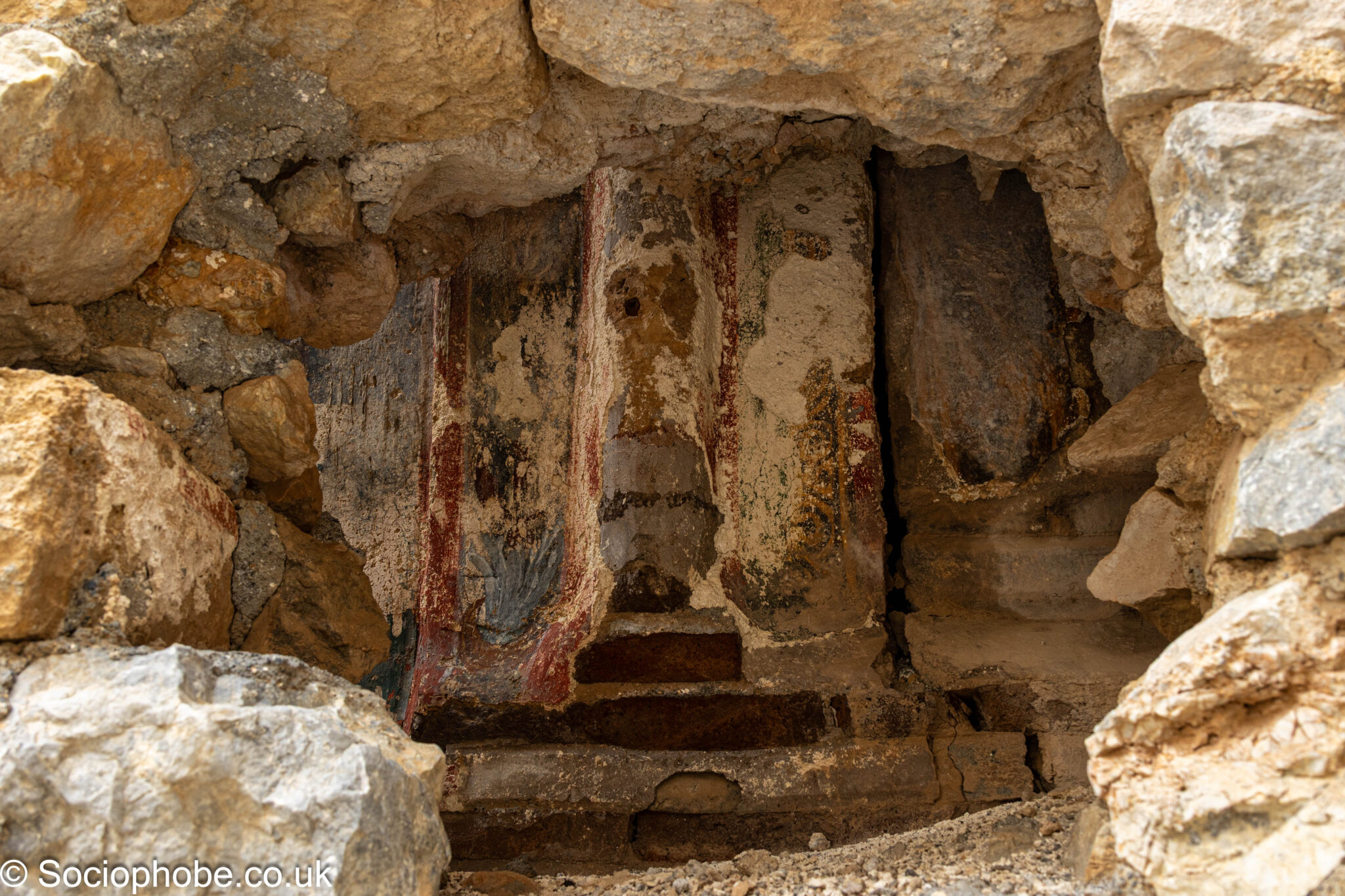
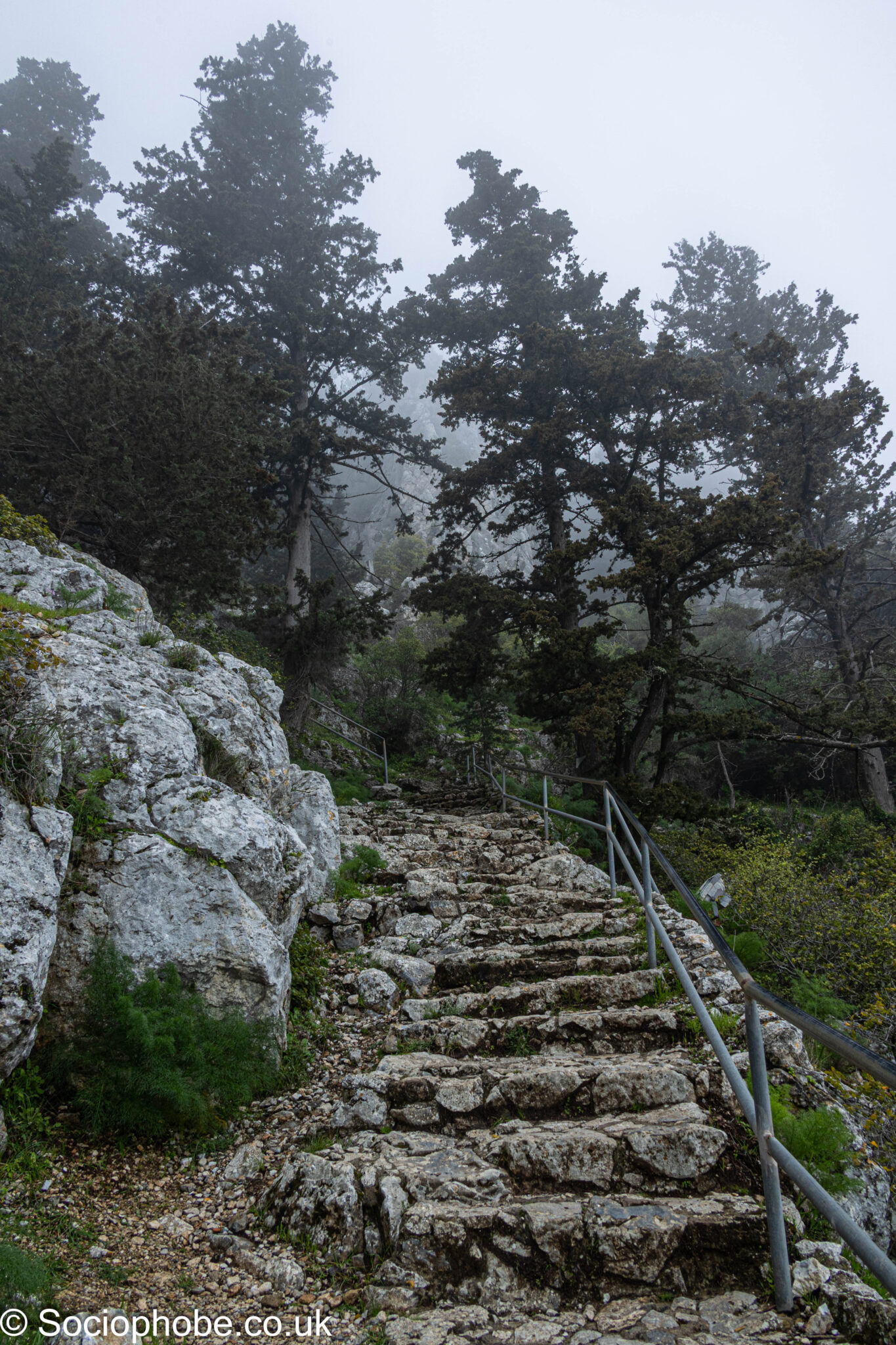
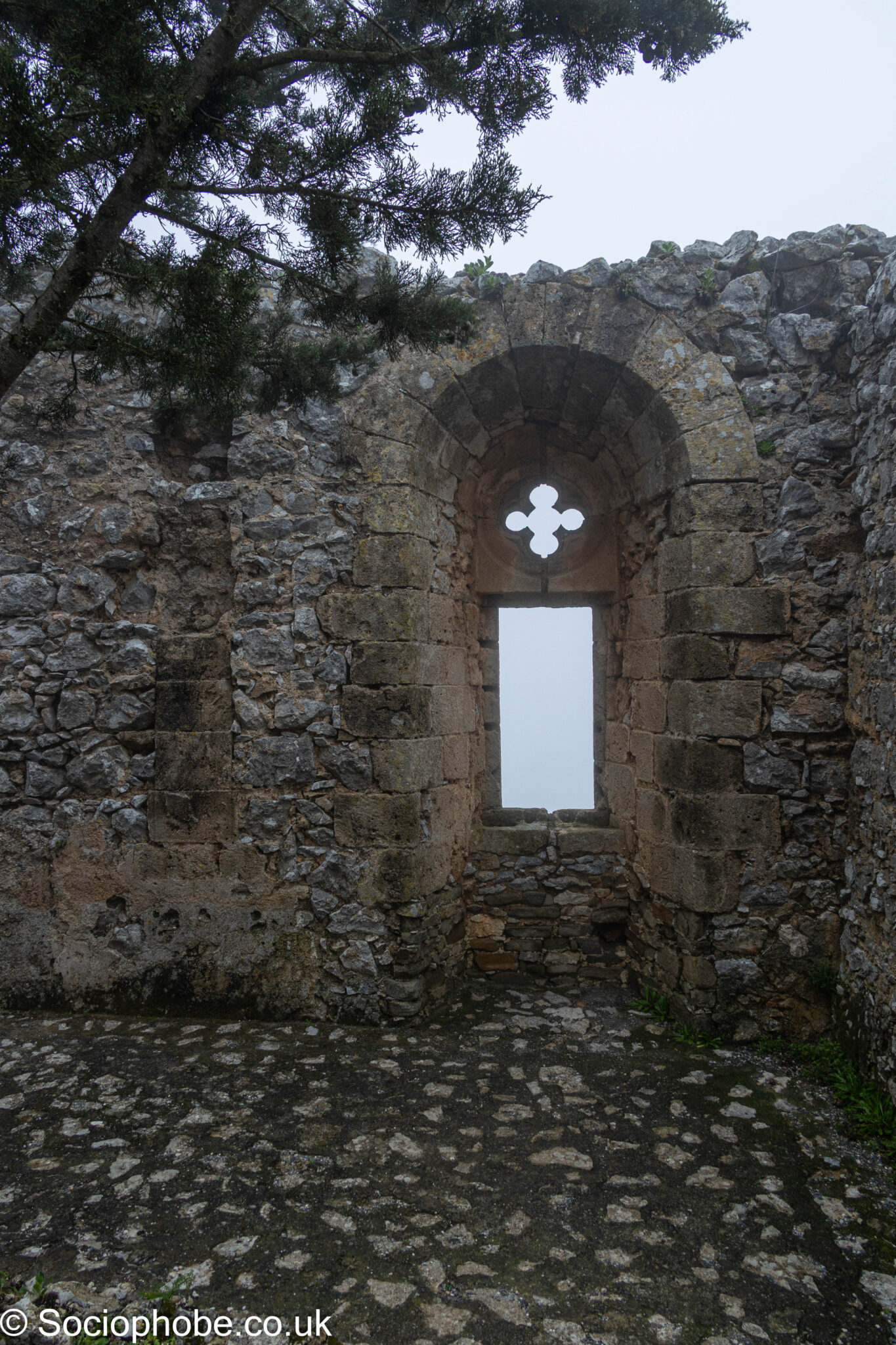
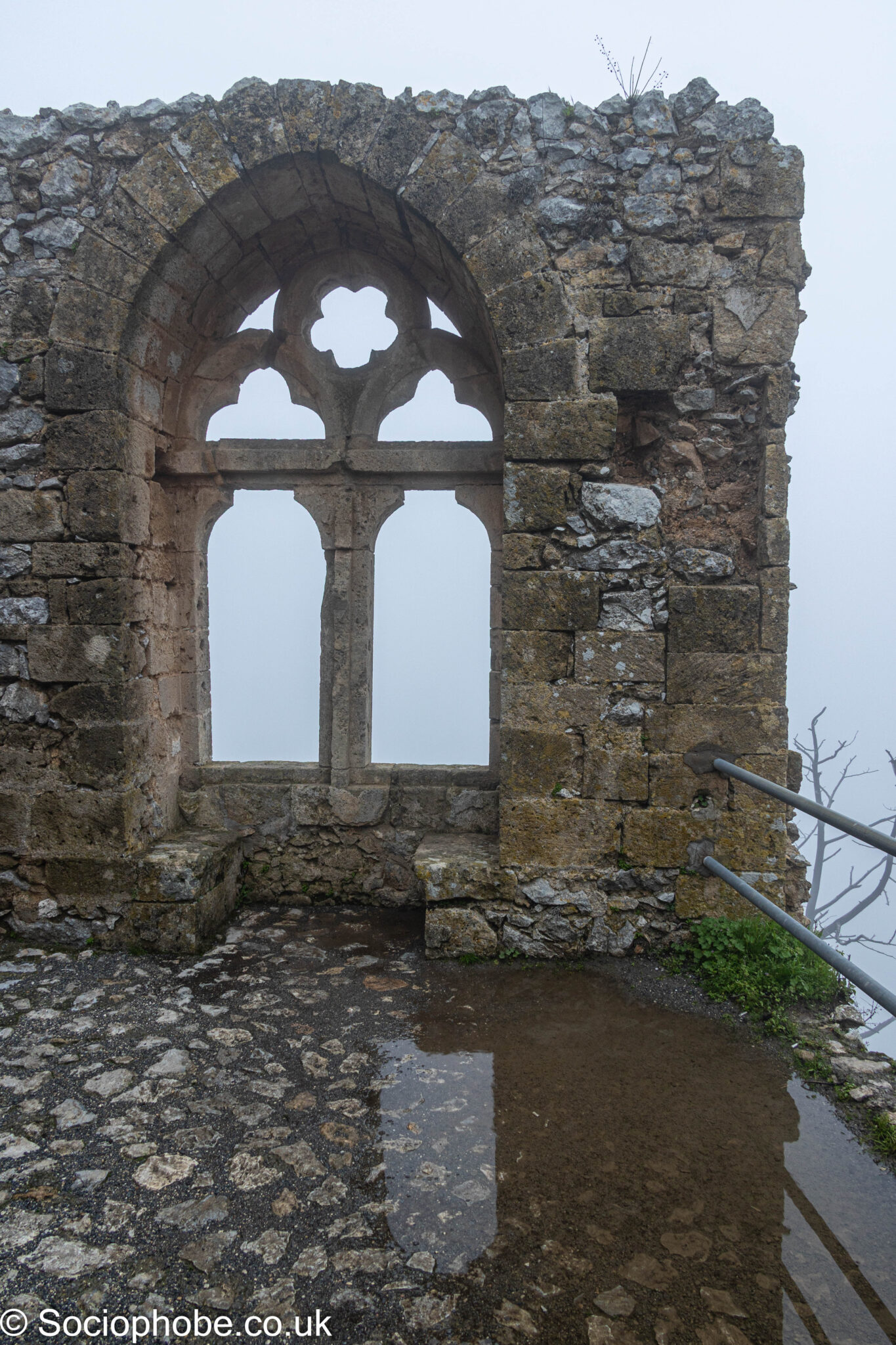
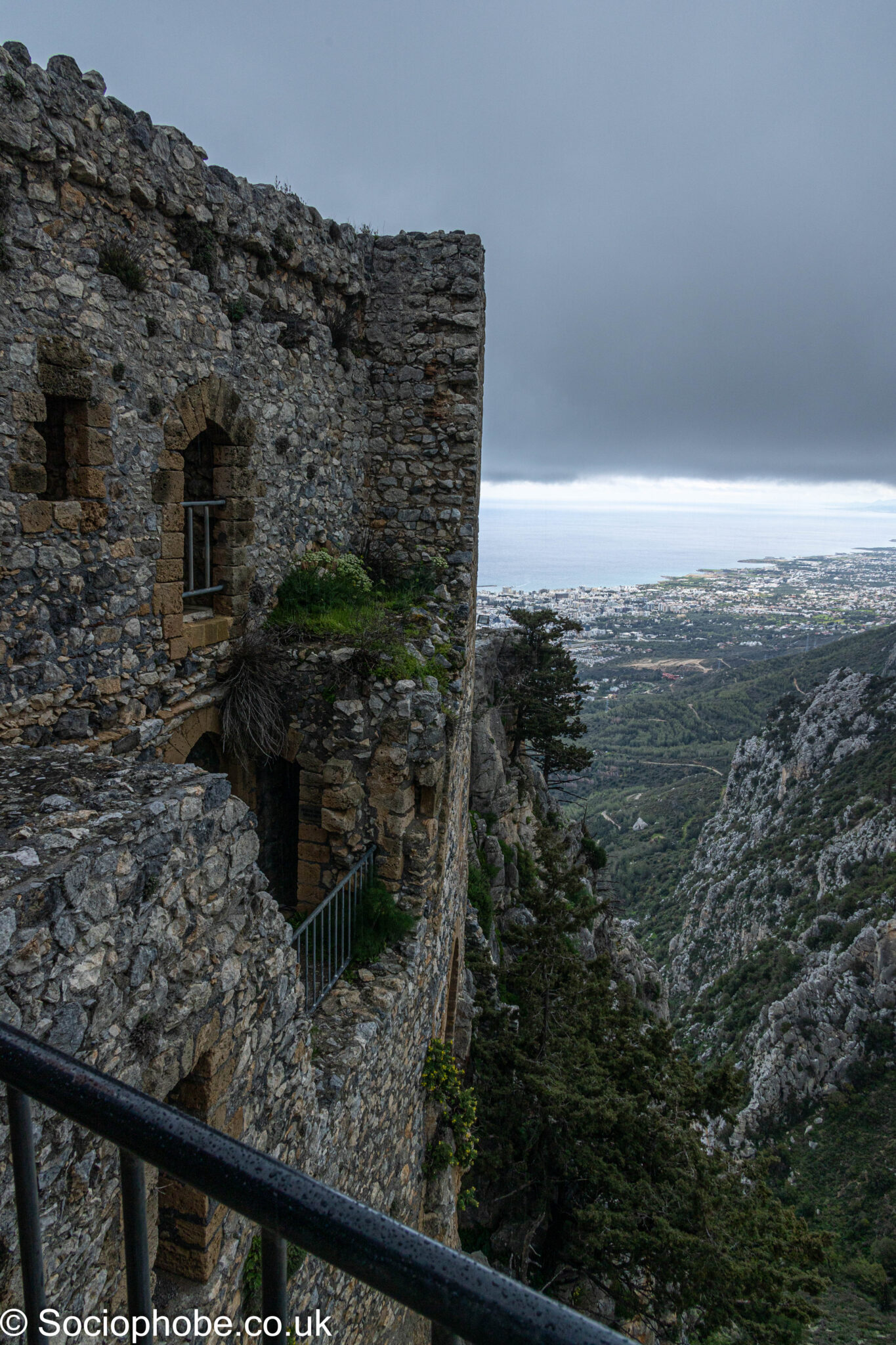
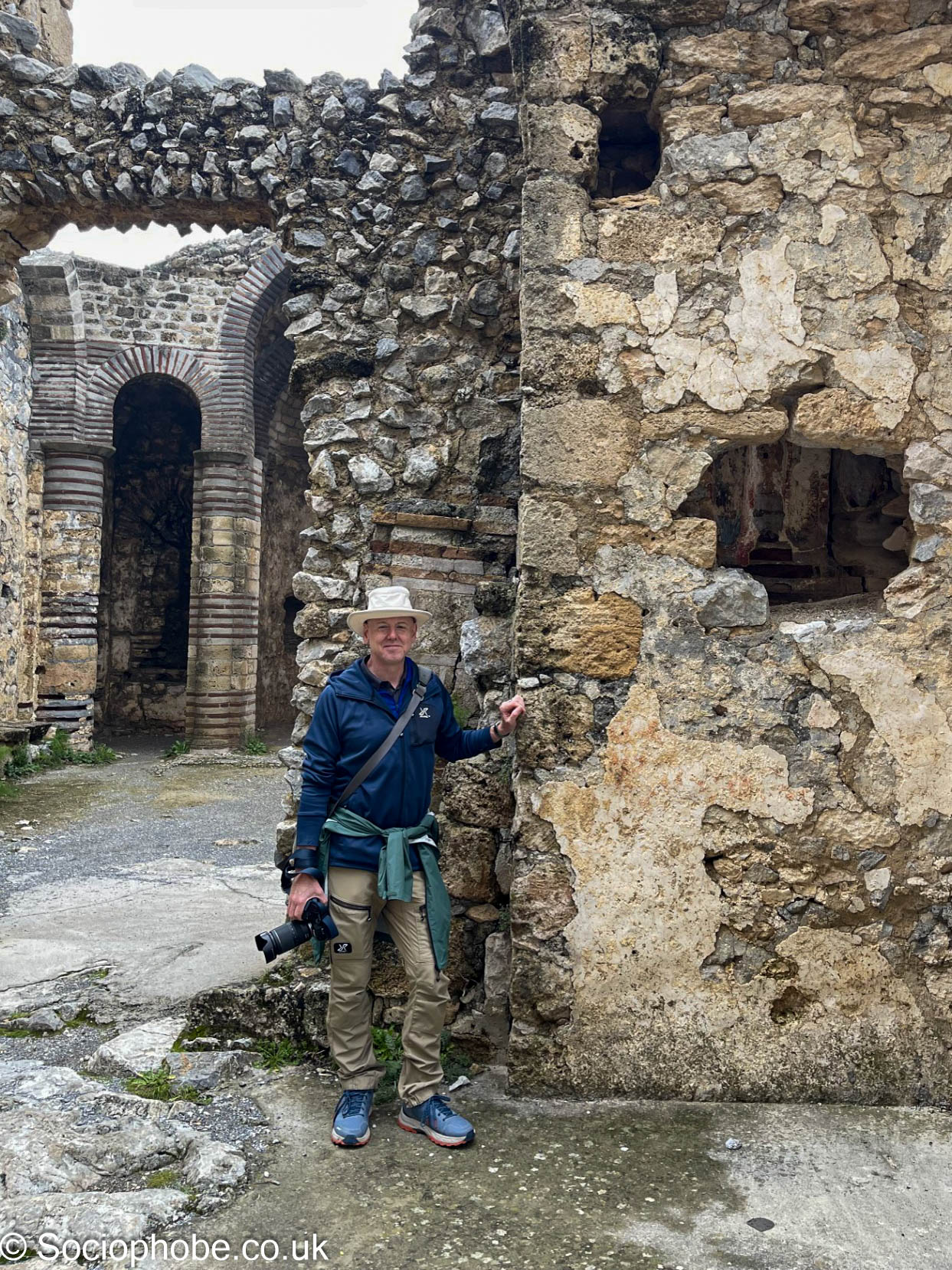
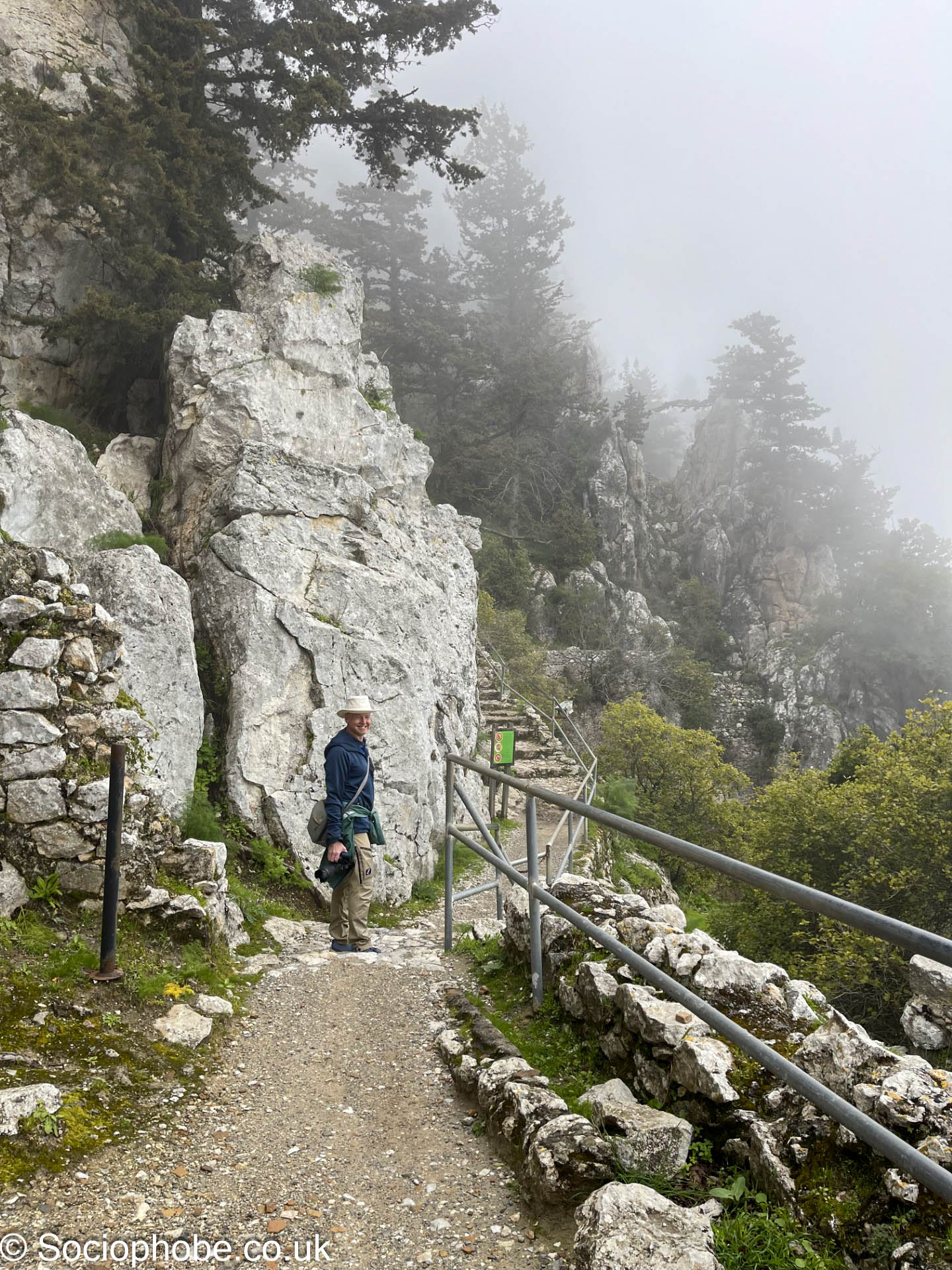
We explored the lower levels, well preserved but with lots of areas still closed for renovation and we looked at the view across to the coast of Kyrenia. There was a small Byzantine chapel with the remains of frescoes hidden behind a more recent wall. The architecture was wonderful, with vaulted ceilings and gothic arch windows and a lot of high quality stonework, as well as a lot of distinctly mediocre stonework, possibly due to facing stones being looted when the Venetians decommissioned the castle. The weather started to change from scattered sunshine to very low cloud below the level that we were on, so Deb and Sedat went to the café while I climbed the 200 or so steps to the Royal Apartments through thick cloud.
The apartments/summer palace was less impressive than expected with a couple of nice windows but no elaborate stone work and mostly a functional building. I did pass several large cisterns as I climbed but the views were pretty washed out by cloud. The climb down was entertaining due to the slippery polished rock of the steps but to several people’s dismay, I arrived safely. I met Deb and Sedat and we returned to the car to drive to Kyrenia.
St Hilarion Castle Photo Gallery
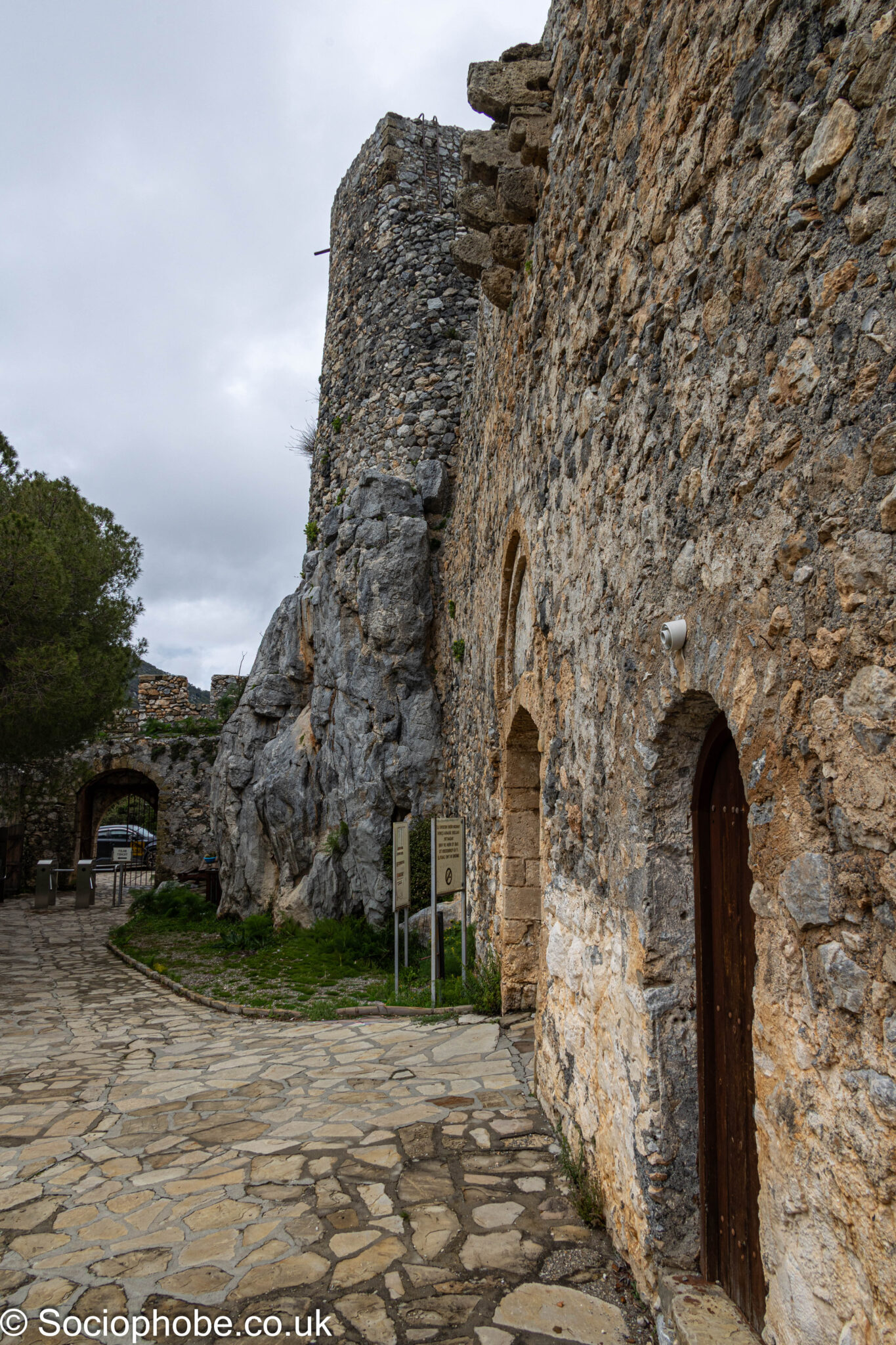
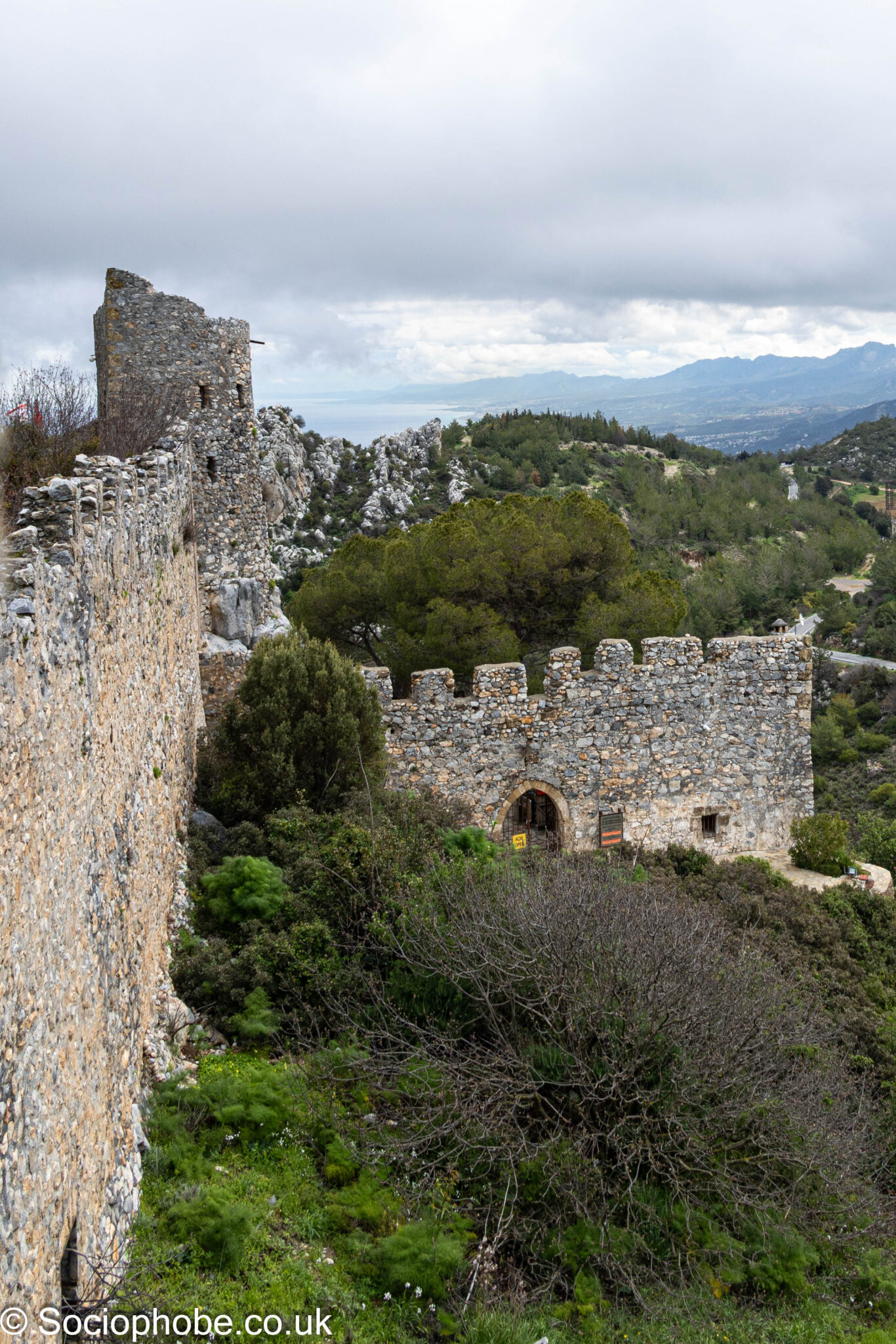
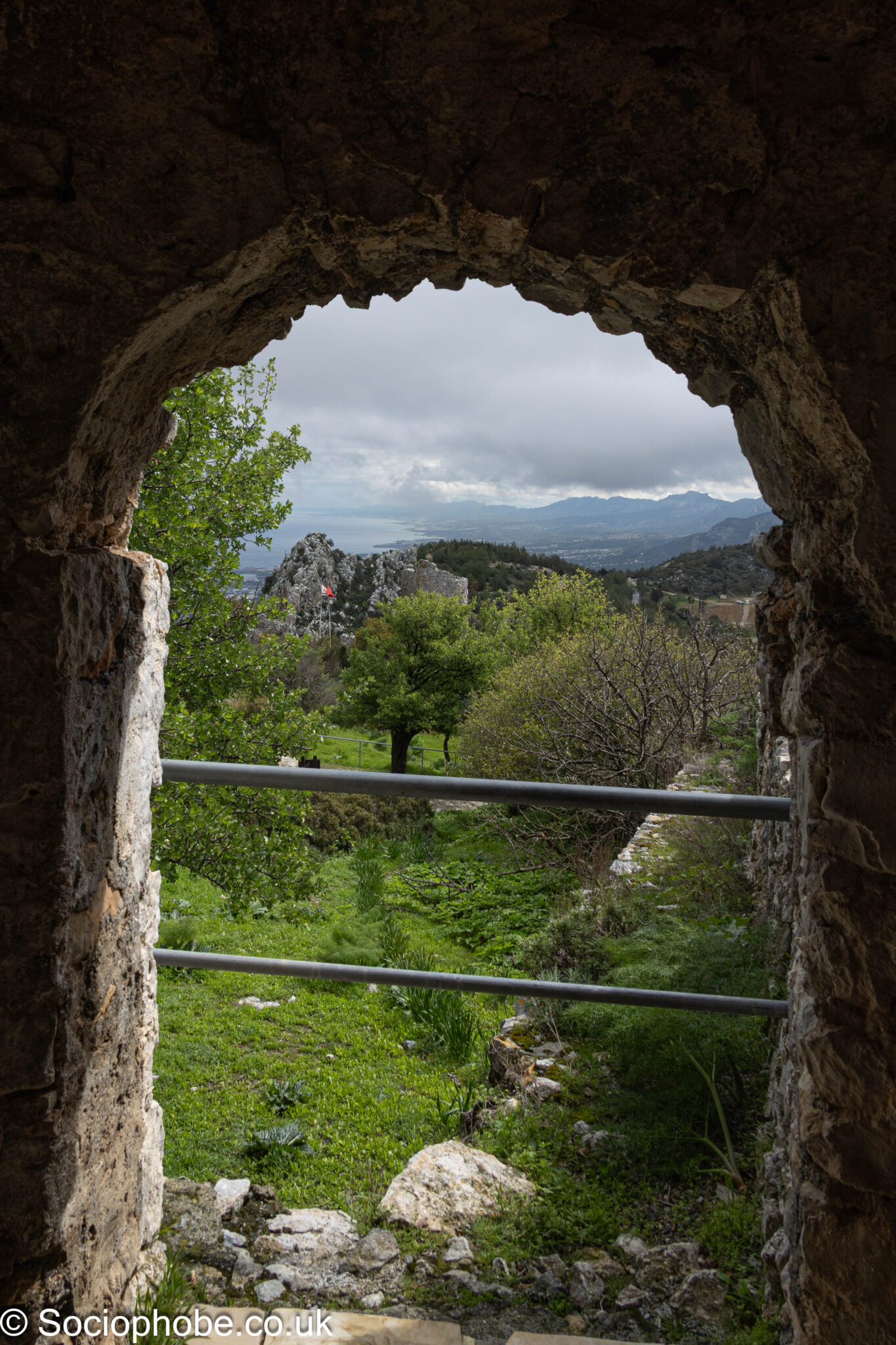
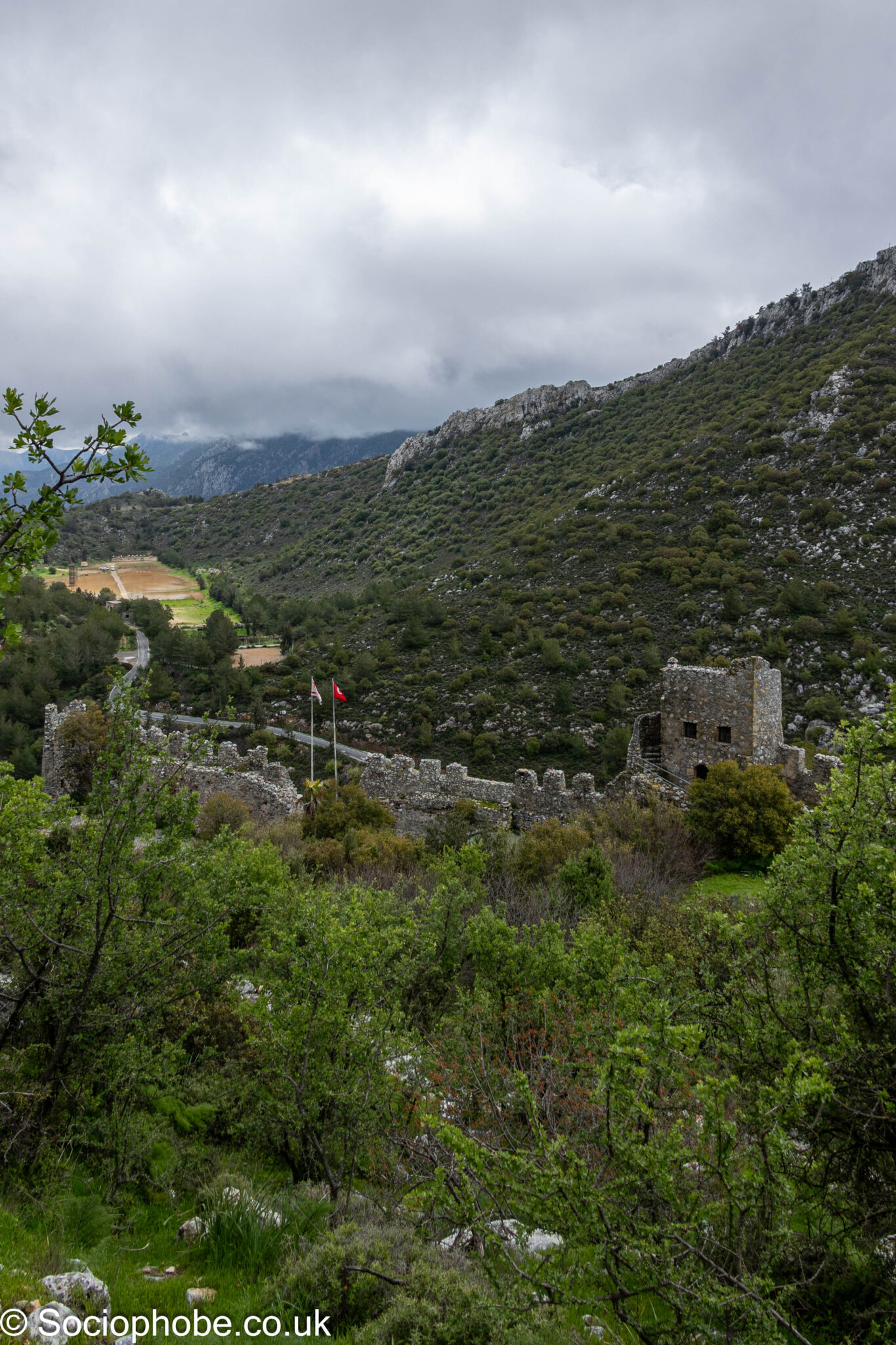
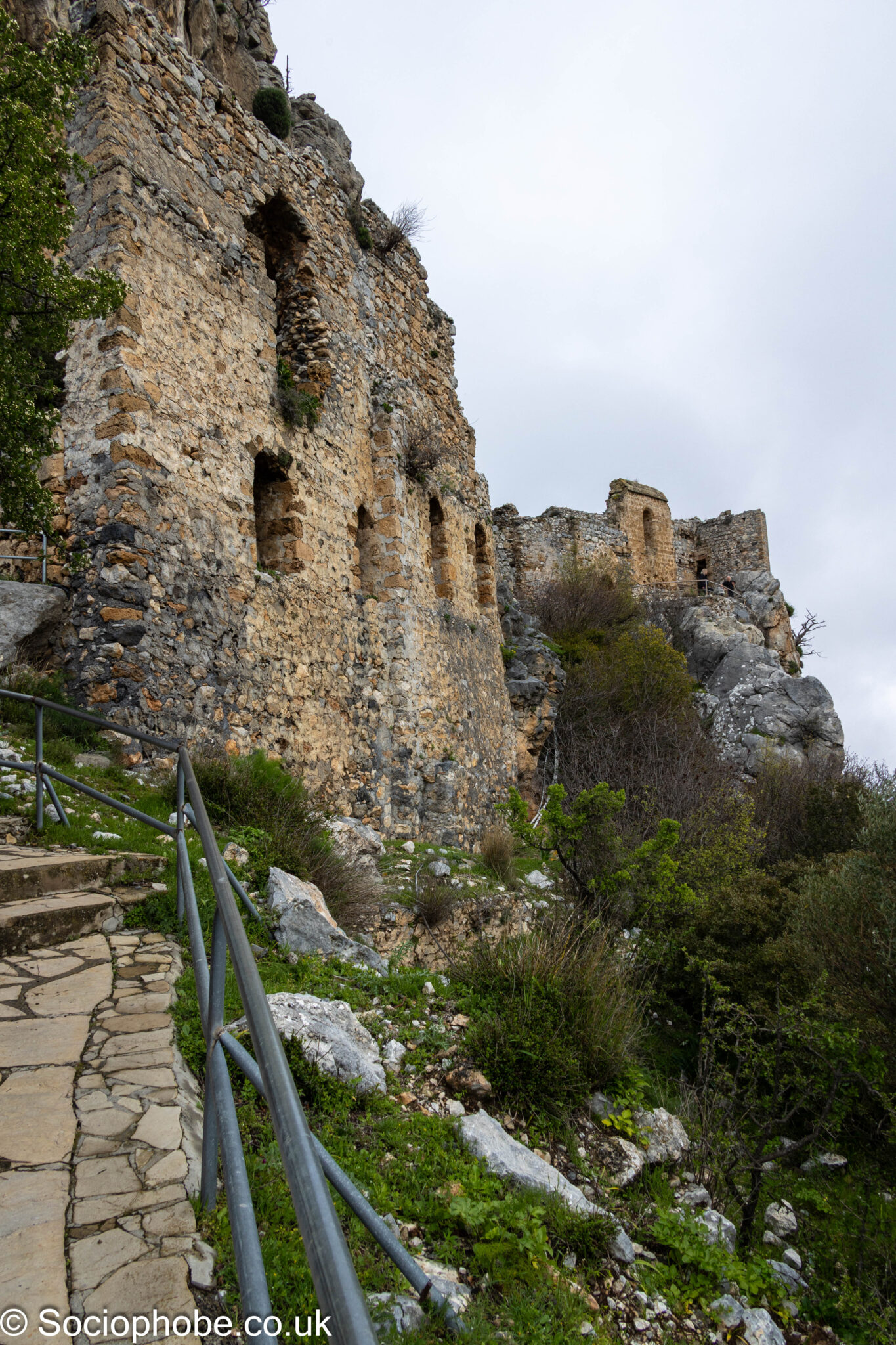
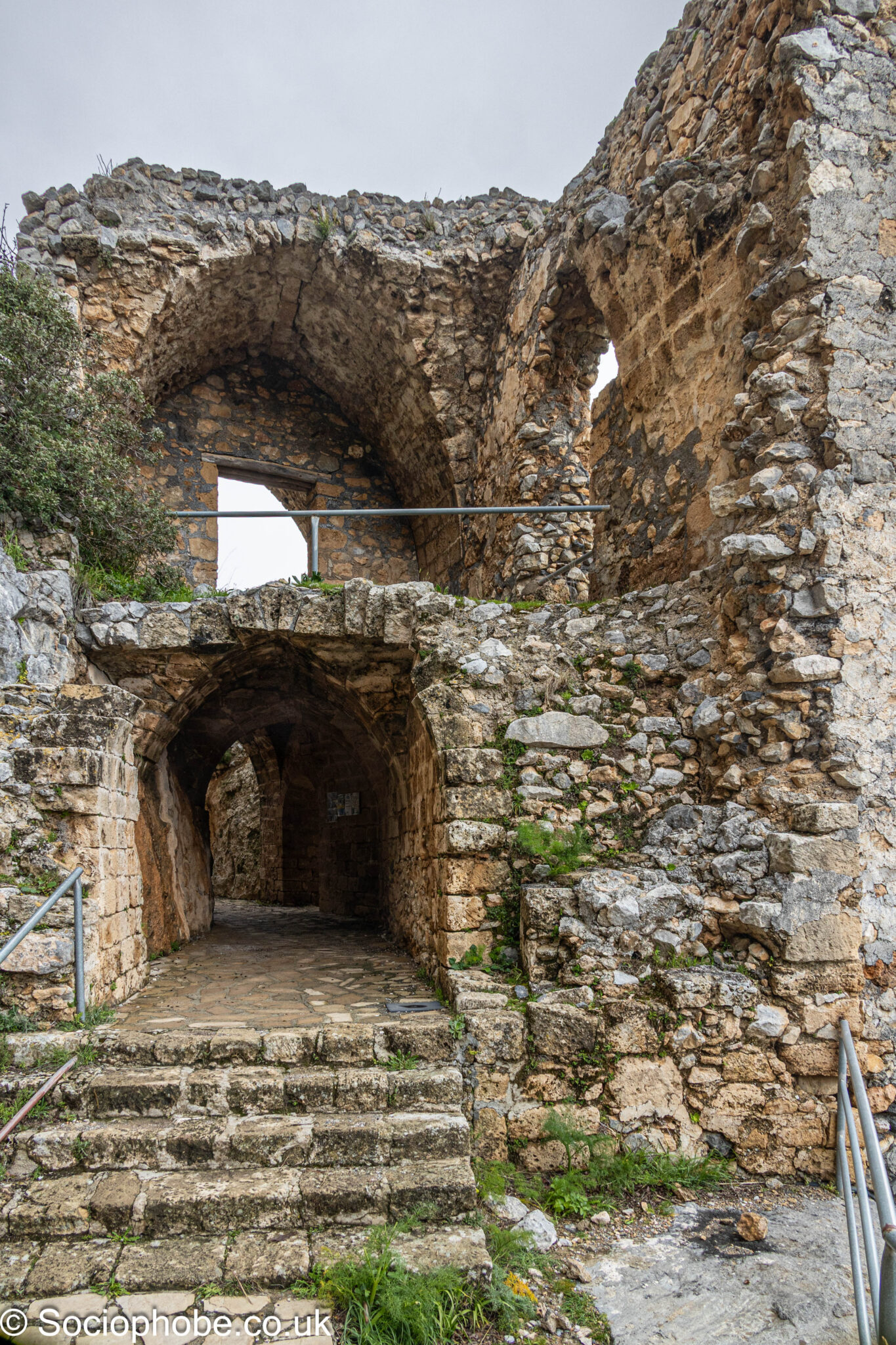
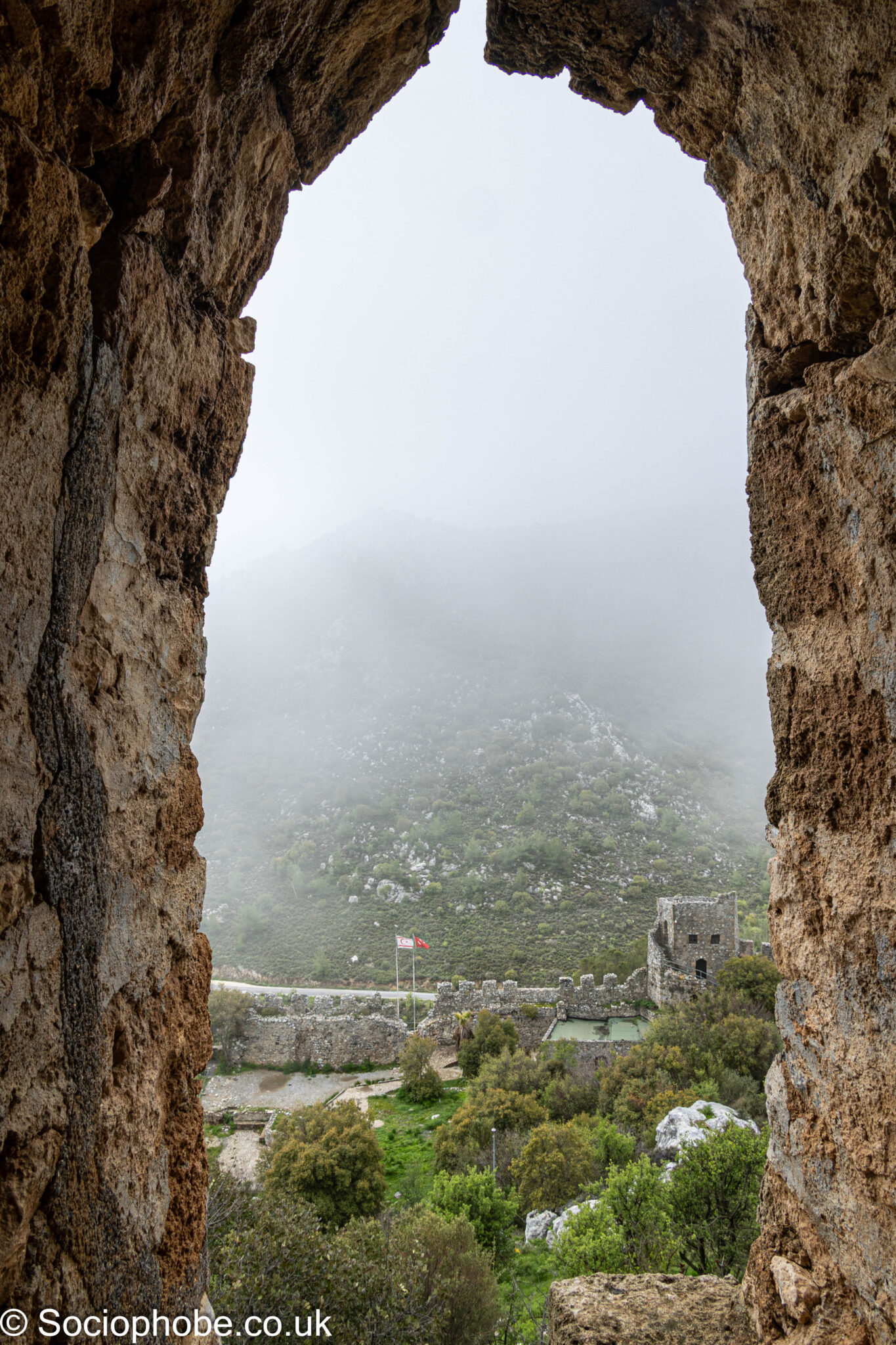
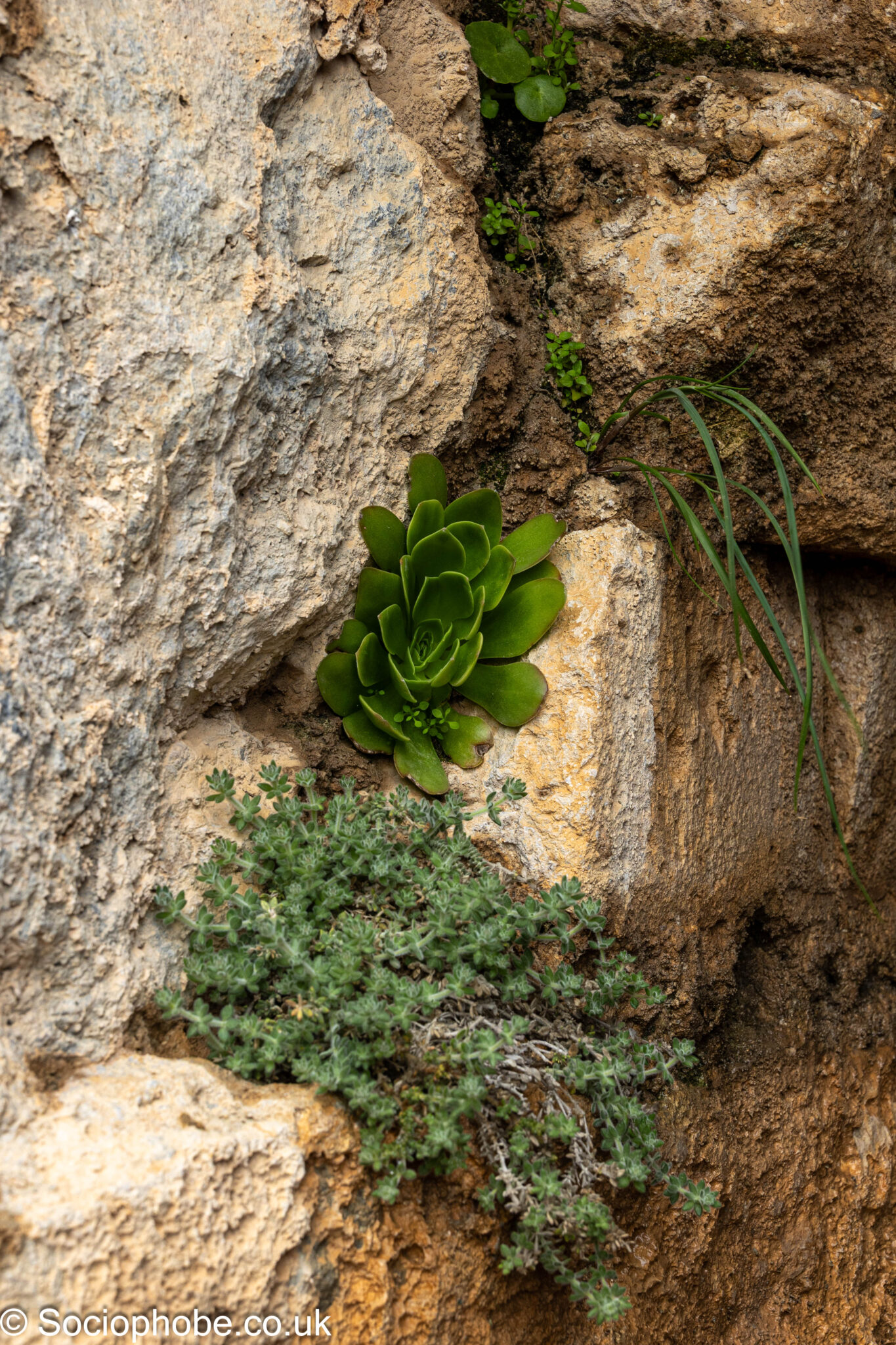
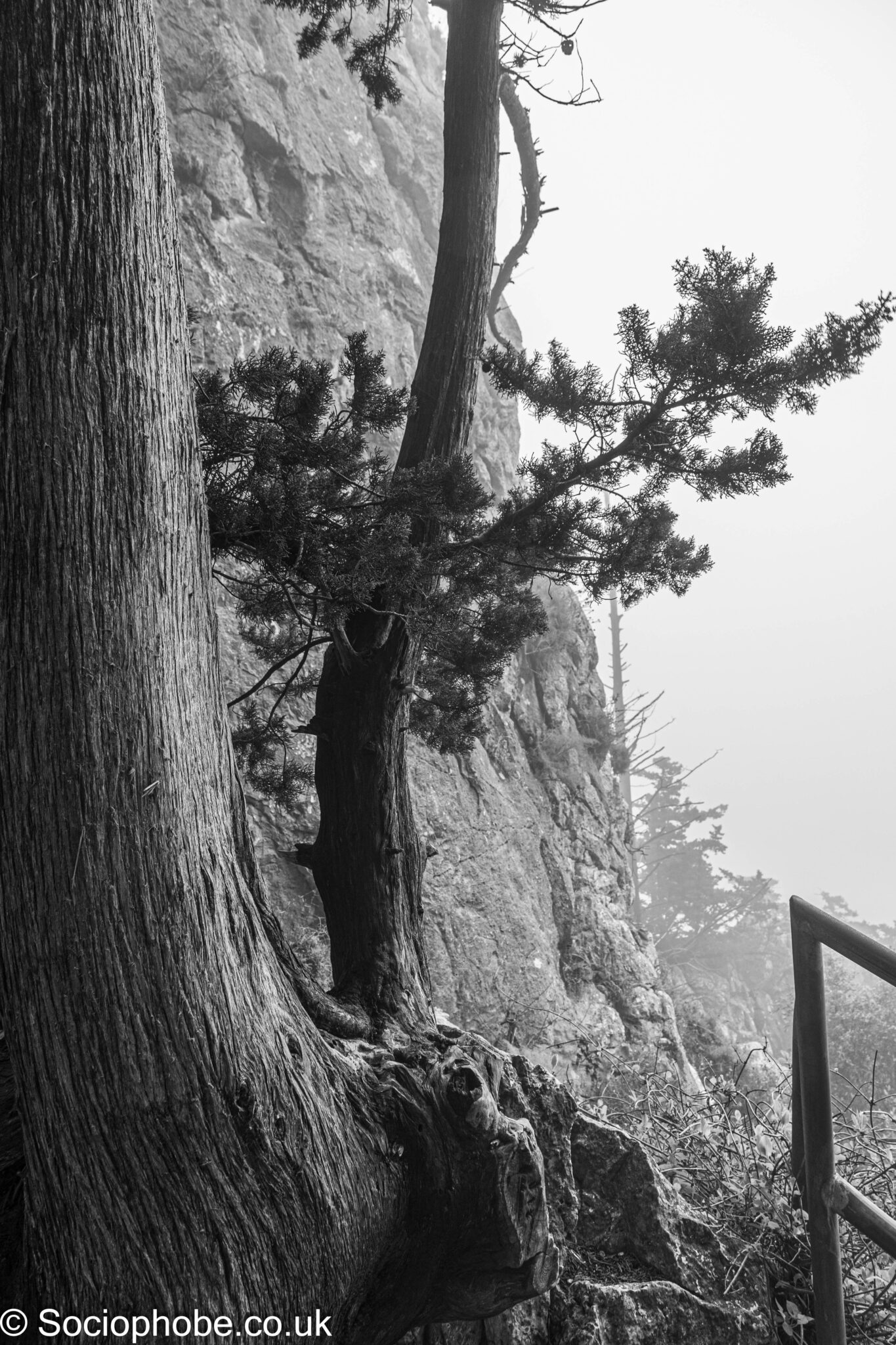
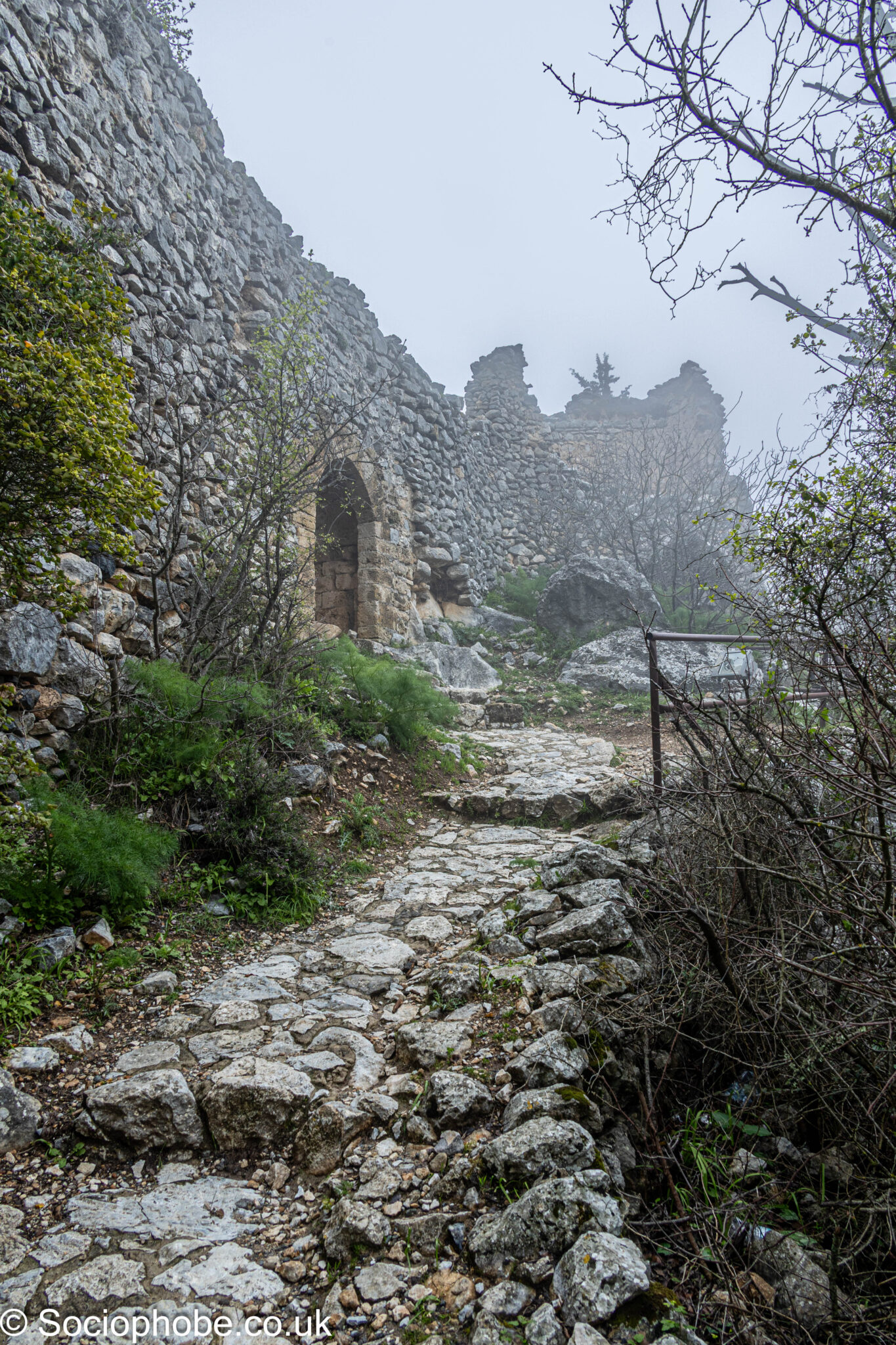
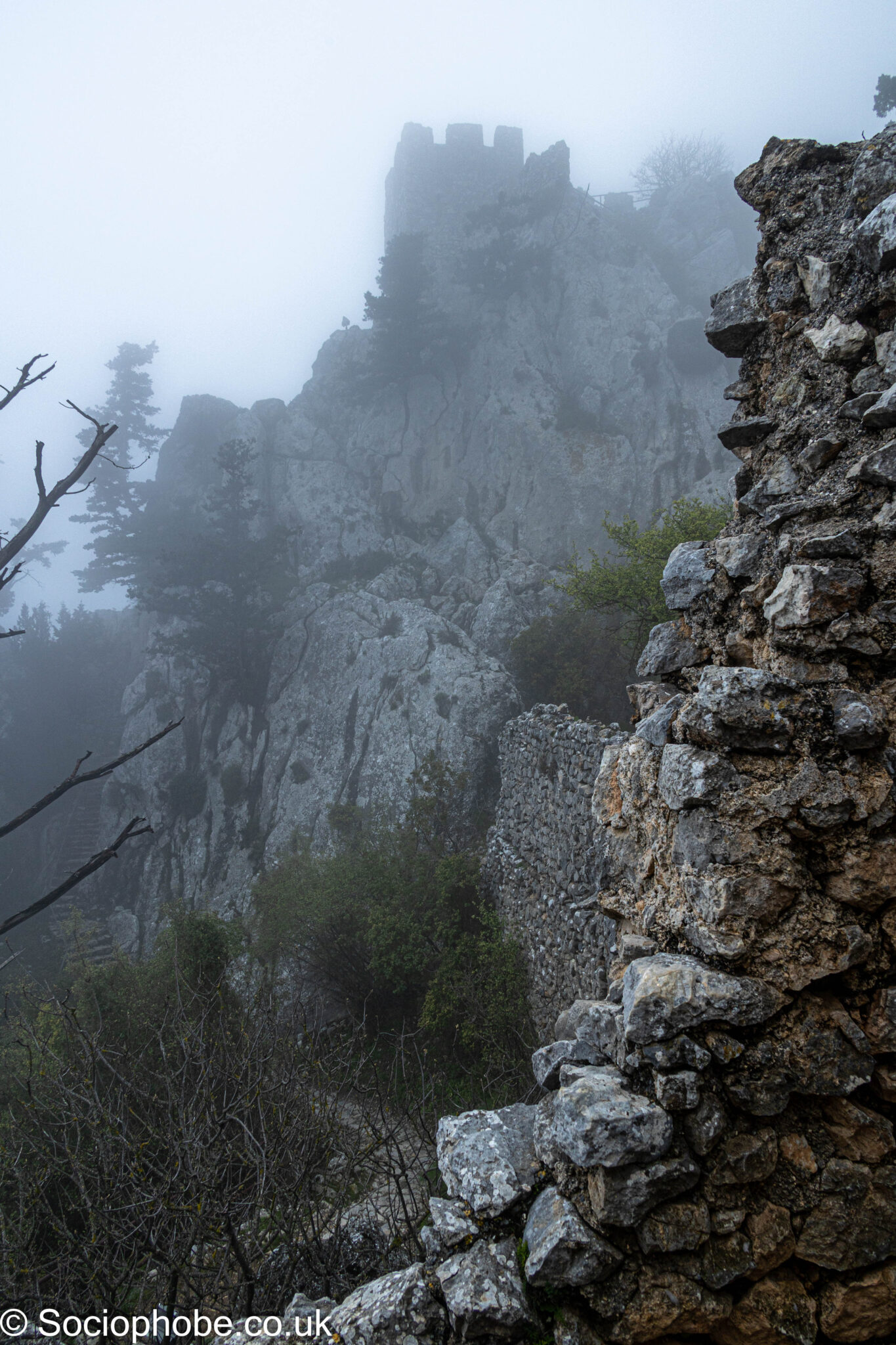
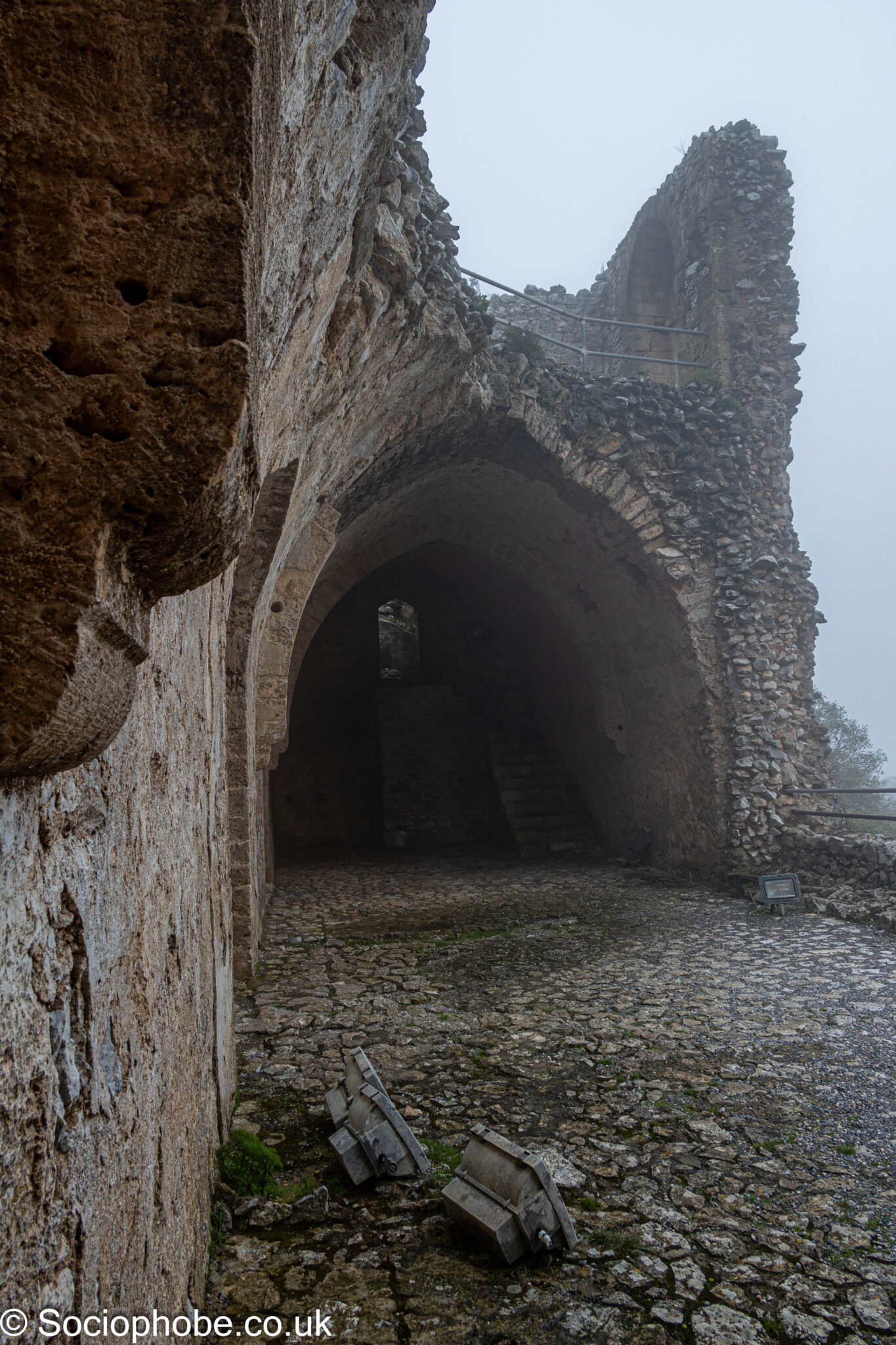

History
The castle is not named after Saint Hilarion of Thavata. It was named after an obscure saint, who is traditionally held to have fled to Cyprus after the Arab conquest of the Holy Land and retired to the hilltop on which the castle was built for hermitage. An English traveller reported the preservation of his relics in the 14th century. It has been proposed that a monastery built in his name preceded the castle, which was built around it. However, this view is not supported by any substantial evidence.
Starting in the 11th century, the Byzantines began fortification. Saint Hilarion, together with the castles of Buffavento and Kantara, formed the defense of the island against Arab raids against the coast. They lost control of the island to Richard I of England who sold it to the Templars and then the Lusignan dynasty, Kings of Jerusalem. Some sections were further upgraded under the Lusignan dynasty, whose kings may have used it as a summer residence. During the rule of the Lusignans, the castle was the focus of a four-year struggle between Holy Roman Emperor Frederick II and Regent John of Ibelin (c. 1179 – 1236) for control over Cyprus.
Much of the castle was dismantled by the Venetians in the 15th century to reduce the cost of garrisons.
References
The history above is copied from the Wiki page here and then expanded a little.
There is a nice overview of the castle on the Visit North Cyprus page here.
Lonely Planet has a lovely write up of the castle here.
That looks so impressive, and with the low clouds looks bleak. Well done for climbing all those steps ! 🙂