
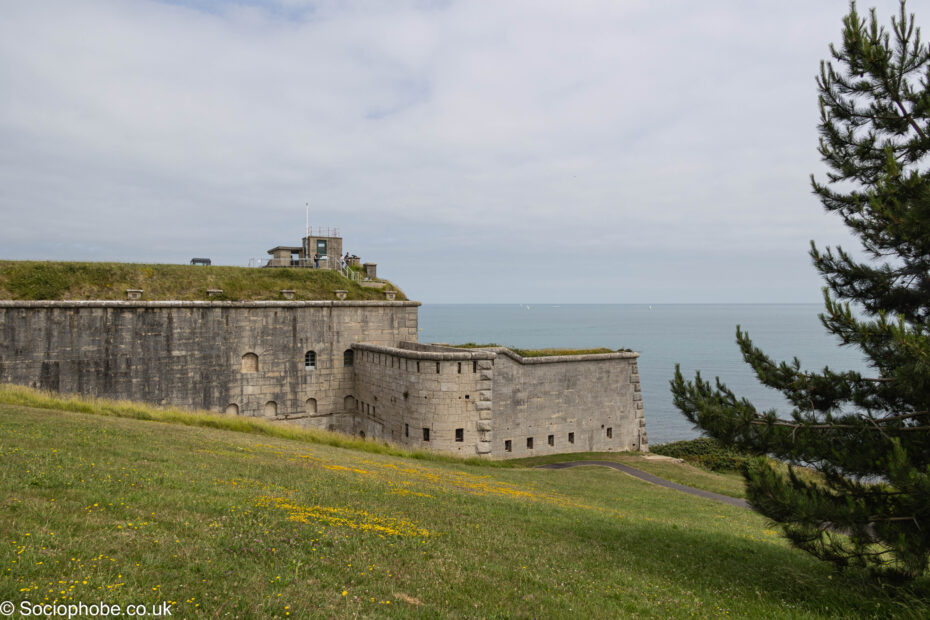
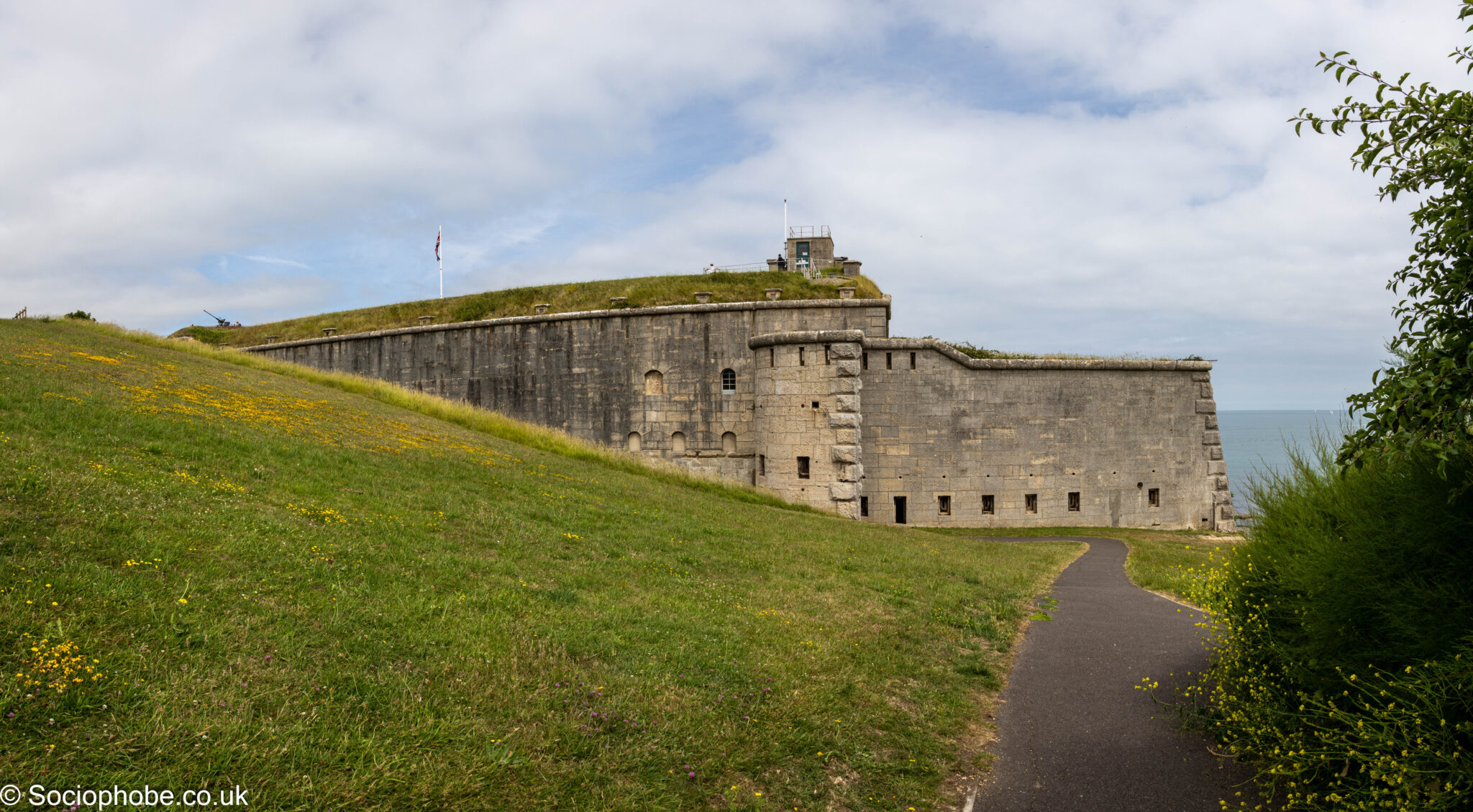
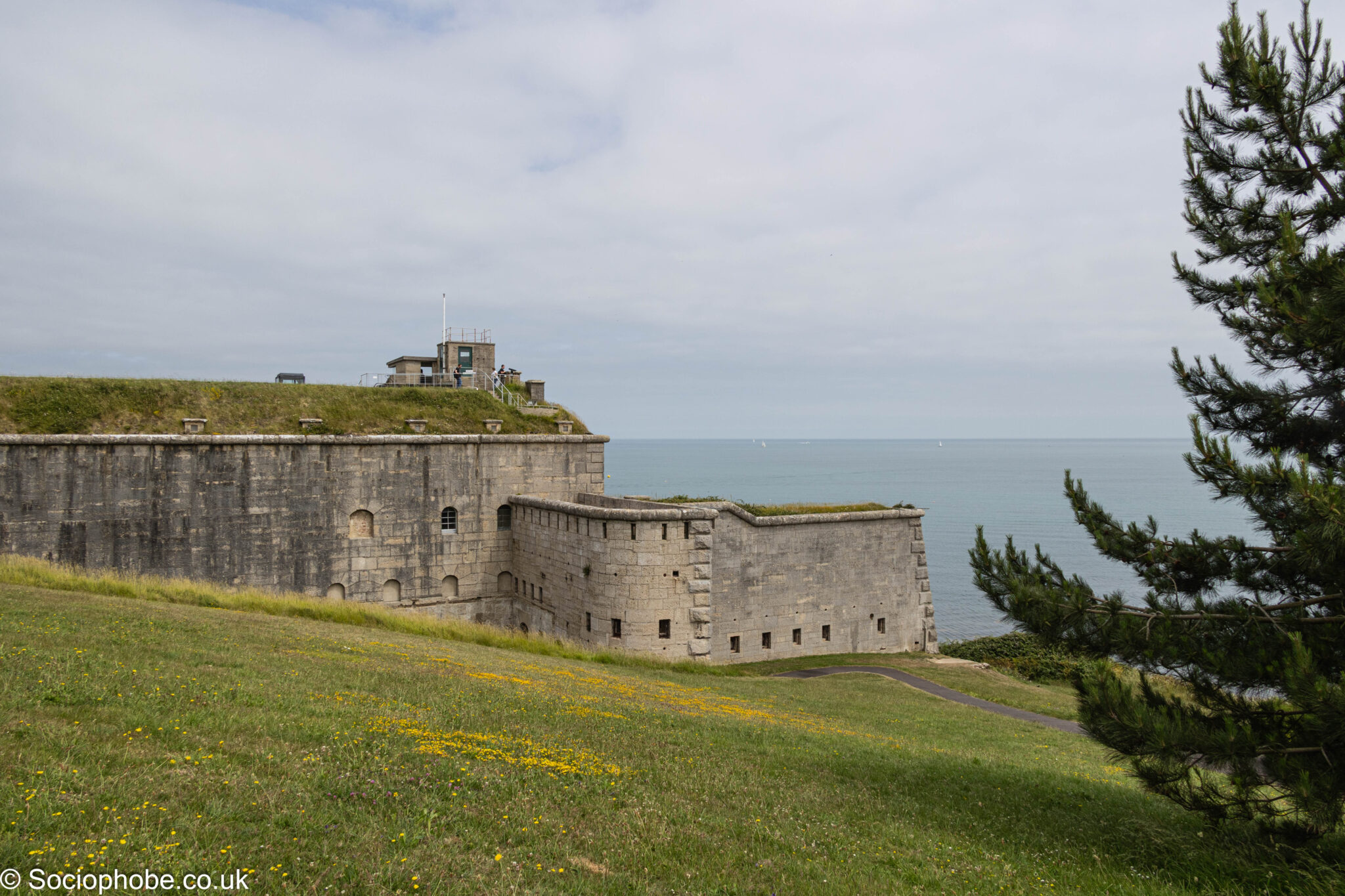
Nothe Fort in Weymouth is another of Palmerston’s coastal defences, built in the 1860s against the French threat and now a museum. The fort is at the tip of the peninsula with extensive views over Portland and Weymouth, built at a time when we had a naval presence in Portland and we worried about protecting our borders.

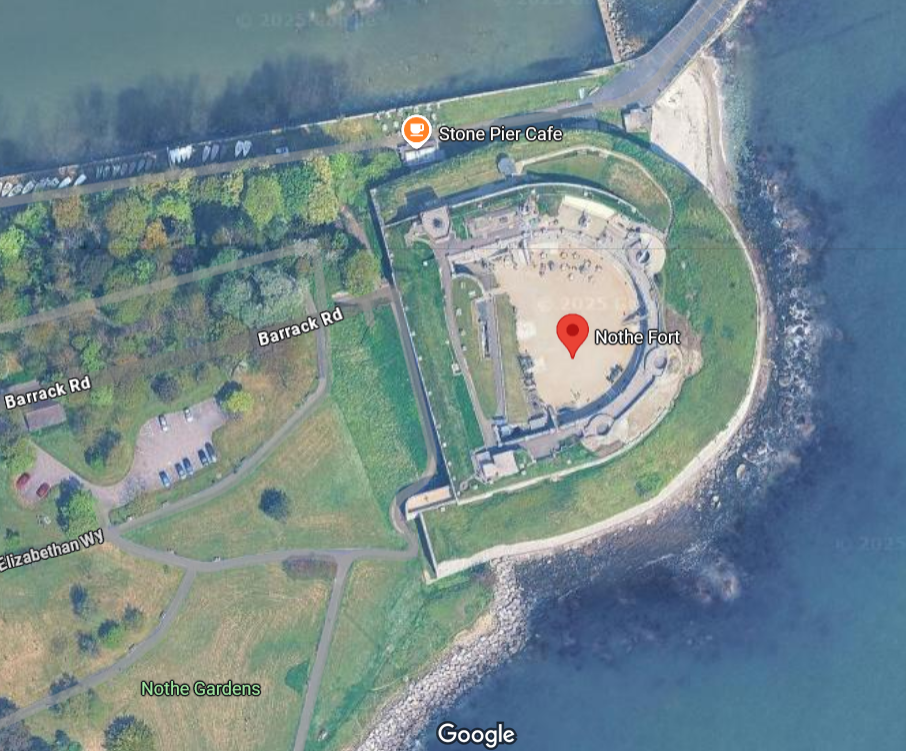
Visiting Nothe Fort
We visited on a Sunday and didn’t arrive until around midday, despite there being several car parks and on street parking we struggled to find a space and ended up parking a little walk away so lesson one is arrive early!
The fort costs £10.50 to visit for adults but this covers any other visits within 365 days. Full details on their website here.
There is a cafe onsite and toilets. I would allow 2-3 hours to visit the fort in full.
My Experience
This is one of Palmerston’s Forts, built as a defence against the perceived French threat in the mid 19th century. The fort is on a hill overlooking Weymouth harbour and Portland Bay. The headland is largely parkland now with lots of walking paths and beaches as well as the beach area and the fort is separated from the by a moat.
After seeing no action against the French, either because the string of forts built put them of or because there was no intention to invade anyway, the fort did see action in WW2. Weaponry had changed so that the original 9.5 inch muzzle loading guns of the fort were replaced with 12.5 inch breech loaders and then 6 inch quick firing guns located on the ramparts. By the Second World War the fort’s role was air defence and a battery of 3.7 inch AA guns were fitted and the fort acted as a supply depot for AA ammunition and stores for the south west. By 1961 the fort had no military role and was abandoned, subject to vandalism and decay until the Borough Council took over in 1981. A Cold War bunker was built in the fort’s depth but and with various grants the fort has now been turned into a tourist attraction.
The entrance process is slow as your visit allows you to return anytime within the year so various details have to be taken and also information for gift aid. The annual pass means that the fort is very popular with families as they can revisit for events at no cost.
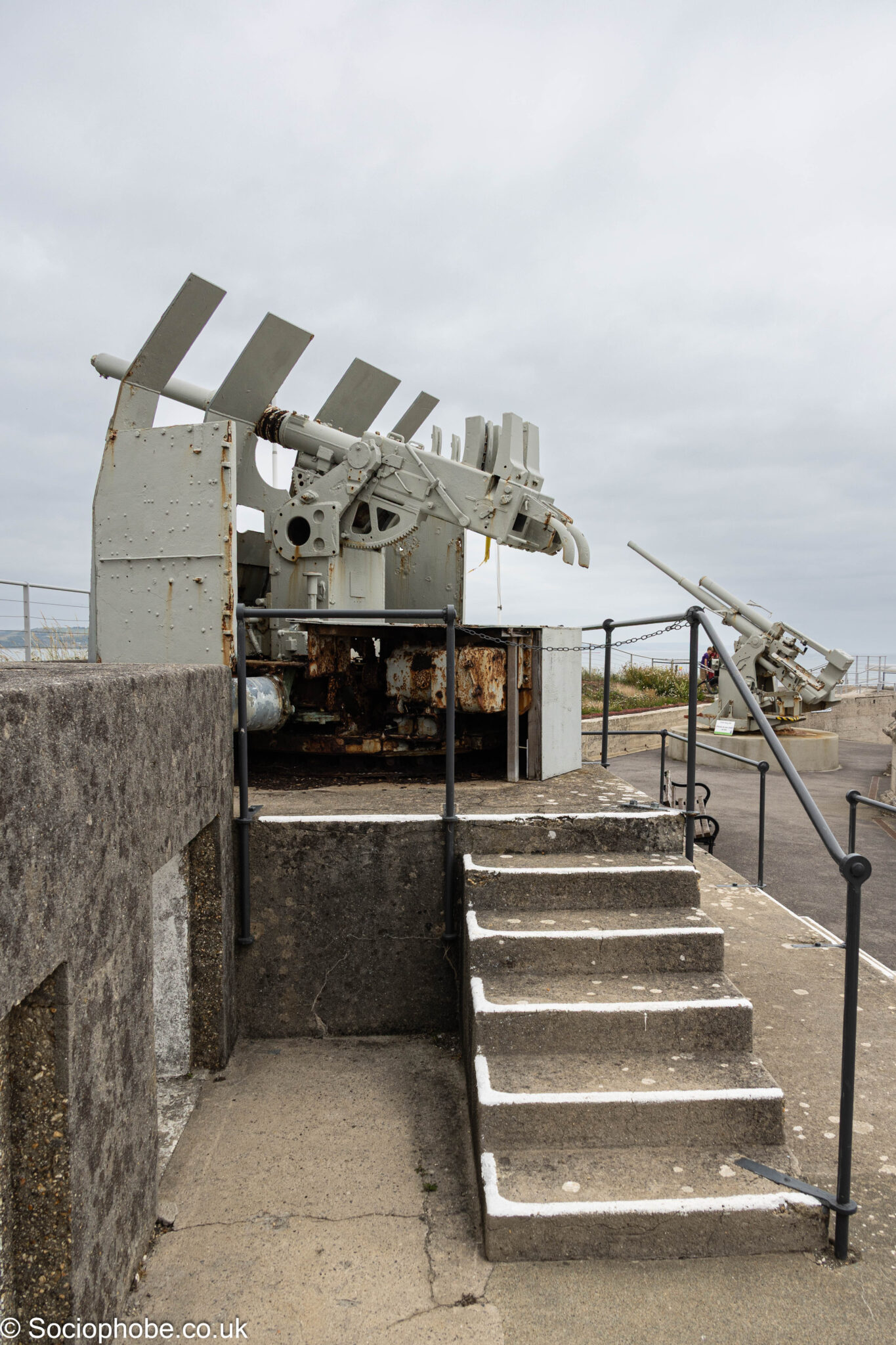
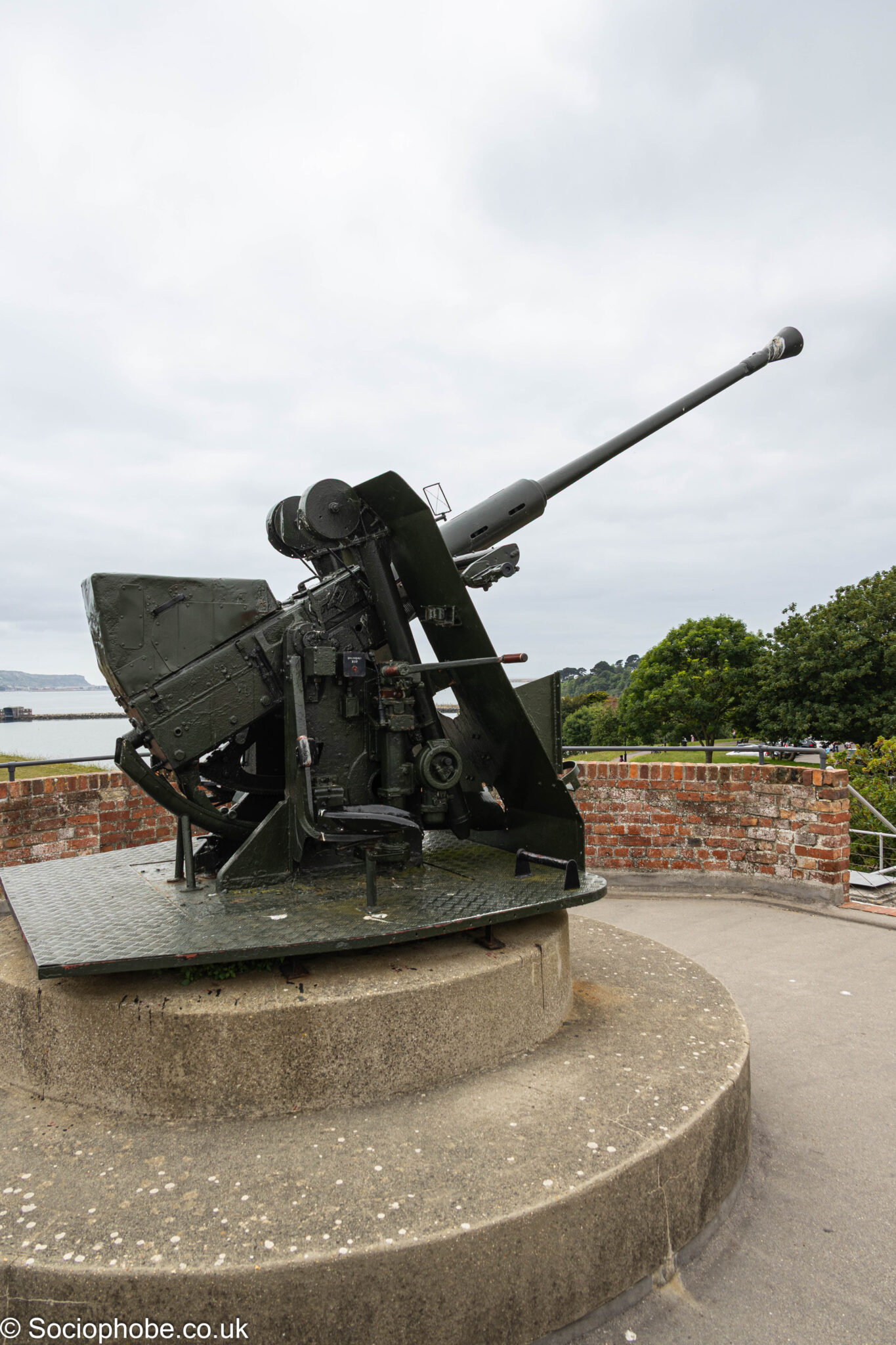
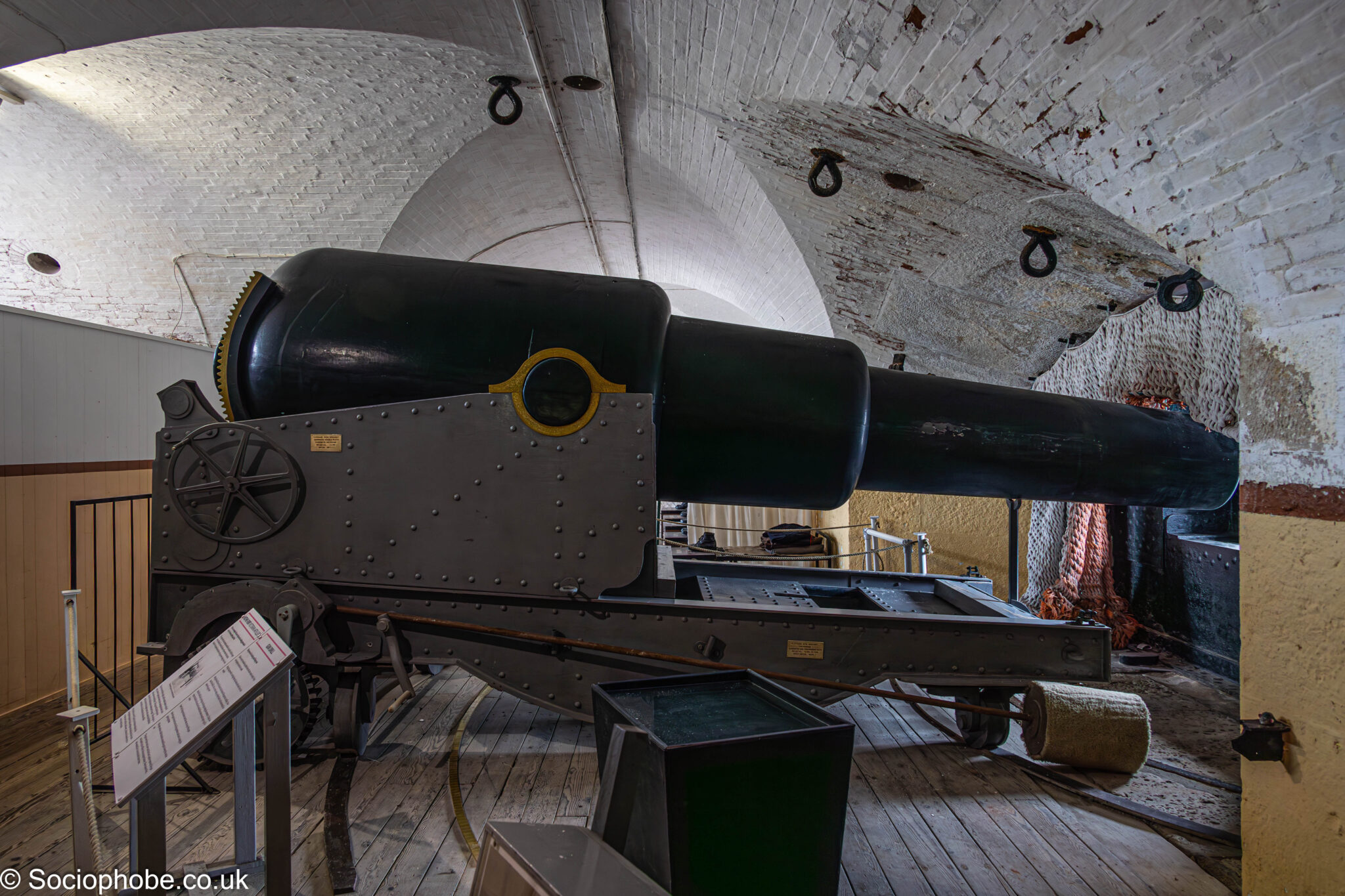
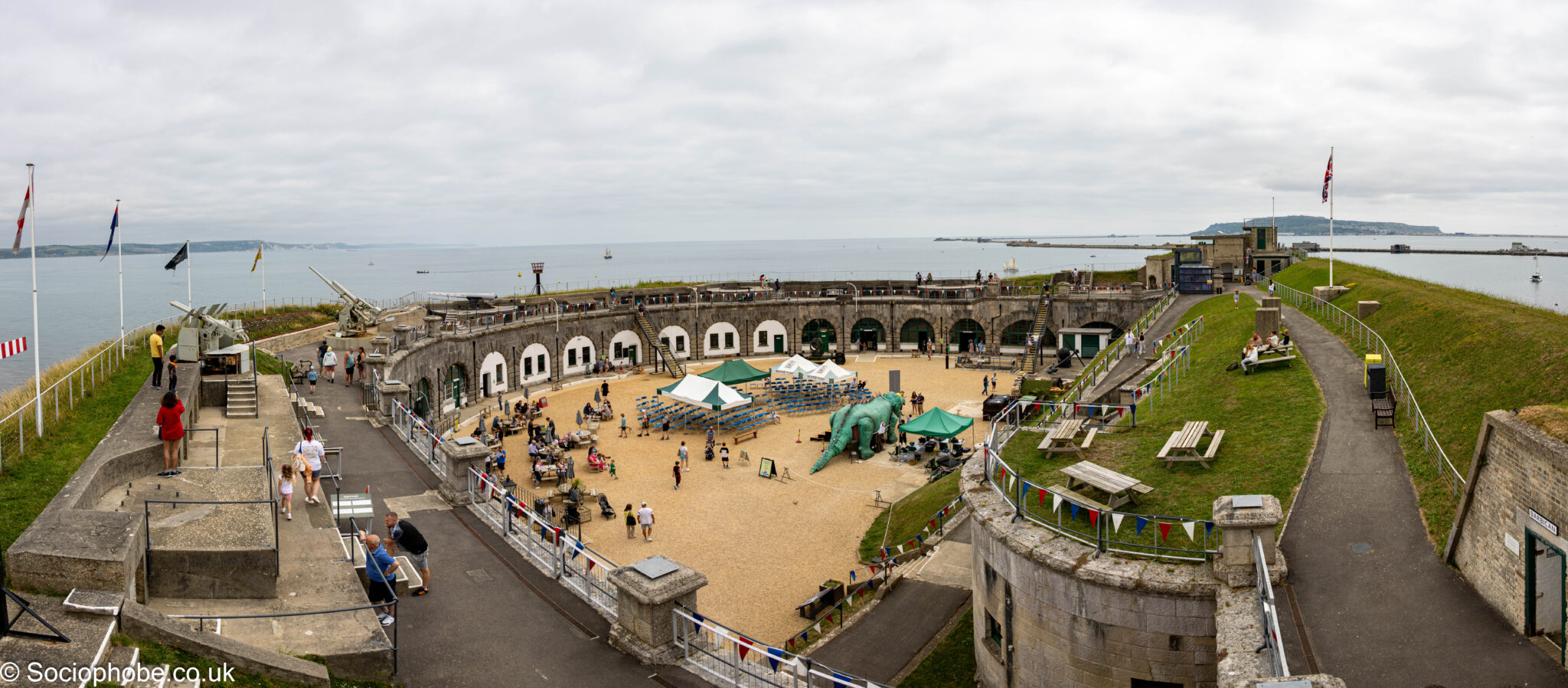
Our first stop was the cafe though and we had some excellent Dorset apple cake with clotted cream and a coffee. We then walked along the ramparts to look at the Bofors gun, 3.7″ and a Hotchkiss gun as well as the observation deck before going in to the lower levels. There is a useful route through the building so you can see the various sections and there are excellent write ups with plenty of information. The guns are just massive and the shells too and the process for firing them explained the slow rate of fire.
The section on military life in the fort was interesting and the recreated barracks area showing the total lack of space and privacy the Victorian soldiers had, along with wages on a par with an unskilled farm labourer and abysmal food! There was also a large section on the Fort’s role in the preparations for D-day and the impact that had on local lives. The museum as a whole was fabulous and we probably spent a couple of hours exploring the fort before walking into the gardens outside to look at the exterior. Well worth the £10 entry fee.
Nothe Fort Photo Gallery

History
Work began on Nothe Fort in 1860 by a civil engineering contractor, with the first stage of construction involving levelling the site and building a sea wall. After the contractor suffered financial problems, the construction work was taken over by 26 Company Royal Engineers in 1862. Although the upper earthen parapet was complete by 1869, the fort was fully commissioned in 1872 at a total cost of £117,049. It was constructed on three levels; the magazine stored the ammunition, the ground level casemates were designed to hold heavy muzzle-loaded cannons and accommodation for the soldiers manning them, and the ramparts, featuring a raised platform that could be used to fire weapons such as muskets and light muzzle-loaded cannons during attacks.
The first soldiers to be stationed at the fort were No. 2 Battery Royal Artillery (Tatton-Browns). The unit were given responsibility to install the original cannons, which were two 64 pounders, four 9-inch rifled muzzle loaders and six 10-inch cannons. During the 1890s, seven of the guns were replaced by 12.5-inch RML guns. With the introduction of breech-loading guns in the early 20th century, the RML guns were removed and replaced by three 6-inch Mark VII breechloading naval guns on the ramparts. In order to carry the 100-pound shells from the magazines, a series of hoists were installed.
In 1938 alterations were completed to allow the fort to be used as a central anti-aircraft ammunition depot for the south west, which included installing an electrically-operated hoist and the construction of a loading platform. Nothe Fort did not see combat until World War II. In July 1940, two ships entered the area and failed to identify themselves, prompting the fort to fire its guns as a warning. The two ships immediately switched on their lights, revealing themselves to be refugees from the Channel Islands. During the war, the fort was equipped with a battery of four Vickers QF 3.7-inch AA guns. The guns are sited on a purpose-built platform within the north-west corner of the fort, which was later replaced by a Bofors 40 mm gun.
It was abandoned in 1956 as it was no longer required as a coastal defence, then used by the Royal Navy to house stores and degaussing equipment. By 1961 the Navy had no further use for the fort and it was sold to Weymouth and Melcombe Regis Borough Council. Under the ownership of the council the fort remained unoccupied and quickly became a victim of vandalism, before starting to fall into a state of dereliction. During this time numerous ideas were suggested, including turning the fort into a luxury hotel complex. Work began to turn the fort into a hotel in 1971 but was soon abandoned shortly after.
In 1980, the Weymouth Civic Society took over responsibility for the fort through a lease with the borough council, allowing restoration work to begin, with assistance from the Manpower Services Scheme. Later in the 1980s, as a result of the Cold War period, part of the fort’s magazine level was used as a nuclear shelter for civil administration, which included the creation of command and accommodation areas, and the installation of heavy blast doors.
Nothe Fort has been gradually transformed into a museum and tourist attraction, where it remains open to the public today. Following the early restoration work, the fort was given a £1.8m lottery grant and a further £600,000 investment due to the involvement of local authorities and English Heritage. The fort is run by a team of five paid staff members and a dedicated team of 70 volunteers, while the Friends of Nothe Fort group has also been established to promote interest in the fort and to encourage its growth as a museum and attraction.
References
The fort website here has comprehensive information on opening times, ticket costs and events at the site.
The Wiki page here has lots of information and the history above is copied from that page.
Subterranea Brittanica has a nice write up of the fort.
This BBC page has a nice summary of the recent history of Nothe Fort.