
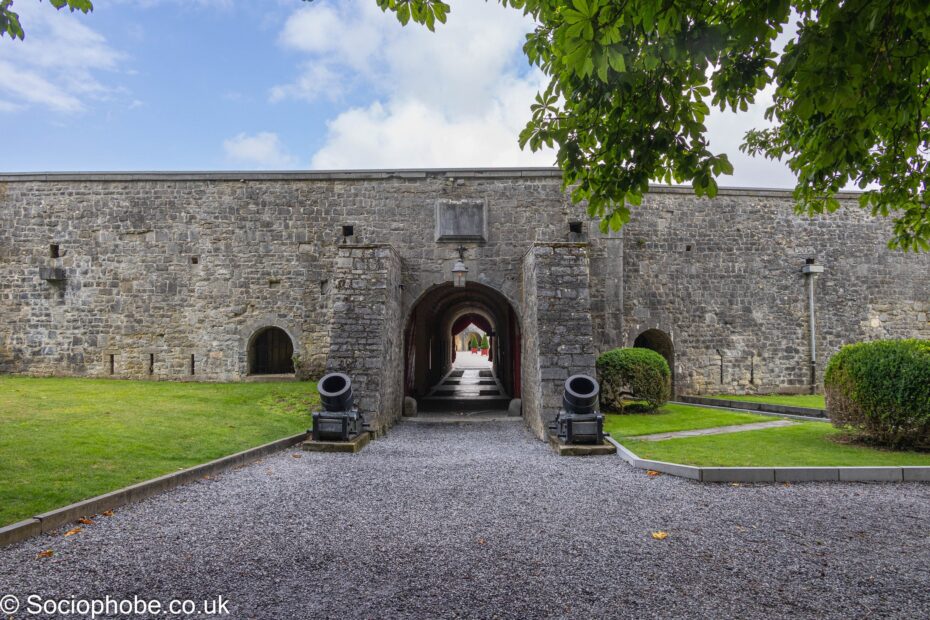
The citadel at Dinant is the culmination of a thousand years of fortification and dominates the river Meuse in this historic Belgian town. Built by the Dutch in the 1820s it was demilitarised and sold off by 1878.
Visiting Dinant Citadel
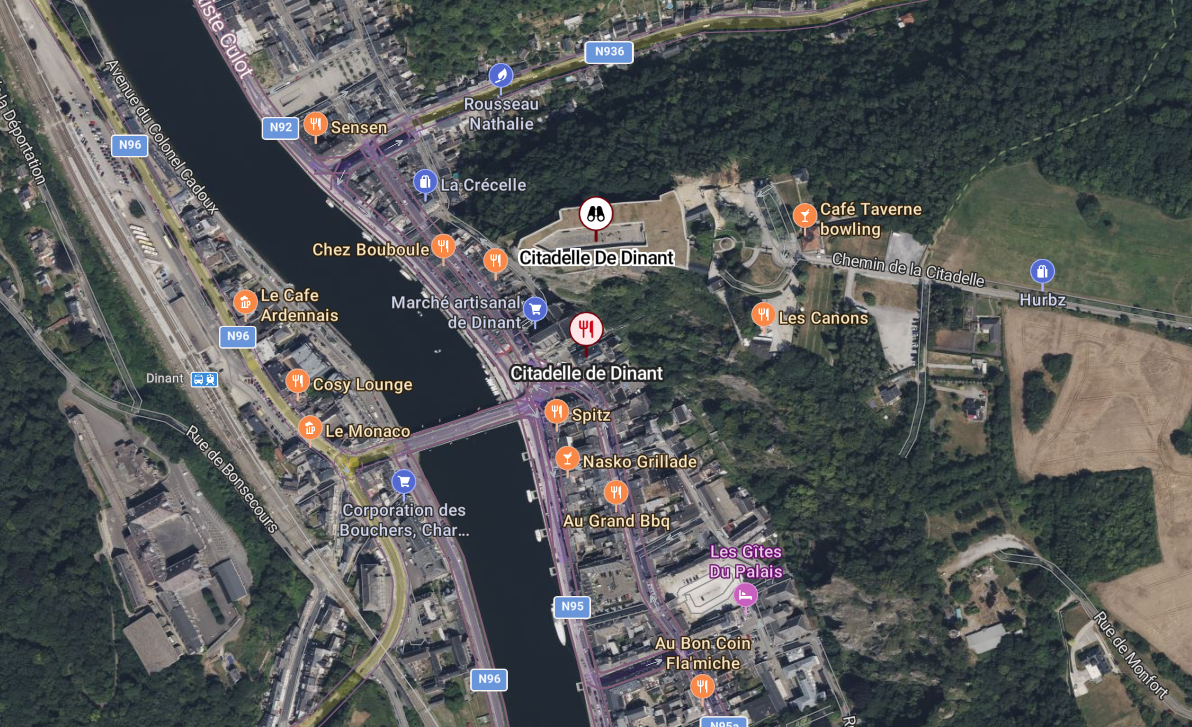
There is a large free car park behind the castle but parking there would mean missing out on the town. Within the town there are plenty of small car parks as well as on street parking and this gives you a chance to appreciate both the architecture and the position of the citadel. You can even climb the 408 steps rather than use the cable car if you like!
Entrance was €22 as we were doing the cruise too. If you are just visiting the citadel then the cost is €14 but this does include the cable car as well. I’d allow 90 minutes to 2 hours to properly explore the citadel and there are plenty of activities for children so they are both interested and educated. The Citadel website gives information on seasonal opening times and cable car access.
My Experience
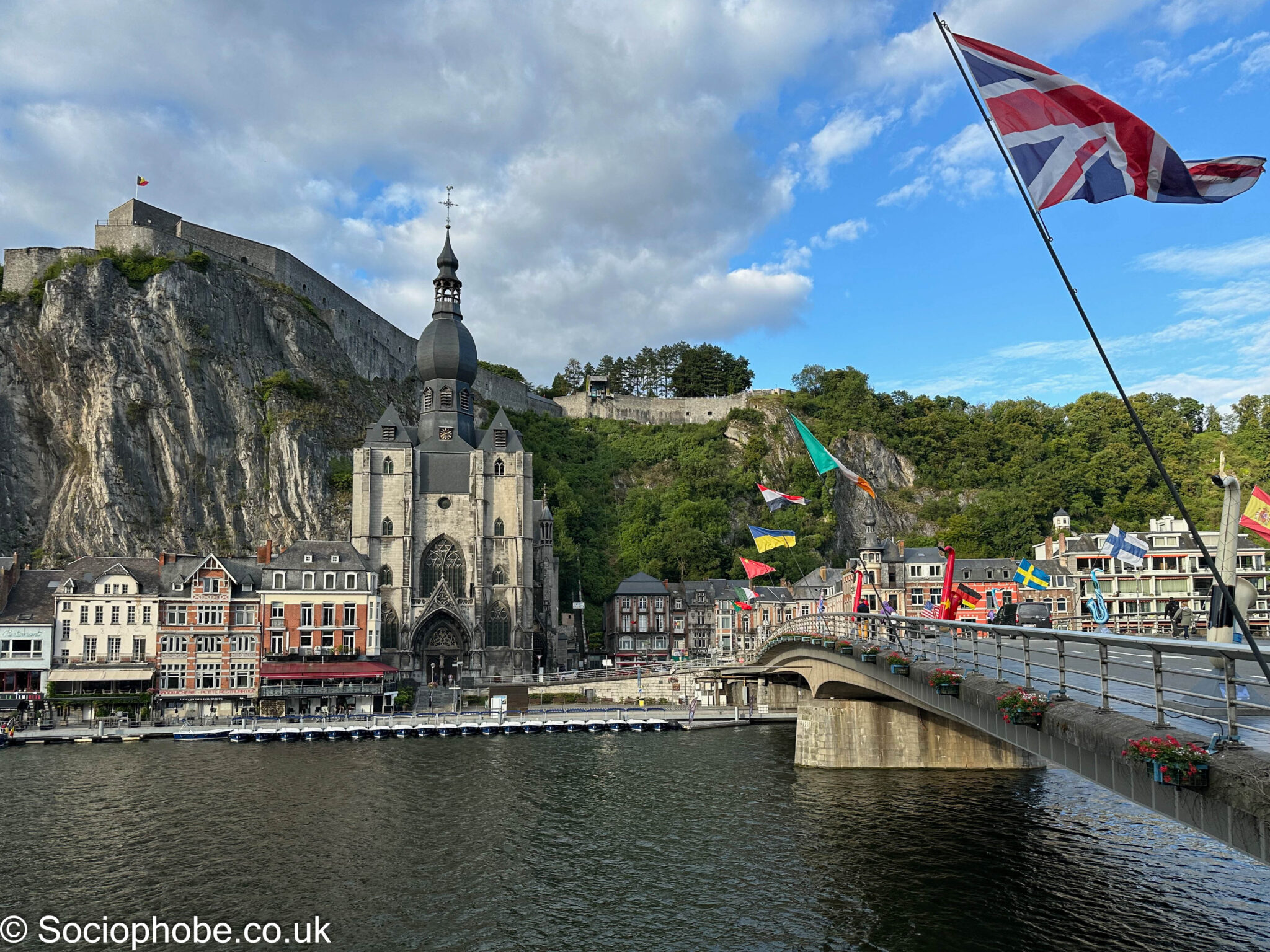
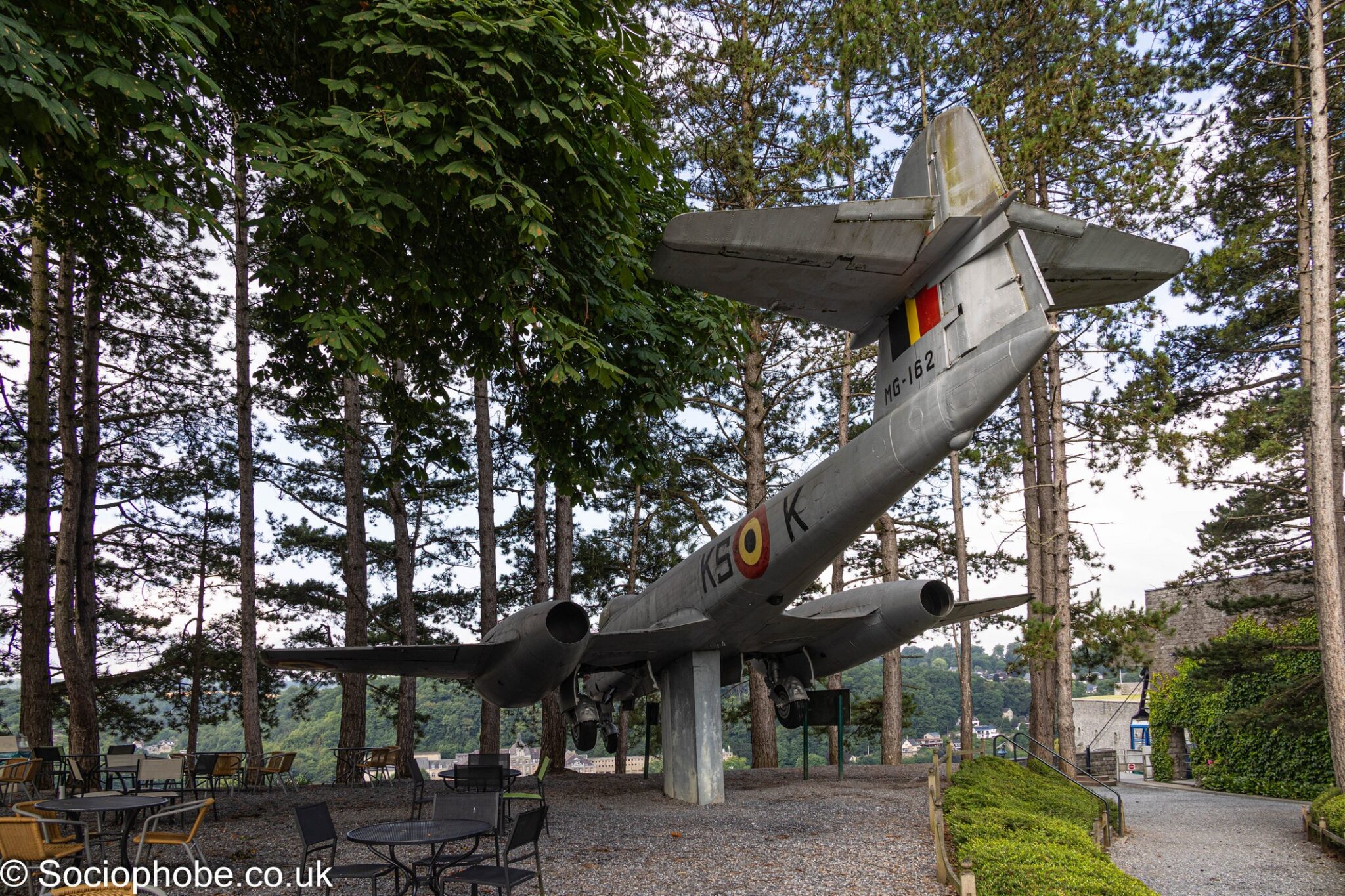
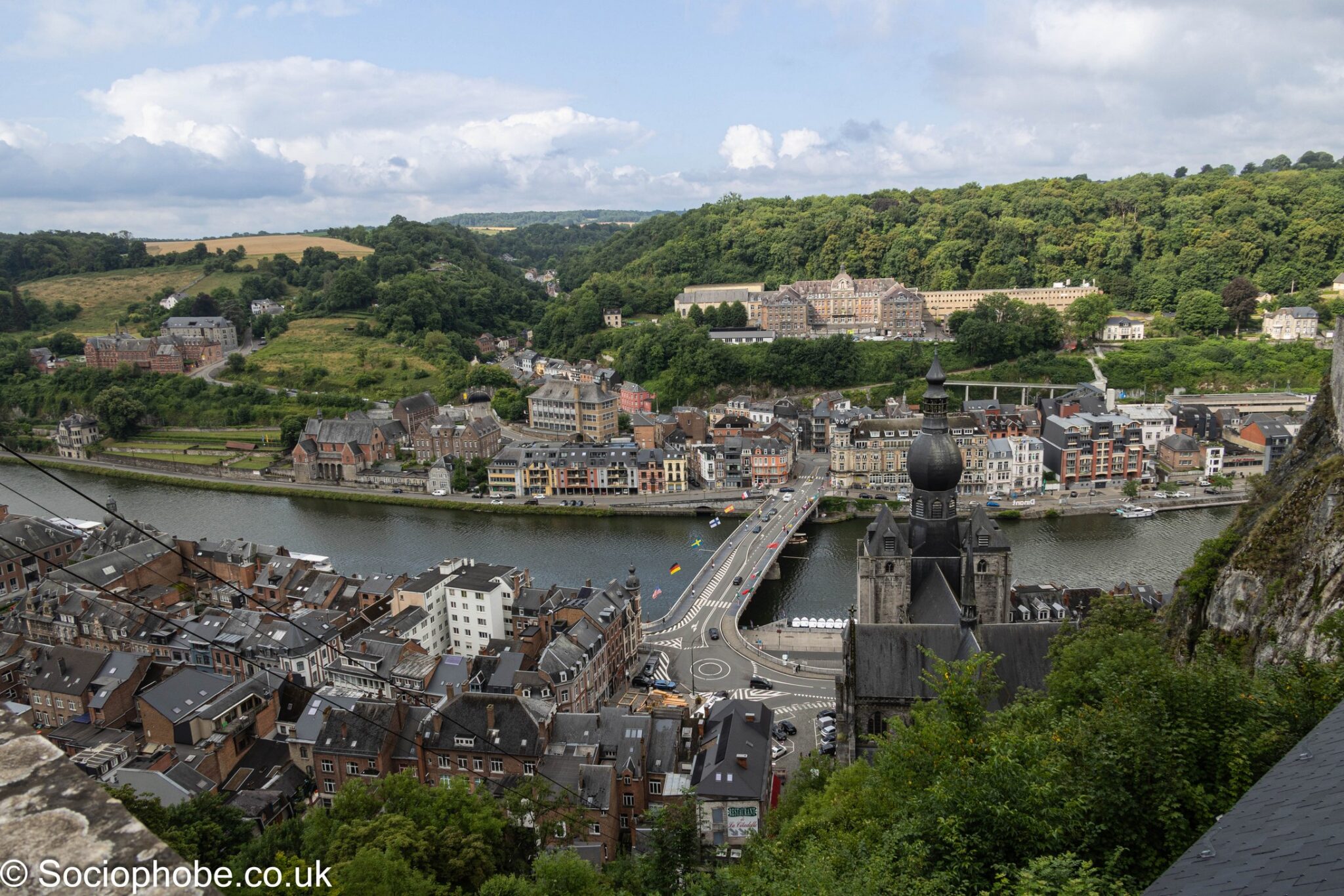
We crossed the Charles de Gaulle bridge from our hotel and the cable car to the citadel was straight ahead of us, next to the Notre Dam church. I think we paid €23 each and that included a river cruise so it was a good value introduction to the town. The cable car only took a few minutes and we reached the top, saw the Gloster Meteor incongruously parked in the trees and then looked at the views across the river. It was then a short walk down a ramp to the citadel entrance where the exhibition began.
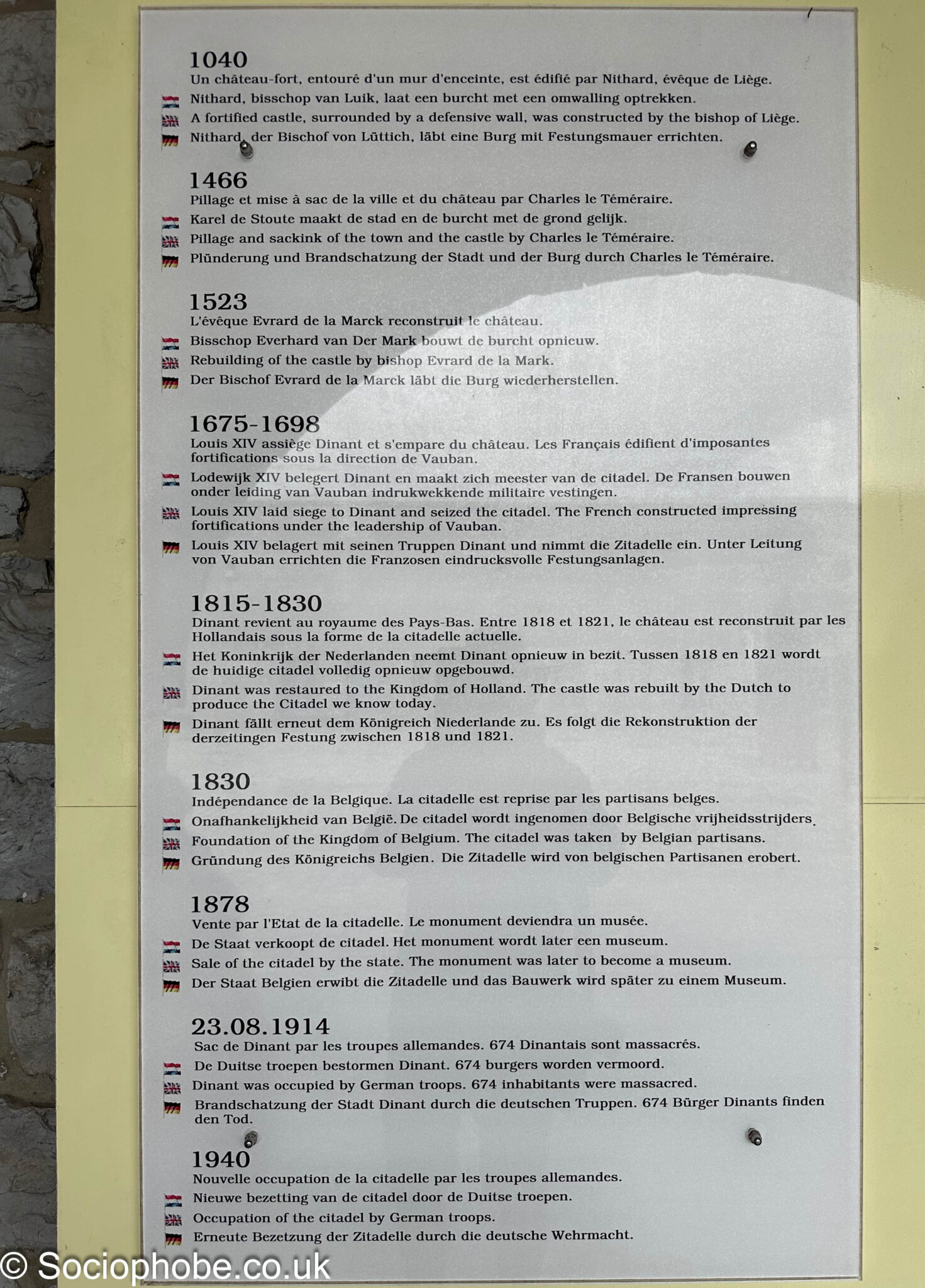
We learned about the castle being rebuilt in the 16th century after the sack of the town by Charles the Bold of Burgundy and then the fortifications being rebuilt by Vauban after the French capture of the citadel in the 17th century. Following the French defeat at Waterloo the town was handed to the Dutch Republic and they rebuilt and modernised the fort in its current form before it became part of Belgium in 1830 and was then sold in 1878 and became a tourist attraction.
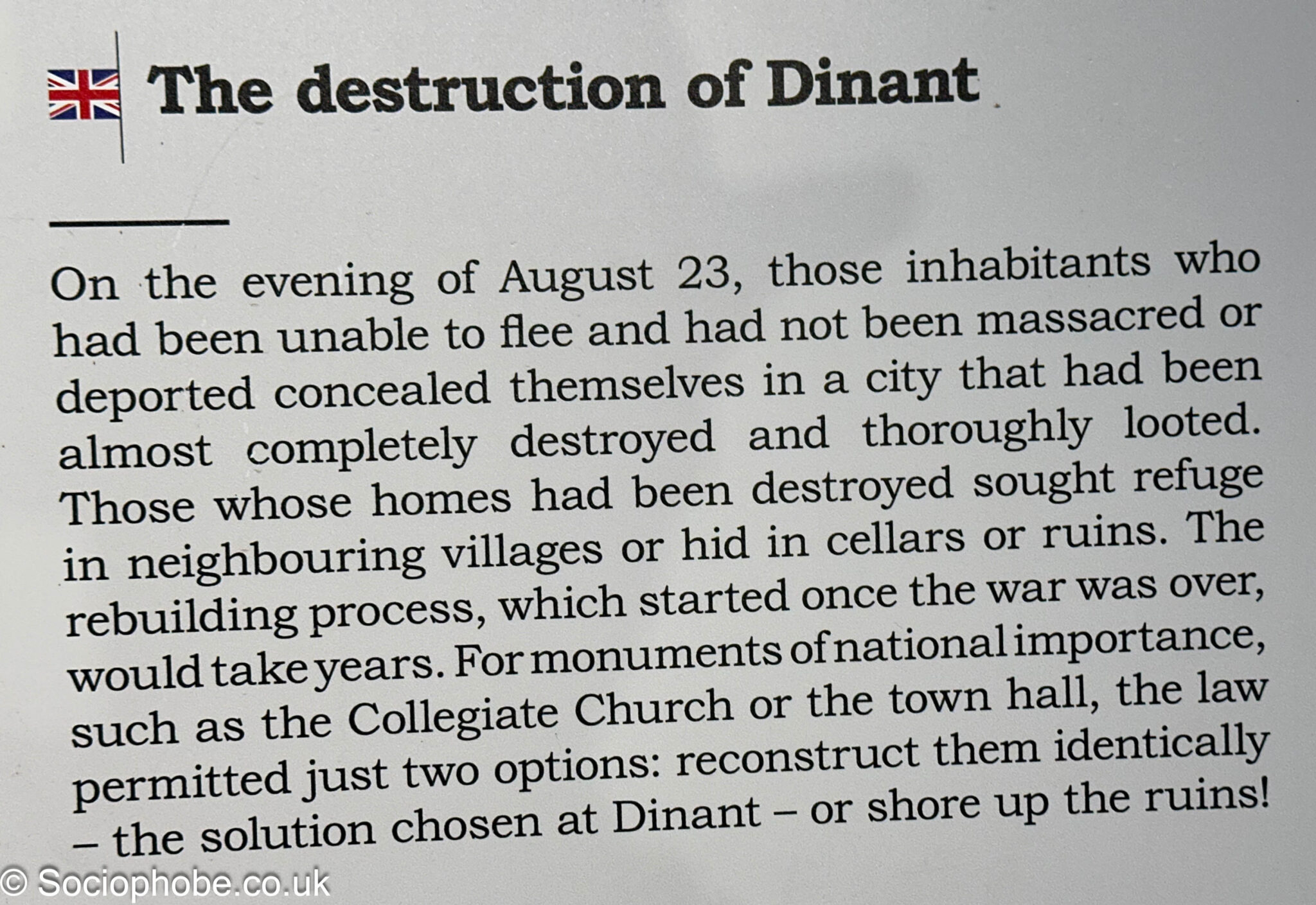
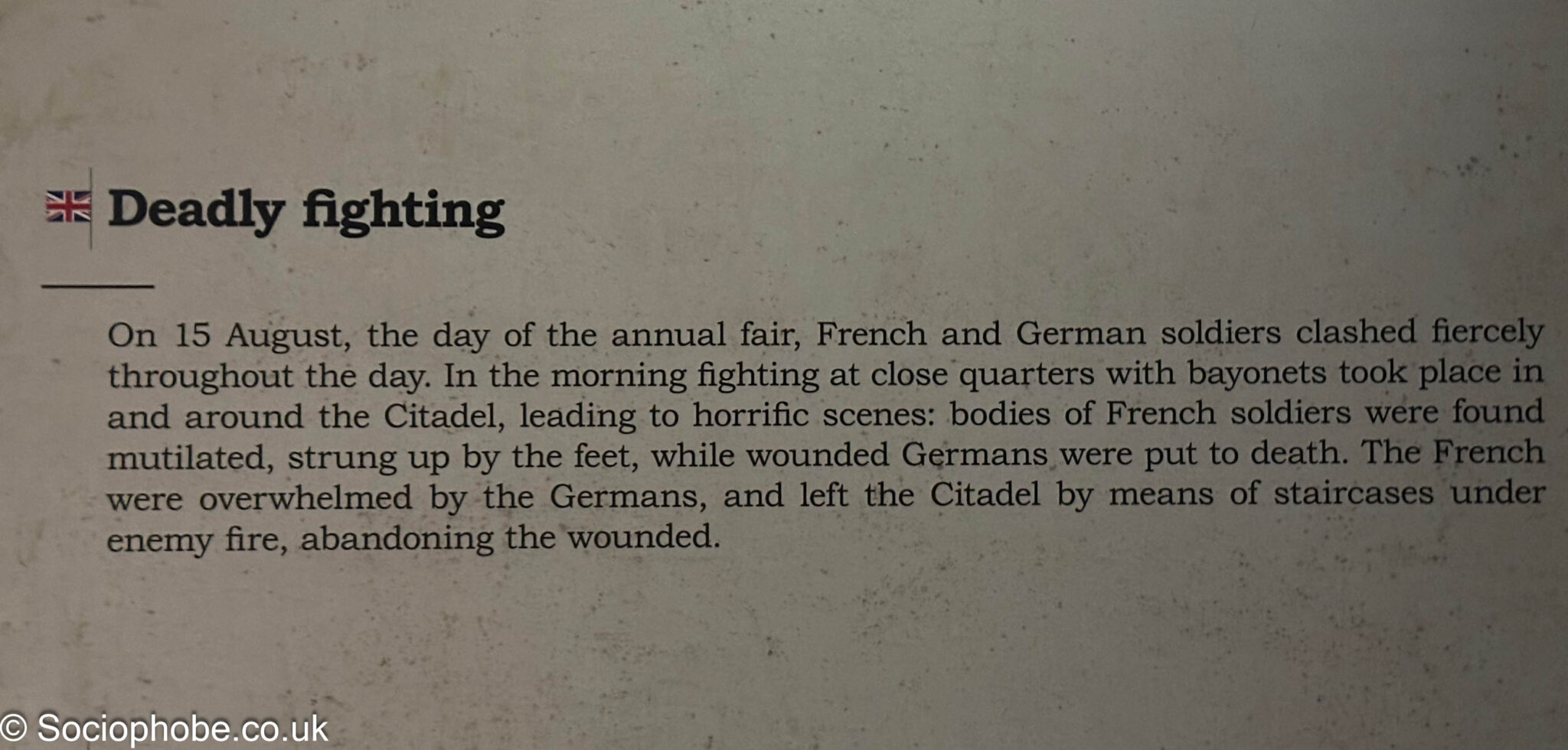
in 1914 the town was in the path of the German invasion of Belgium and nearly 700 civilians were massacred by the Germans amid widespread looting, destruction and murder. The citadel was again occupied by German troops in their 1940 invasion. There was also a section to hear the actual accounts of the 1914 massacre by those involved and the German commander claimed they were fired upon by “shrews” and his troops responded accordingly. I’m not sure the 3 week old baby killed in this action could be considered a shrew and the commander was never charged with war crimes.
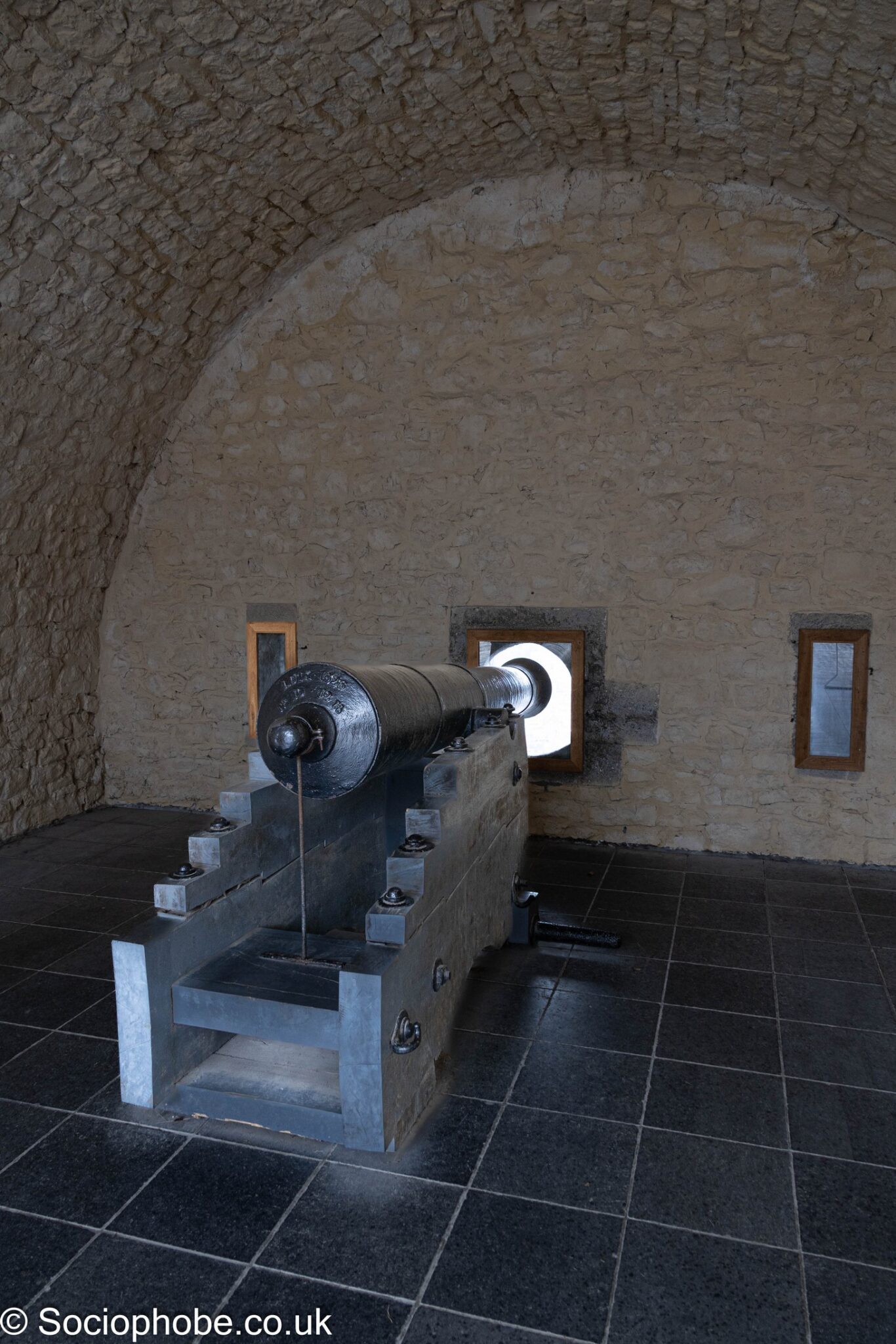
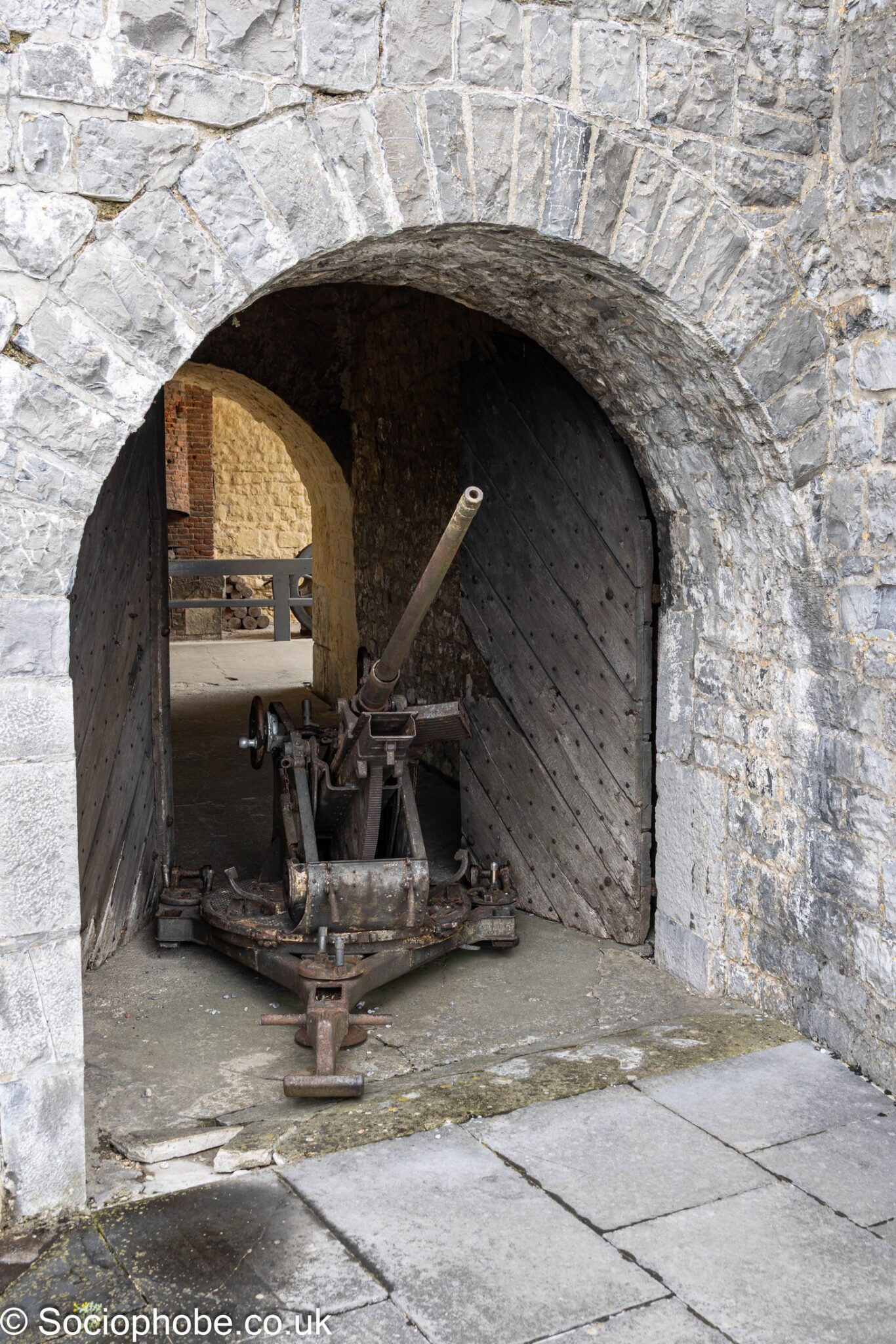
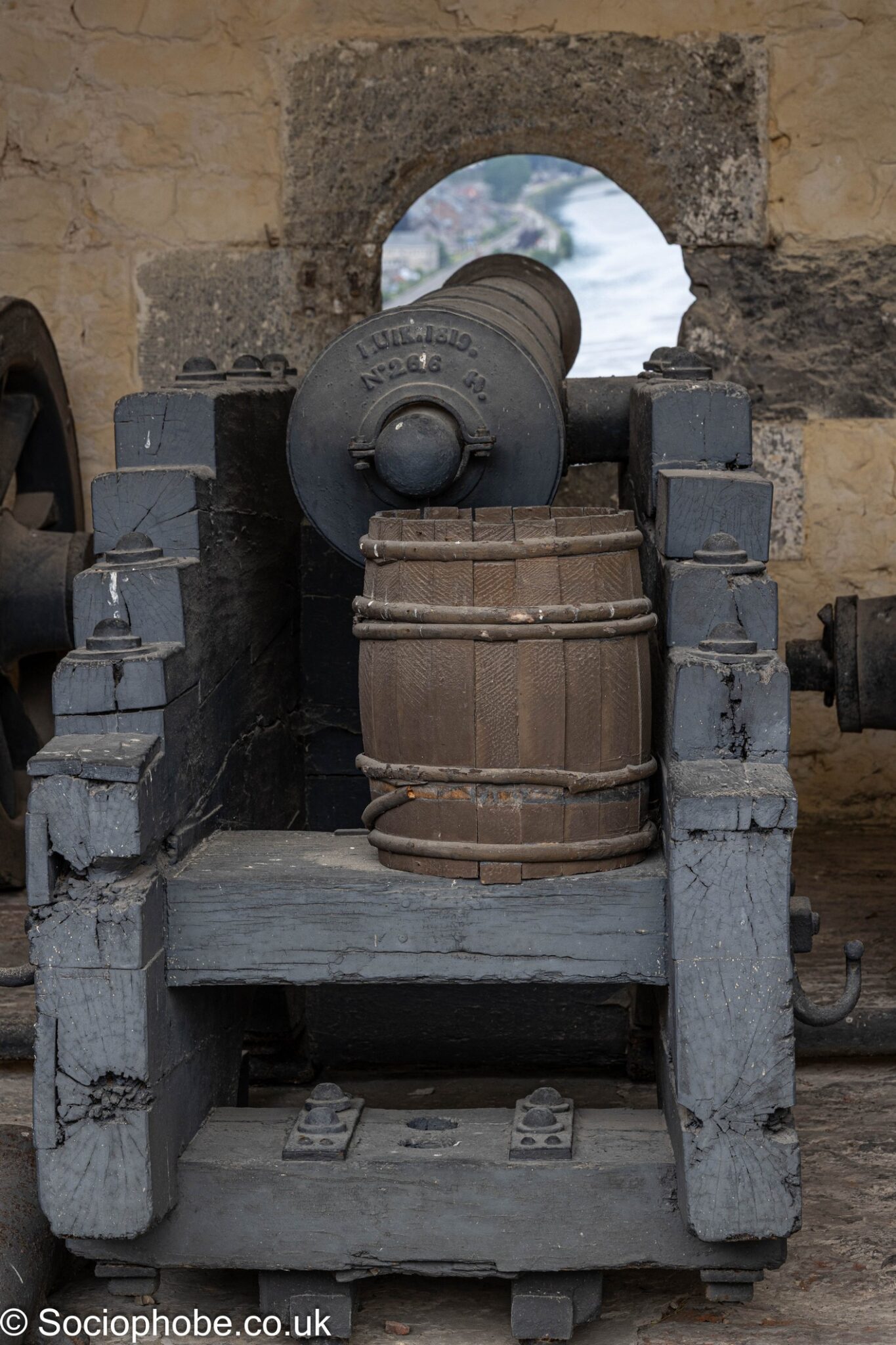
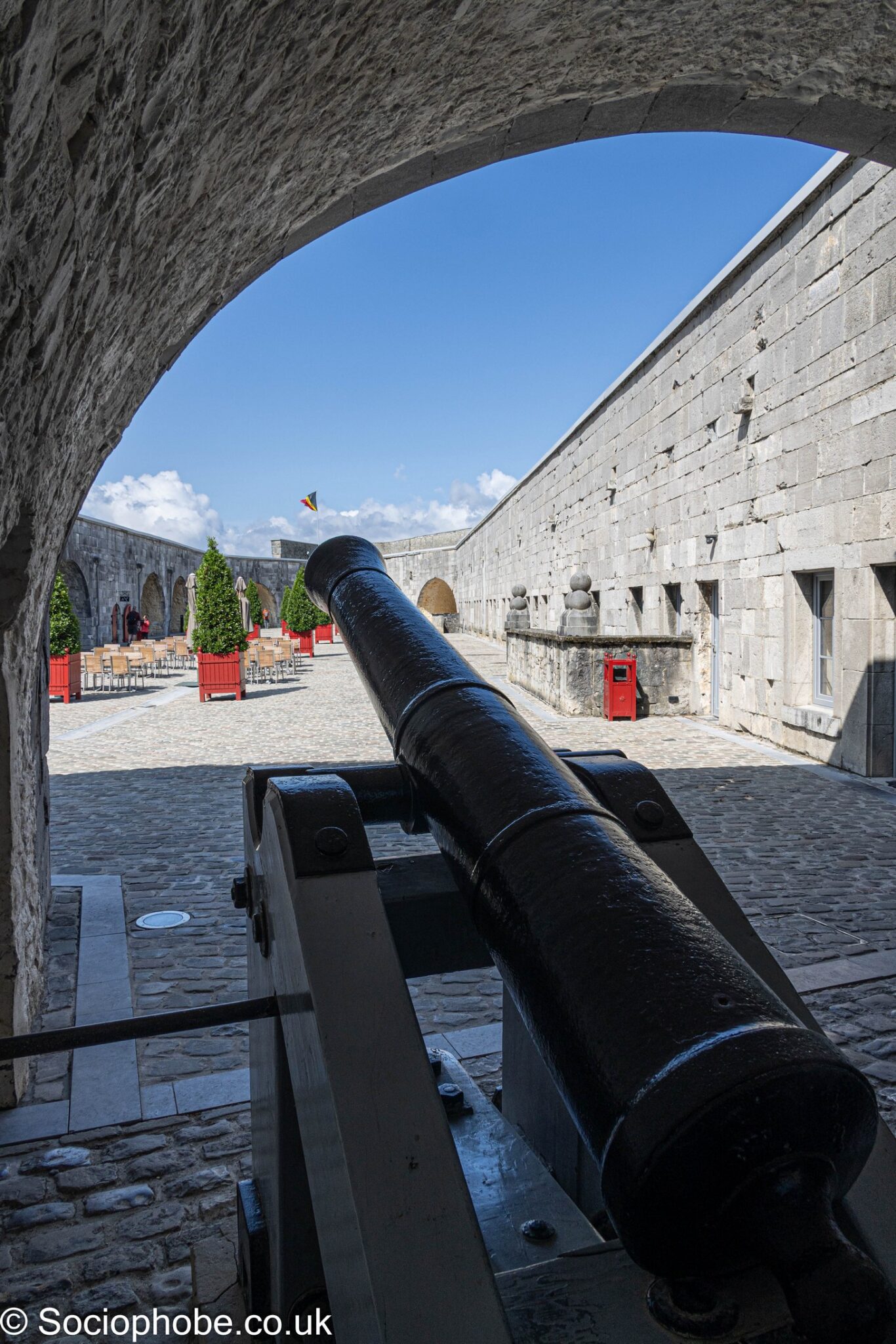
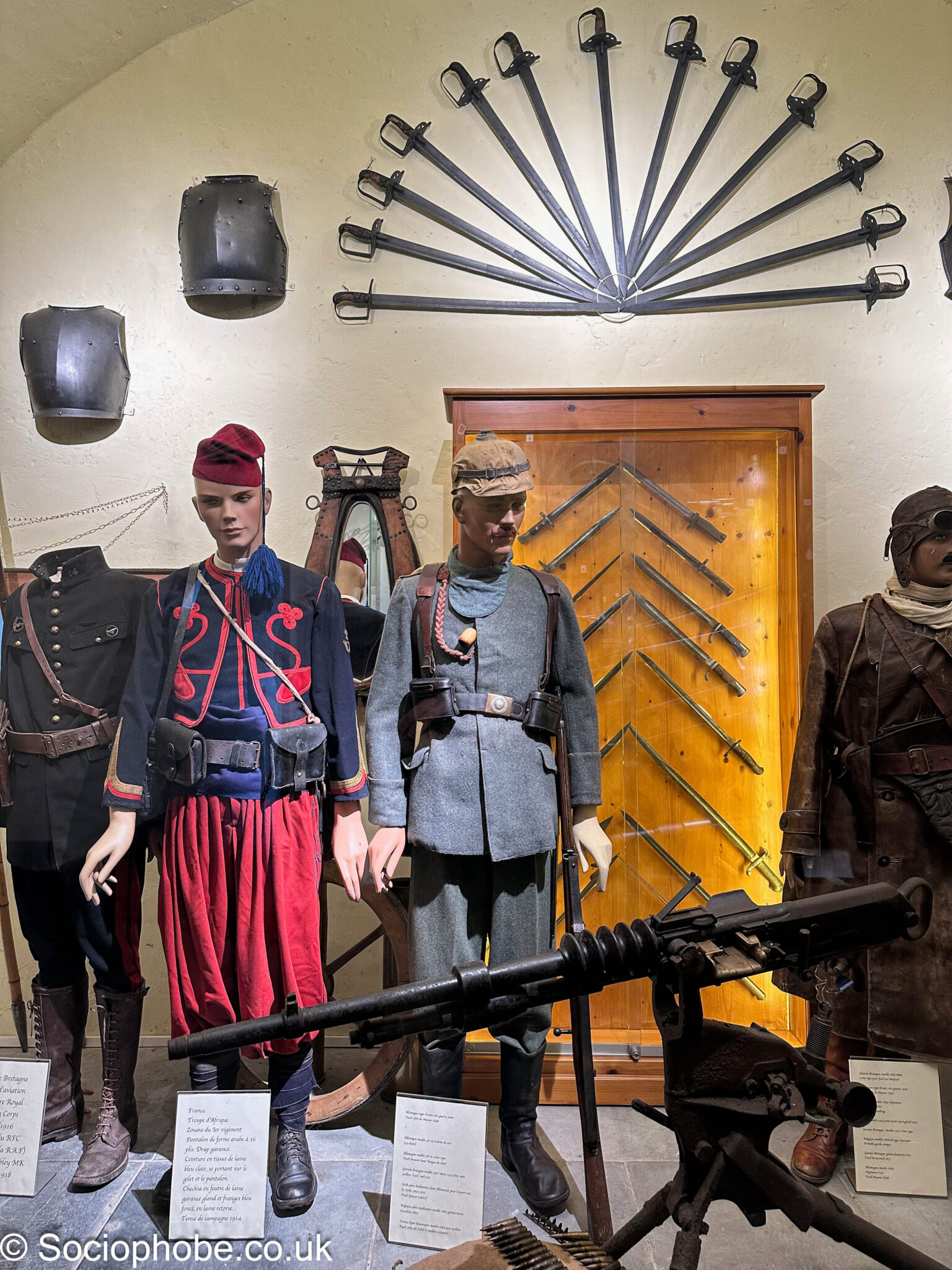
The route then led us to the gun batteries of the citadel and you could use media screens to give you information on each section of the self guided tour. There were a variety of cannons on display and also hand weapons and uniform of the 19th and 20th centuries. There was also an exterior terrace which gave you more views up and down the river valley.
One very strange part was a damaged casement that had been created at a 30 degree angle, a challenge to walk around and there was also a recreated trench system to see. The final part was the cells from the time the Citadel served as a prison for disobedient troops in the 1920s and 30s. We then took the cable car down the hill and walked along the riverside for our river cruise.
Dinant Citadel Photo Gallery








History
Around 1040, the prince-bishop of Liege built the first castle here to defend Dinant. At that time, the town was located at the border with the rivaling county of Namur. Not by coincidence, around the same time, the burgh of Crèvecour was built by the count of Namur on the opposite side of the Meuse river (in the town of Bouvignes-sur-Meuse). During a long period of time there were regularly skirmishes between both towns.
In 1466, the town and the castle of Dinant were destroyed by the troops of Charles the Bold. The castle was rebuilt in the beginning of the 16th century by Everard of the Marck, who was the prince-bishop of Liege at that time. Afterwards, the castle was adapted several times. In 1675, the army of Louis XIV conquered Diinant. The French occupied the town until 1698. During those years the castle was renovated according to plans of the famous Vauban. When the French left in 1698 however, they dismantled the changes they did to the fortifications.
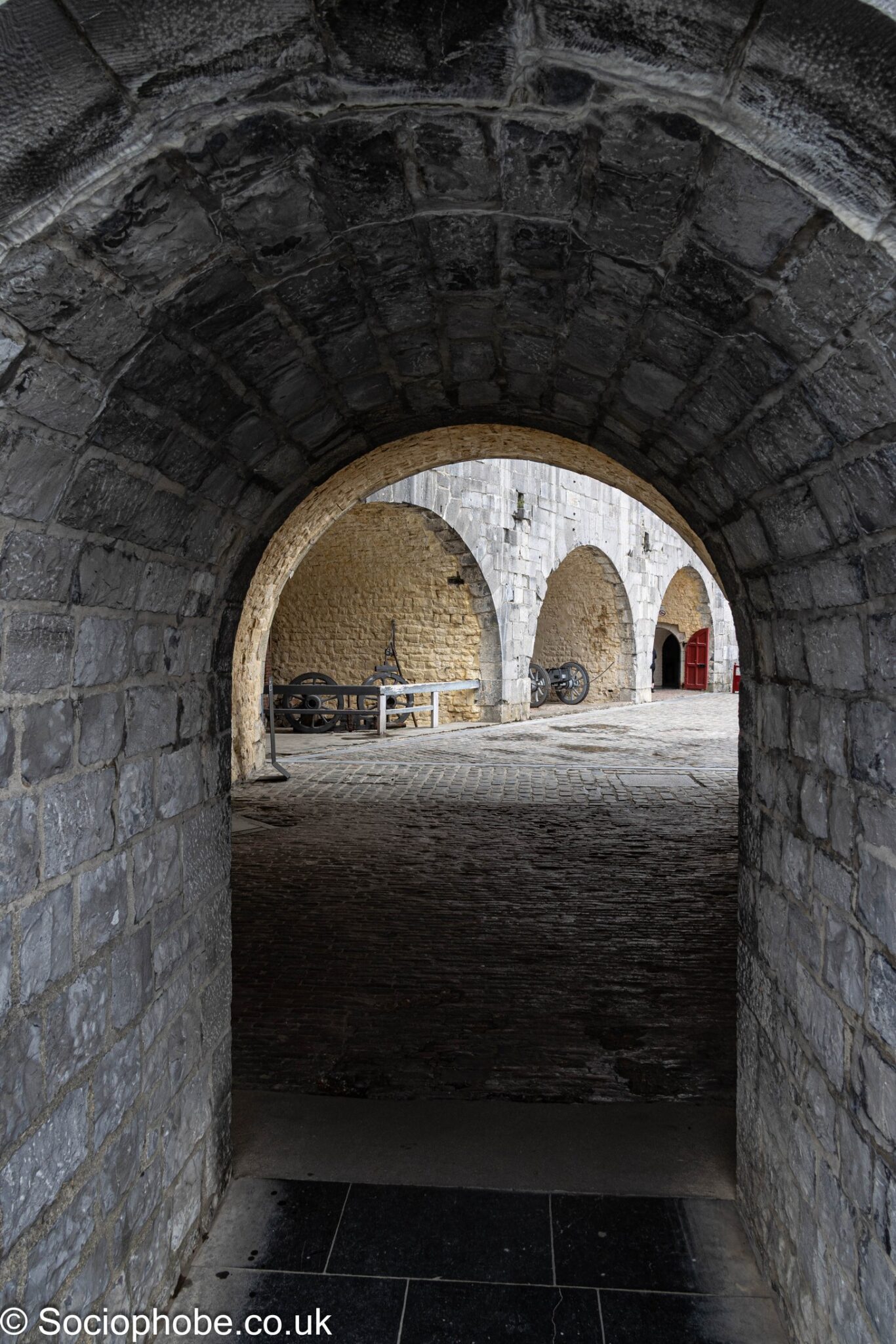
Between 1815 and 1830, the area of what is now Belgium was under rule of the Dutch. Immediately, the Dutch started fortifying their new southern borders and the construction of the citadel of Dinant was part of those efforts. The mighty fortress was built between 1818 and 1821. Its construction follows the natural form of the rock formation, this is why the citadel has the shape of an horseshoe. It consists of several covered galleries with firing positions from which canons could cover the Meuse valley. In one of those galleries there were canons installed that were aimed fixed at the bridge so that the bridge could be shot at rapidly if necessary. The fortress was however vulnerable when attacked from the plateau. To protect the fort from that side, a smaller frontal fort was constructed that was separated from the main fortress by a dry moat of about 5 meters deep. The citadel could however become a death trap for its defenders when attacked from that side because the only escape route in the direction of the town were steep stairs that were directly in the line of fire of the enemy.
When Belgium became independent, the citadel was taken over by the Belgian army but it did not serve long anymore as an army base. Because the concept of the fort was outdated, the citadel was sold to private owners in 1878. They made the fortress accessible for the public. During both World Wars, German troops were stationed in the citadel.
References
The history above is copied from the xplorengo site, where they have a good summary of the citadel.
The Citadel website is here, with full visitor information
There is some nice footage of the Citadel taken from a drone, on the tracesofwar site.
Wiki has an excellent article on the 1914 battle for the city here.
The liberationroute website has a nice article on Charles de Gaulle’s memorial by the bridge