

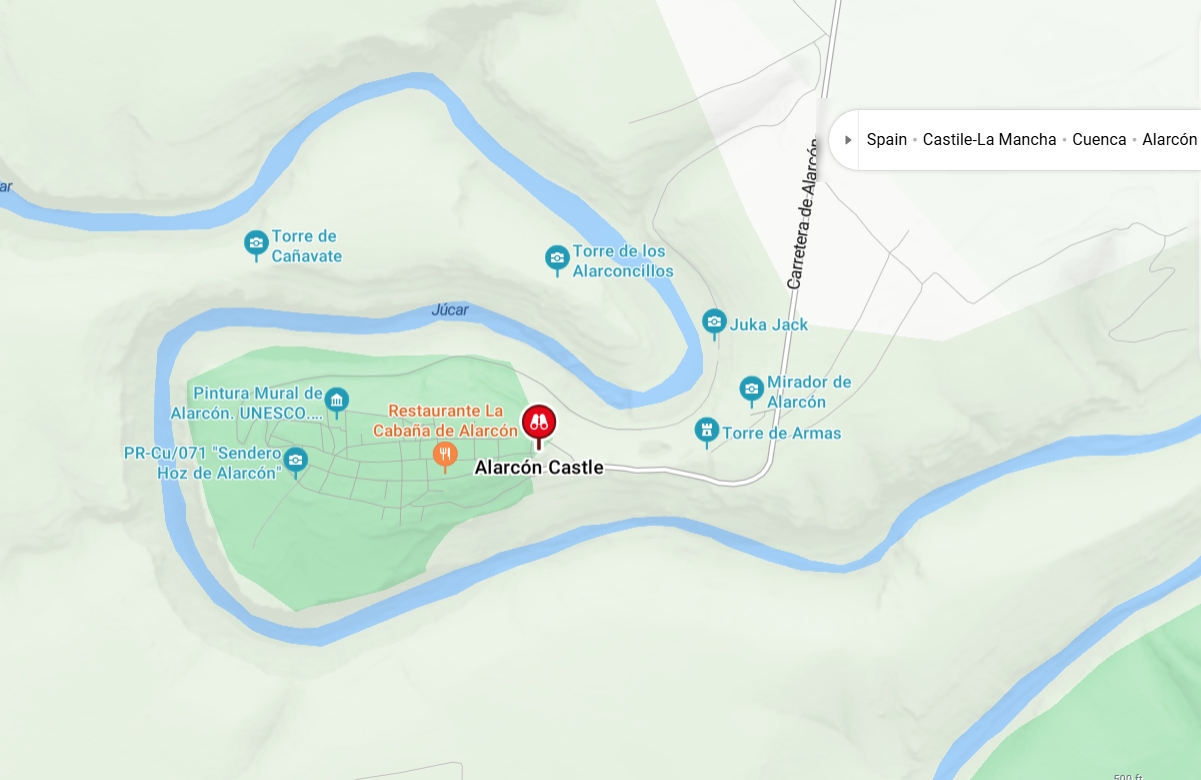
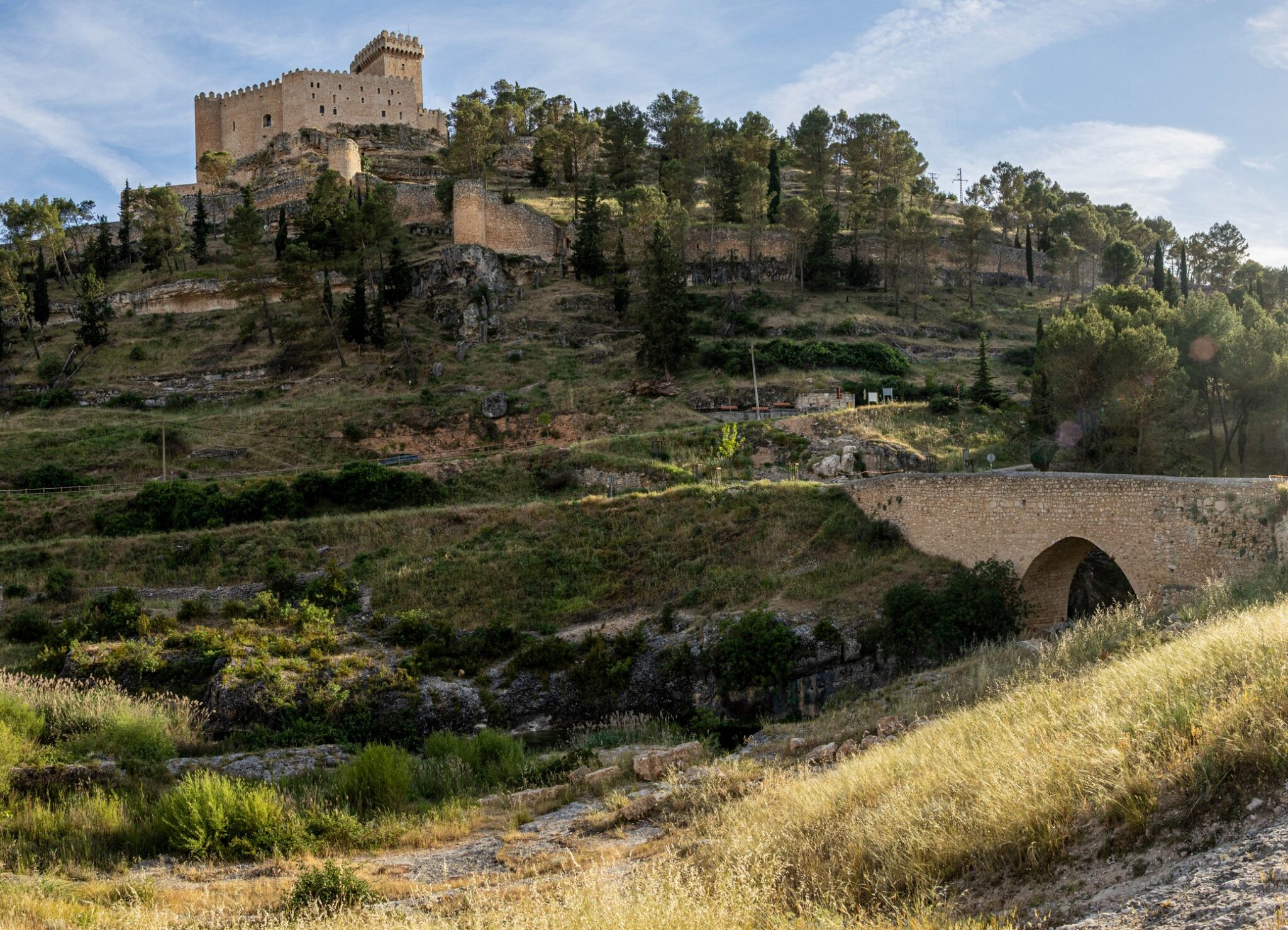
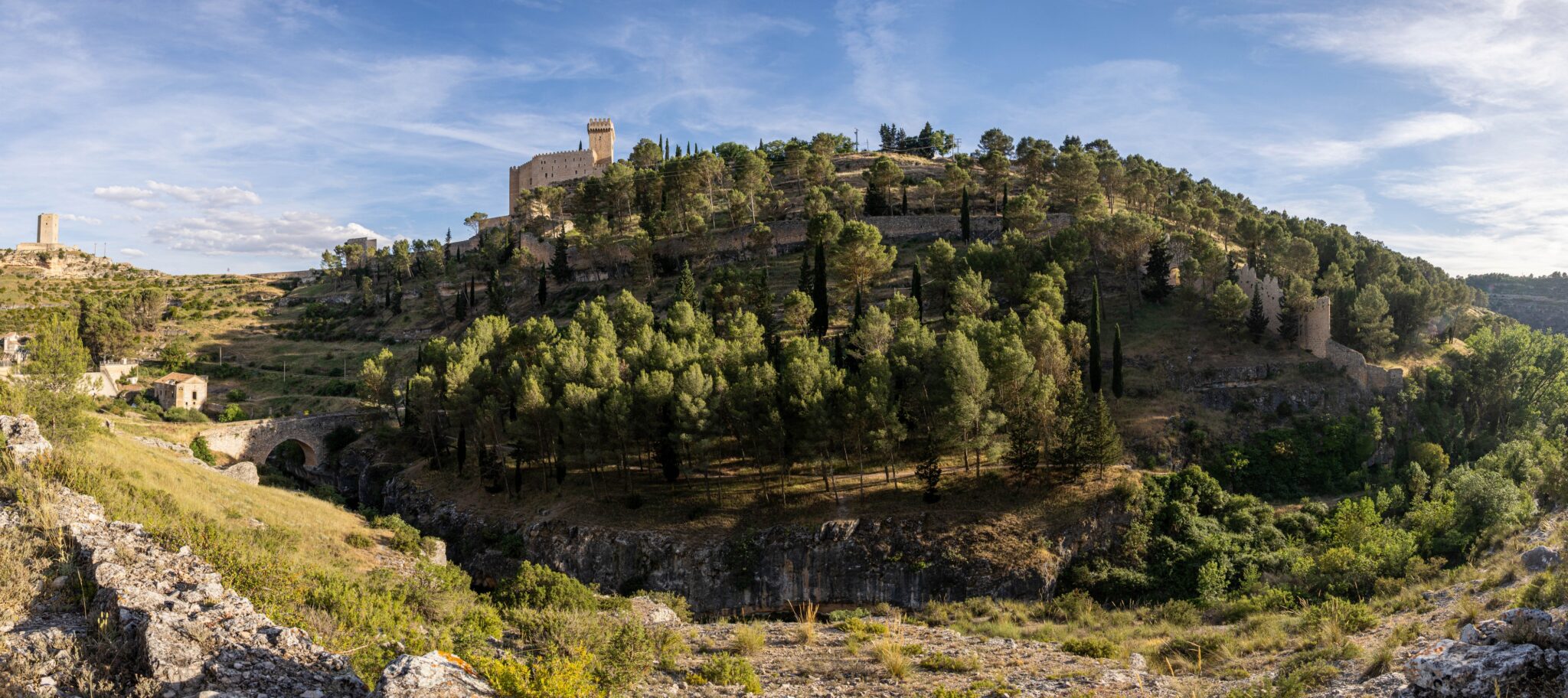
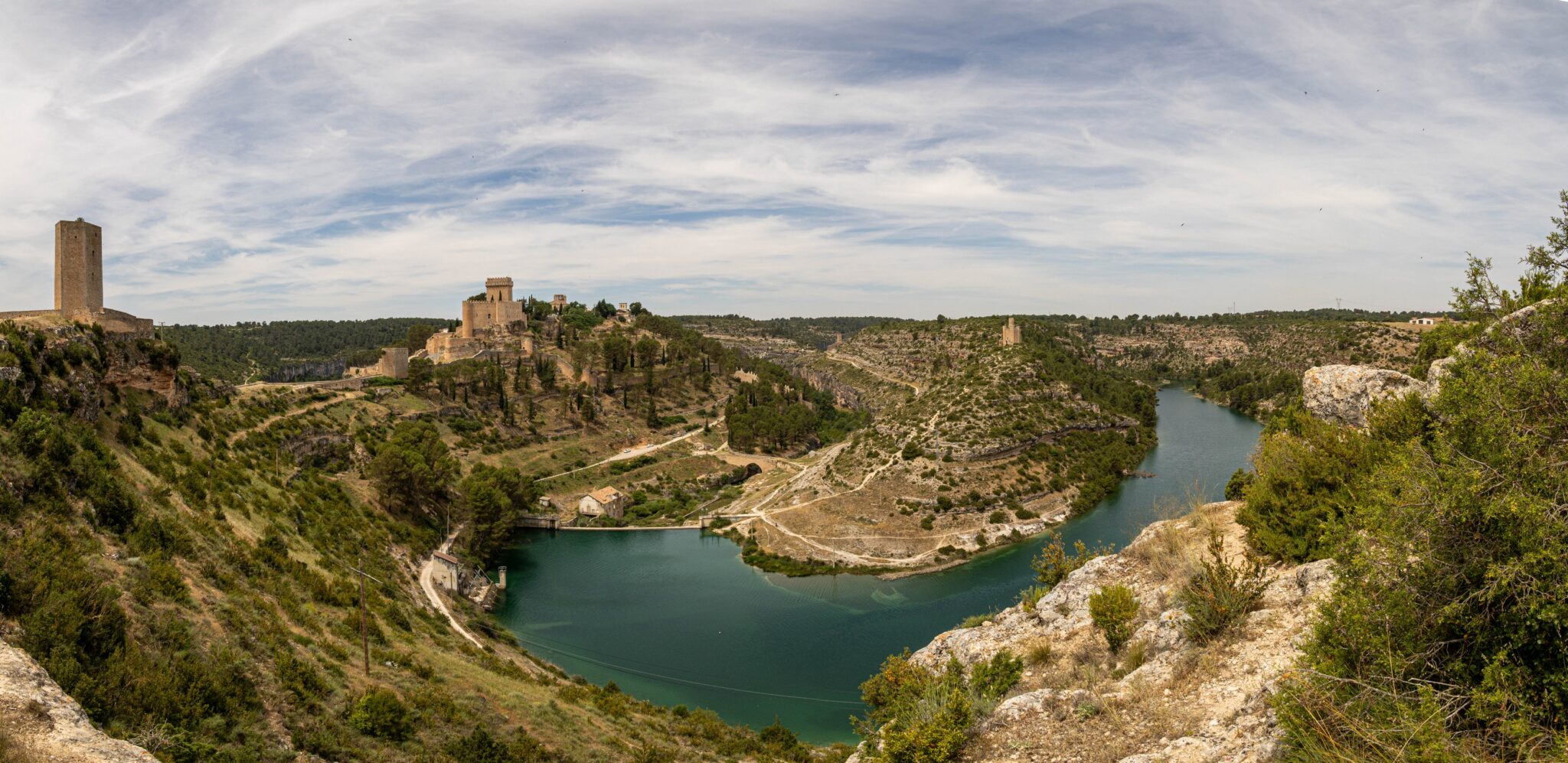
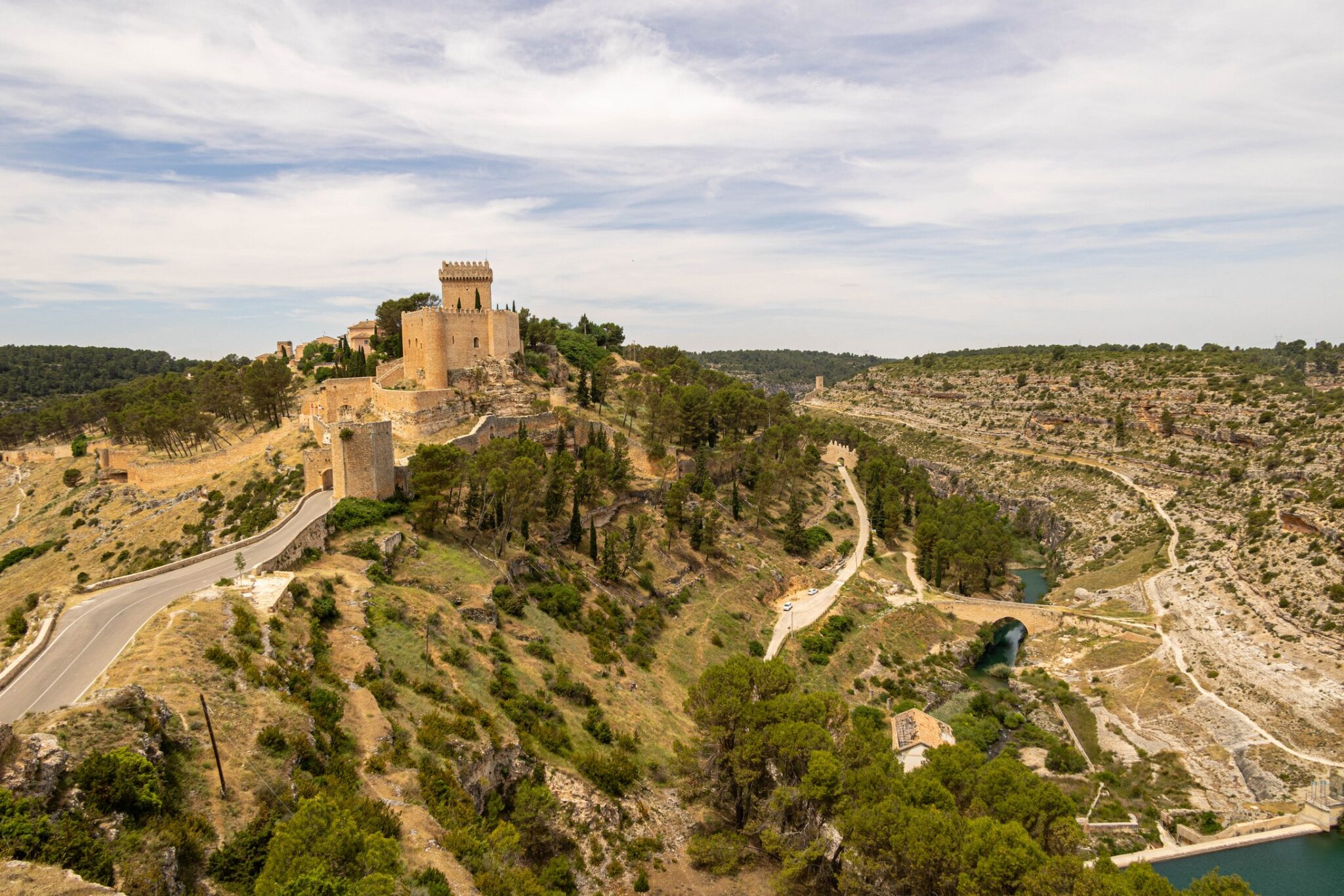
The castle at Alarcon is a 15th century creation, built on Arab origins. Strategically important at one time it is now a Parador hotel. Our visit was a breathtaking event, cresting the hill and seeing the castle and defensive tours in the horseshoe bend of the river Jucar.
Visiting Alarcon Castle and Towers
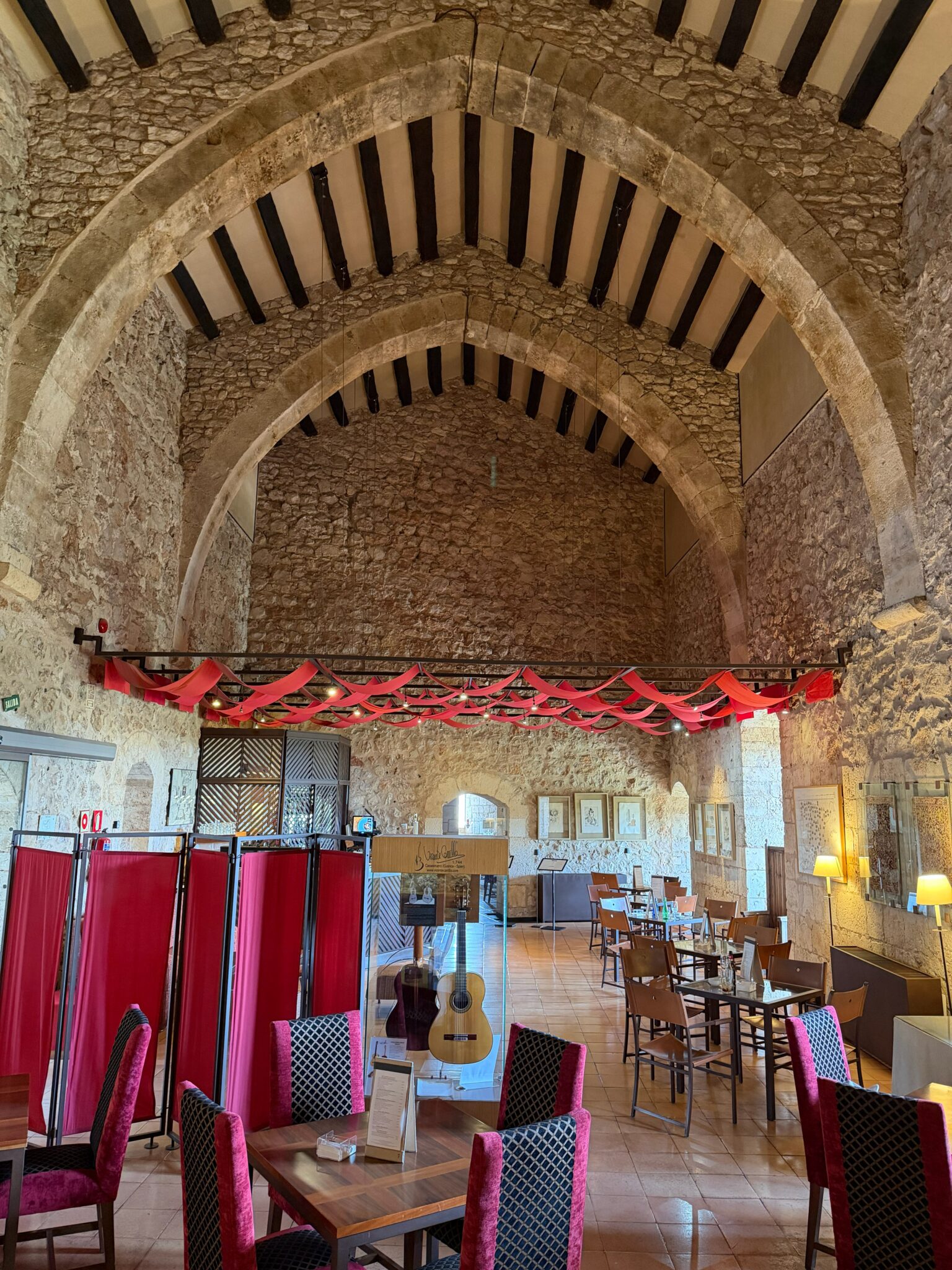
The castle of Alarcon itself is now a Parador hotel so it is easy to stay there and explore the building. None of the towers we got close to could be entered but all could be walked around. There is a large car park in the town next to the Parador and one outside the town by the Torre de Armas.
If you are staying at the Parador you can ask for the key at reception to give you access to the roof and the corresponding views that gives.
My Experience
Alarcon was quite an amazing sight, the castle on a rocky spur in a horseshoe of the Rio Jucar with huge watch towers on the surrounding hills. We were staying in the castle overnight at the Parador Alarcon, an 8th century Arab fortress recaptured by the Spanish in the 12th century. The castle slowly deteriorated as the Muslim threat declined and was in danger of collapse by the 19th century. It was forcibly purchased in 1963 and converted to a parador by 1966.
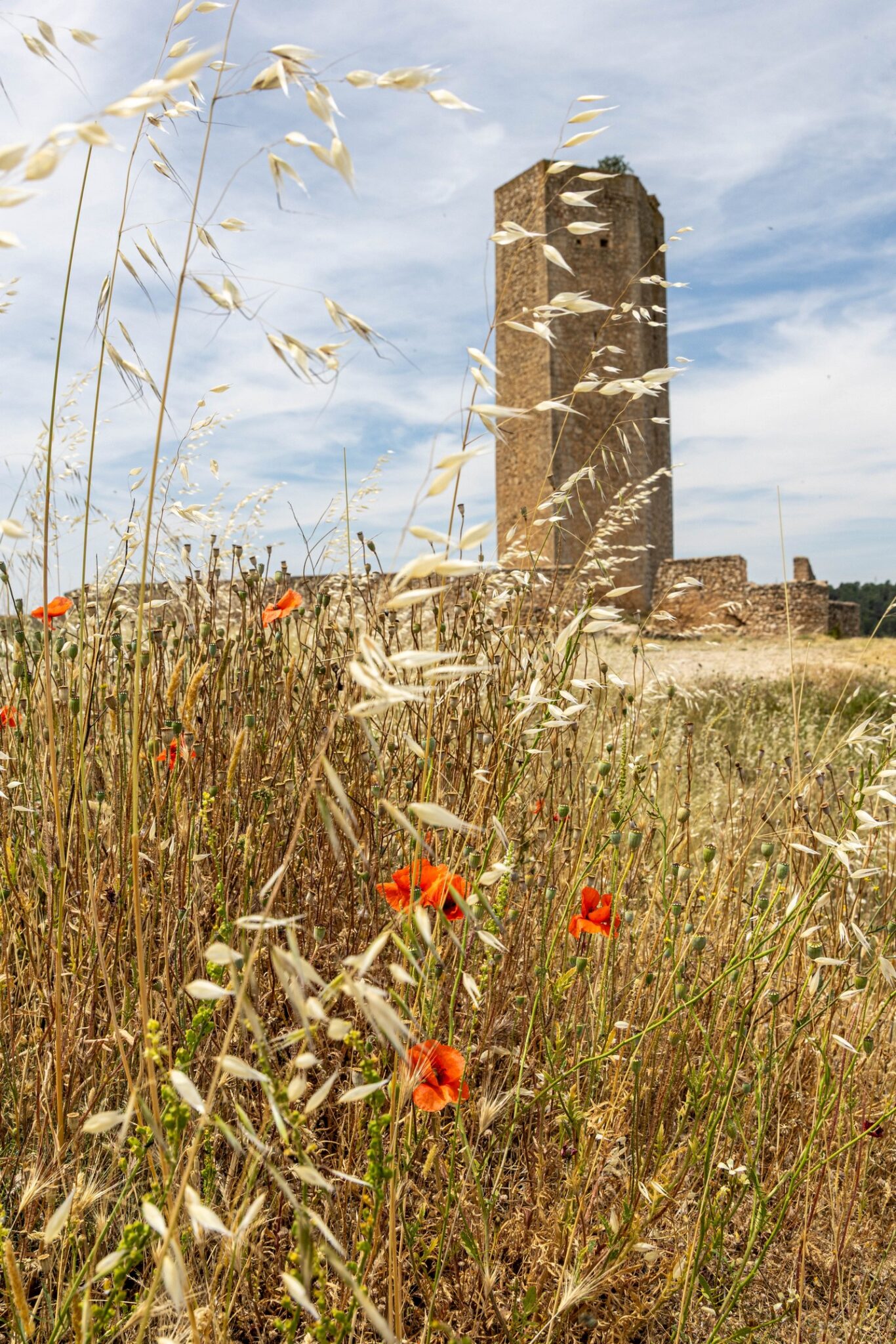
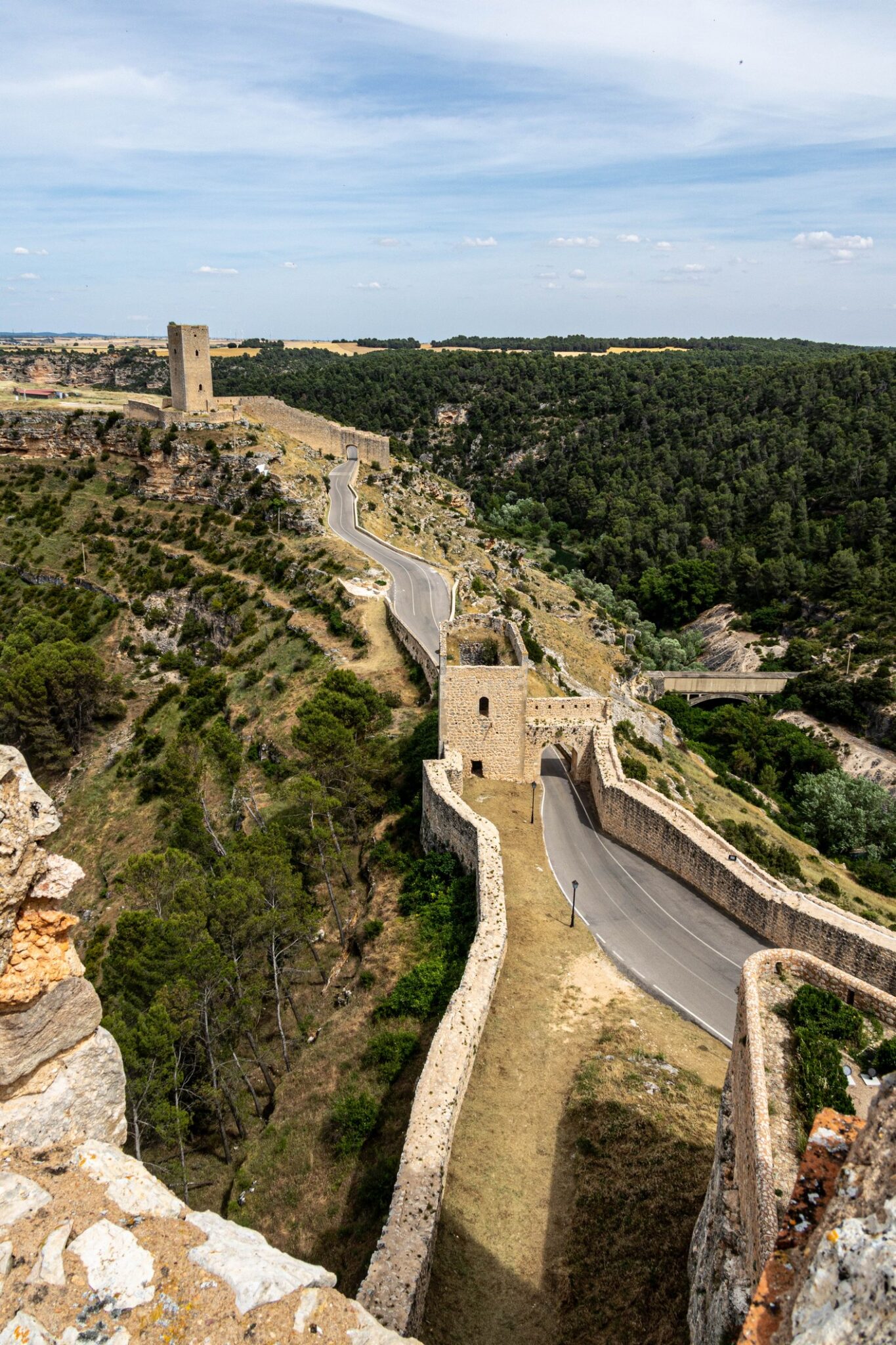
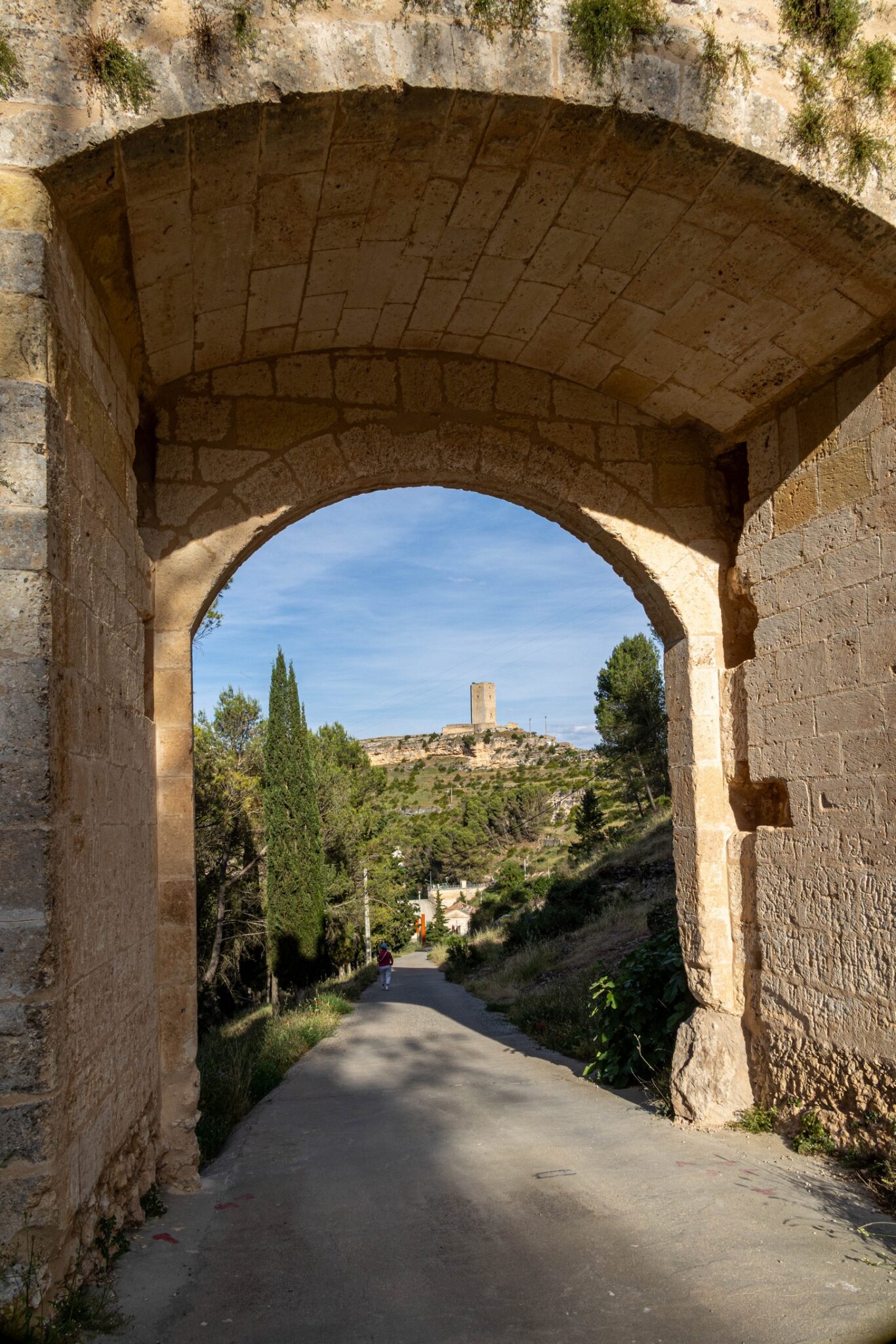
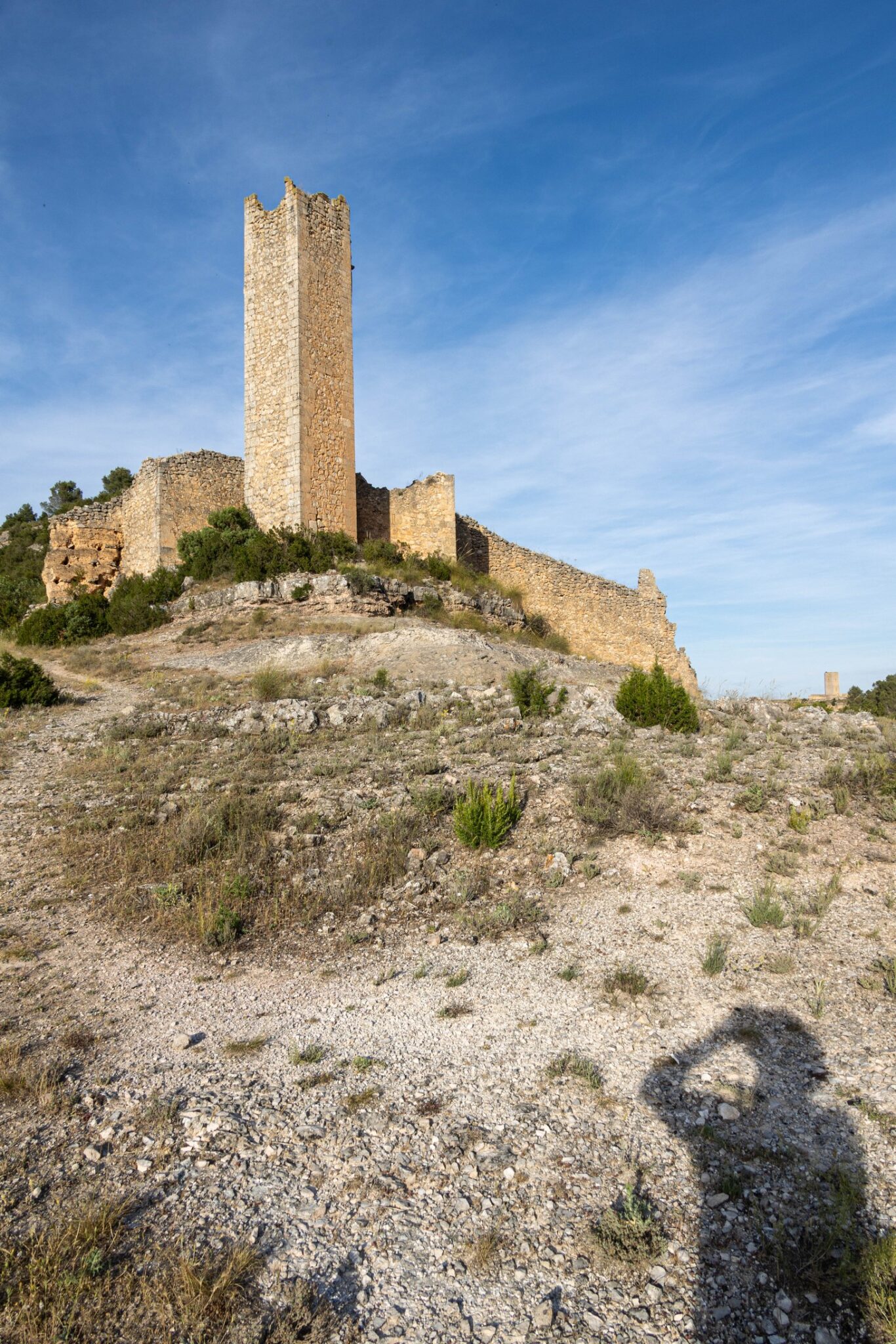
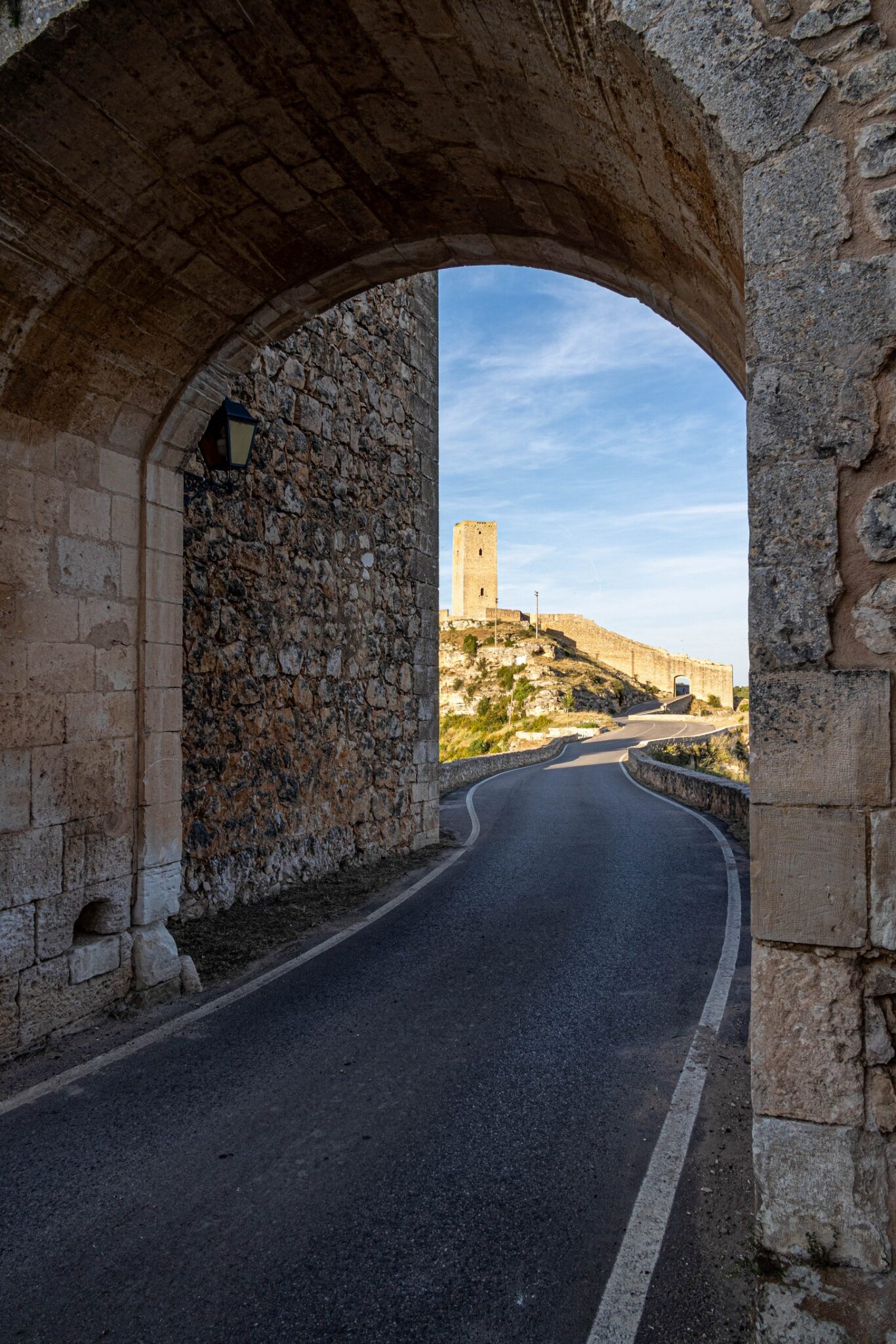
We stopped at the Torre de Armas, a huge watchtower on a hill overlooking the castle, to take in the views of the town and surroundings. We couldn’t access the tower but it was an impressive building, surrounded by walls leading down to the outer gate to the town. We returned to the car and drove through three sets of gates before driving through the town and parking at the Parador.
We couldn’t see an easy way to get to the other towers so we returned to the Parador and climbed to the roof of the keep for views. I managed to hit my head on the low roof as we were climbing the stairs so that was a delight. The views were as impressive as you’d expect and the area was riddled with medieval walls and towers.
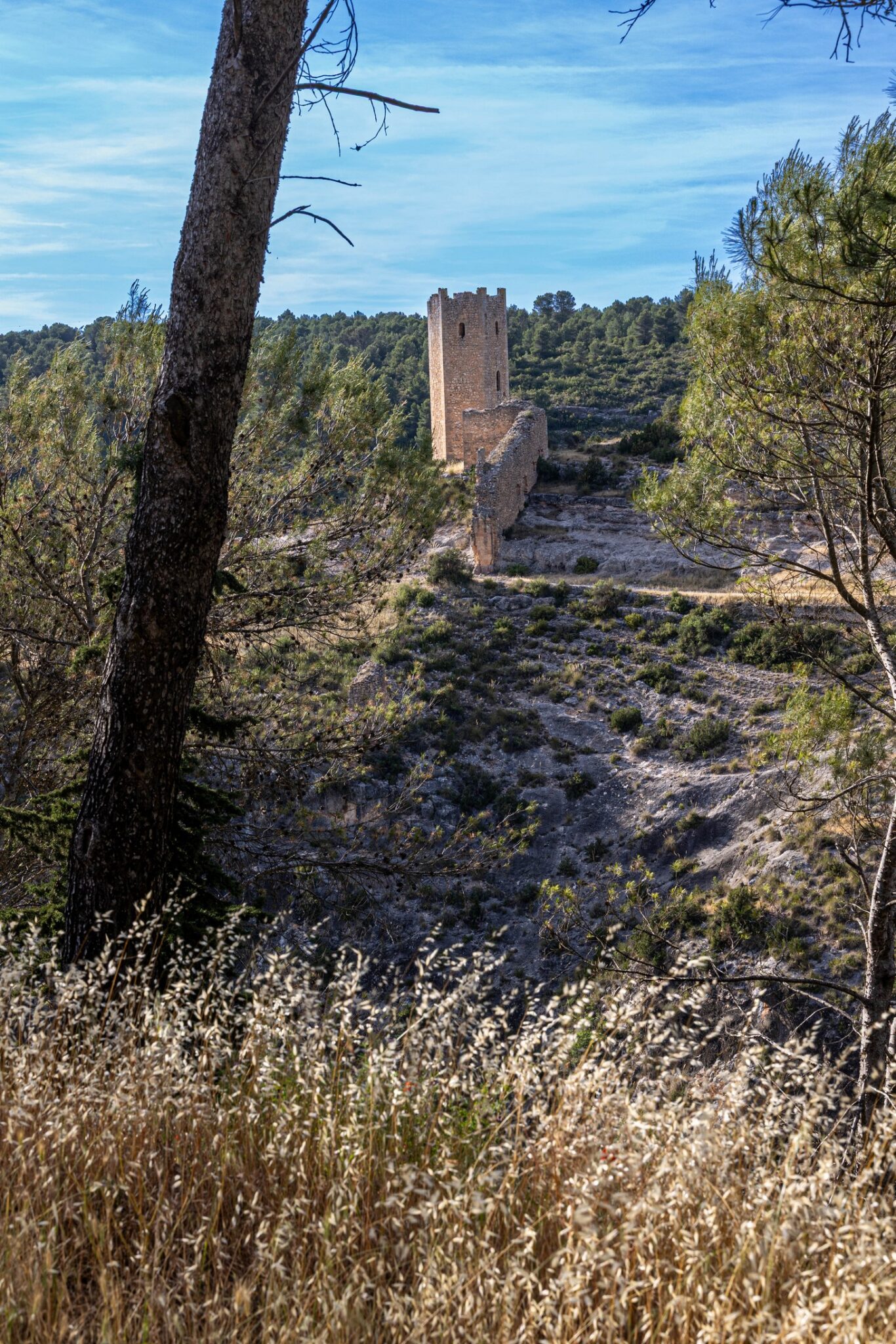
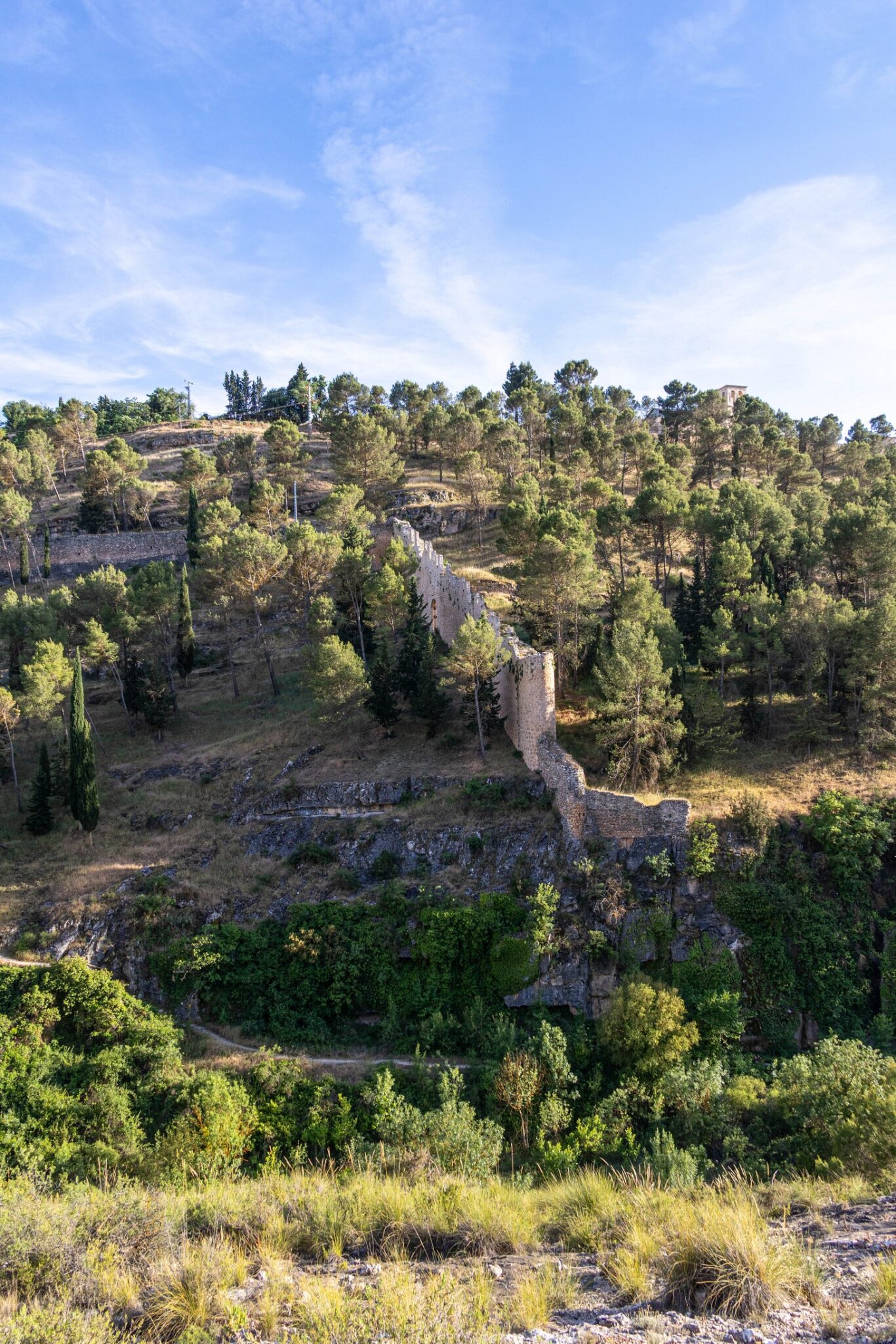
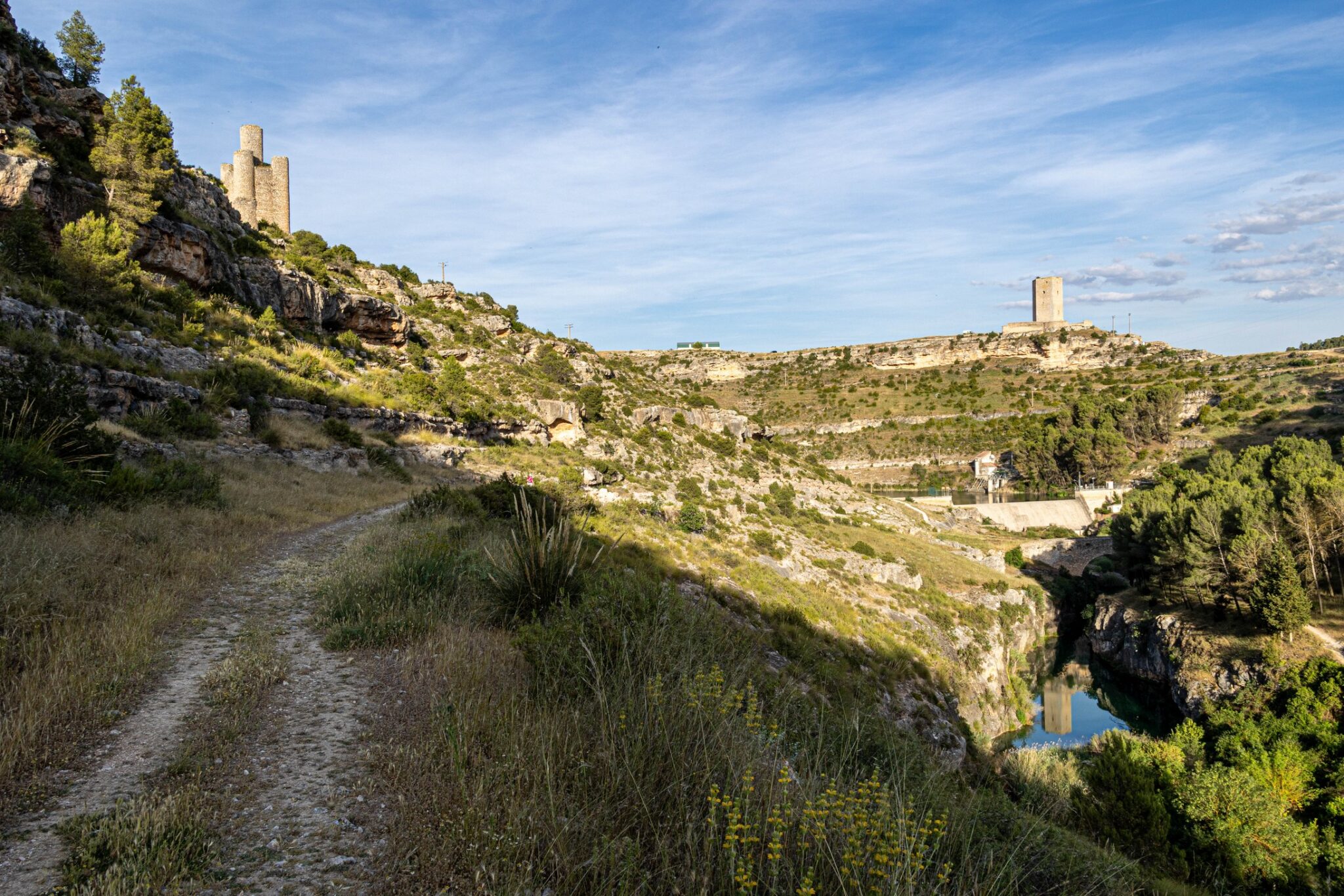
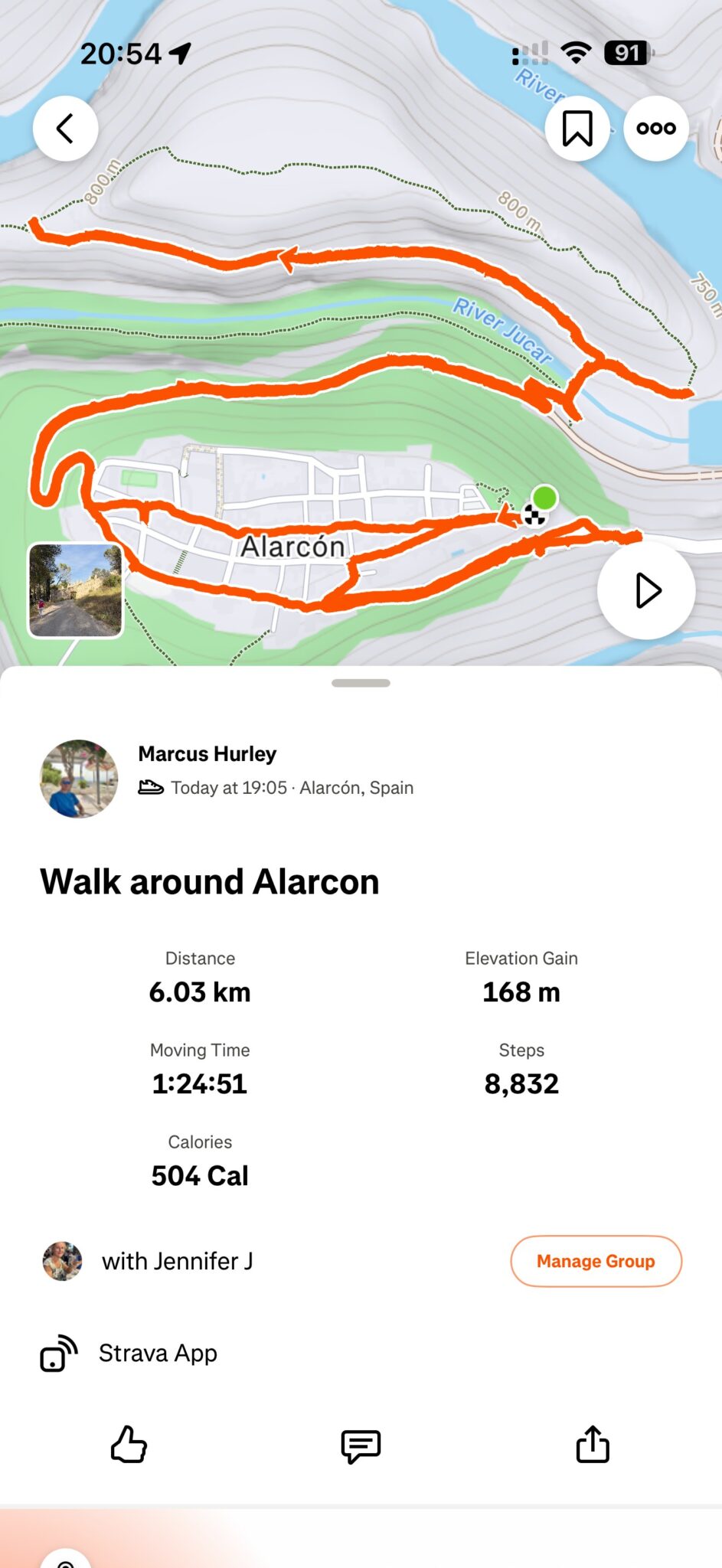
Mum and I left to do the river walk around 7PM. It was a beautiful walk through pine forests down to the river then across the medieval bridge and along a track below the Torre de los Alarconcillos to the Torre de Cañavate. Each of the towers were well restored although inaccessible and the path was well marked but we were surprised how warm it still was at 8PM. We walked for about 90 minutes in all, returning through the town and under the 2 gateways and then back to the Parador.
The area is quite beautiful and it would be easy to spend a couple of days hiking the trails from the town and exploring the forfifications.
Alarcon Castle and Towers Photo Gallery






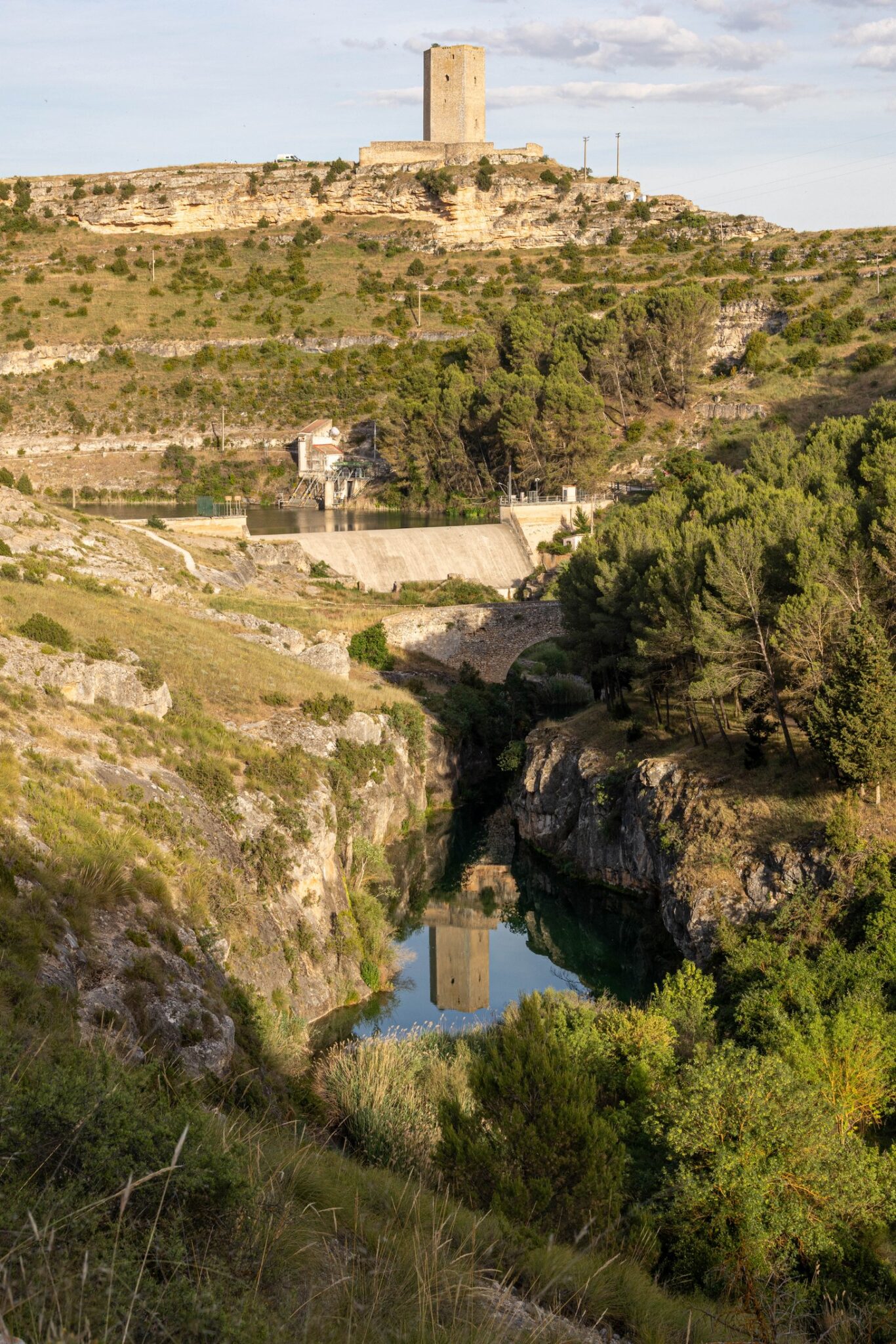
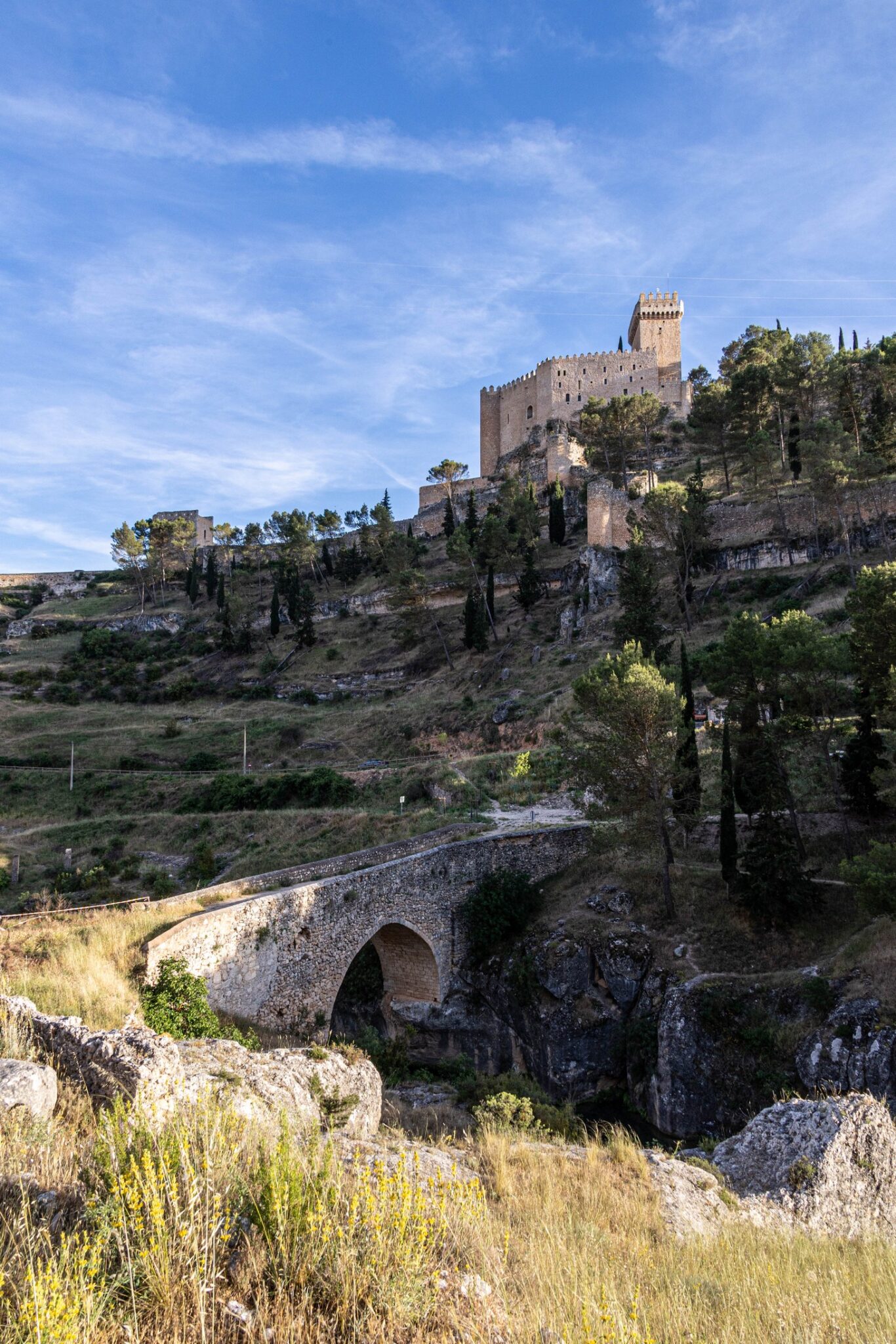
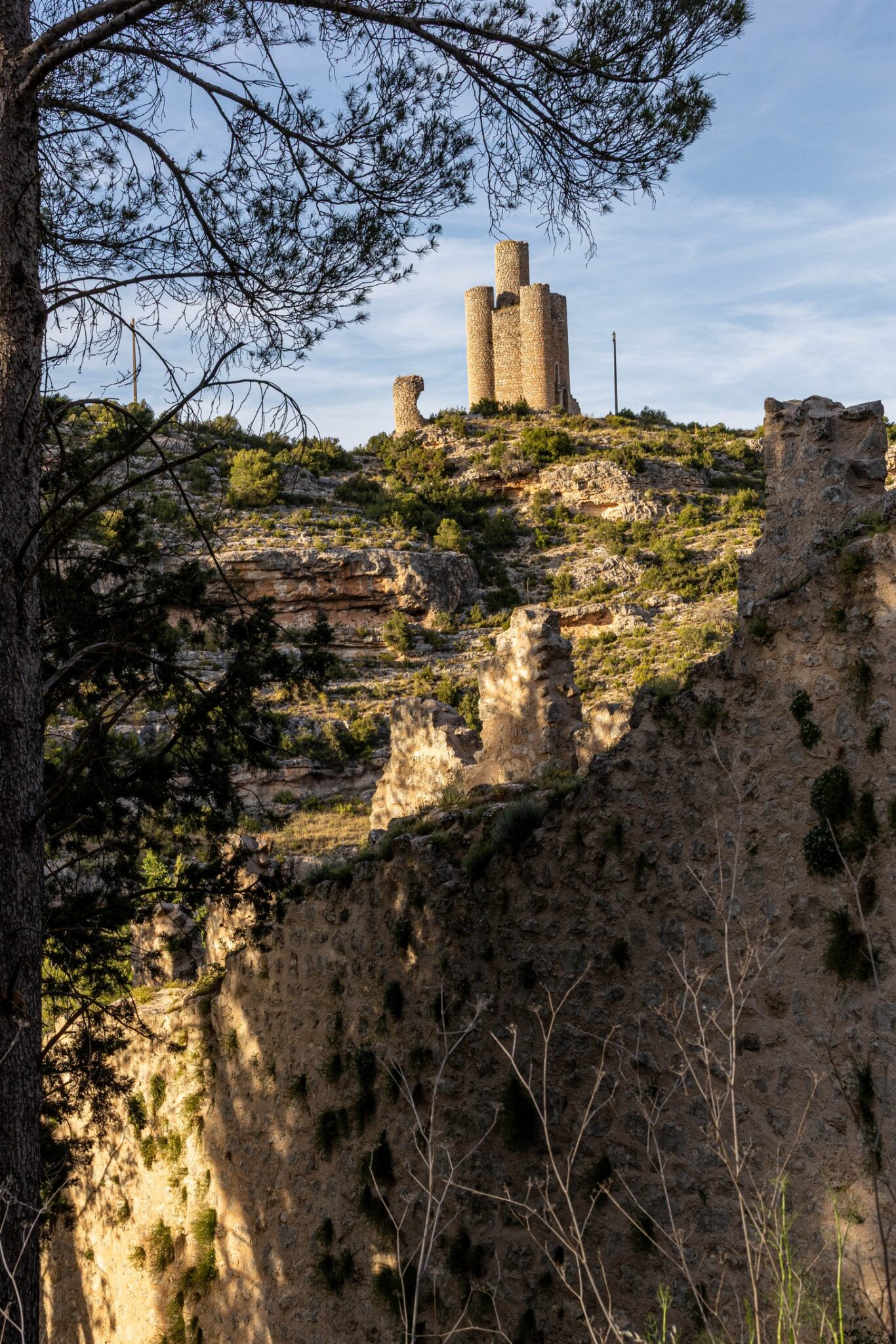
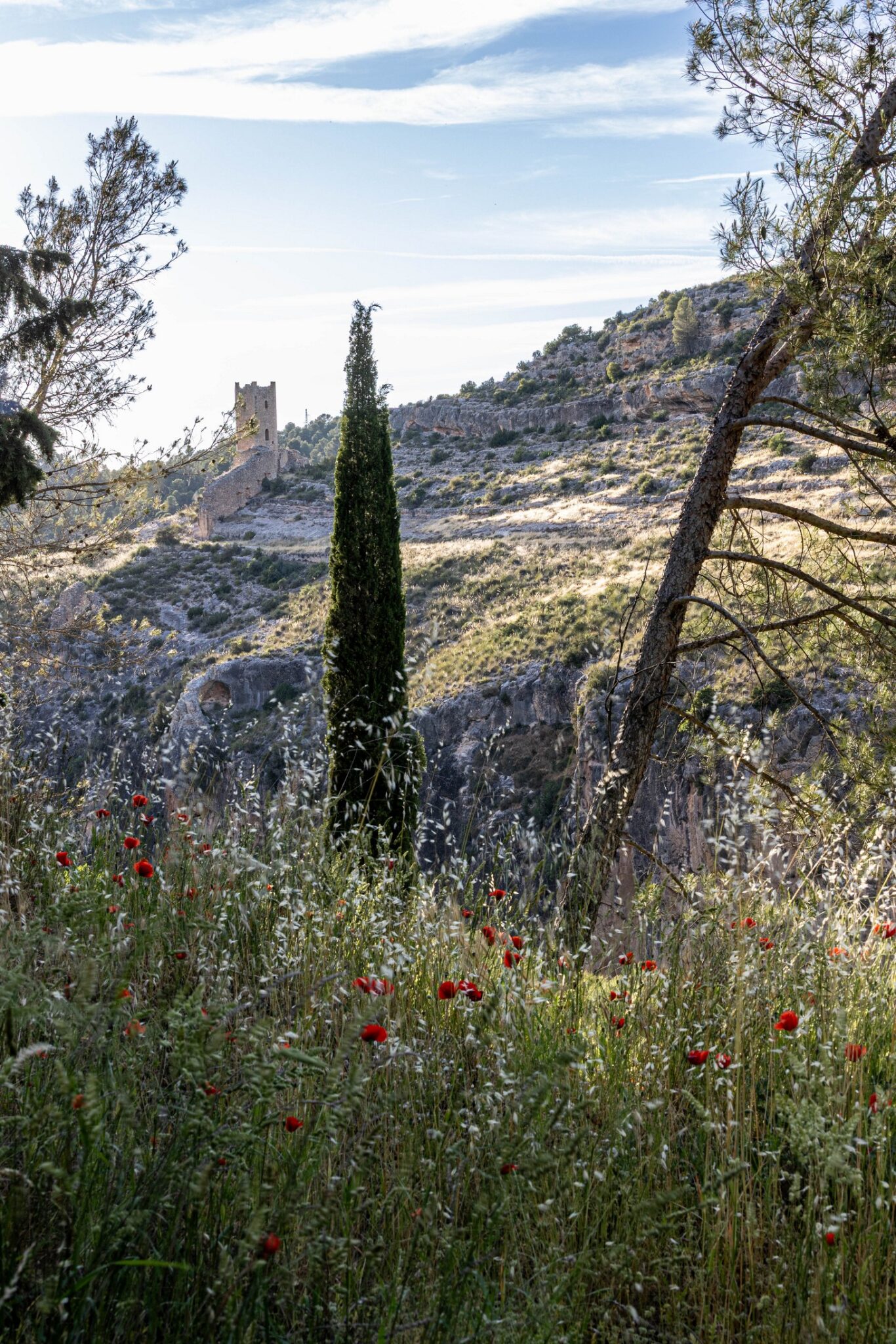


History
The Castle of Alarcón is located in the town of Alarcón, within the province of Cuenca, Spain. Its origins trace back to the period of Arab control under the Emirate of Córdoba. Following the fragmentation of the Caliphate of Córdoba, the castle became part of the Taifa of Toledo, serving as a key defensive fortress during times of internal conflict among Muslim rulers.
In 1184, the castle was besieged for nine months by Fernán Martínez de Ceballos, a captain serving Alfonso VIII of Castile. After its capture, Martínez de Ceballos earned the right to adopt the surname Martínez de Alarcón. Shortly after, in 1186, the castle was granted a fuero, or charter, and lordship over a large territory that included 63 villages such as Albacete, La Roda, and Villarrobledo. In 1194, Alfonso VIII donated the castle and its lands to the Military Order of Santiago, a religious and military order, a gift that was confirmed multiple times in subsequent years.
The town council of Alarcón played a military role by contributing troops to the Battle of Las Navas de Tolosa in 1212, a decisive conflict in the Reconquista. In the early 14th century, King Ferdinand IV granted the lordship of Alarcón and its castle to Juan Manuel, Prince of Villena, a notable literary figure who composed some of his works there. The lordship later passed to his descendants Blanca and Fernando Manuel de Villena before being reclaimed by King Peter I and returned to royal possession.
During the late 14th century, Henry II of Castile granted the castle to Alfonso I of Aragon, Marquis of Villena, in 1372. Henry III later reclaimed it in 1395. In the 15th century, the castle was given to Juan Pacheco, Marquis of Villena. Juan and his son Diego López Pacheco supported Joanna la Beltraneja in her claim against the Catholic Monarchs, maintaining control over Alarcón and other castles during this period of civil strife.
After the Middle Ages, the castle was gradually abandoned and fell into disrepair. By 1712, it belonged to the Marquis of Aguilar, who received urgent recommendations to repair the structure to prevent collapse. In 1720, governance passed to Alejandro de Alarcón and Duchess Julia de Alarcón, who provided refuge to many people during regional conflicts.
On June 5, 1863, José María Fernández de Velasco, the 15th Duke of Frías, sold the castle and several small towers to Rafael Lázaro Álvarez de Torrijos for 20,000 reales. In 1963, the Spanish government, under Minister Manuel Fraga Iribarne, expropriated the castle from the Álvarez Torrijos family. The castle was restored and converted into a parador hotel, opening to the public in 1966. It was officially declared a Bien de Interés Cultural, a Cultural Interest Site, on February 28, 1992.
References
The history above is copied from Ancient History Sites here.
The Wiki site is here.