
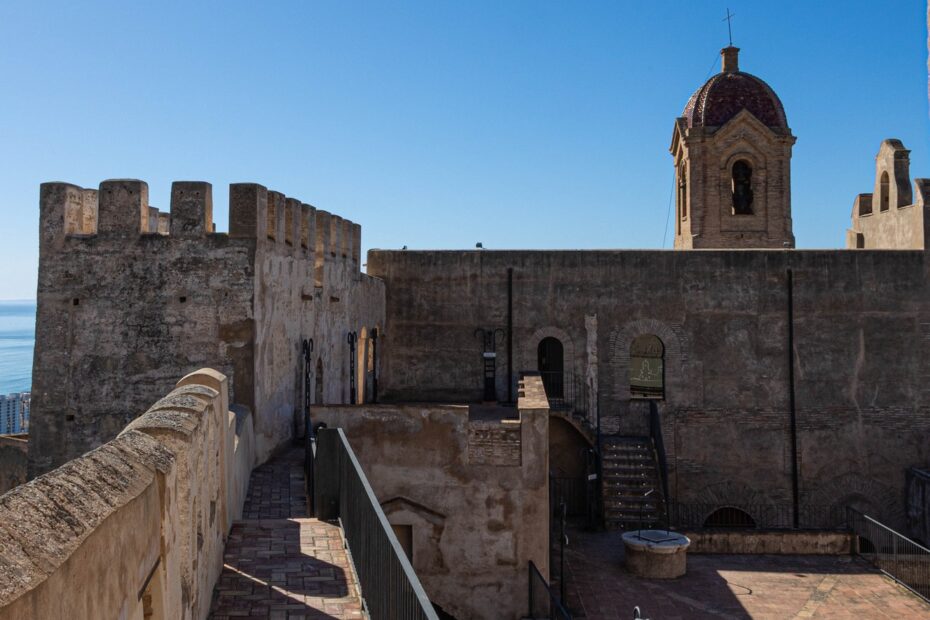
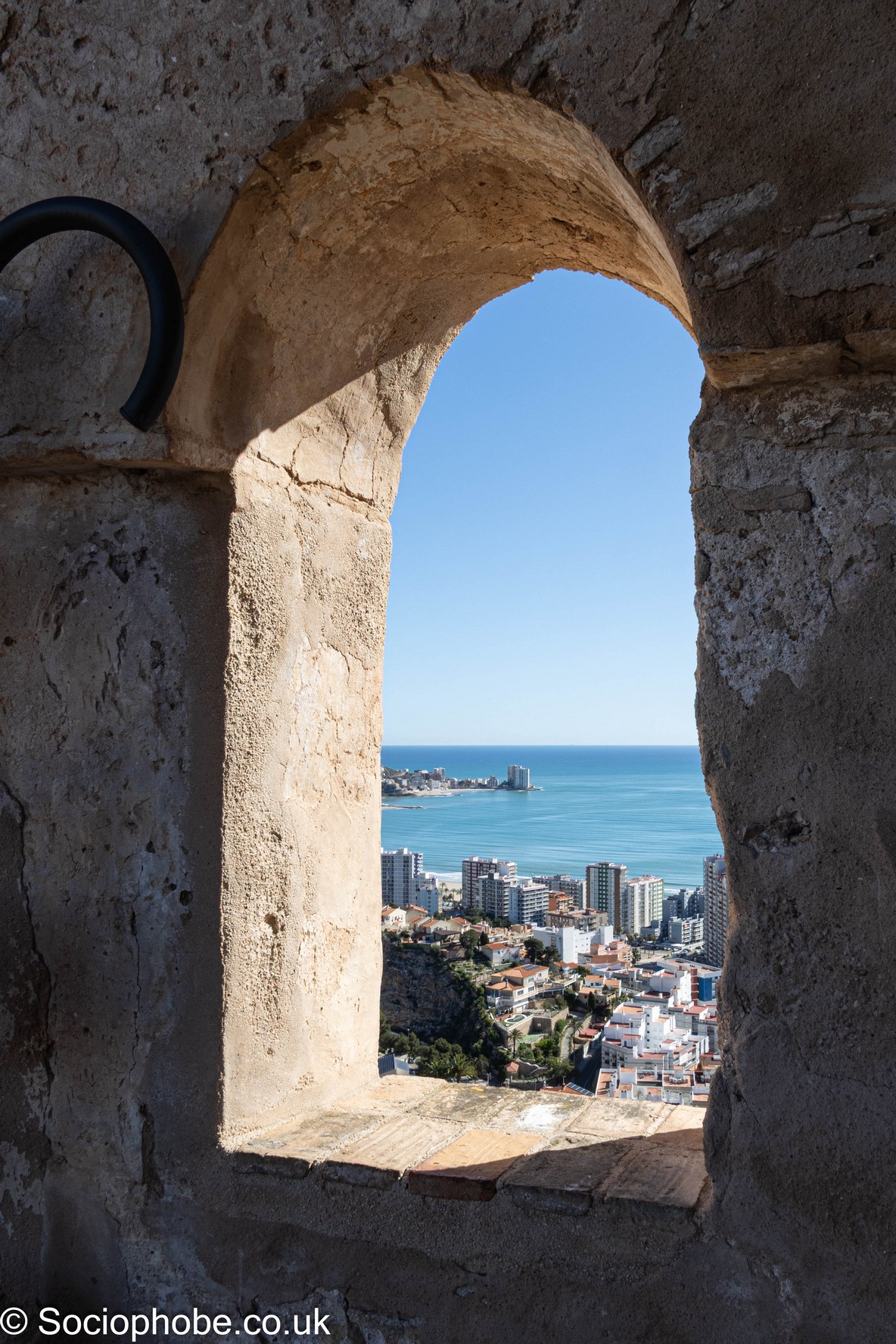
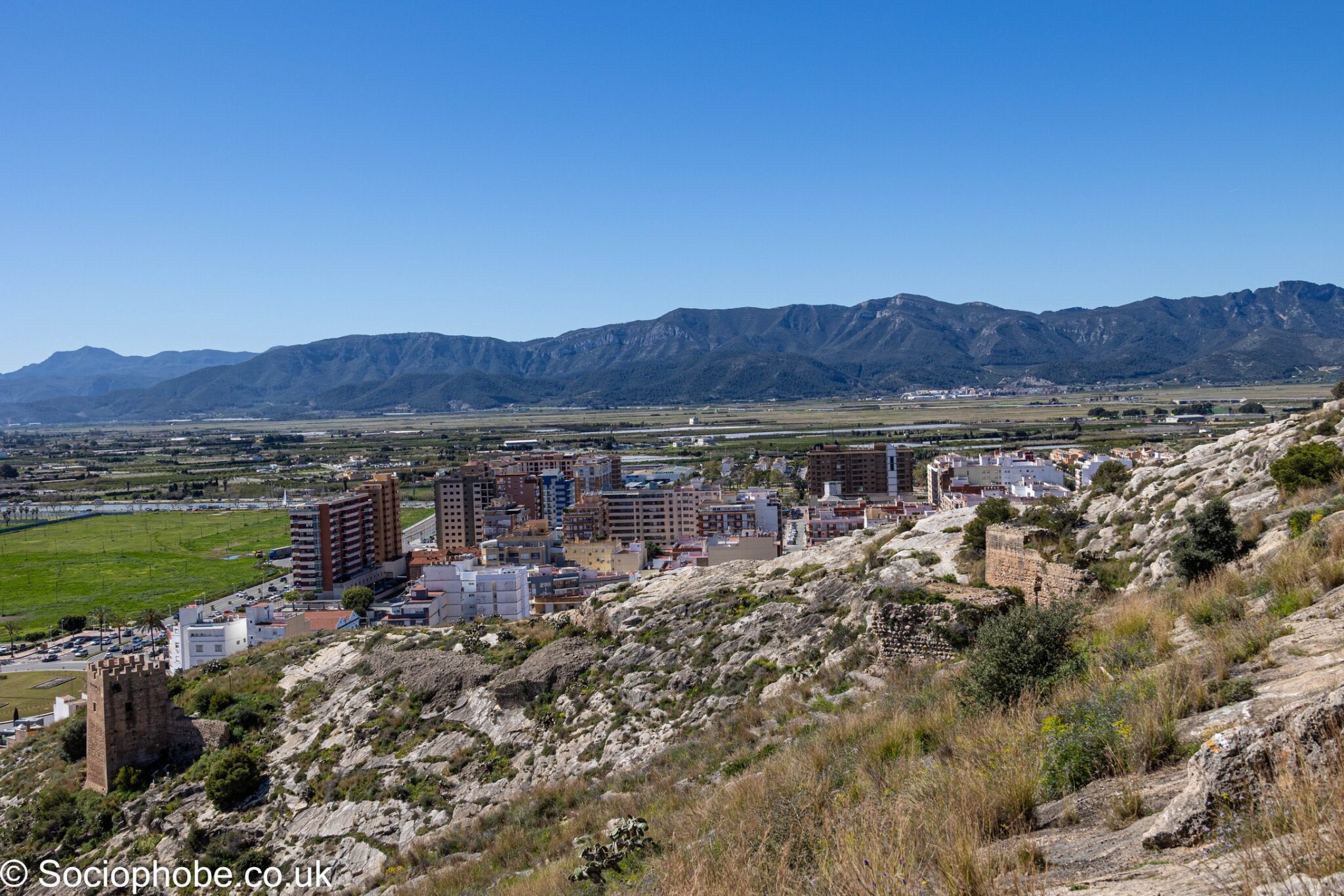
Castle is rather a grand term for this fort but it has beautiful views over the bay and the crumbling towers of the old town of Cullera. Initially a Moorish fort it was conquered by the Christians in the thirteenth century and greatly expanded as a response to Muslim slaving raids in the sixteenth and seventeenth centuries.
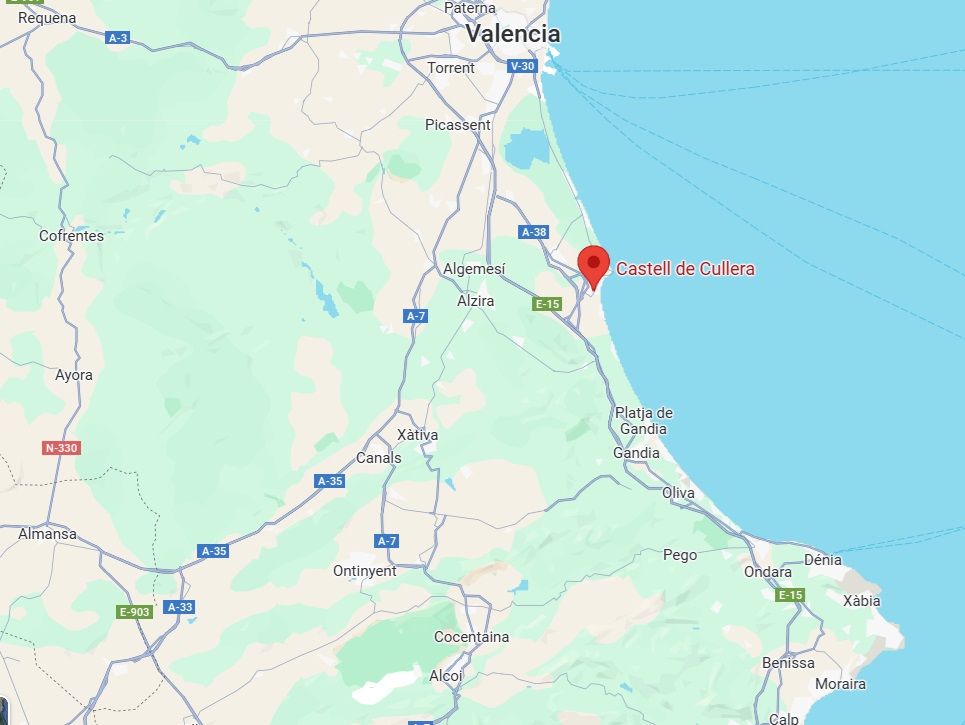
Visiting Cullera Castle
The castle is a popular tourist destination and the road up to it is long and circuitous. There is a small car park at the top and after that the parking is on the street with you parking further and further down the hill the later you arrive!
There is a small cafe (cash only) and also a small funicular to get you up the last set of steps, if needed. Admission to the castle was €3 and there is also a small church next door but as we visited on Sunday we thought it best not to go in and disturb worshippers.
There is a pedestrian route up to the castle from the town, which is on a well maintained pathway. There are also paths to look at some of the towers, one of which has been restored as a shrine and one (Mora tower) as a museum.
My Experience
This visit was part of a longer road trip in Spain, exploring the region around Valencia and detailed in my blog here. As Deb was unable to walk properly due to her injured knee we wanted to get to our first stop early so we left for the coastal castle of Cullera, about an hour away. The route started well but then we seemed to drive miles through orange groves on narrow, single track roads before rejoining proper roads for the last part of the drive. We were able to grab the last parking space at the top of the hill and luckily there was a mini funicular to take Deb the final distance to the castle entrance.
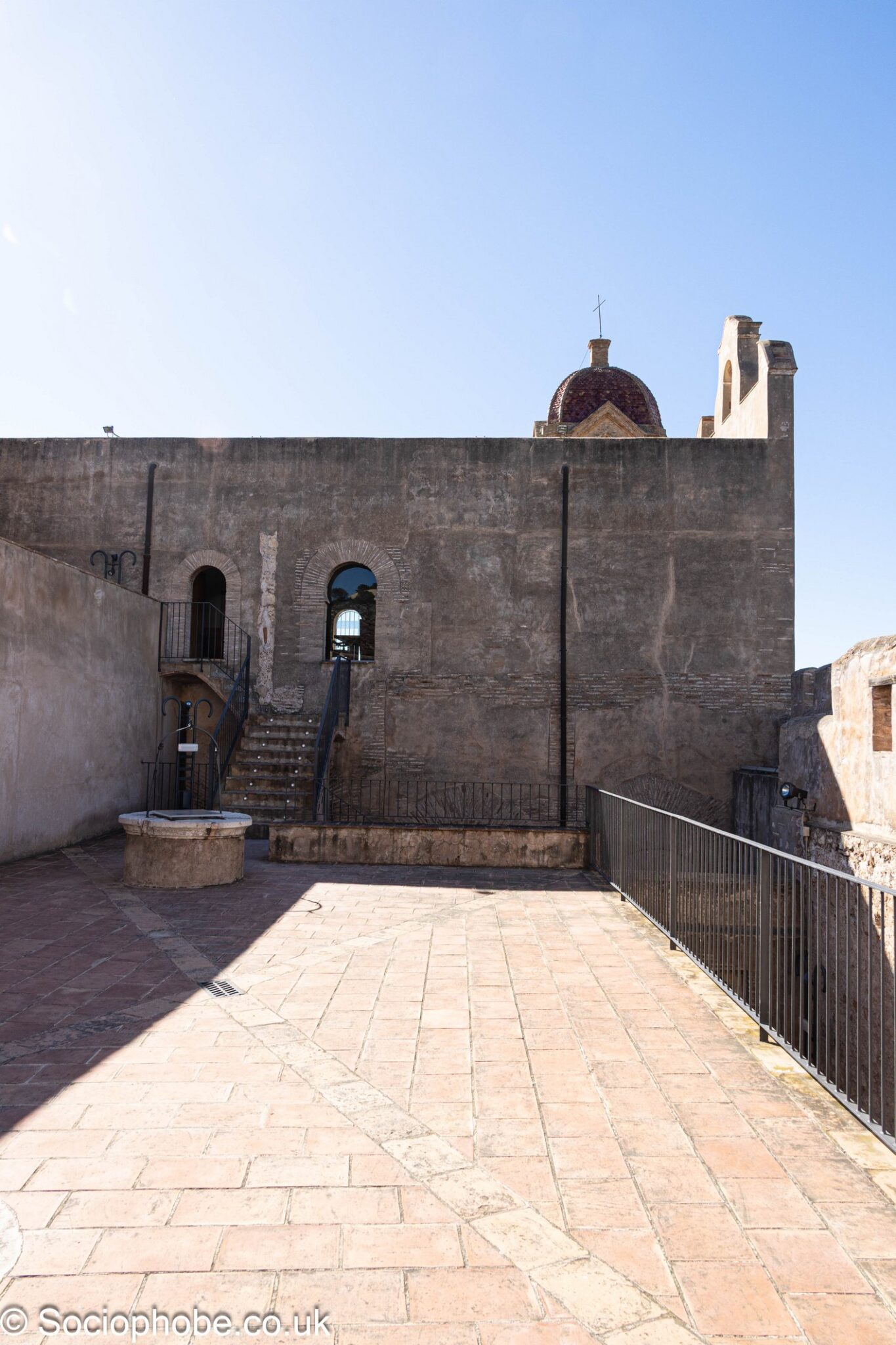
Admission was €3 but it is a small castle so we probably spent less than 30 minutes inside, including watching the 12 minute information film (English subtitles). The interior was unadorned and the battlements were small but with nice views of the coast and the rice fields. There was also a small archeological museum showing finds excavated from the castle and the history of the castle and town.
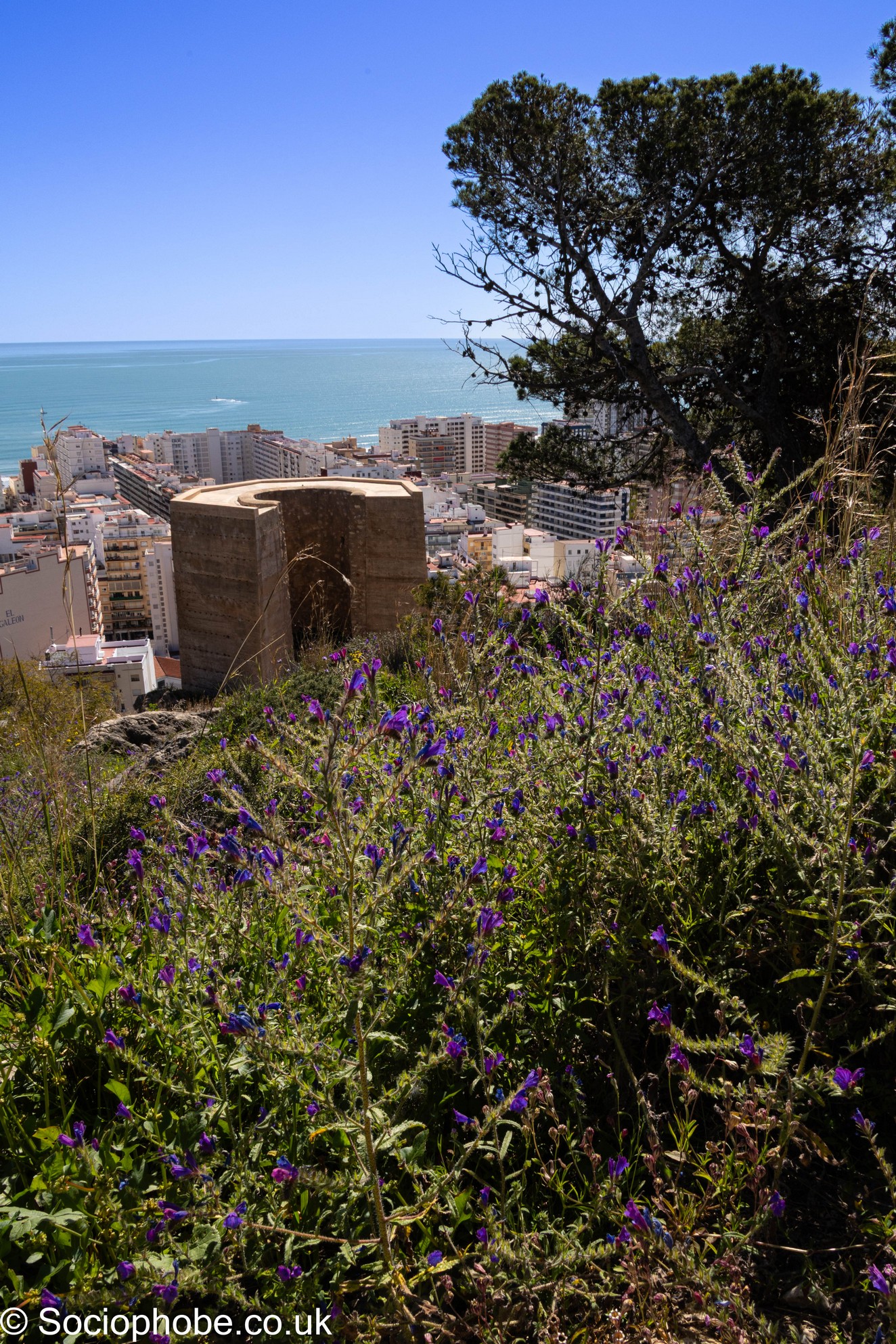
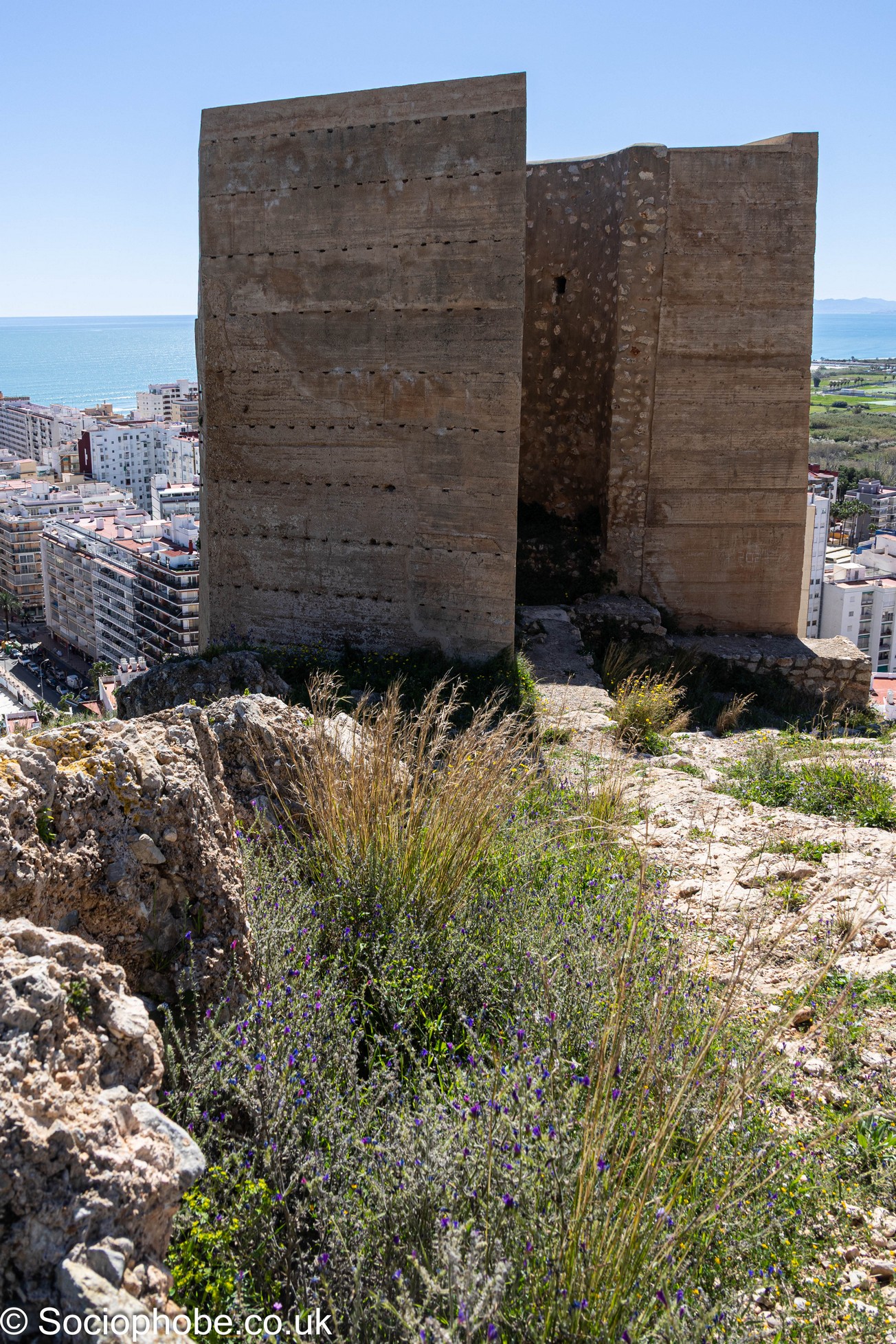
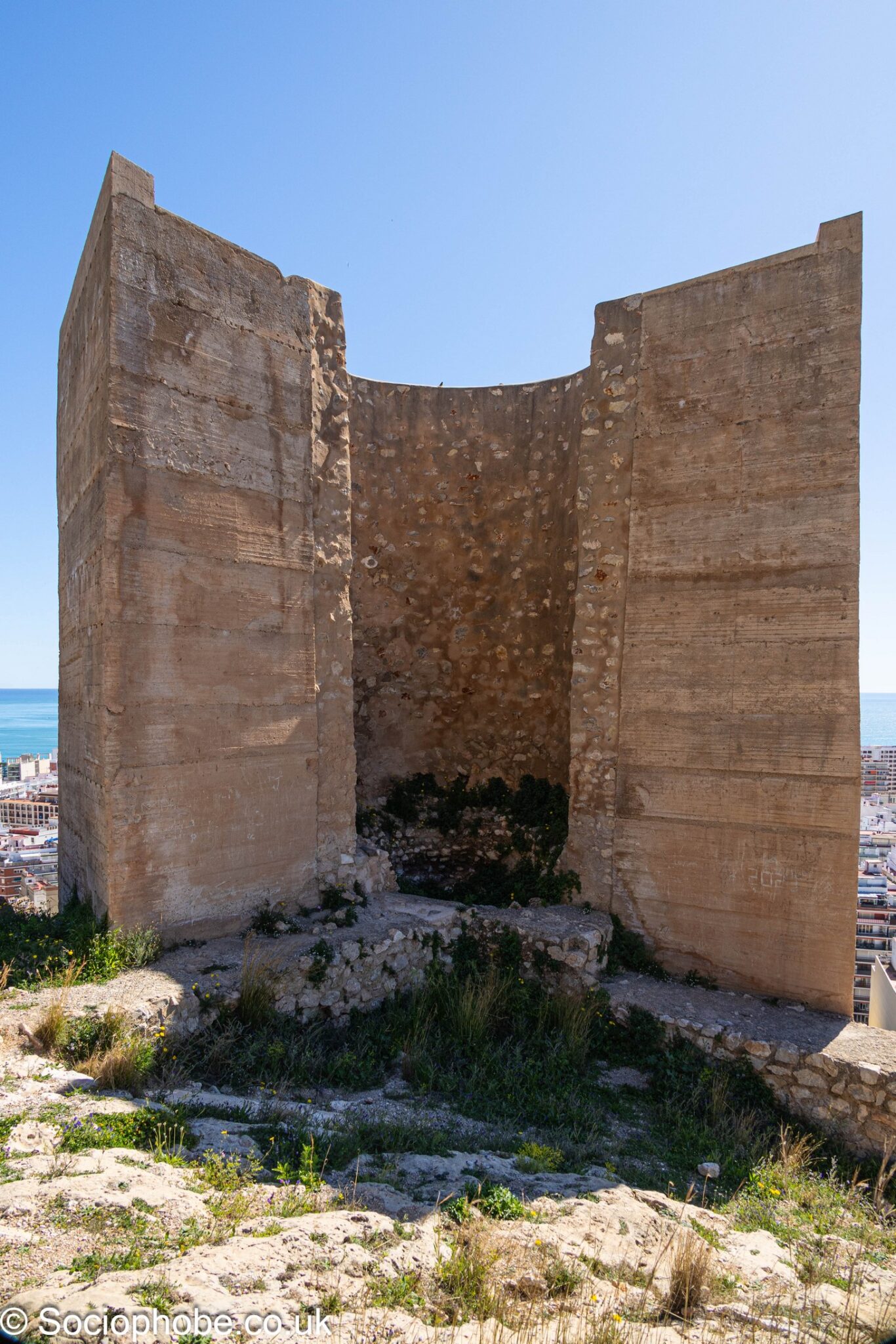
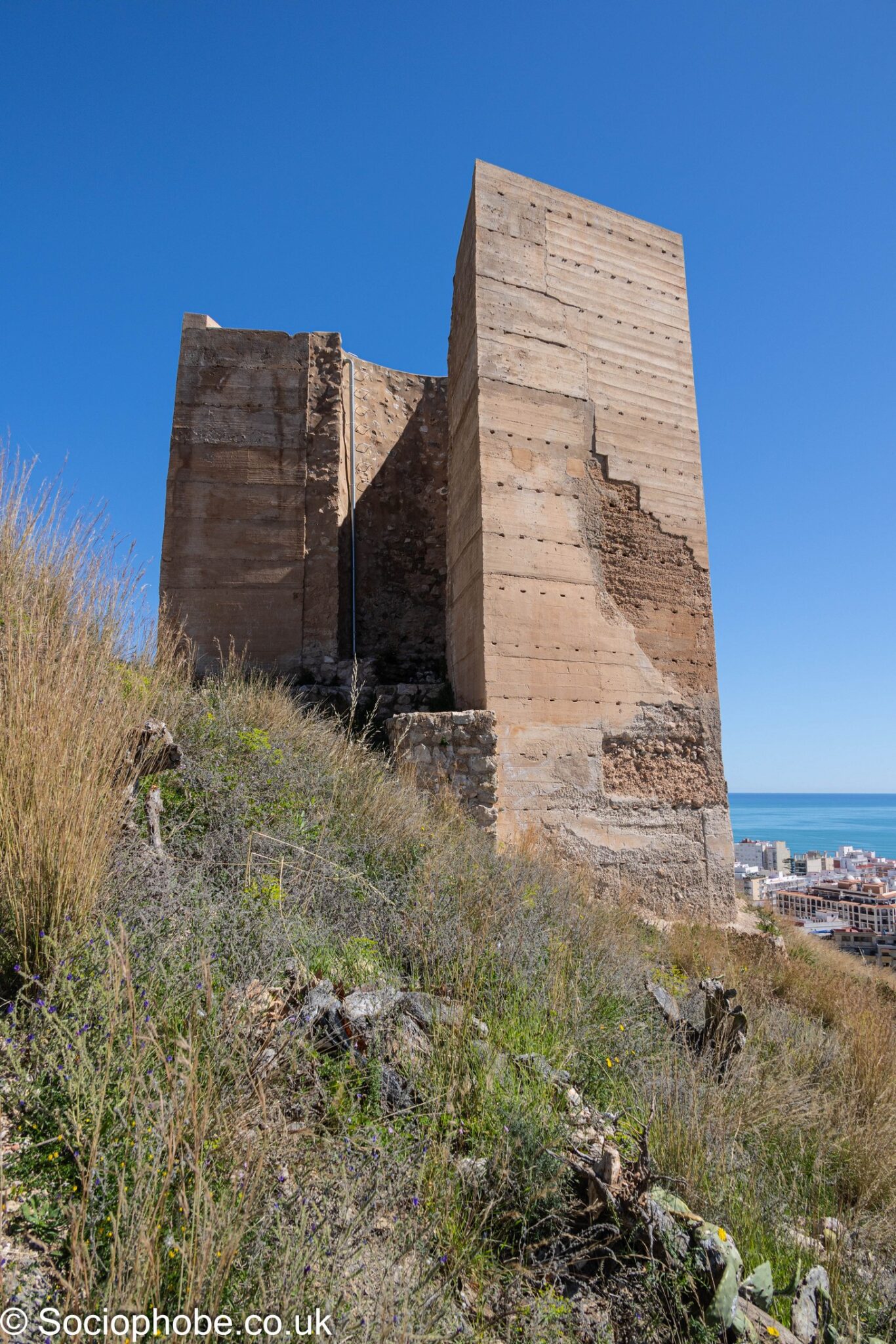
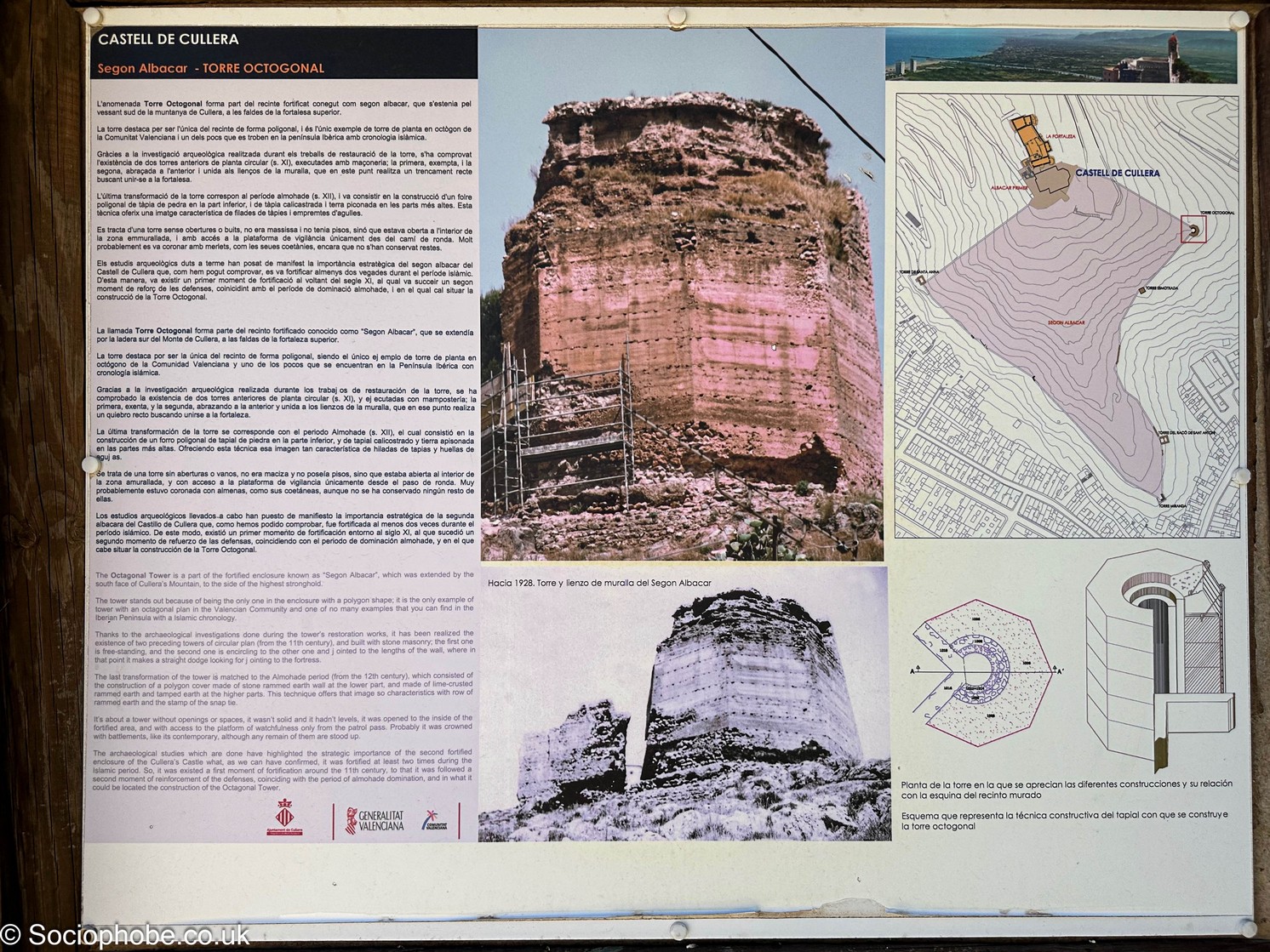
We had an ice cream and a coffee at the cafe terrace and then I walked down the steps to view the castle from below and then down a small path to view the octagonal tower and segments of the town wall, built during the Islamic period. The castle itself has an Islamic base and was then updated and expanded after the Christian reconquest in the 13th century. It’s next expansion was in the 16th century after Muslim pirates sacked the town and carried the population off into slavery. Although we don’t mention that as it doesn’t fit the white slaver narrative.
Cullera Castle Photo Gallery
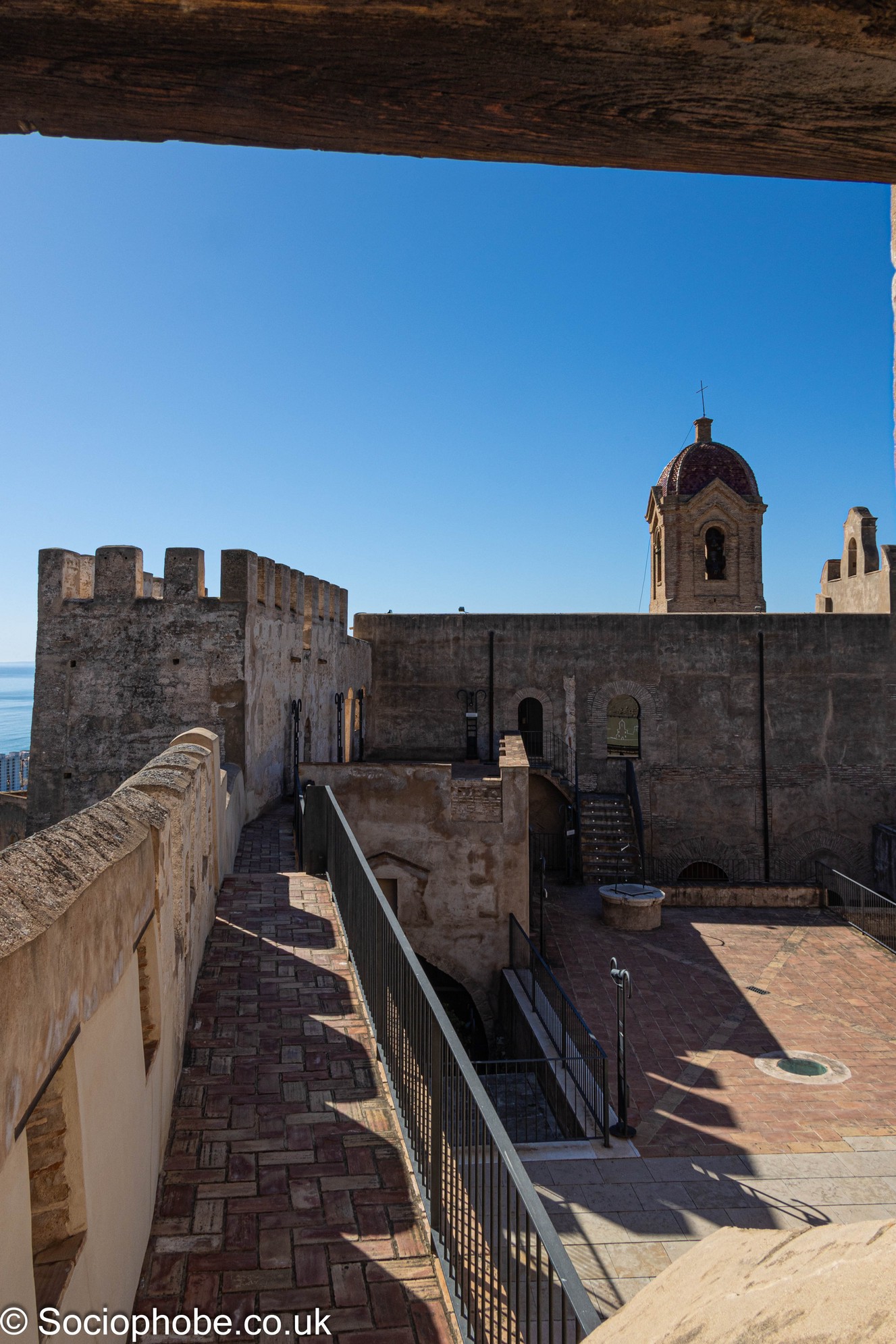
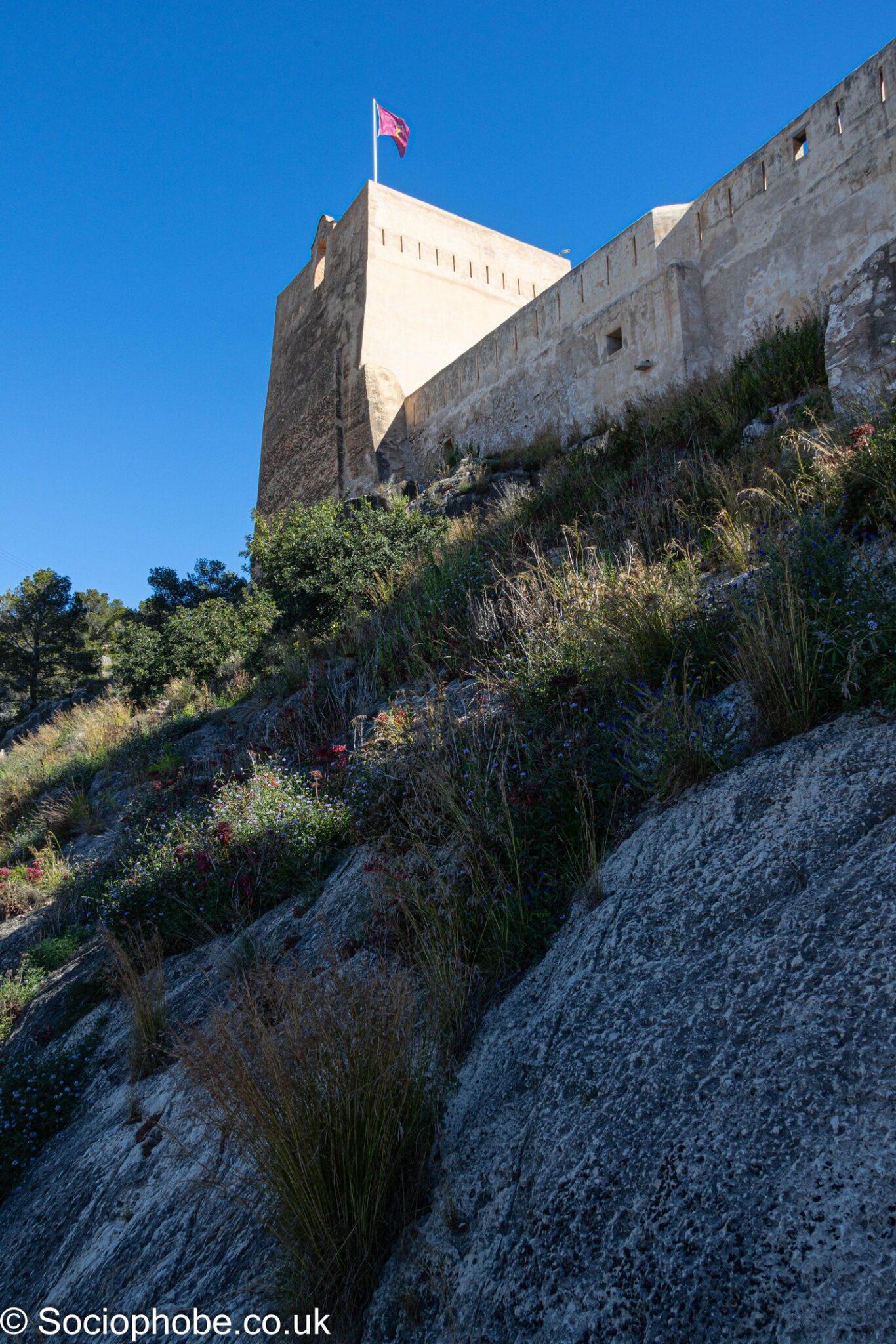
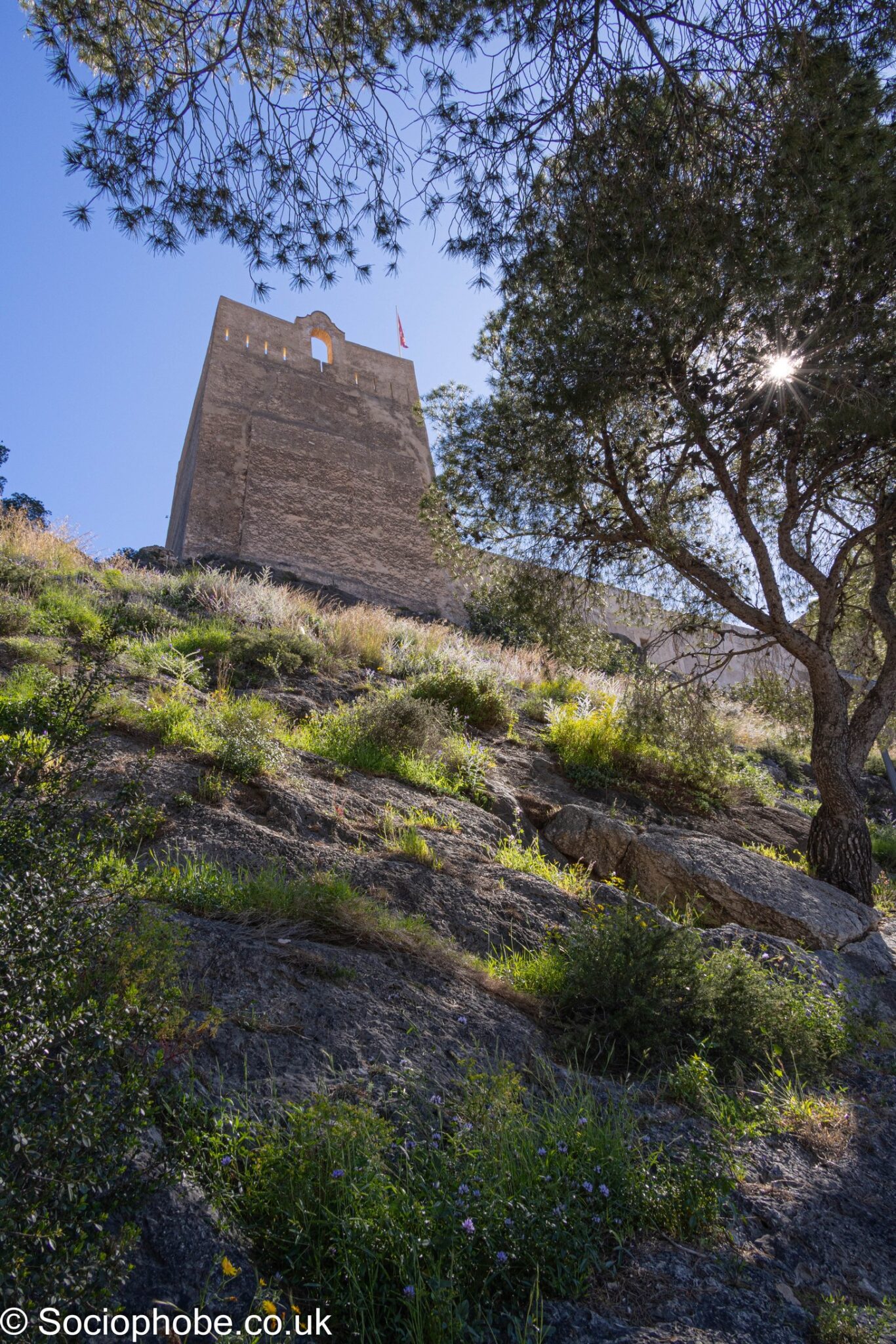
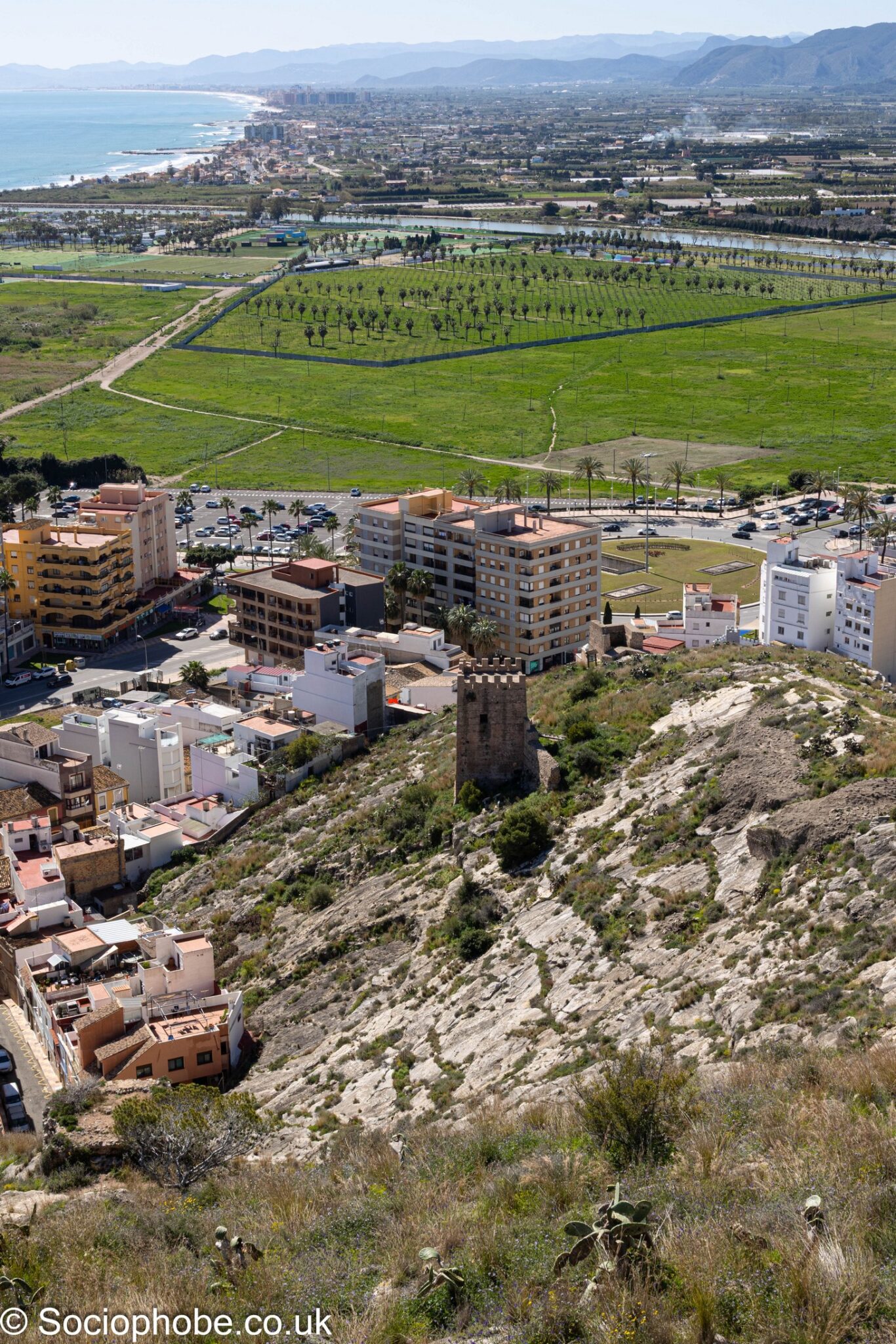
History
Castillo de Cullera is an imposing fortress built by the Caliphate of Córdoba in the 9th century to control the natural resources, communication routes and borders of the region. In addition, it fulfilled the function of sheltering troops, cavalry, cattle and population when they tried to besiege the city. Around the castle we can find different towers and fortified sections: Torre de la Reina Mora, Torre Miranda, Torre del Racó de San Antonio, Torre Desmochada and Torre Octogonal.
In the 11th century it became part of the defenses of the Taifa of Valencia. According to the story of the Cantar del Mío Cid, Cullera was one of the fortifications looted in the campaign of attacks orchestrated by the Campeador, made at night and treachery in the face of Almoravid impotence. According to the story, King Yussuf had to take refuge in Cullera after the failed attempt to recover the city of Valencia in order to save his life.
Later it passed into Christian hands after the conquest of James I, and in the 16th century it was a defense against Barbary pirates, also playing a leading role in the War of Independence and the Carlist Wars in the 19th century.
So, if you think that’s not reason enough to visit it by bike, you don’t have a soul.
References
The historical information above is copied from lazypedals.com guide to castles that you can cycle to, near Valencia.
There is a lovely guide to the castle and town on get readyforadventure.com
Riberana.es has some nice videos of the site including a drone tour.
Komoot has some great walks in the area of the castle.
MilitaryHistory.com has an interesting article on the Barbary sack of the town in 1550.