

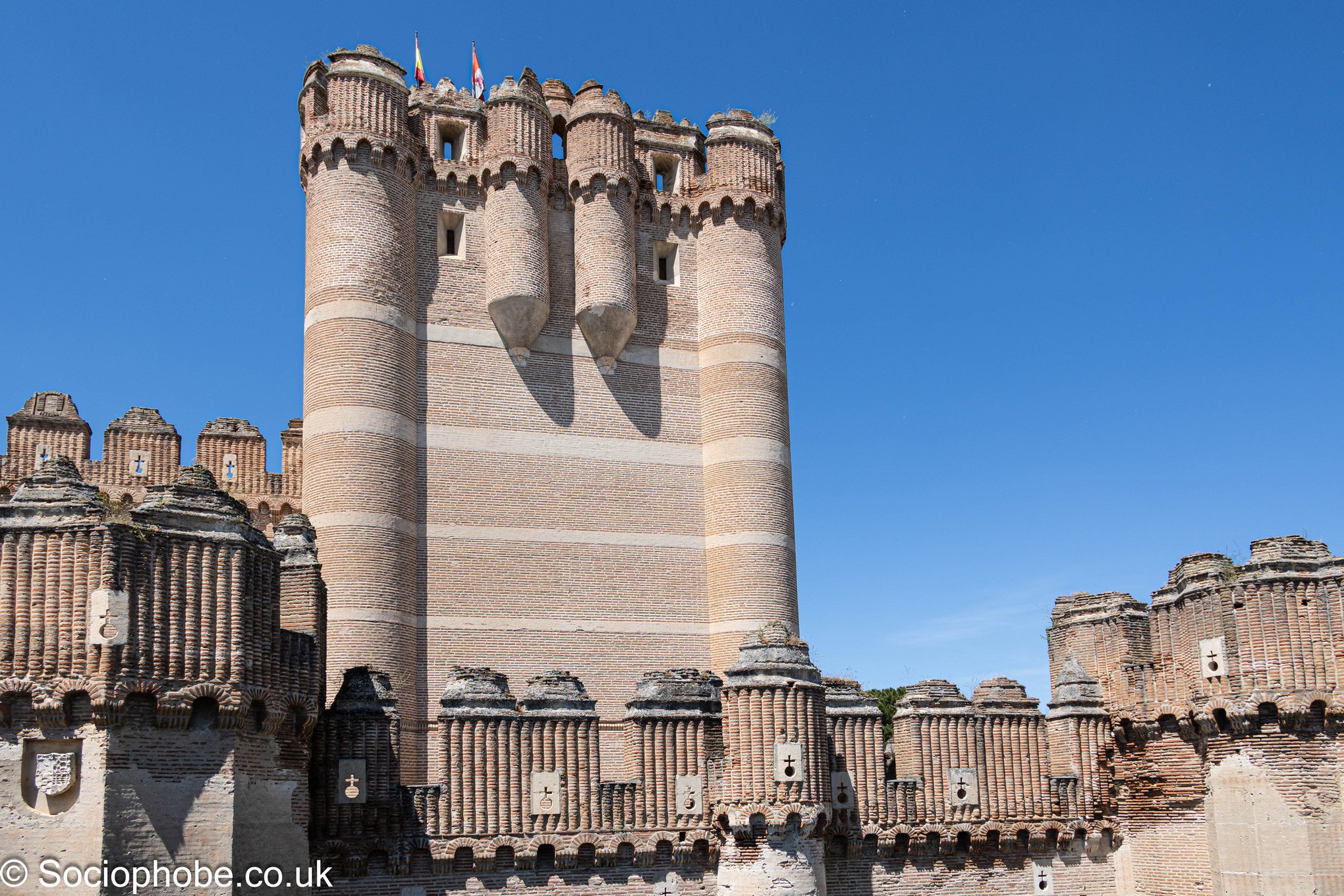
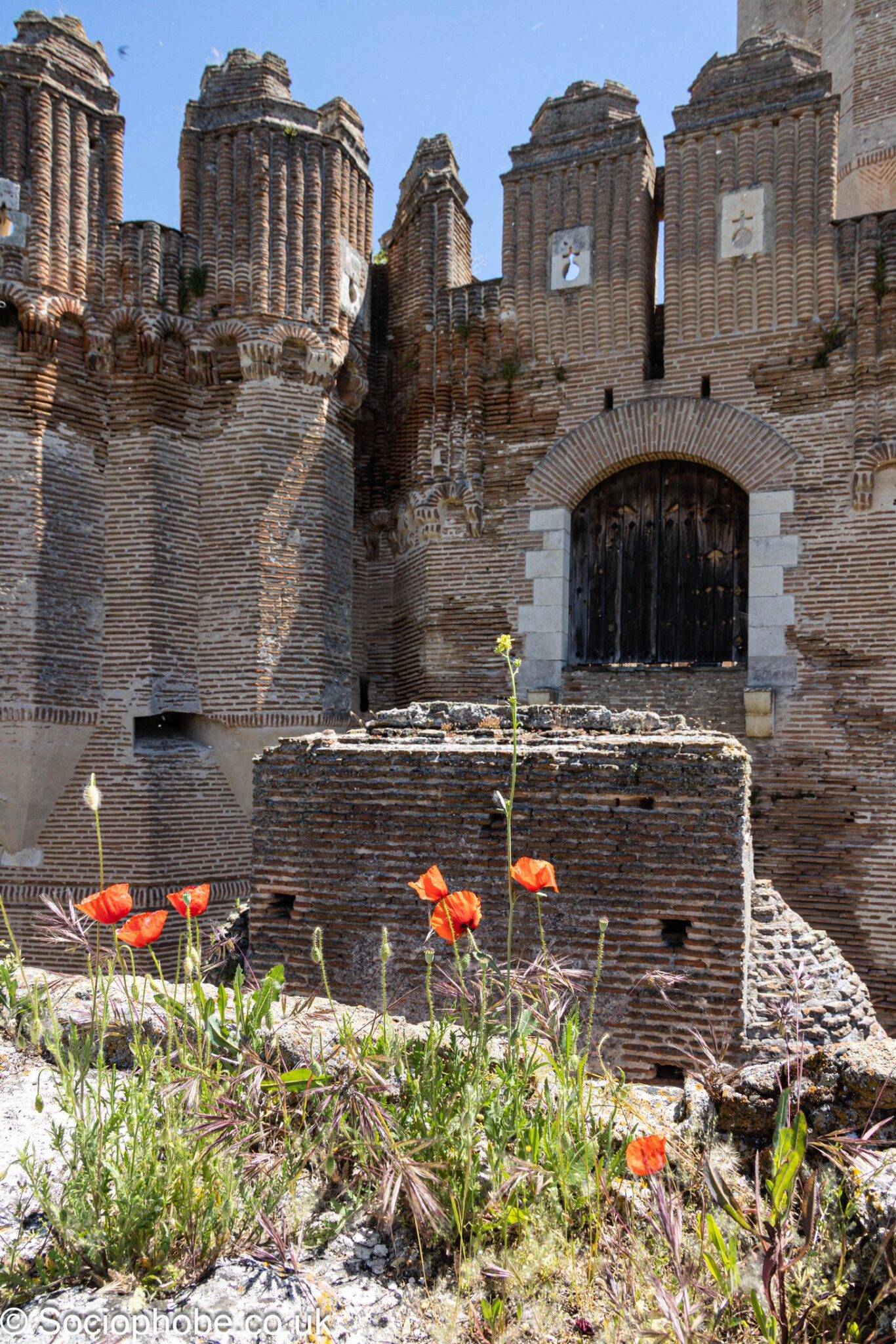
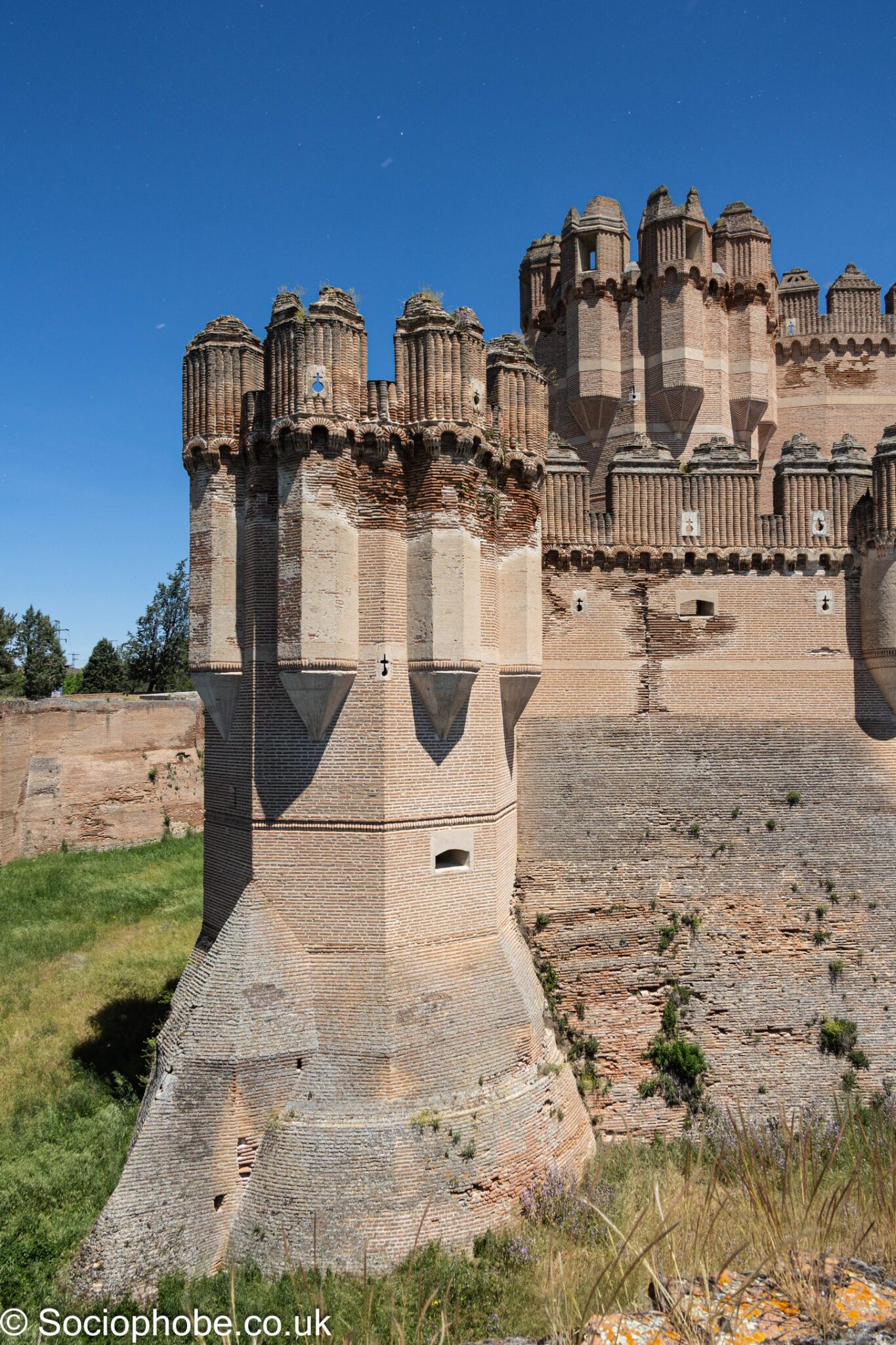
Castillo de Coca (Coca Castle) is a fabulously ornate 15th century brick fortification built in the Mudejar Gothic style, in north west Spain. From the eighteenth century the castle fell in to disrepair, culminating in the aristocratic Alba family stripping it of ornamentation in 1828 before it passed to state ownership in 1926 and restoration work started in 1954.

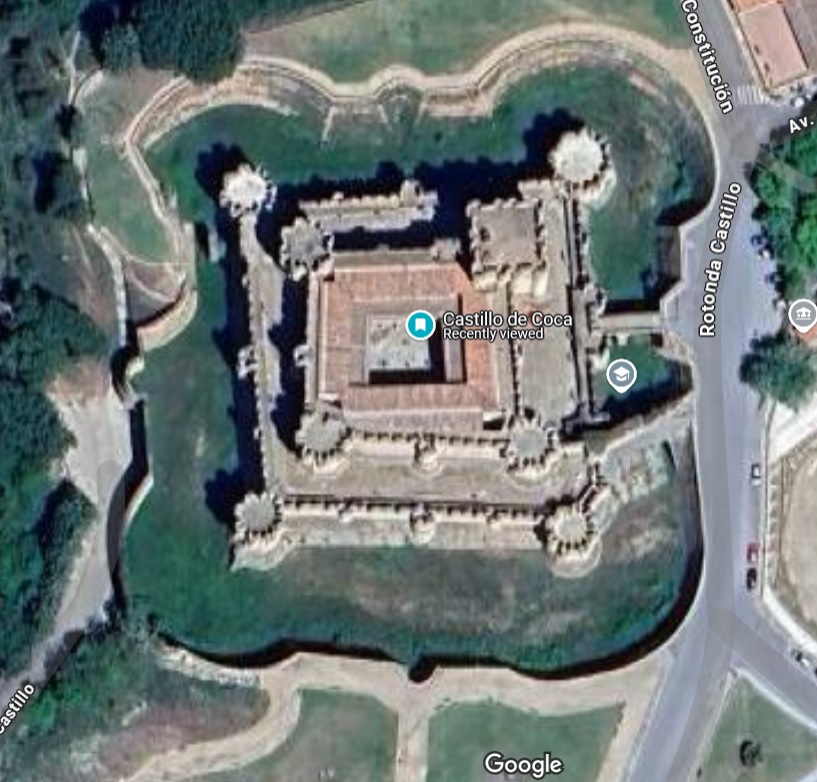
Visiting Coca Castle
Coca Castle can easily be visited as a day trip from Madrid or Valladolid and combined with La Mota castle, another Mudejar creation.
The castle has a decent sized car park opposite the main gate, under the shade of some trees. There are additional car parks in the town.
Entry is €3 and that allows you access to the keep and rooftop as well as the outer walls.
The castle closes for lunch from 13:00 until 16:00 I think. Full information is on the castle website, listed below.
My Experience
Coca Castle was another Gothic Mudejar brick extravaganza, again built in the 15th century, and only a 30 minute drive away from La Mota castle. We visited as part of a road trip around Valladolid, Avila and Segovia, detailed in my travel blog here.
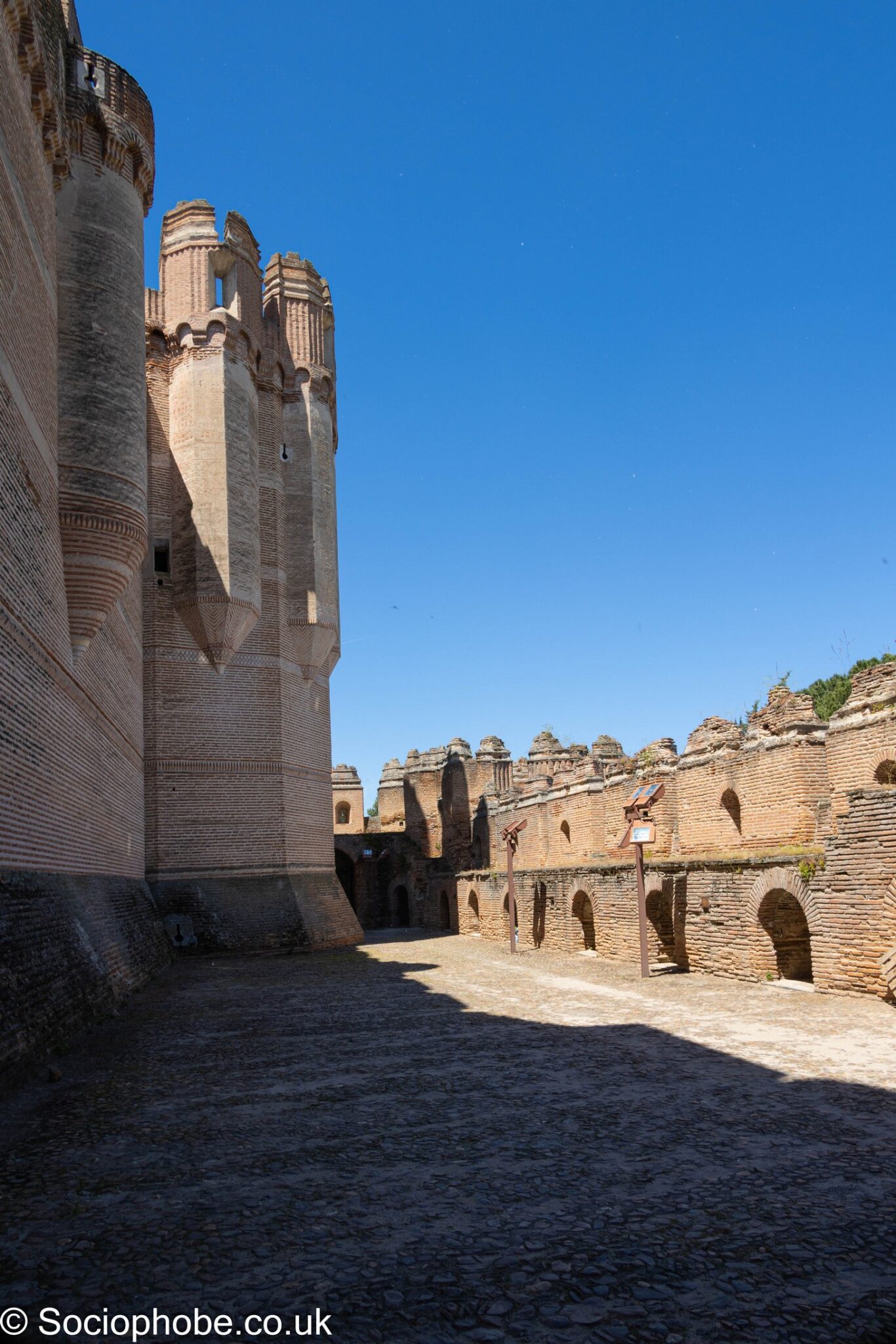
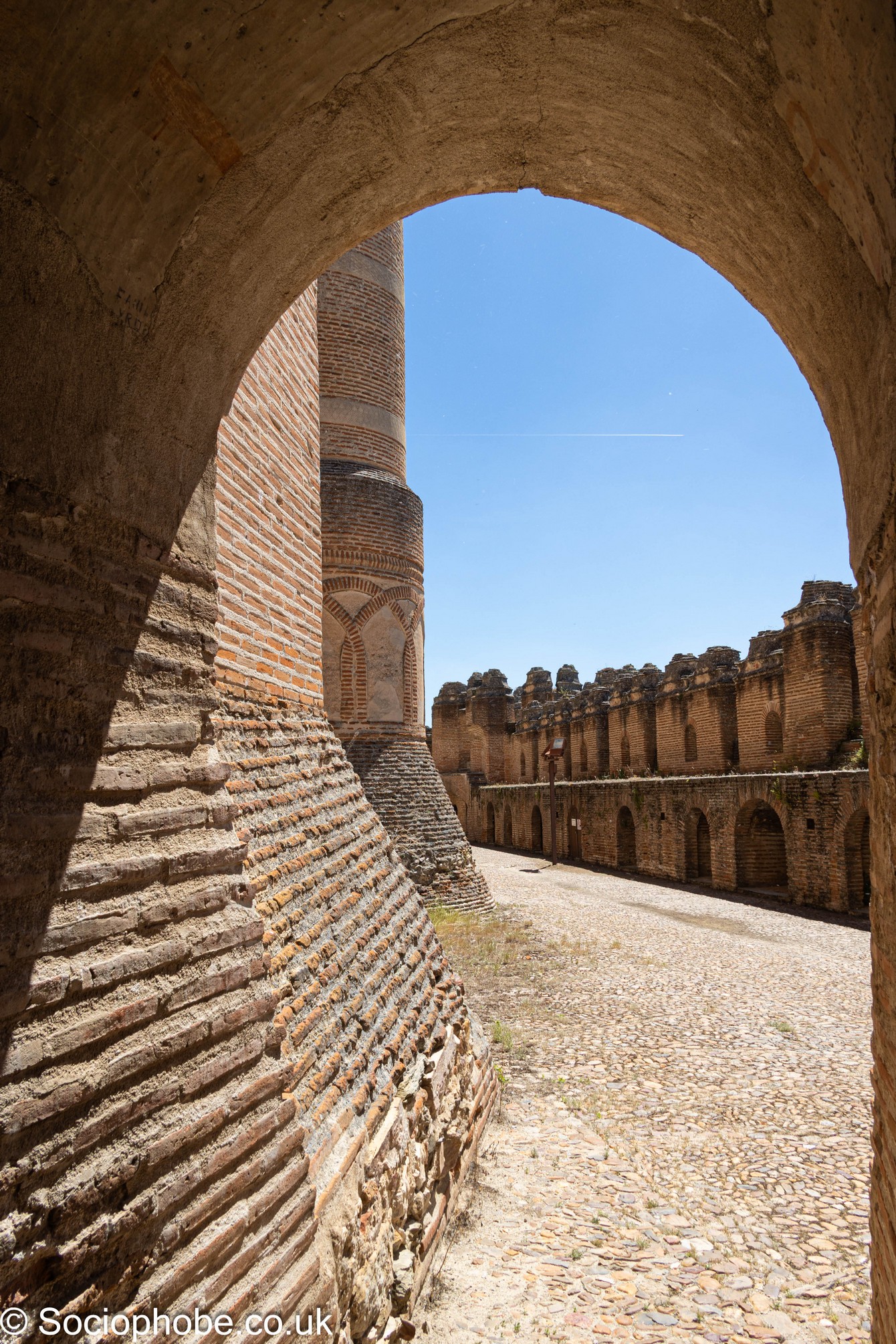
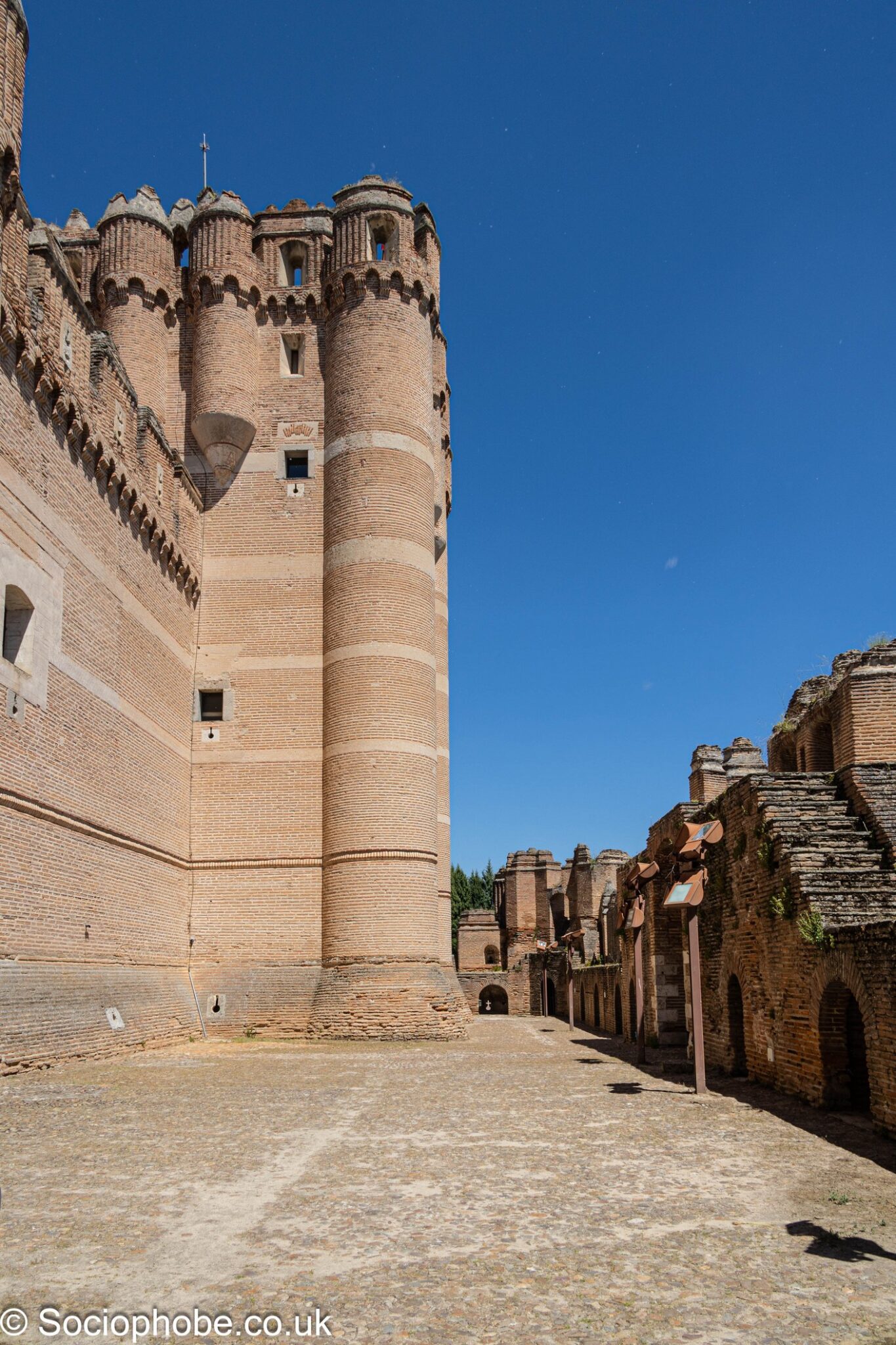
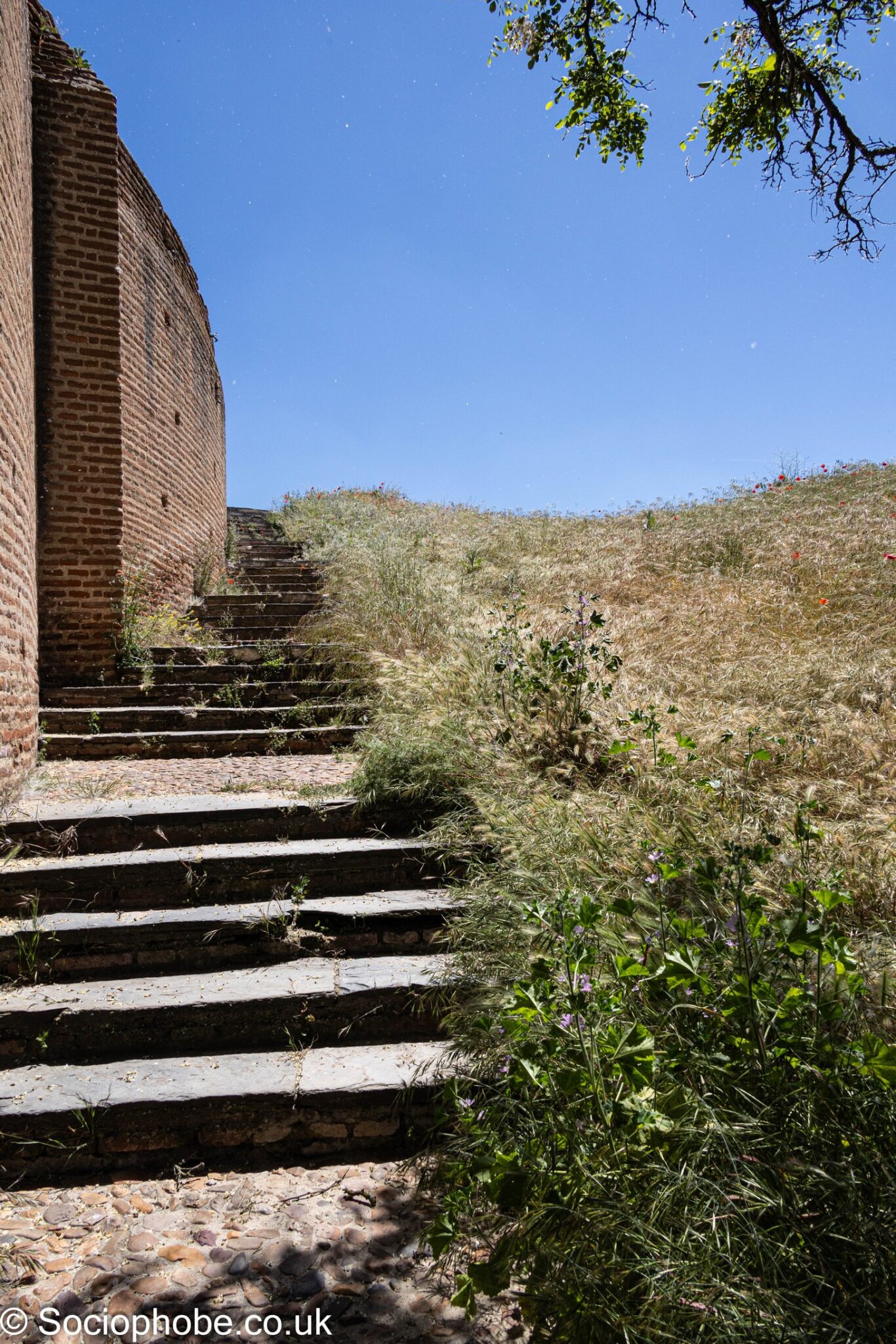
Once we got inside we saw that we only had 30 minutes before they closed for lunch so we did a whirlwind tour of the keep and rooftop before taking our time exploring the outer bailey and then doing a circuit outside the walls.
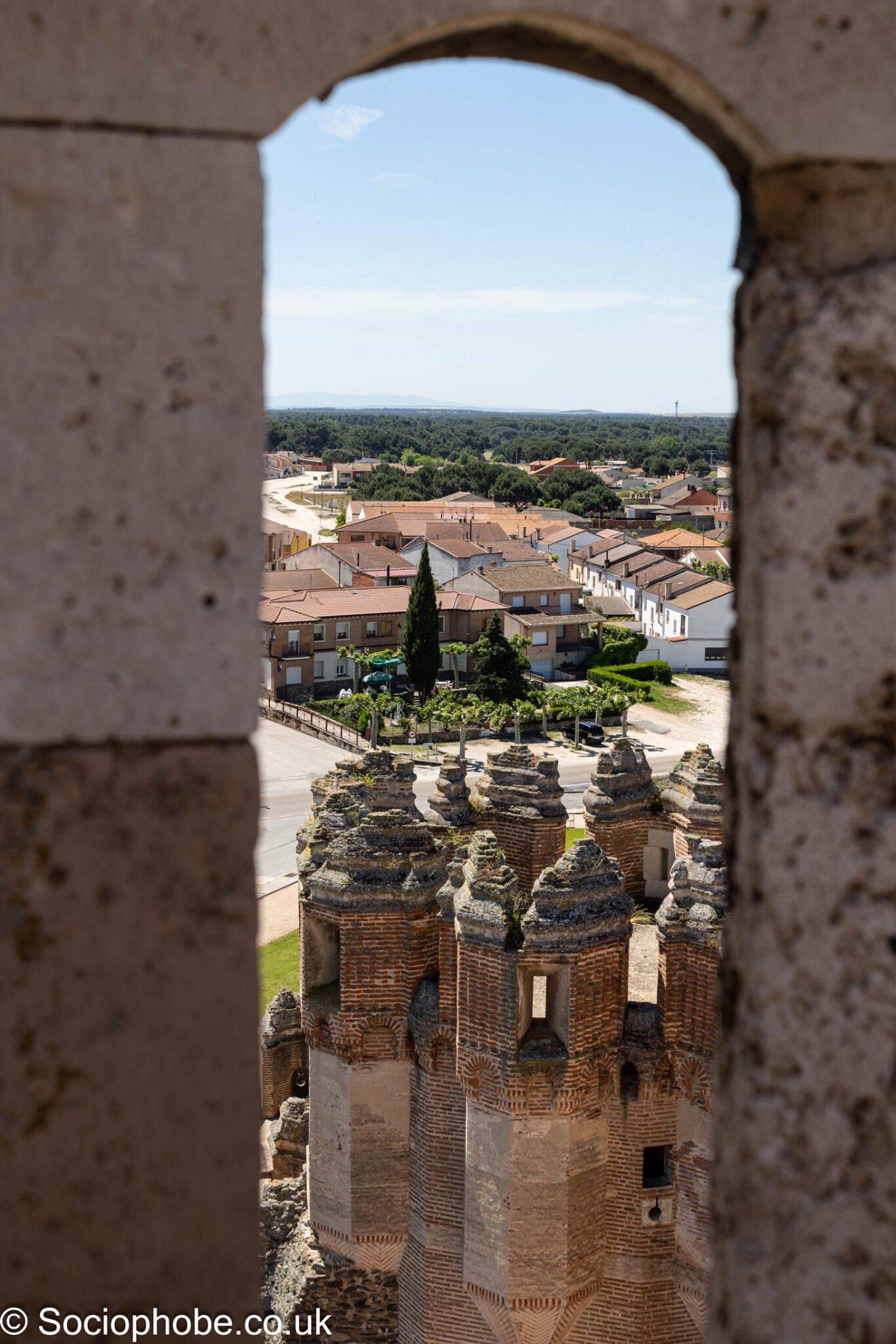
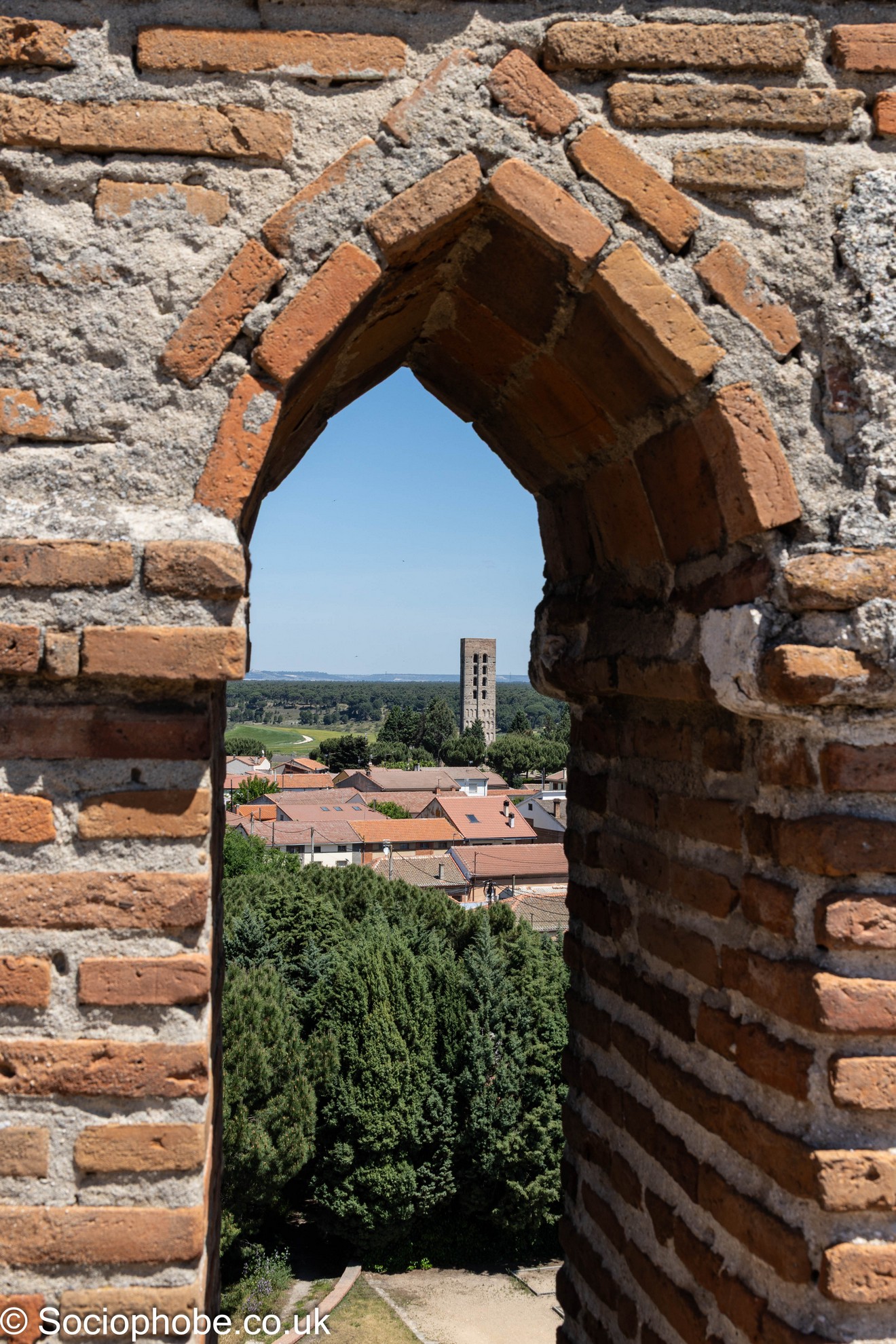
This castle was even more ornate than La Mota but was also very overgrown on the battlements and the route through the keep started with climbing four flights of a dilapidated spiral staircase, not Deb’s favourite thing! Mum and I went on ahead , leaving Deb to go at her own pace. The rooftop battlement views were just awesome and the rooms had lots of frescoed decoration.
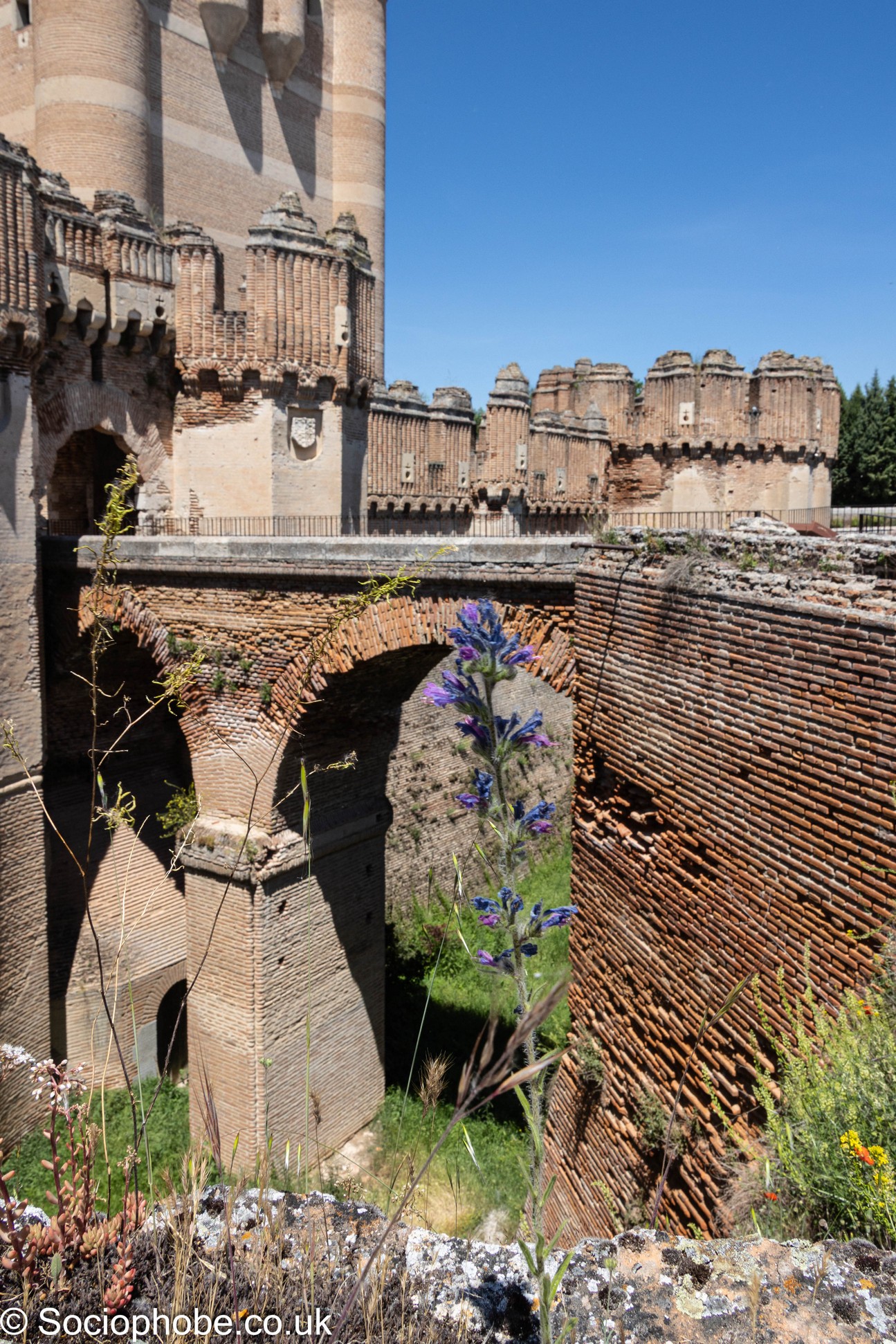
We spent about another 30 minutes walking around the interior of the walls and then Mum and Deb went to find a cafe and I did a circuit of the castle exterior. Like La Mota the castle walls appear deceptively low as the moat is barely visible until up close and is on low lying ground rather than a hill. The restoration gives you a chance to see the castle as it was in its heyday, rather than being a crumbling pile of authentic bricks.
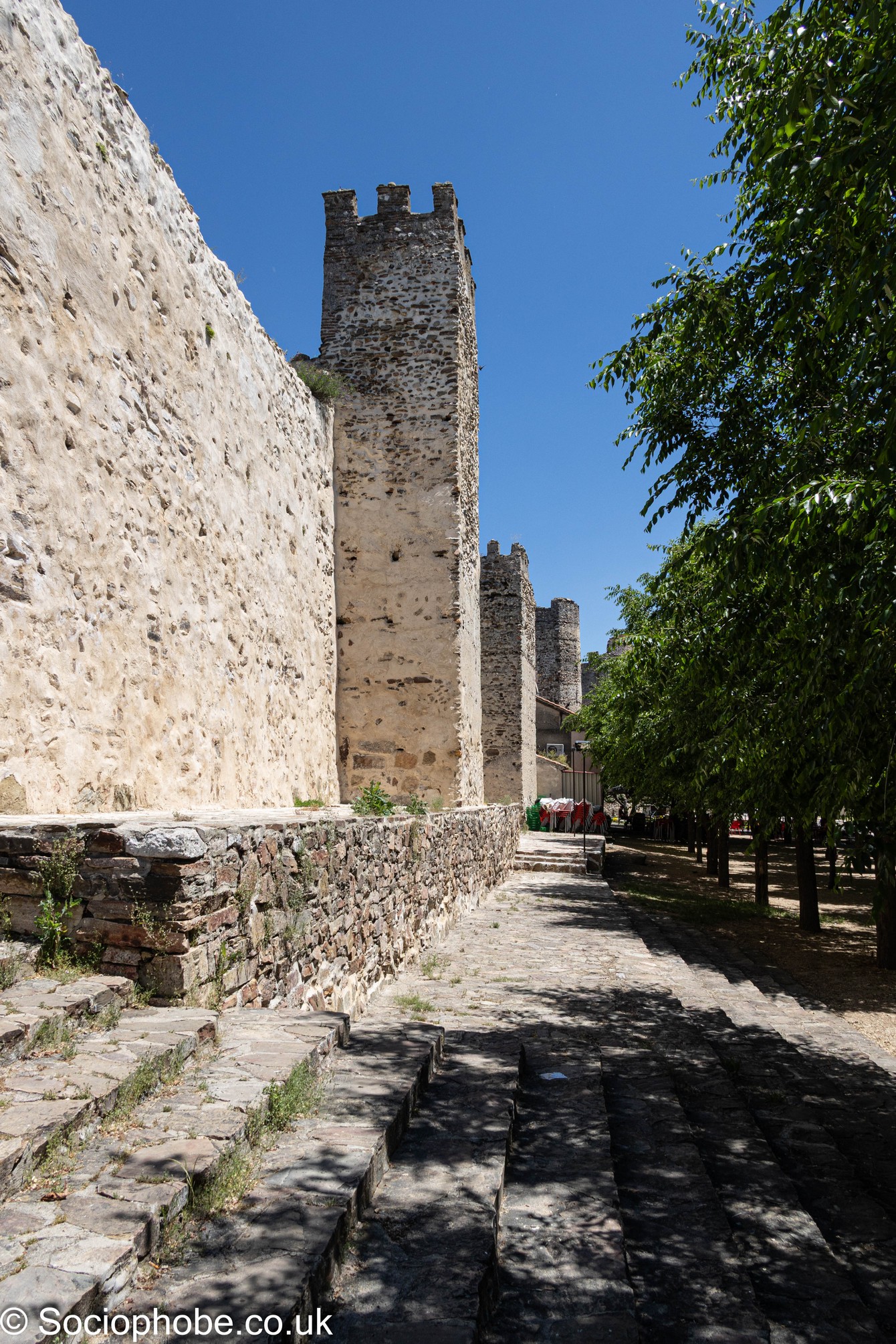
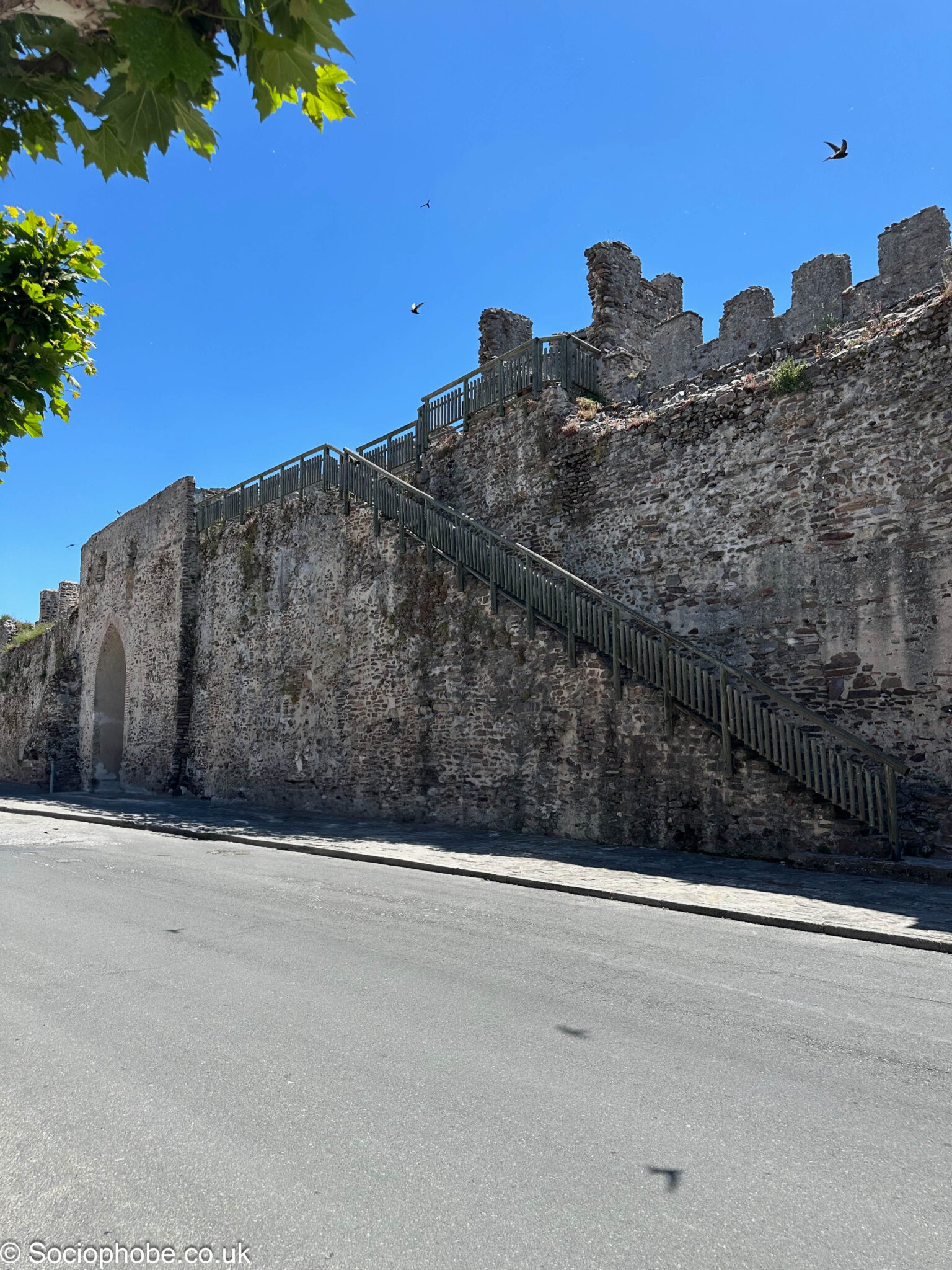
I walked through a park to the original town walls and gate, saw the statue to Theodisius I (late Roman emperor born in the town) and then met Mum and Deb for a coffee before we all went back to the town gates, sat in the little cafe next to the sky pine trees and enjoyed an ice cream. Coca seemed a beautiful little town, clean, quiet and pretty. The drive back to the city was through more wonderful scenery, very much like Wiltshire with low hills, scattered woodland and lots of farmland, but a lot warmer!
Coca Castle Photo Gallery















History
The town of Coca was first established during Roman rule. It was called Cauca at that time. In 1439 Coca came under the control of Marquis of Santillana. In 1451 negotiations between Santillana and Fonseca families started. These would later culminate in 1453 with Coca being exchanged for Saldaña. Construction of the Coca Castle began as soon as the treaty was ratified by Juan II.
Alonso de Fonseca y Avellaneda has been credited with the construction of the castle. The castle was built under the supervision of a master builder and most of the work had been completed by 1493. In 1502 it was decreed that castle and the town could only be passed down to male heirs, so after Alonso’s death it passed on to Antonio de Fonseca. In 1512 a number of extra ornamental features were added to the keep and the castle exterior under the supervision of engineers. The castle came under attack during the Revolt of the Comuneros in 1521. Communeras troops attacked the castle in retaliation to the burning of Medina del Campo. Medina del Campo had been previously attacked by the Royalists as it housed a large number of artillery pieces, and it had subsequently been razed after Royalists met heavy resistance. In 1645, Gaspar Alfonso Pérez de Guzmán, 9th Duke of Medina Sidonia was accused to treachery after he instigated the Andalusian independentist conspiracy of 1641, and was imprisoned in the castle.
The castle went through a period of repairs and renovations from the sixteenth to the eighteenth century AD. Most notable among these renovations was the addition of the Patio de Armas in sixteenth century, the construction of a gallery between the Keep (Torres del Homenaje) and Pedro Mata Tower in the seventeenth century AD and the extensive renovations of 1715. After 1730 the castle suffered a long period of neglect that led to it falling into disrepair, and subsequently many important artifacts were either lost or destroyed. During the Peninsular War, Coca Castle was captured by the French, who occupied the castle in 1808 and vacated it in 1812. During these four years the castle further deteriorated and much of it fell into ruin. The French troops were, obviously, not concerned with the upkeep of the castle and many ornamental features fell into ruin during this time. Another incident that led to the castle falling further into ruin was the 1828 sale of materials by the administrator of the castle. As the castle was under the ownership of the House of Alba at that time, the owners tore away a number of columns, marble pieces and other ornamental features and sold them off to the highest bidder.
Coca Castle was declared a national monument of Spain by Decree-Law on August 9, 1926. By the same decree, it was nationalized. The control of the castle itself and the adjoining land was taken over by the government of Spain from the House of Alba. No major restorative work was done until 1954 when state-sponsored repairs and renovations were started. The Ministry in charge of the castle wanted to restore it so that they could open a school of forestry training. The repair and renovation work was conducted under the supervision of the Spanish avant-garde architect Miguel de los Santos Nicolás. The team of architects, which included Francisco Pons Sorolla was given carte blanche by the General Directorate of Fine Arts. The renovations took four years and were completed in 1958. After the renovations the “Escuela de Capacitación Forestal” (Forestry school) was opened in 1958.
References
The official castle website is here, Spanish language only.
Wiki has the most detailed history of the castle I could find online and I have used that above.
Everycastle has some nice info on the architecture of Coca, here.
There is another nice write up on magical europe.
It really was a brilliant visit-the castle is so impressive and climbing the stairs to the top was well worth it-the views were amazing. In excellent condition and lovely countryside-it made a very pleasant excursion, especially the cafe stops in the lovely little town.:)