

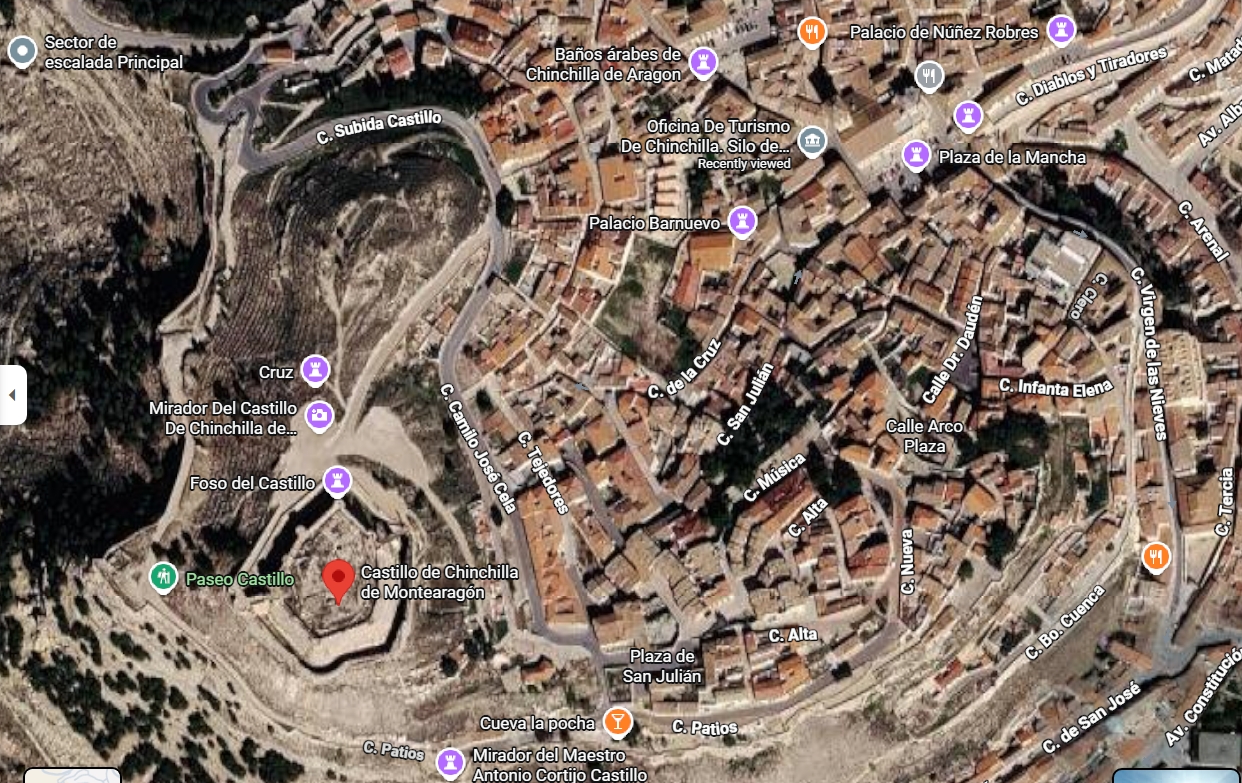
Built in the 15th century on 10th century Arab foundations the castle at Chinchilla was heavily damaged in 1812 and then used as a prison. The construction of the prison meant the entire interior of the castle was destroyed and then the prison itself was demolished in 1973. The interior of the castle can only be visited by guided tour.
Visiting Chinchilla Castle
The castle is, as usual, at the top of a hill and the car park is blocked off although people have moved the barriers and driven up to it while we’ve been there. There is street parking part way down the hill and a car park on the edge of town. Be aware that the town has some very interesting streets and corners so just because you got in, don’t assume you can get out!
The exterior can be visited for free but the interior can only be done as part of a guided tour which has to be booked in advance through the tourist office.
My Experience
The castle, in its current form, is a fifteenth century creation built on an earlier Arab fortification. Chinchilla was badly damaged by the French in 1812 and then the council cleared the interior completely in 1900 to build a prison, which was demolished in 1973. Restoration work started in 2010 but I think it was limited to putting up the signs saying restoration work was starting.
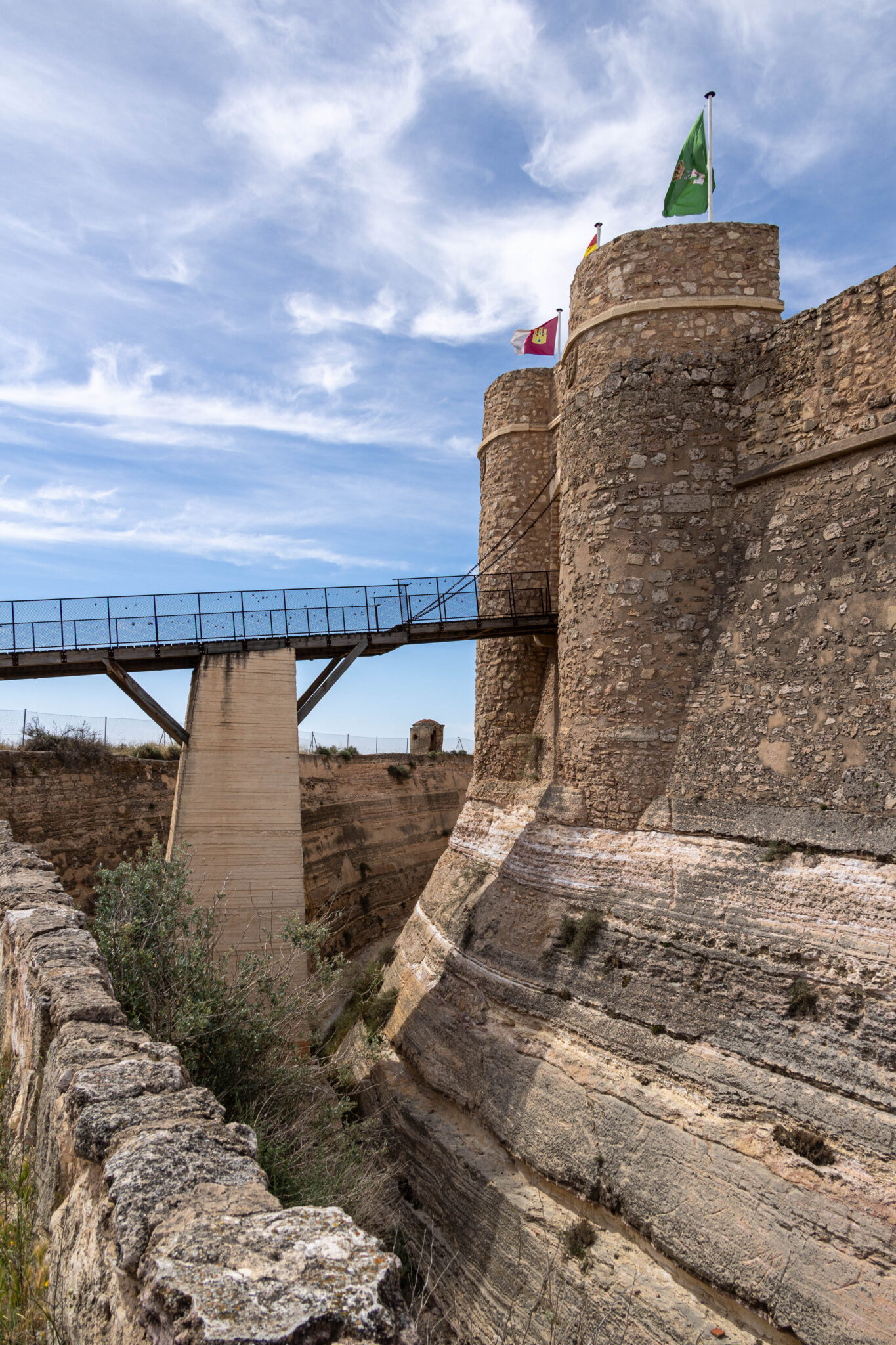
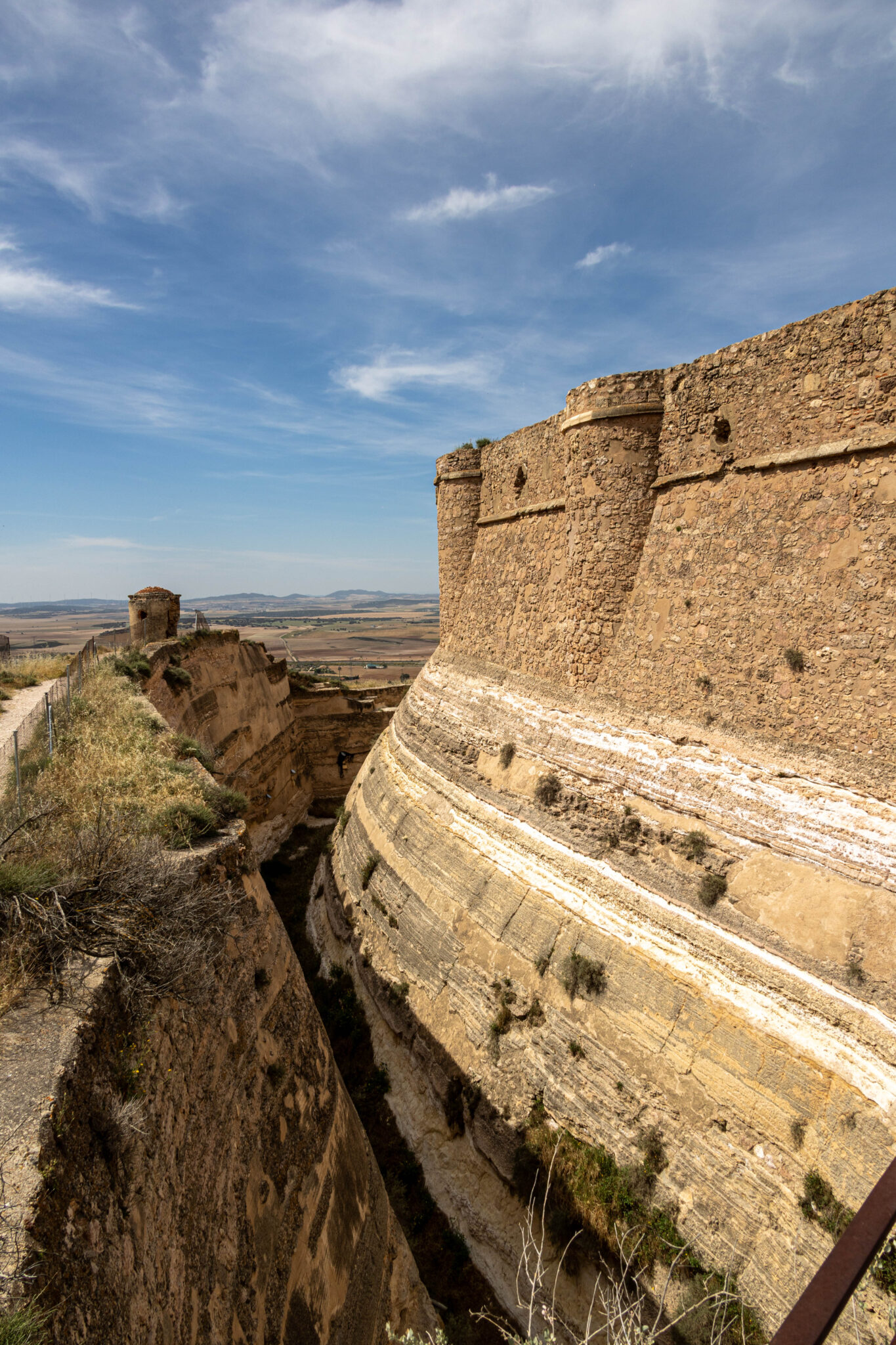
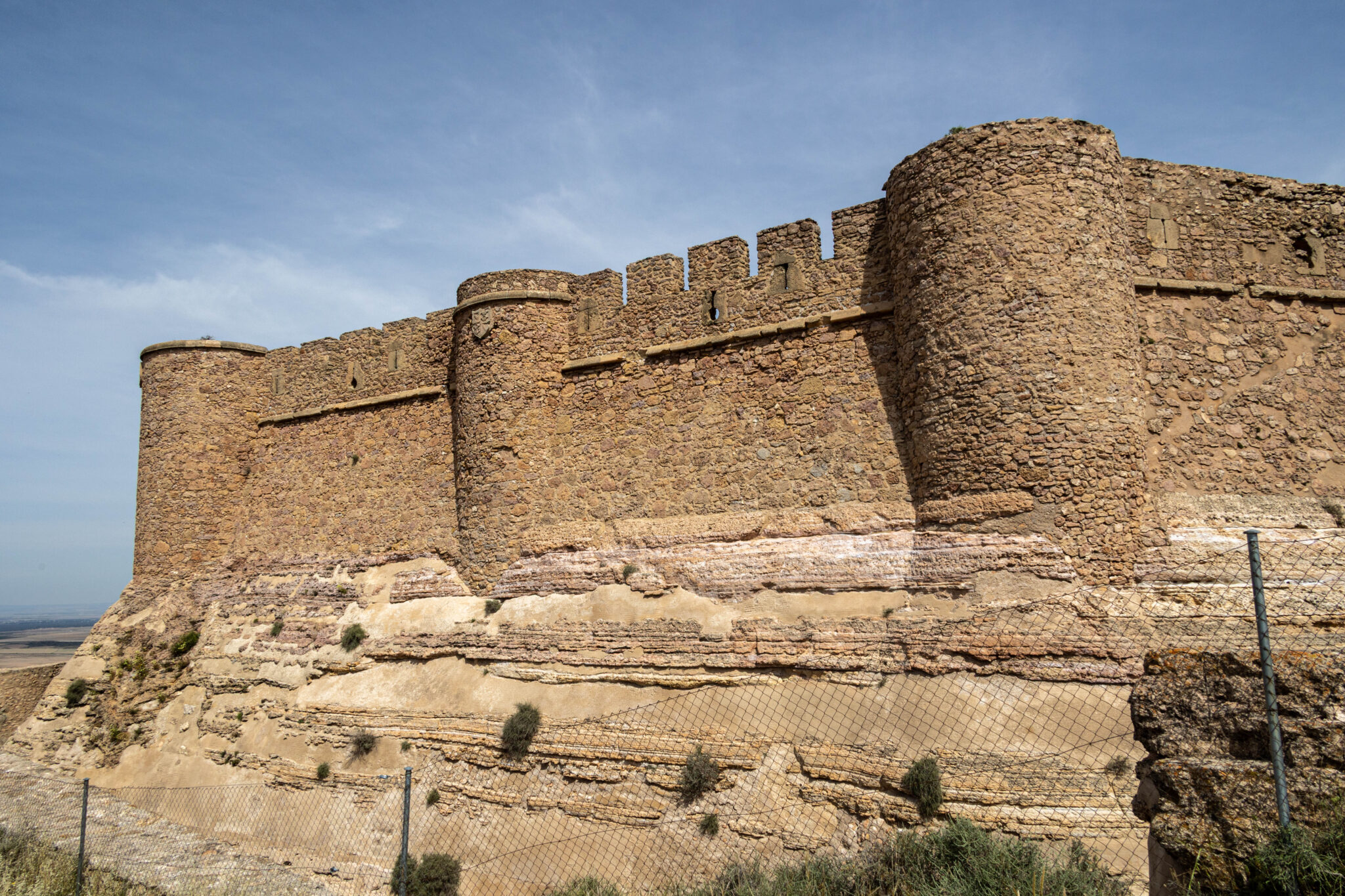
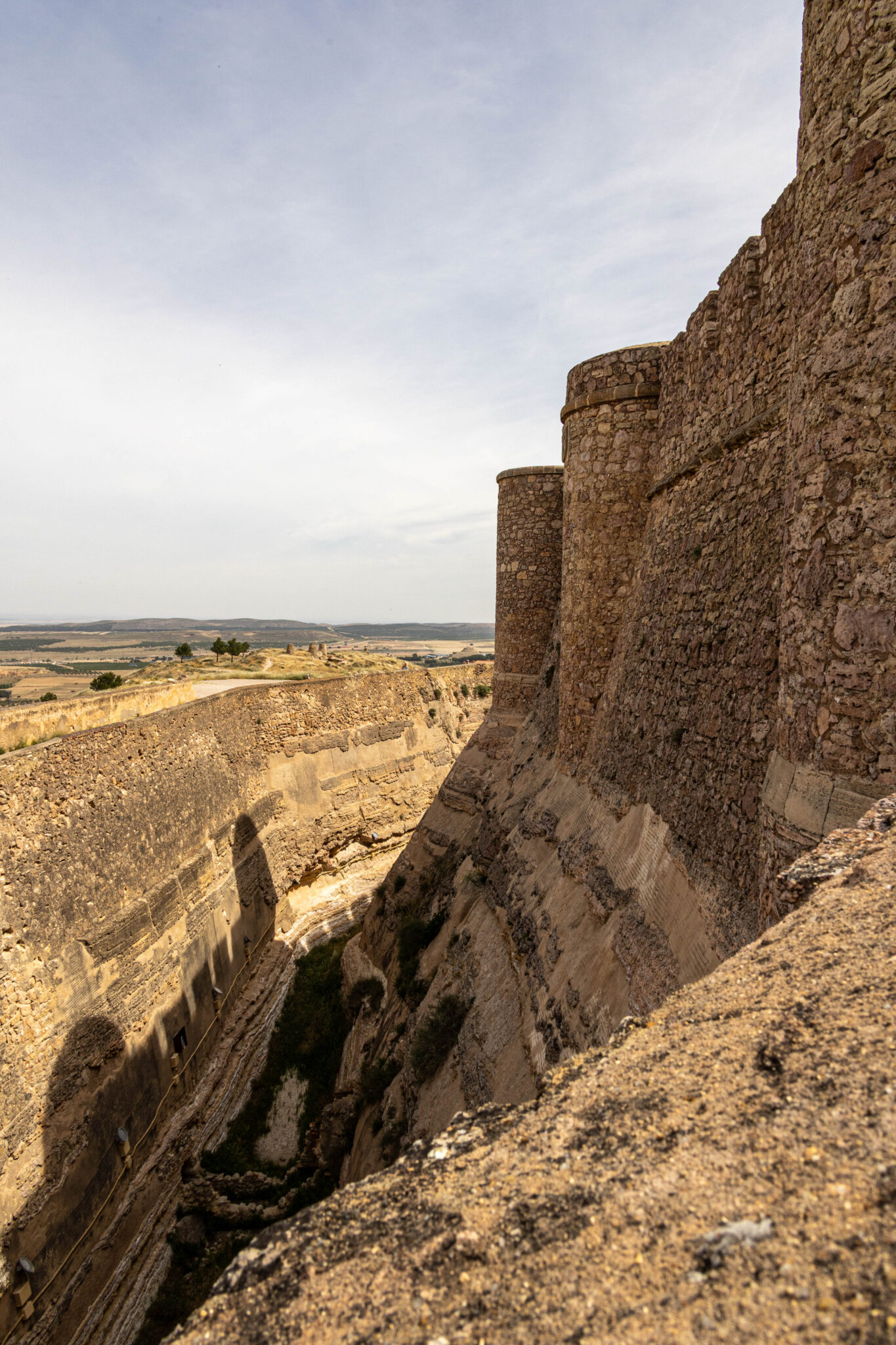
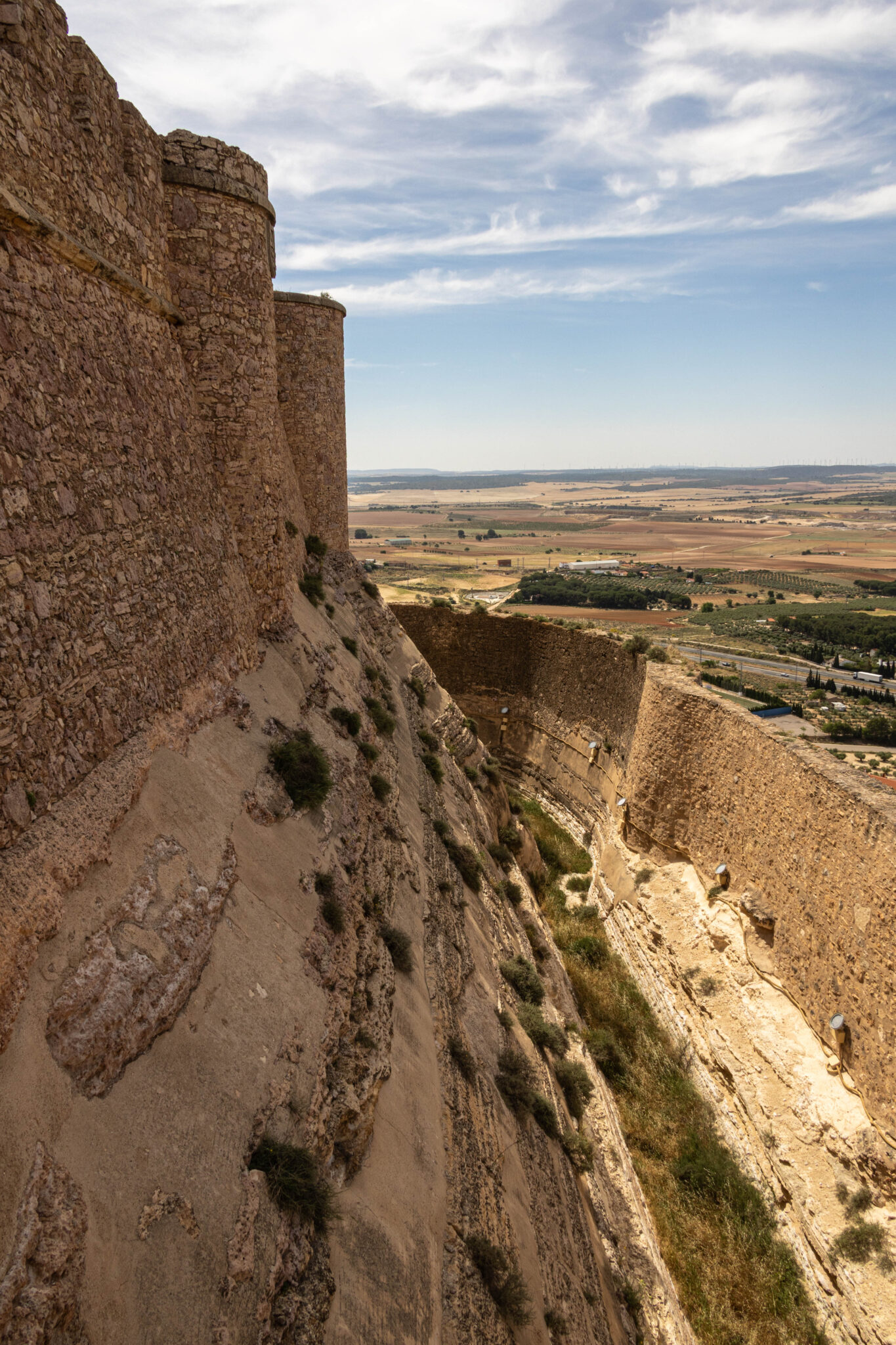
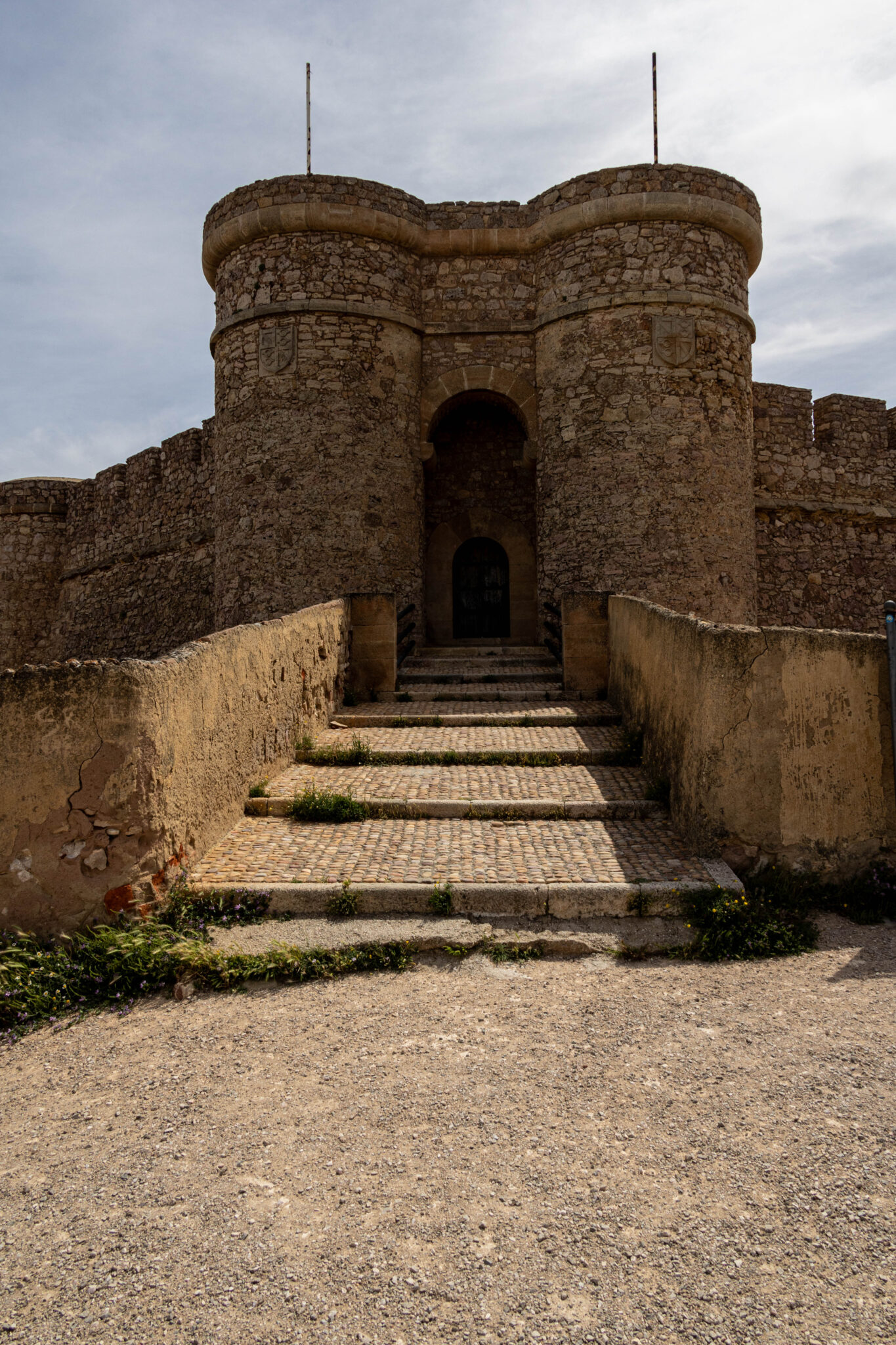
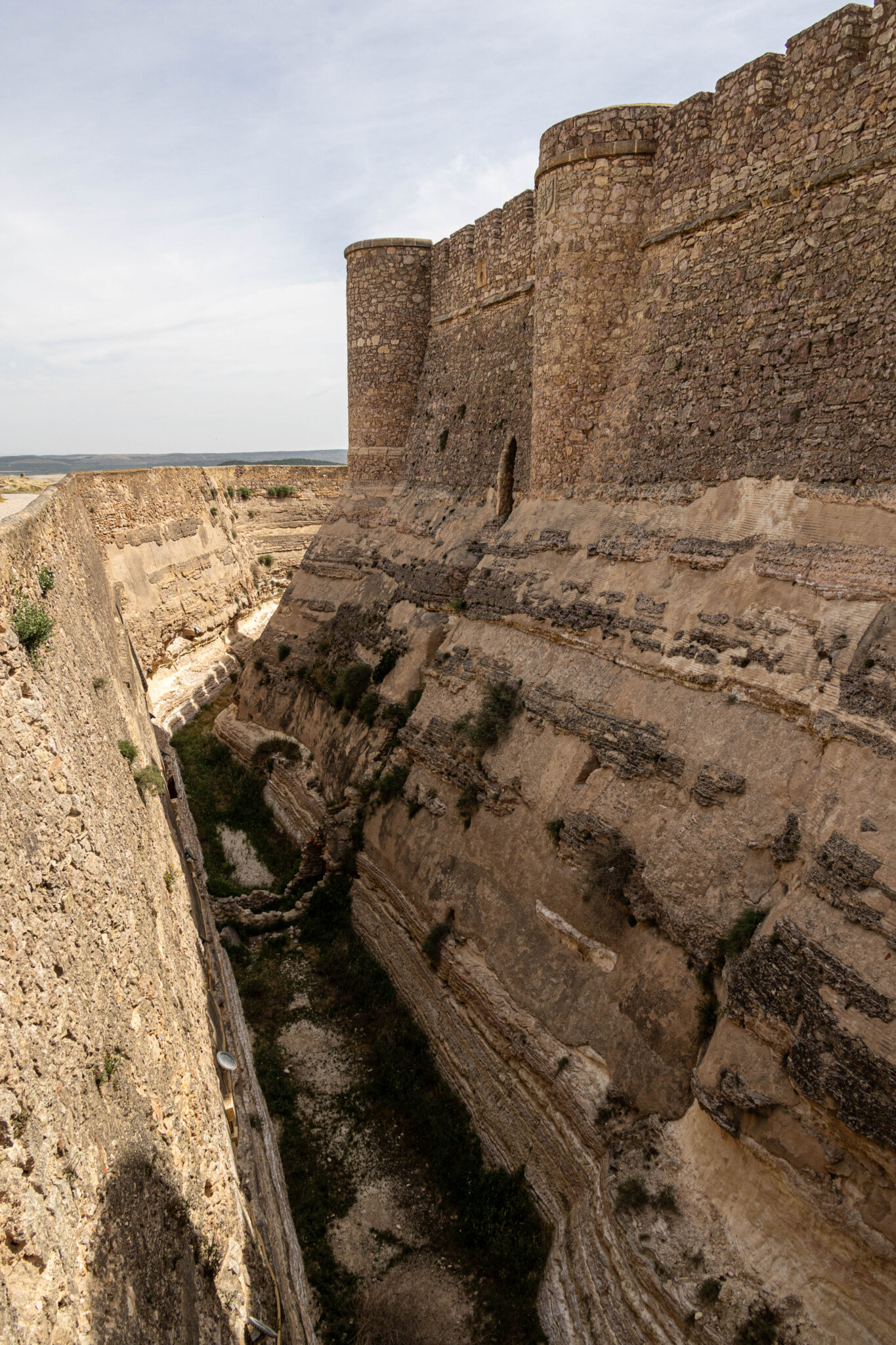
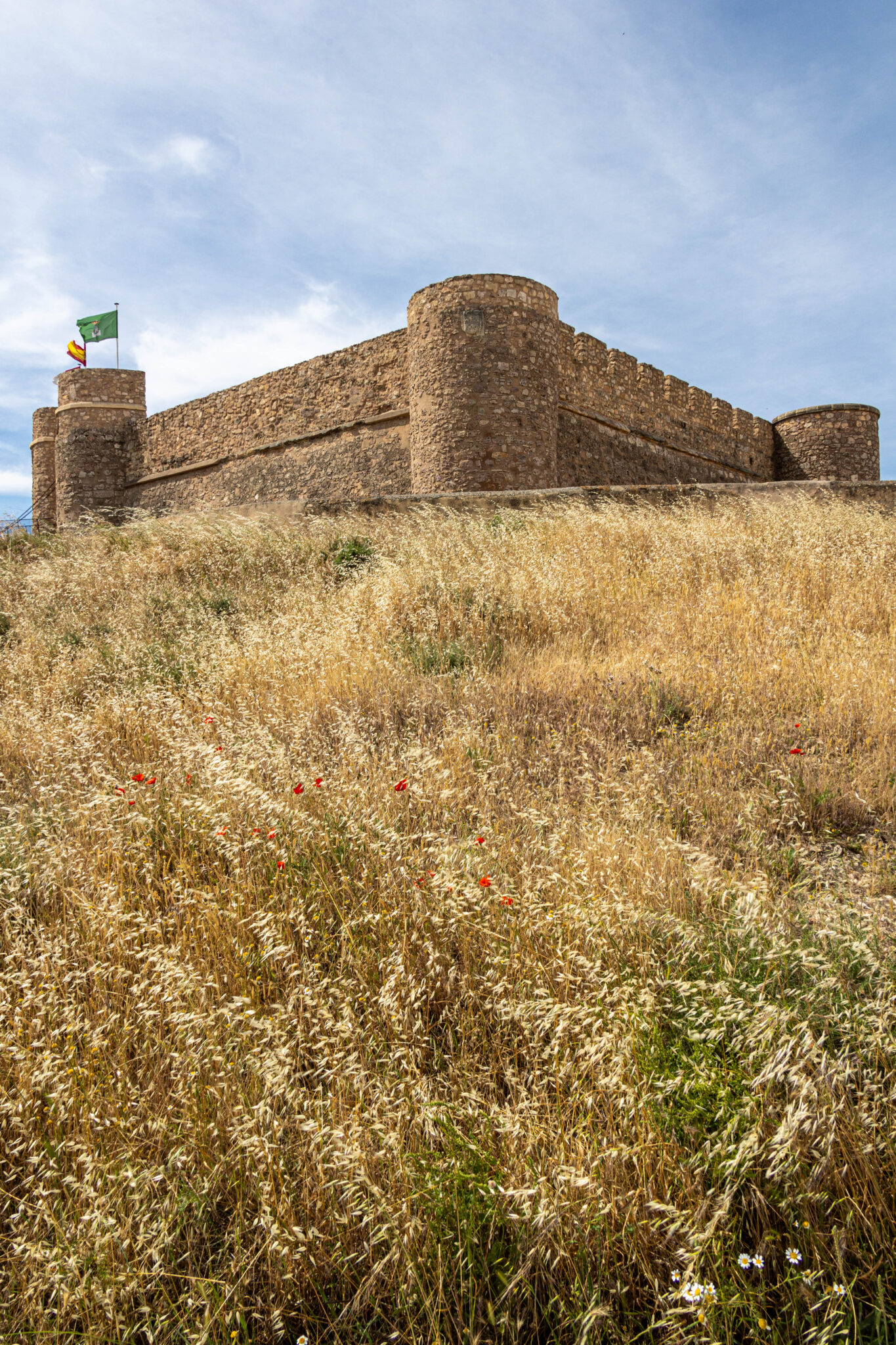
Currently you can only visit the exterior of the castle unless you visit as part of a guided city tour. These are arranged by the tourist office but we didn’t realise until it was too late to book. Hence, the first photos are just of the very impressive exterior moat, walls and towers.
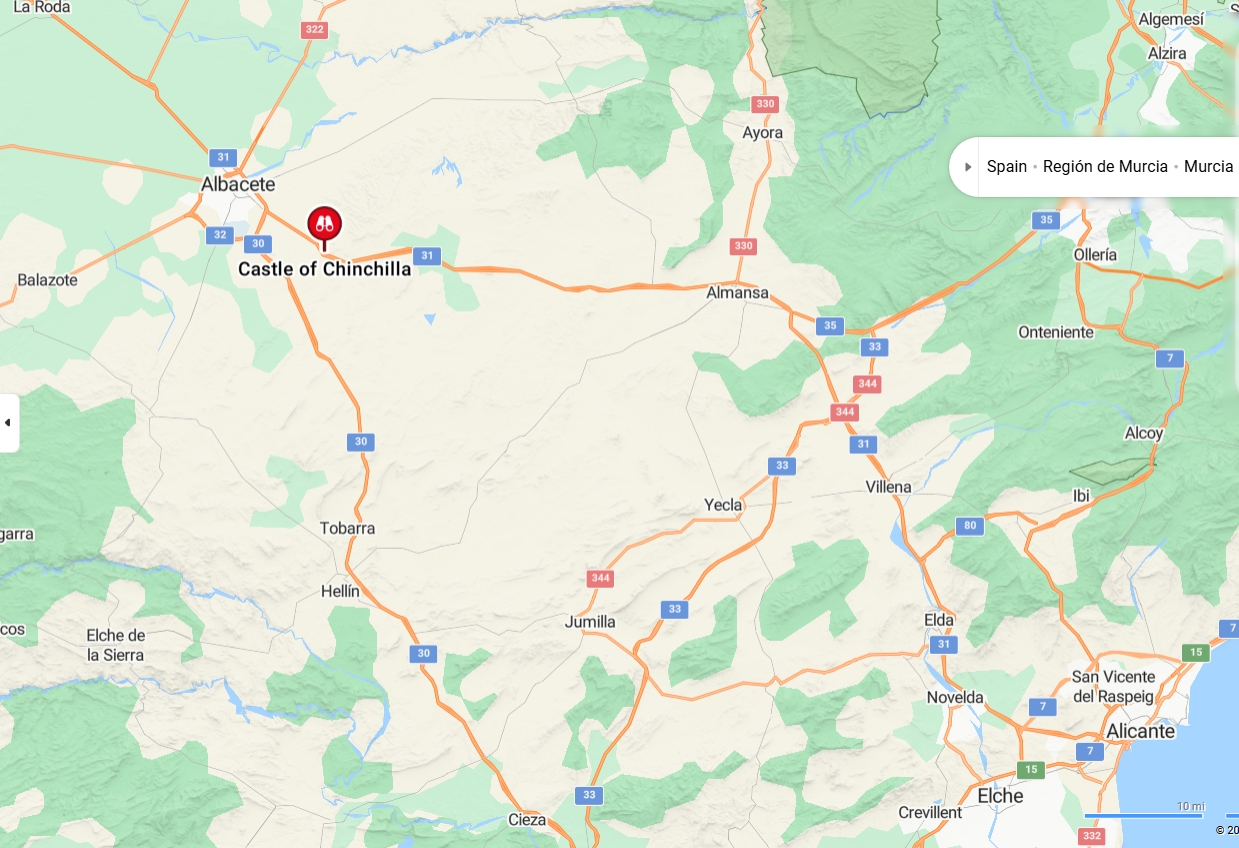
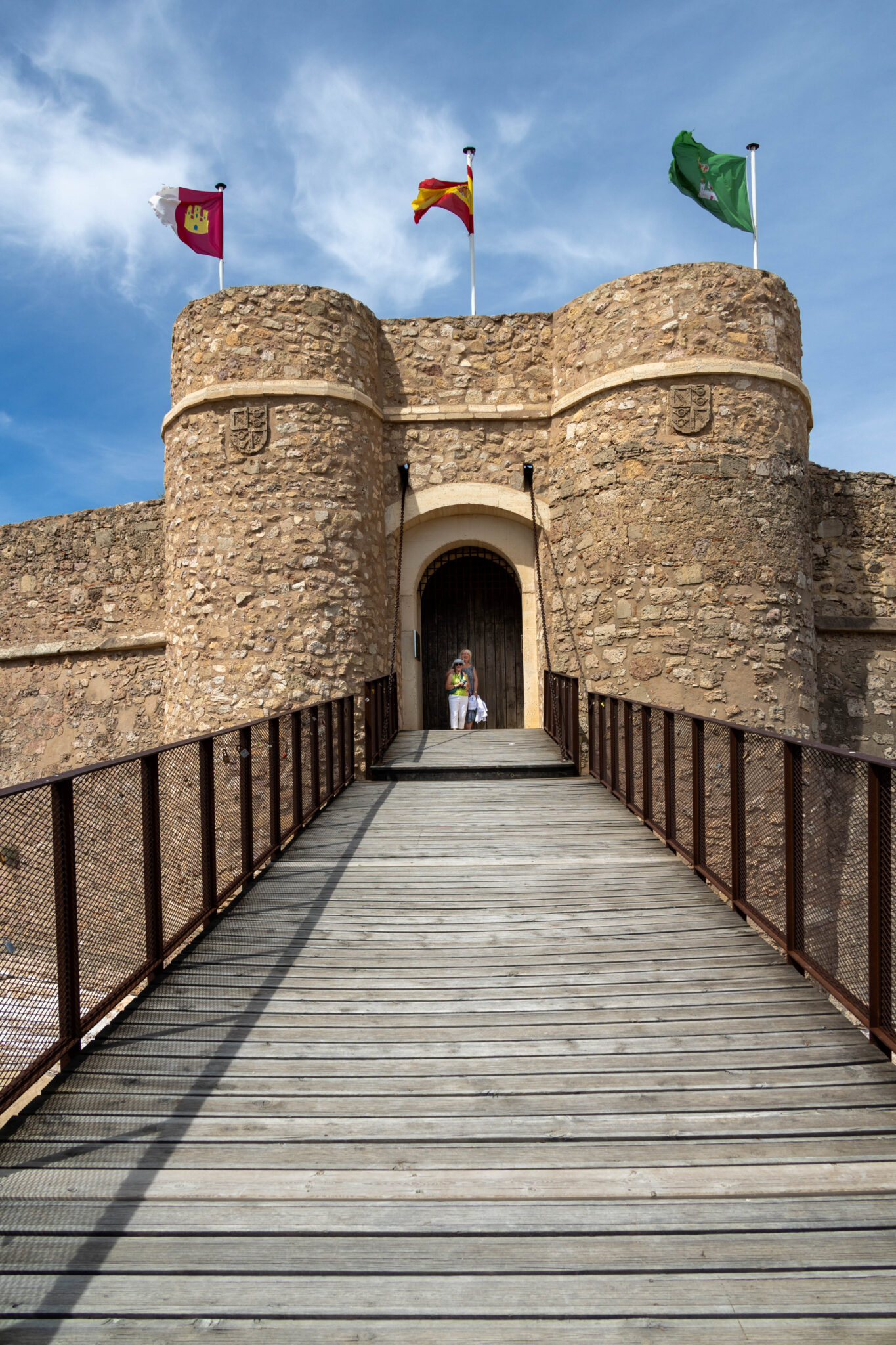
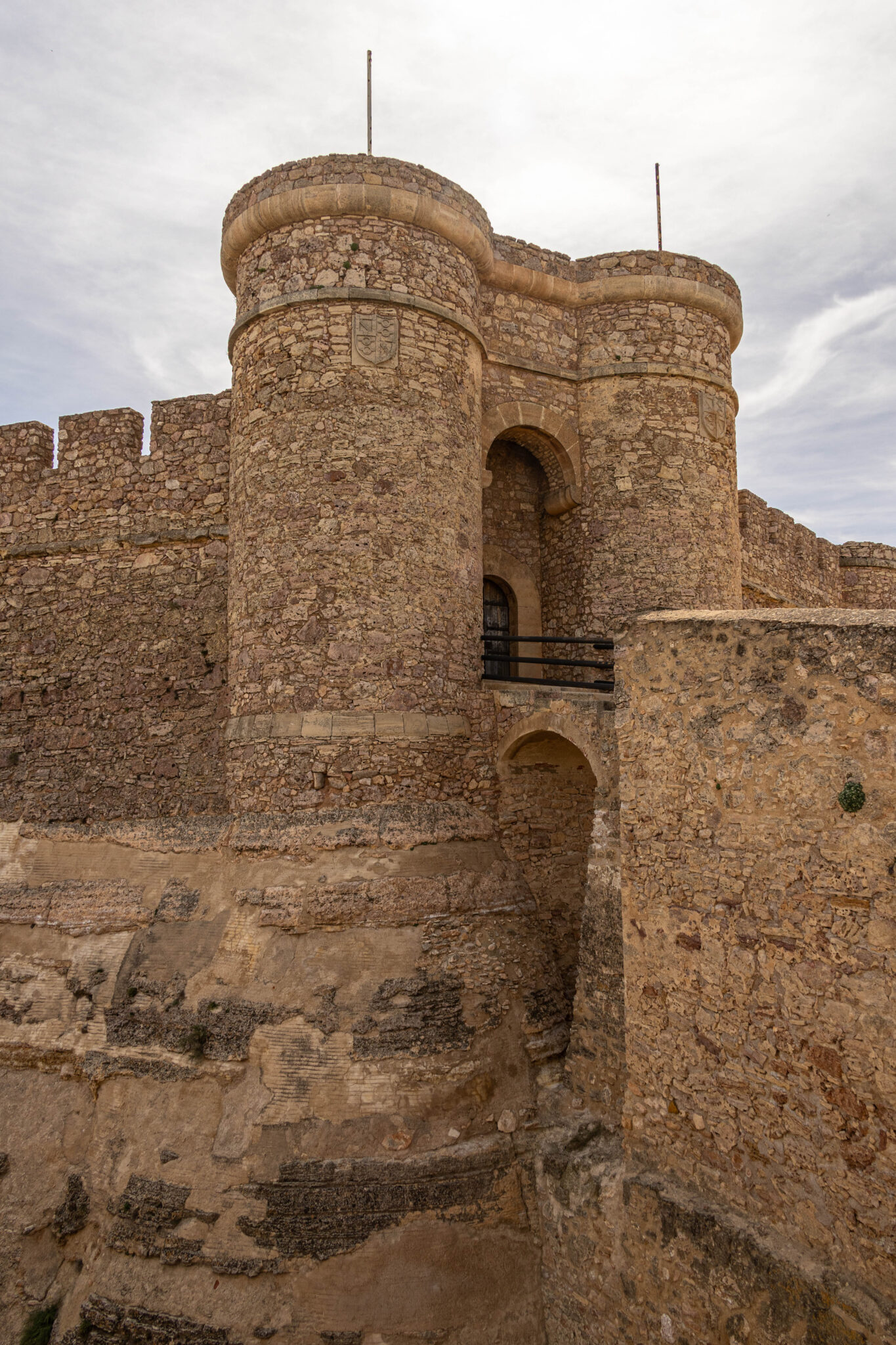
We returned a week later to take the guided tour and from the church we walked up the hill through various winding streets to the castle. We quickly skirted the exterior before Antonio explained the strategic importance of the site and pointed out the various roads that intersected on the plains below. Crossing the drawbridge we then entered the interior of the castle.
The inside of the castle was, frankly, like a building site. You could see traces of the original Muslim keep tower and walls, the keep was originally 35m tall with 10 storeys but was destroyed by the French in 1812 in an act of revenge against the castle’s defenders. The rest of the interior was cratered with holes or rubble from the demolished prison although you could also see the original Muslim cistern, 15m deep for collecting rainwater. We exited the castle via the wooden bridge over the moat (the moat took 10 years to dig!) and then walked down through the town to look at the cave houses.
Chinchilla Castle Photo Gallery



History
Human occupation of this part of the La Mancha plain can be traced back to pre-historic Iberians and the Romans. After the fall of Rome in the early 5th century, Germanic Visigoths crossed the Pyrenees and established a Christian kingdom that in time included the entire Iberian Peninsula. However, internal unrest led to invasion of the Visigothic kingdom by Muslim invaders from North Africa. These people, commonly referred to as the Moors, founded the kingdom of Al-Andalus under the Umayyad dynasty.
The Moors used Chinchilla castle as a stronghold against Christin incursions from the north and its strategic location was important during the centuries of Muslim rule. Known as Ghengalet by Moors, Chinchilla prospered, acquiring baths and a mezquita (mosque).
When, in 1242, after several sieges, the Christian Kingdoms of Castille and Aragón captured the town, the castle was again reinforced to help secure the territory as Valencia and Murcia then came under attack during the Christian Reconquest. Chinchilla was raised to city status in 1422 and became an important centre for the Catholic Monarchs as they finally drove the Moors from Iberia in 1492.
During the 15th century, Chinchilla came under the control of one of Spain’s most powerful noblemen, Juan Pacheco, Marqués de Villena, who was responsible for the castle we see today.
In 1812, during the Spanish War of Independence, French Napoleonic troops inflicted serious damage on the castle.
However, by this period, power was already shifting from the medieval hilltop town to the burgeoning modern city of Albacete on the plains below, and in 1833 the capital of the new province moved here from Chinchilla.
Albacete’s strategic position between Madrid and the east coast of Spain witnessed the arrival of the railways and increasing population grew. However, as a result, it played an important part in the Spanish Civil War (1936-9), during which it was the headquarters of the Republican air force and the International Brigades, before falling to the Fascists.
References
The history above is copied from Albacete And Chinchilla De Montearagón – an excellent page for those interested in the architecture of the two towns of Chinchilla and Albacete
The Wiki page here gives a brief history of the castle including a timeline of events.