

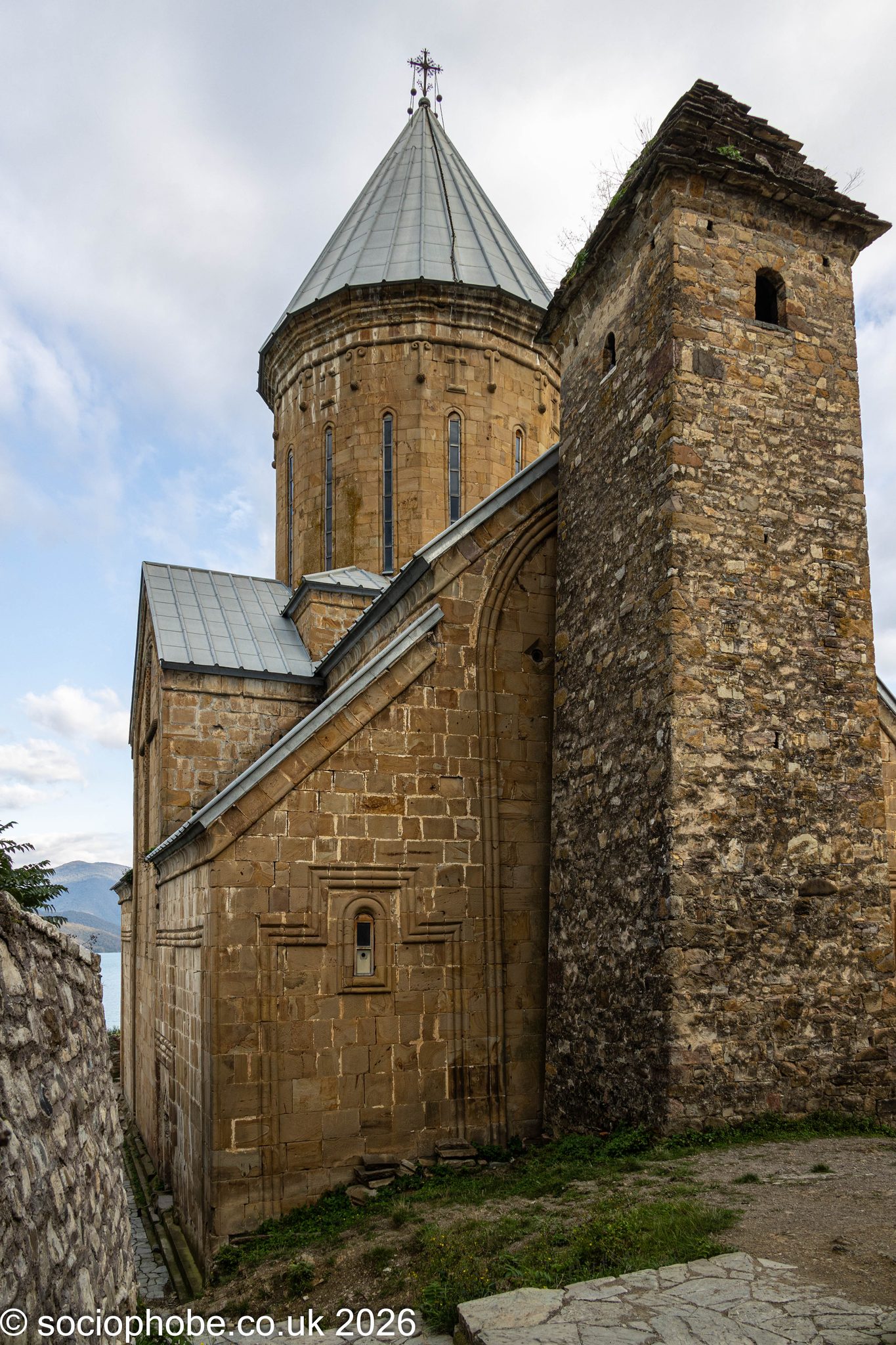
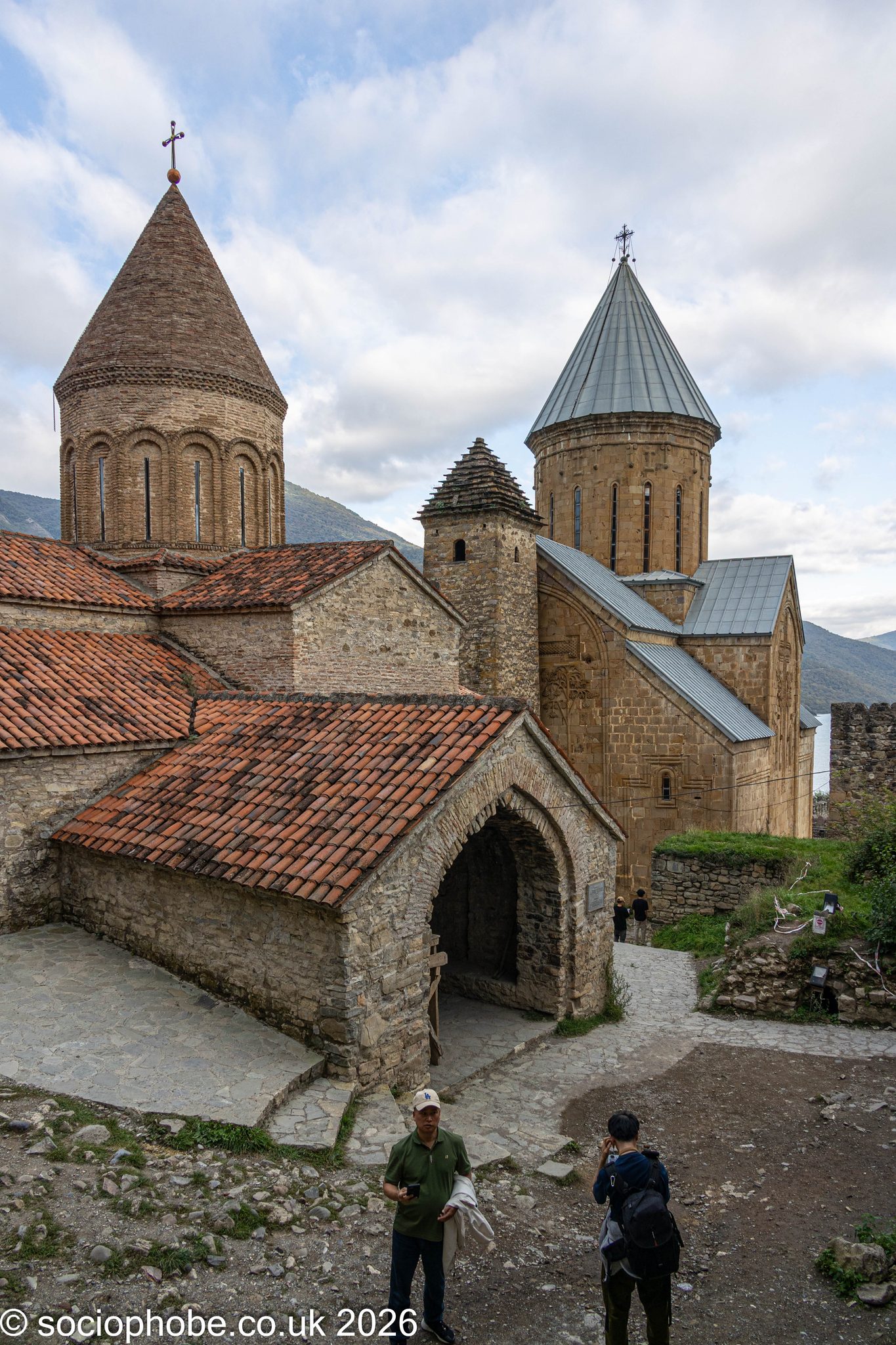
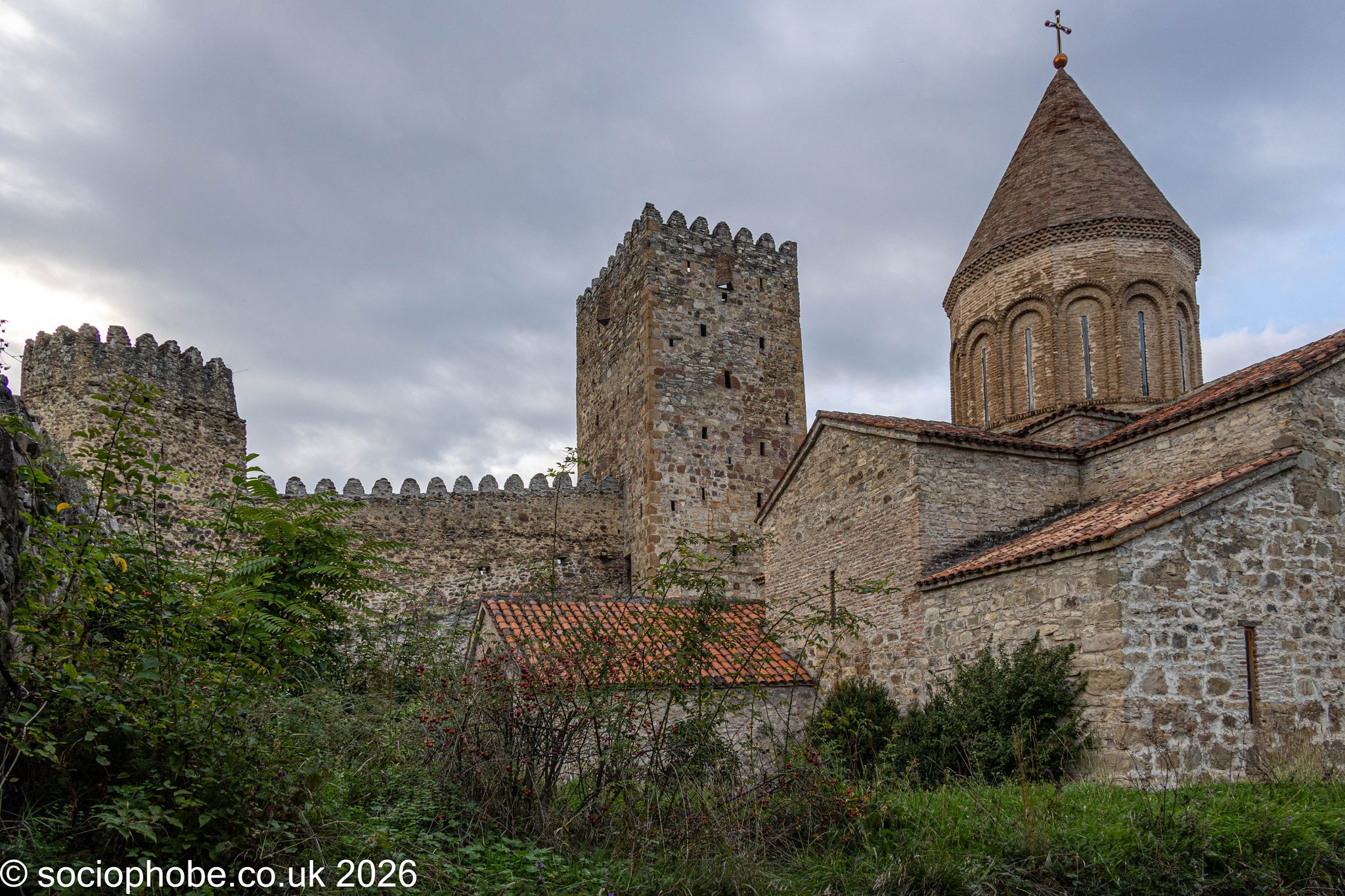
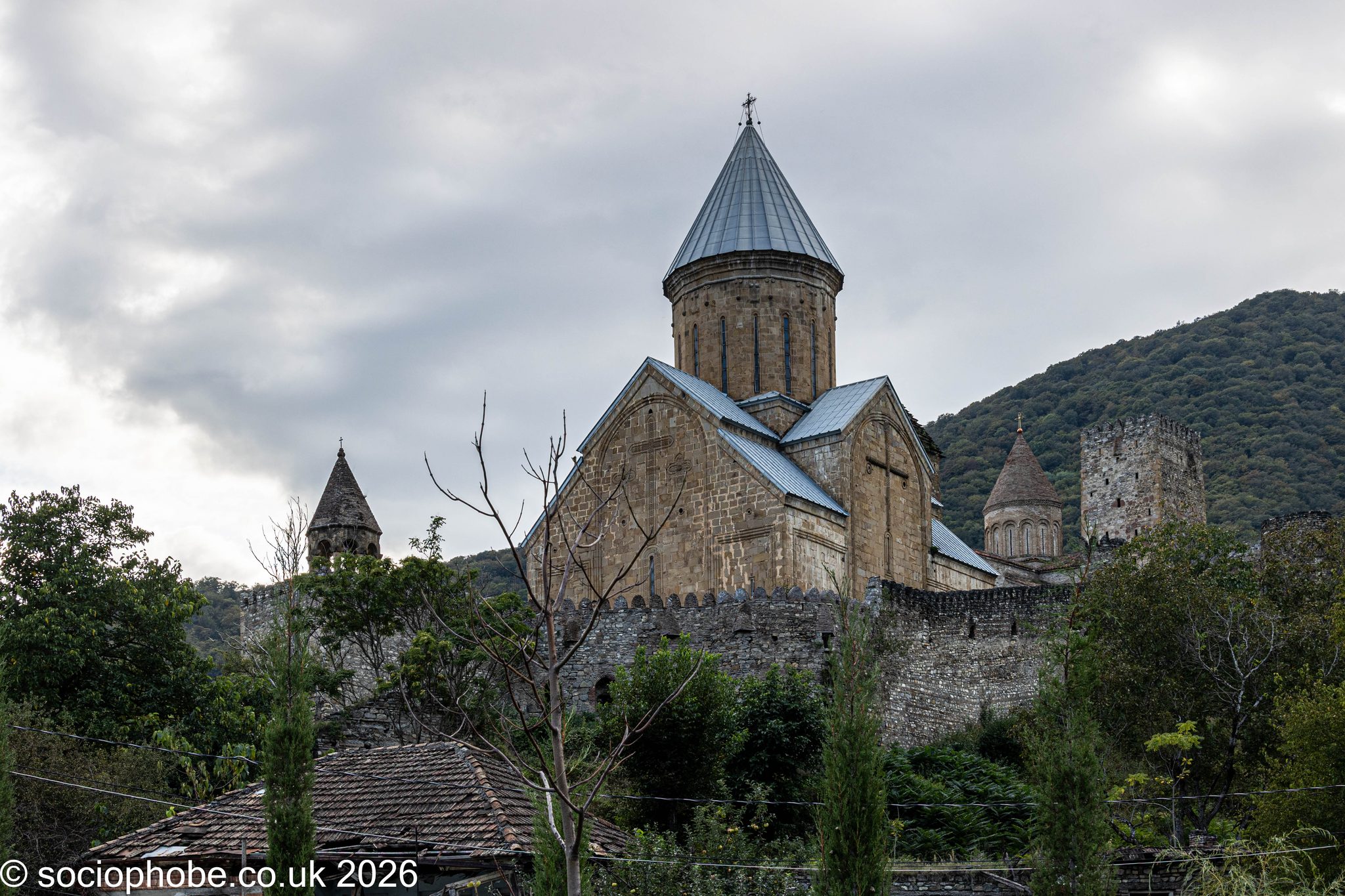
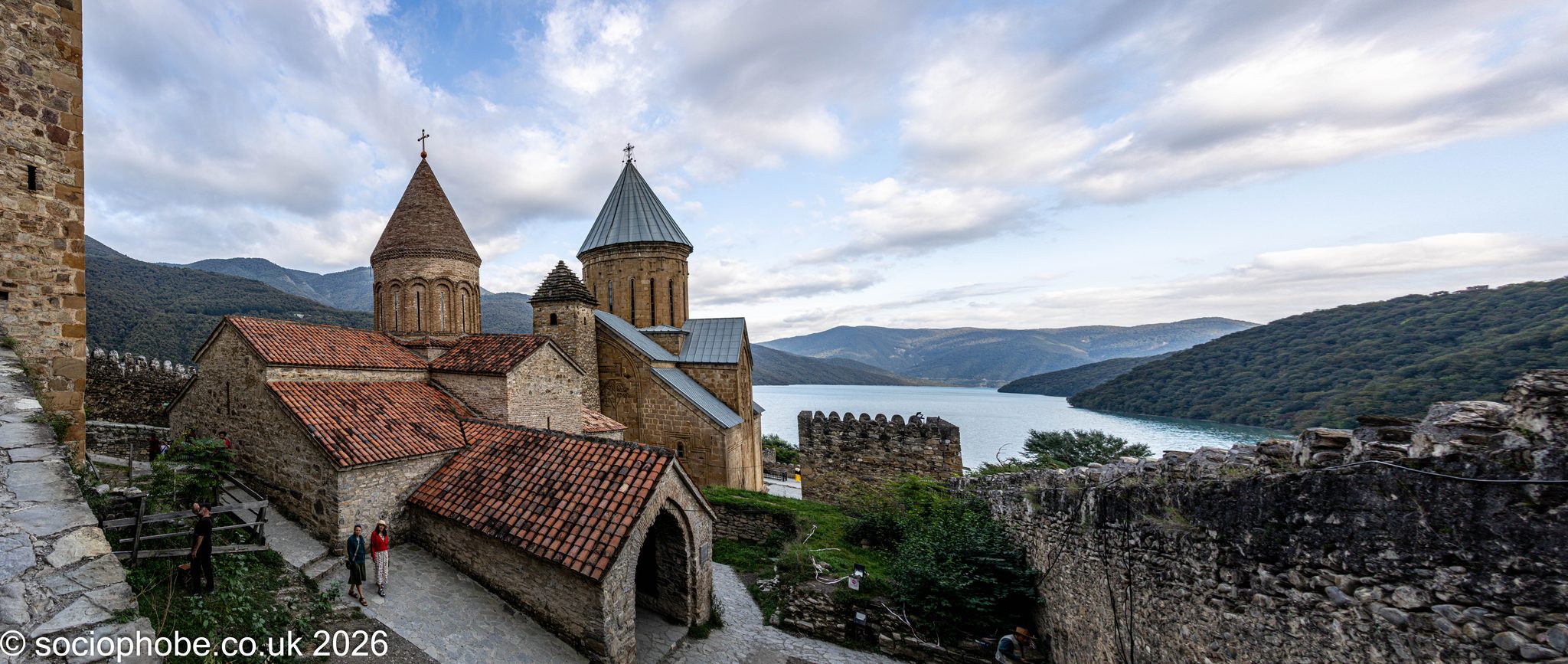
The fortress church complex at Ananuri was the 16th century home of the Dukes of Aragvi and the site of numerous battles. The fortress is now on the Zhinvali Reservoir although originally it was surrounded by grassland.

Visiting Ananuri Fortress
The fortress is incredibly easy to get to, once you have escaped the traffic hell that is Tbilisi! The fortress is just off the E117, the main road that leads to the Russian border. There is a large car park in front of the castle with stalls and a seating area. I think admittance is free but you pay for parking. TAKE A TORCH IF YOU WANT TO CLIMB THE TOWER! I didn’t do this so couldn’t see to climb up but the views from the top are meant to be awesome.
My Experience
I visited this castle as part of a day trip from Tbilisi to various sites on the way to the Russian border. The setting of this 13th century fortress is beautiful and the exterior and interior are both well worth a visit. One of the two churches inside is closed but the larger one, built in the 17th century, allows photography inside. Before entering I crossed the somewhat rickety road bridge to get some views of Ananuri from a distance with the reservoir behind.
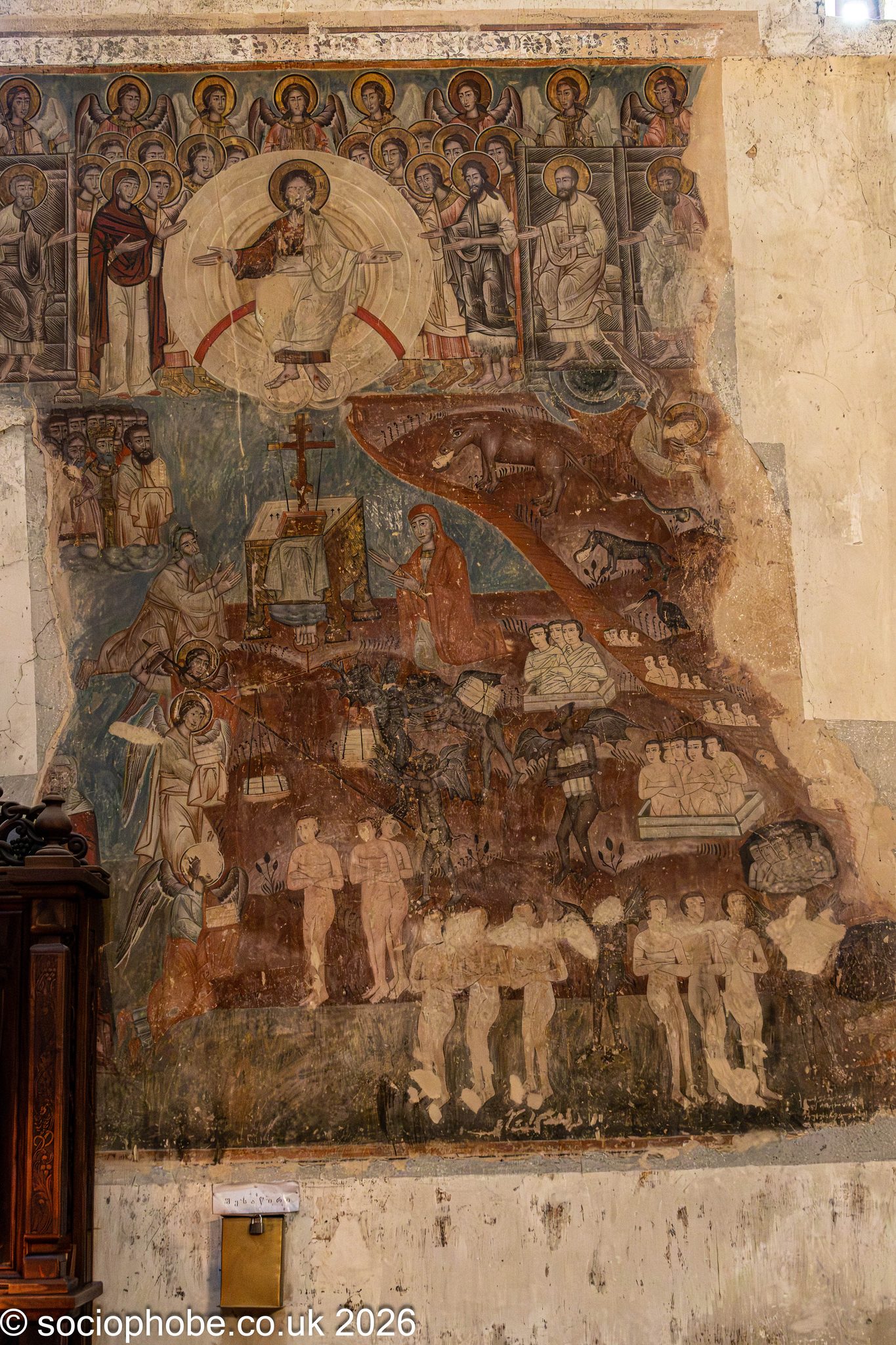
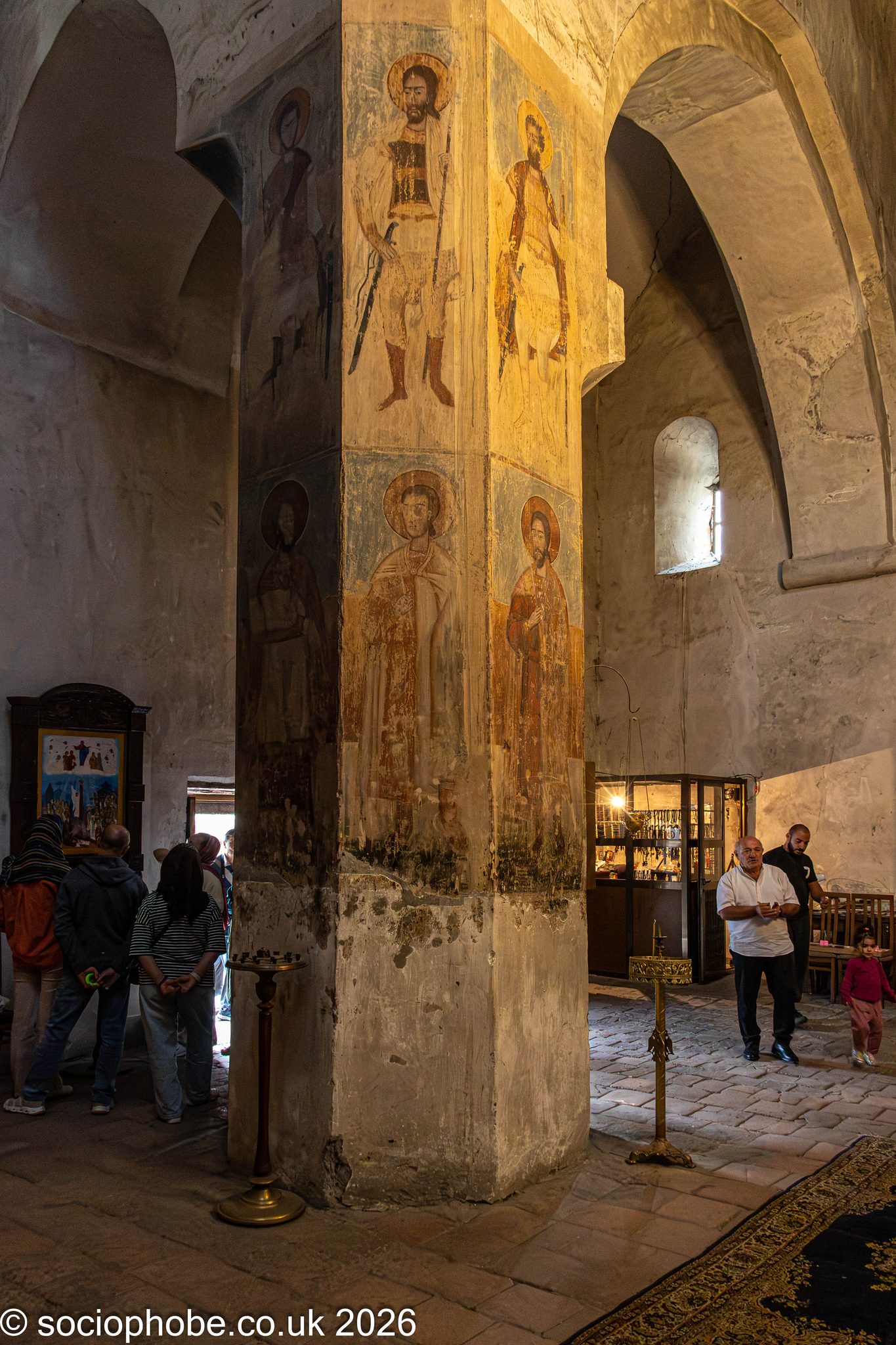
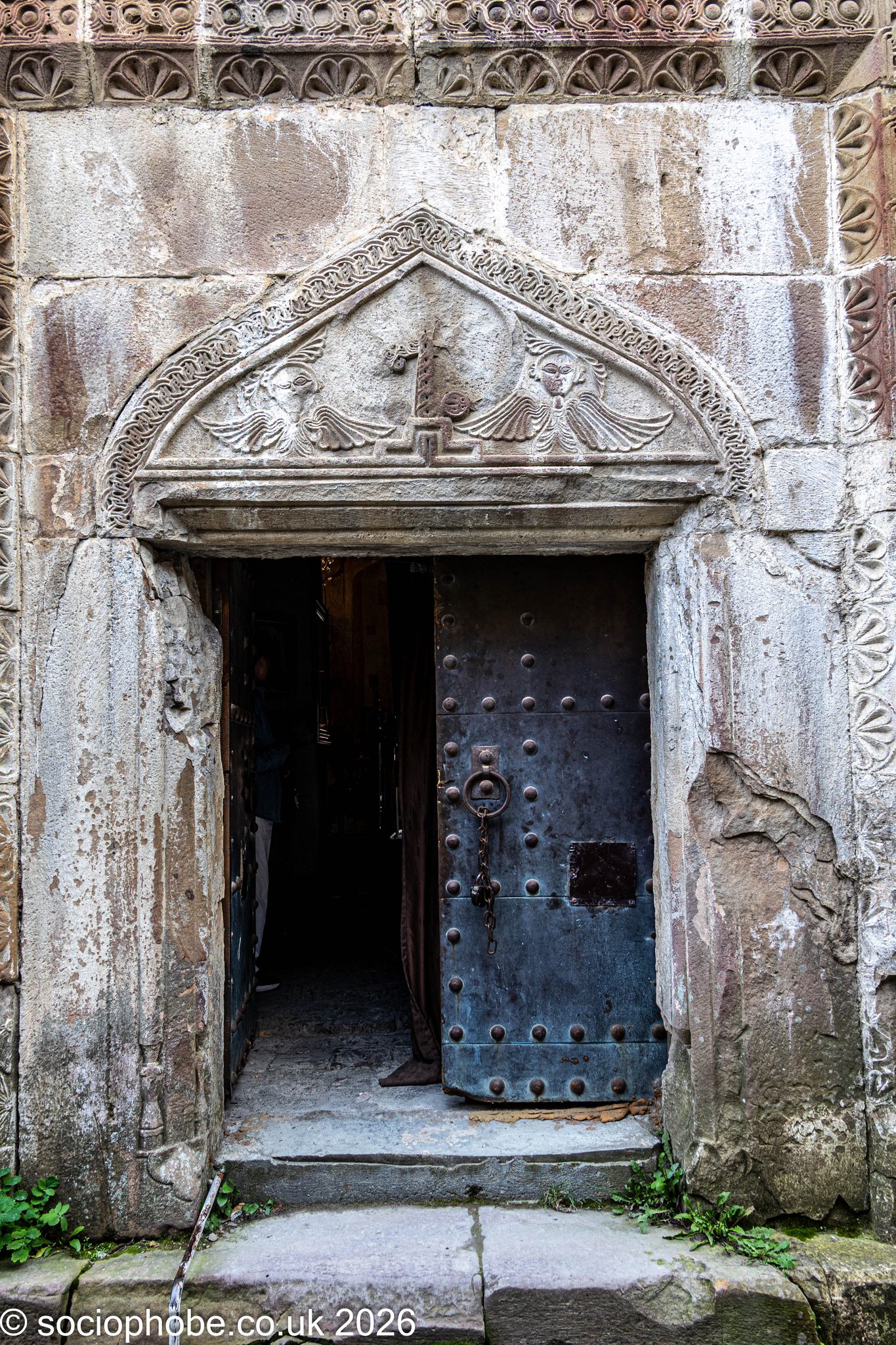
The church had some wonderful carvings outside, full of symbolism, which Tamara (our guide) explained. There was also an inscription in both Georgian and Russian although I might be getting that confused with somewhere else. Inside there were wonderful frescoes on the pillars and walls including one particularly graphic one of the Day of Judgement. I walked down to the lake to view the fort from there and it’s odd crenelations before climbing the hill to meet Deb and Tamara, after pausing to play with a dog.
Be aware that there are no safety rails and the ledges around the walls are narrow! This is a place that is worth spending some time at so allow an hour, especially if you climb the tower.
Ananuri Fortress Photo Gallery








History
From the 13th to the 18th centuries, the Dukes of Aragvi (Eristavis) ruled over these valleys with absolute authority. Their power base relied heavily on controlling the natural mountain corridors linking central Georgia with the North Caucasus. By creating a defensive bottleneck at Ananuri, the duchy levied taxes on regional trade networks, accumulated immense wealth, and sustained a private army capable of challenging even the Georgian monarchs.
This extreme concentrations of wealth and power inevitably bred deep blood feuds with neighboring feudal states. In 1739, the rival Duchy of Ksani mounted a massive, coordinated siege against the complex. The attackers breached the lower defenses and set fire to the inner fortifications, culminating in the violent demise of the ruling Aragvi line. The highest defensive tower, Sheupovari (The Stubborn), served as the final sanctuary for the remaining defenders who ultimately perished within its thick masonry walls. Following the massacre, the fortress shifted between imperial Russian garrisons and local royal administrations, retaining its military role well into the early 19th century.
References
The history above is copied from the Georgian Travel Guide here.
The Georgian Guide site has an excellent overview of the site including travel options from Tbilisi here.