

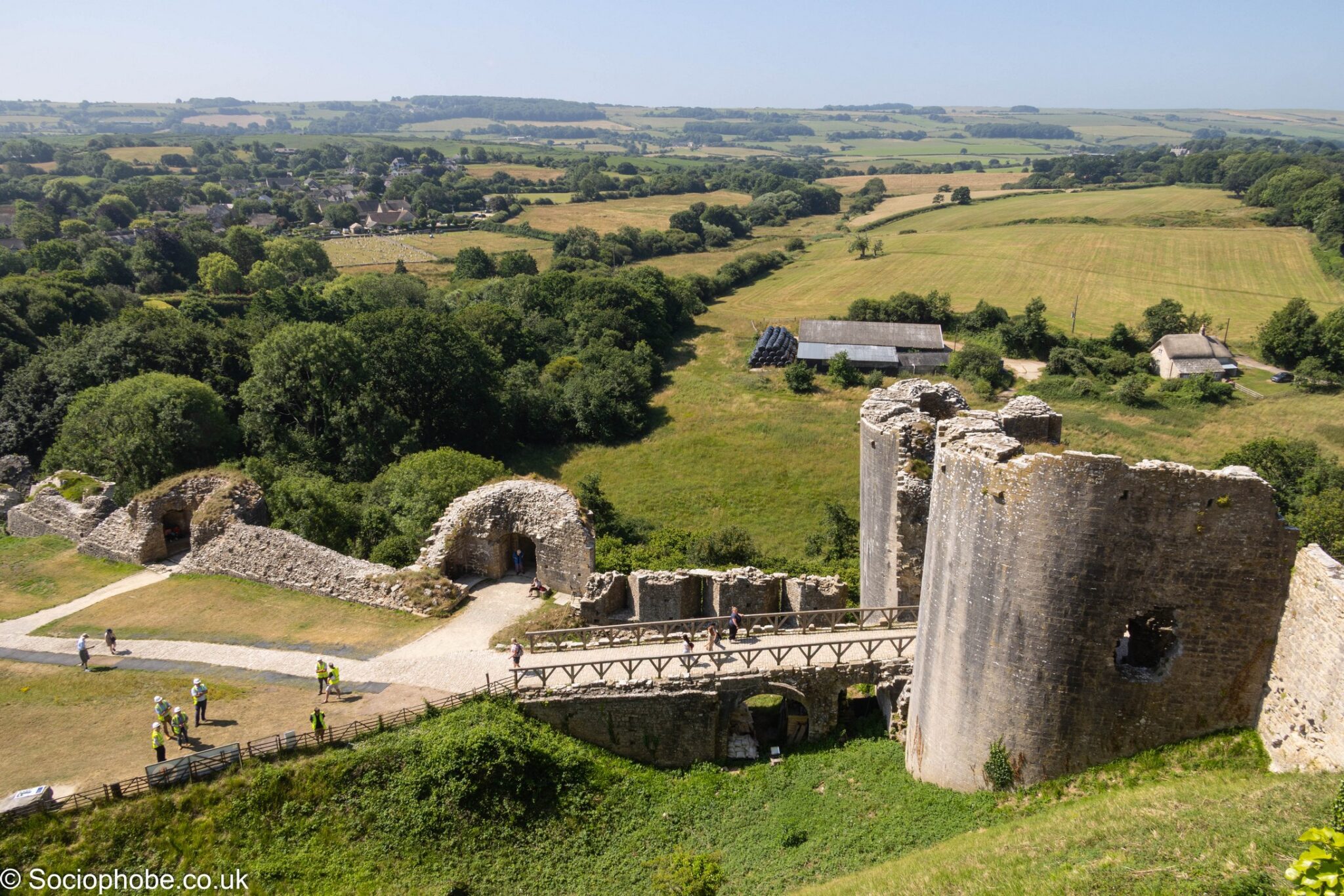
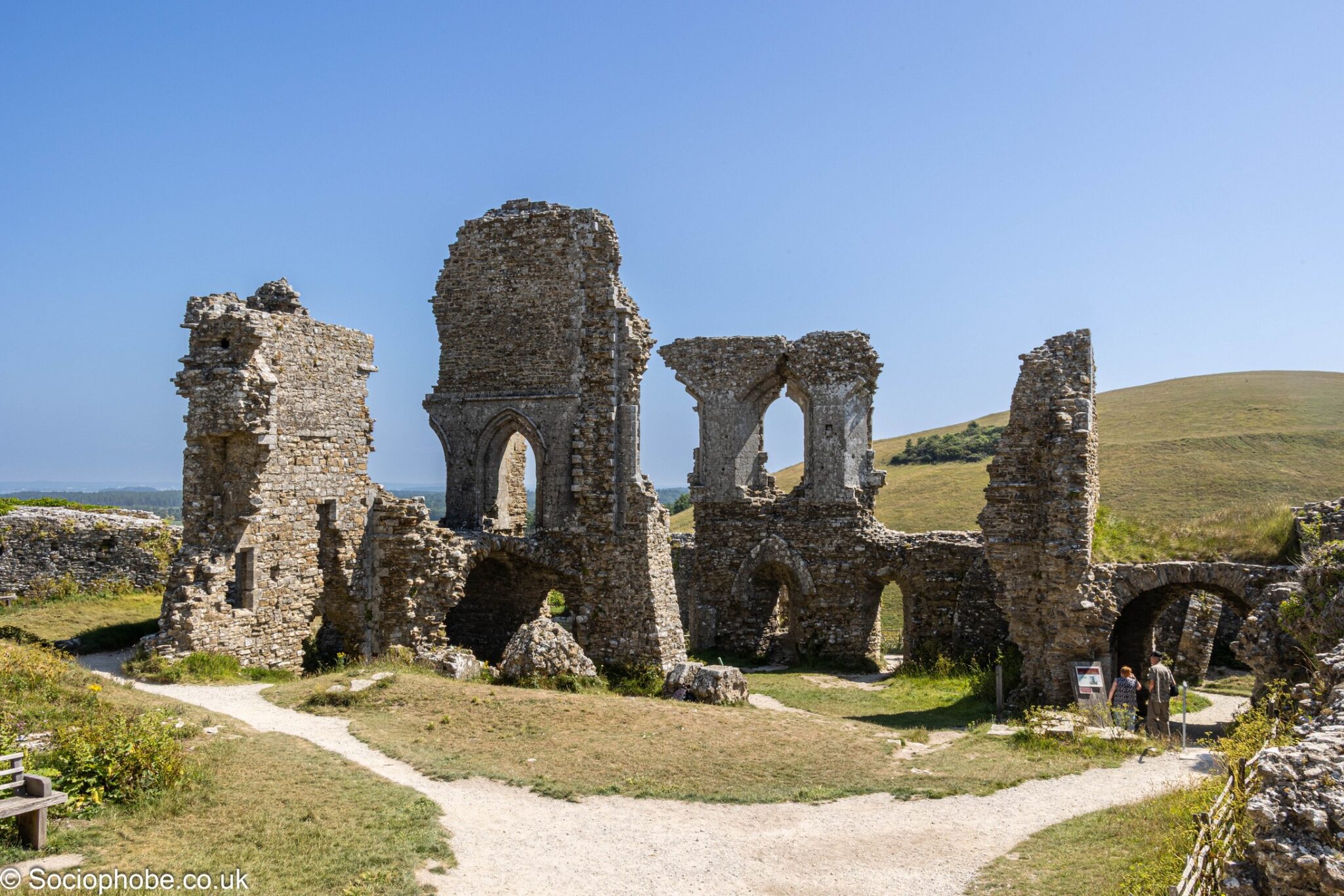
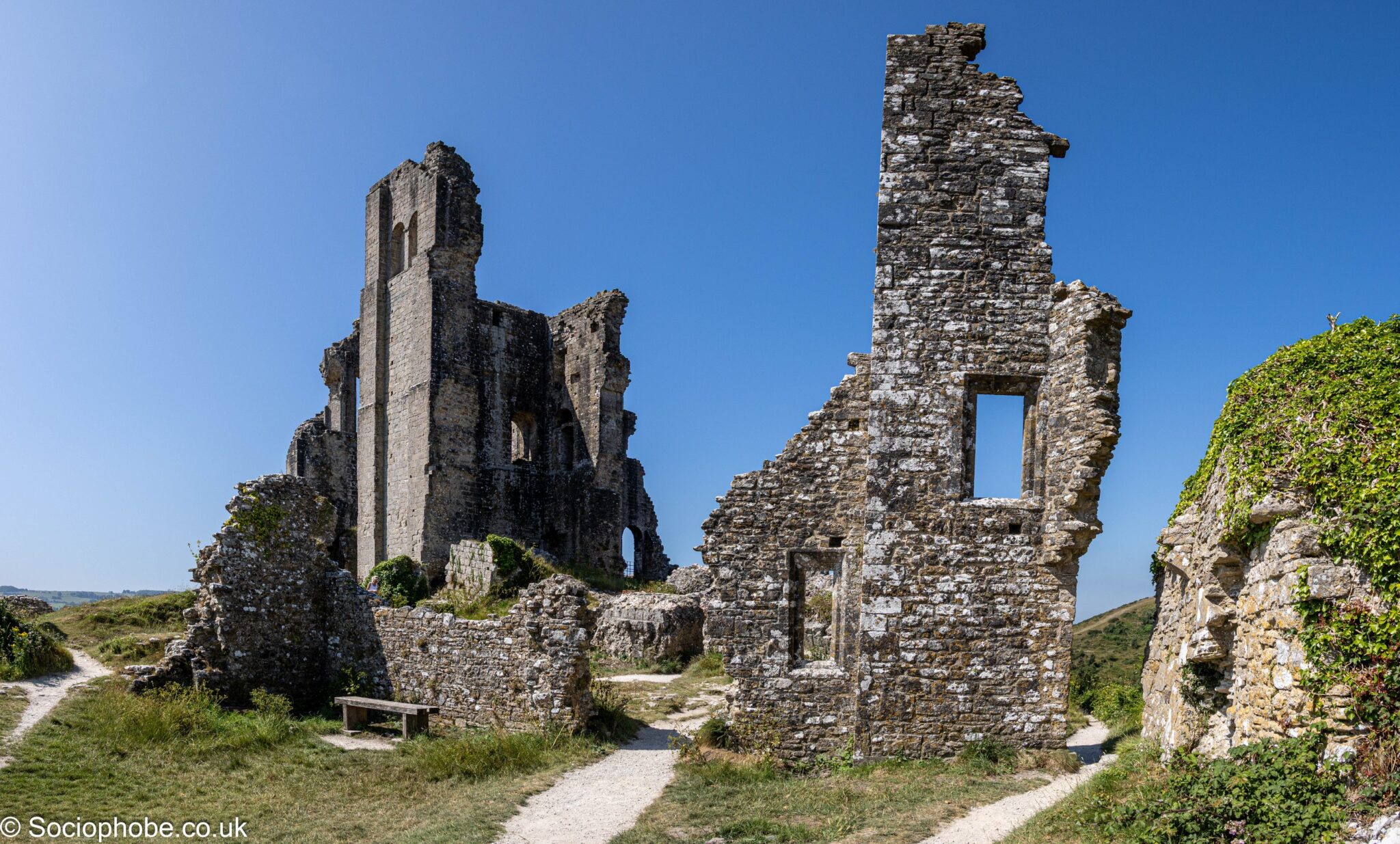
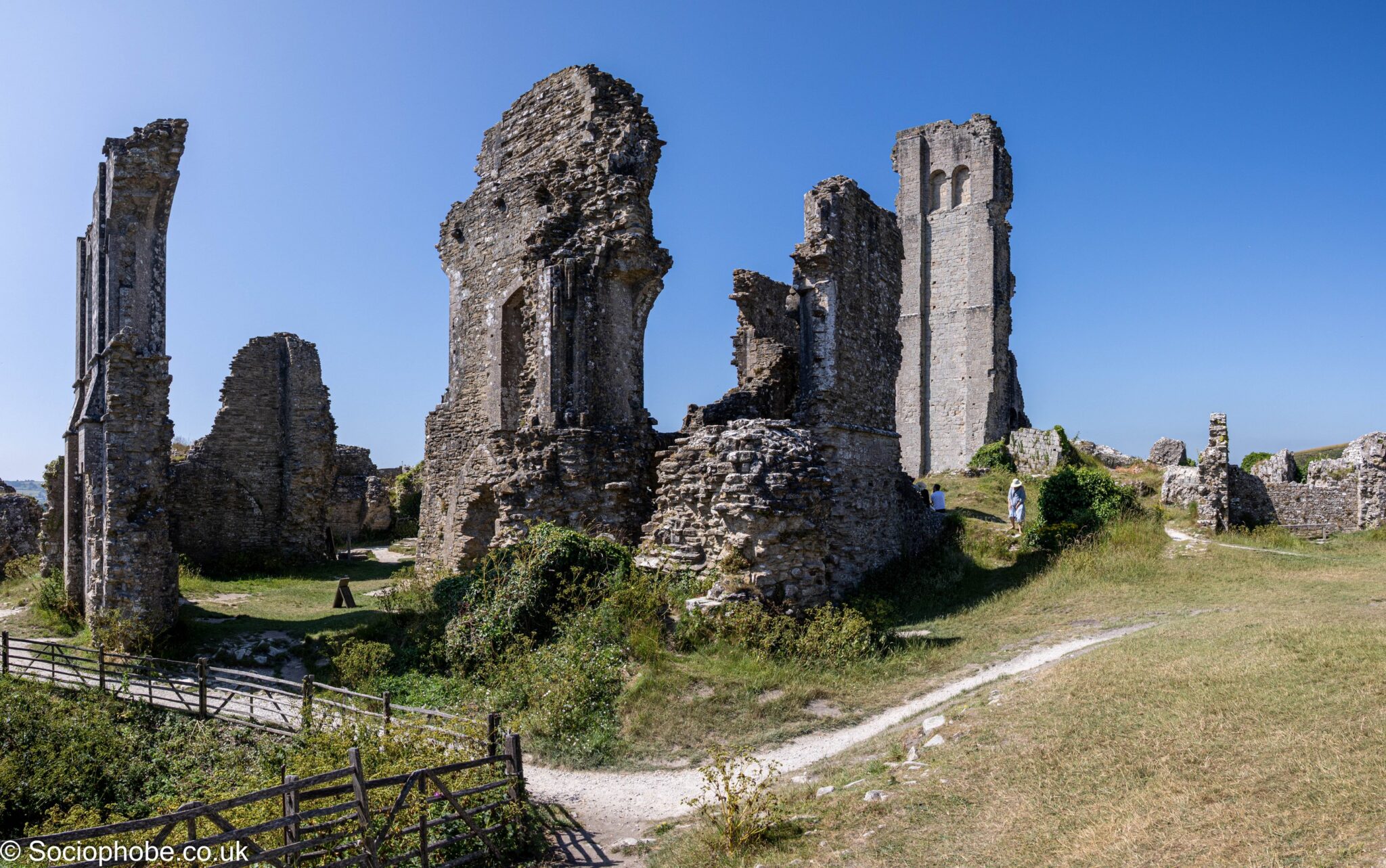
Corfe Castle is a famous tourist destination to visit in Dorset, set in low hills that are coated with mist in the early mornings. The castle was involved in two sieges in the English Civil War and then slighted to become the picturesque ruin that currently stands, cared for by the National trust.

Visiting Corfe Castle
Corfe Castle is one of the most famous tourist destinations to visit in Dorset. As one of the National Trust’s premier properties it is suitably equipped with cafe, toilets and a decent car park. The village of Corfe is very pleasant to look around and the pub is great for lunch and dinner.
My Experience
I have visited Corfe many times and as I wade through the notes and photos this page will be updated. The photos currently here are from a spring visit in 2017. We were working nearby but stayed in the village overnight and had a walk around the castle exterior but didn’t have time to visit the interior of the castle.
The castle has a fascinating history and went out with a bang after two Civil War sieges, being one of the many slighted by Cromwell’s orders as a result.
Corfe Castle Photo Gallery


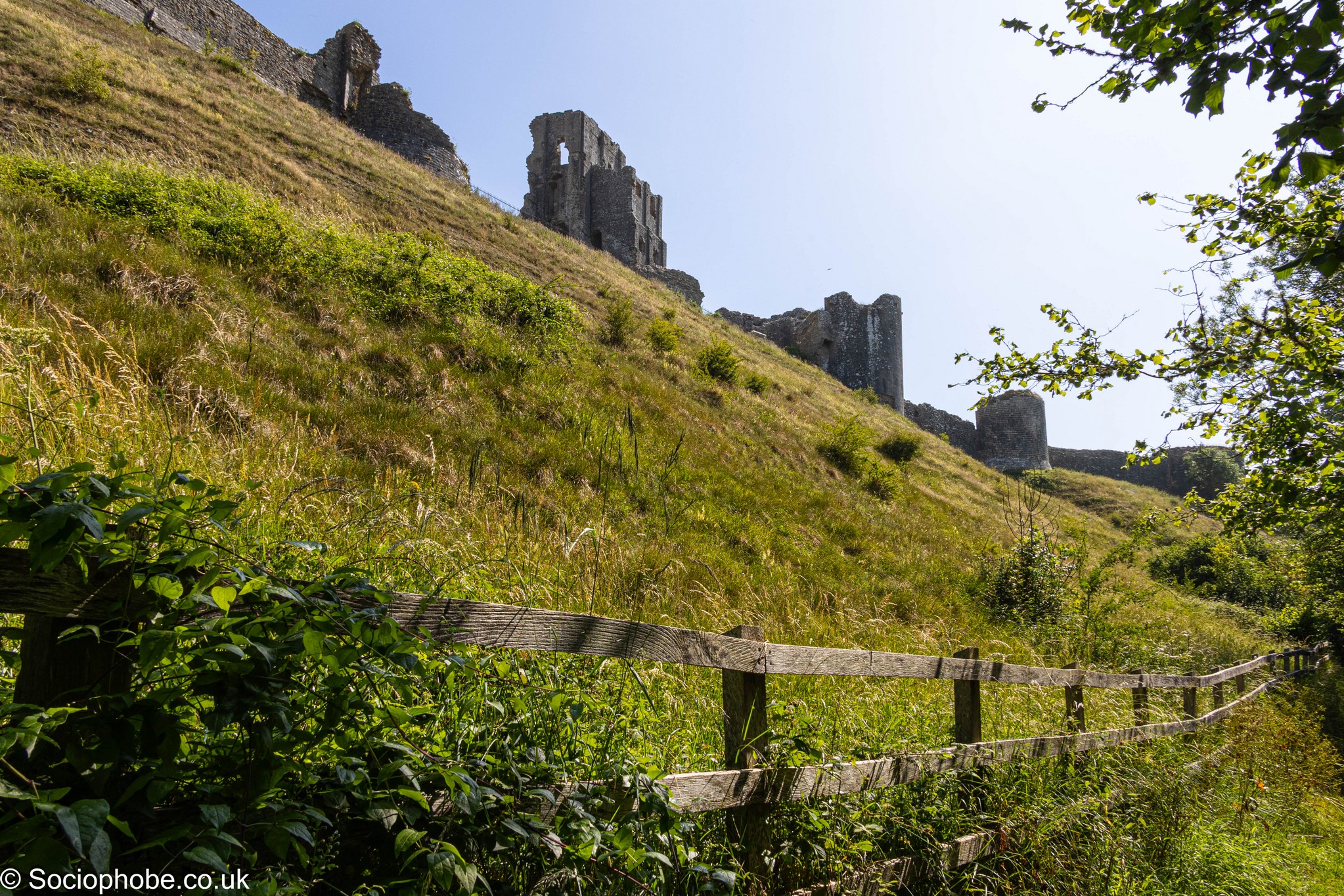
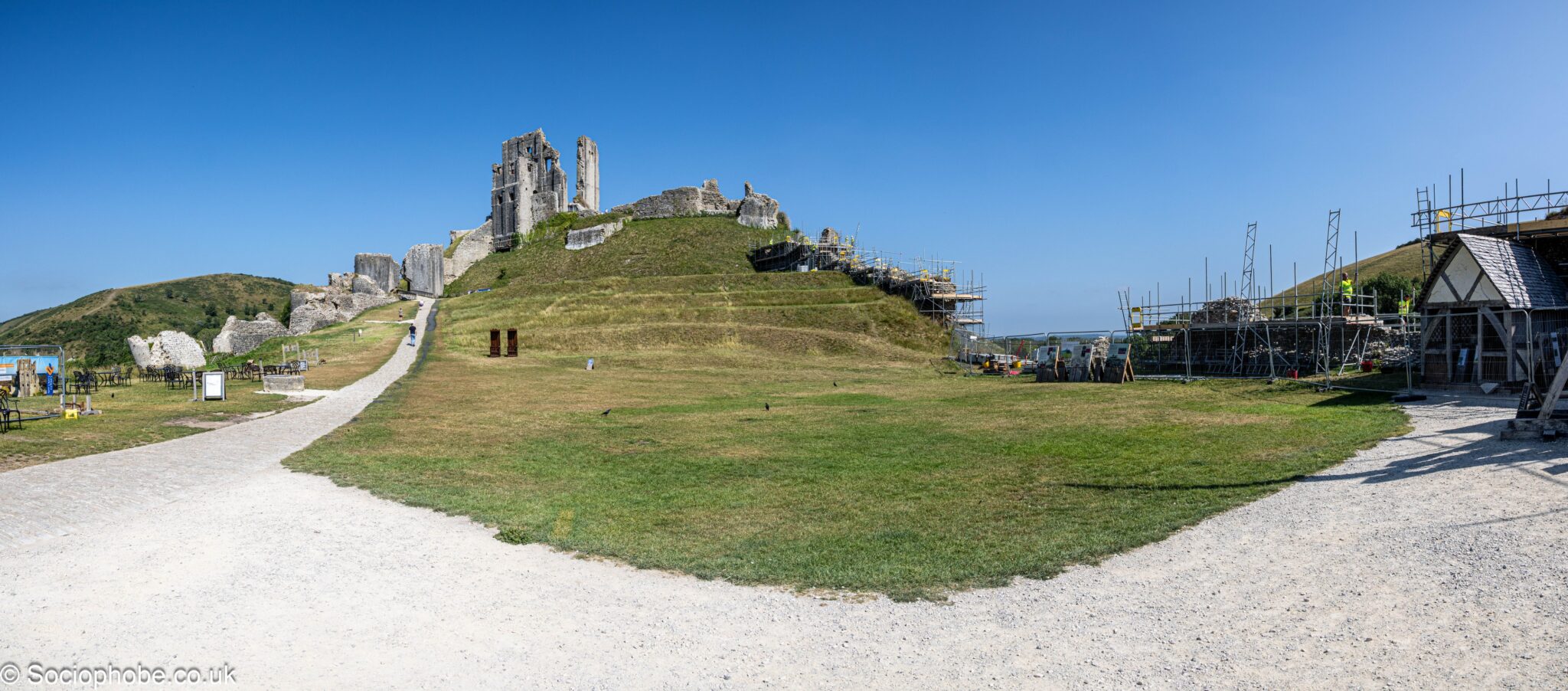
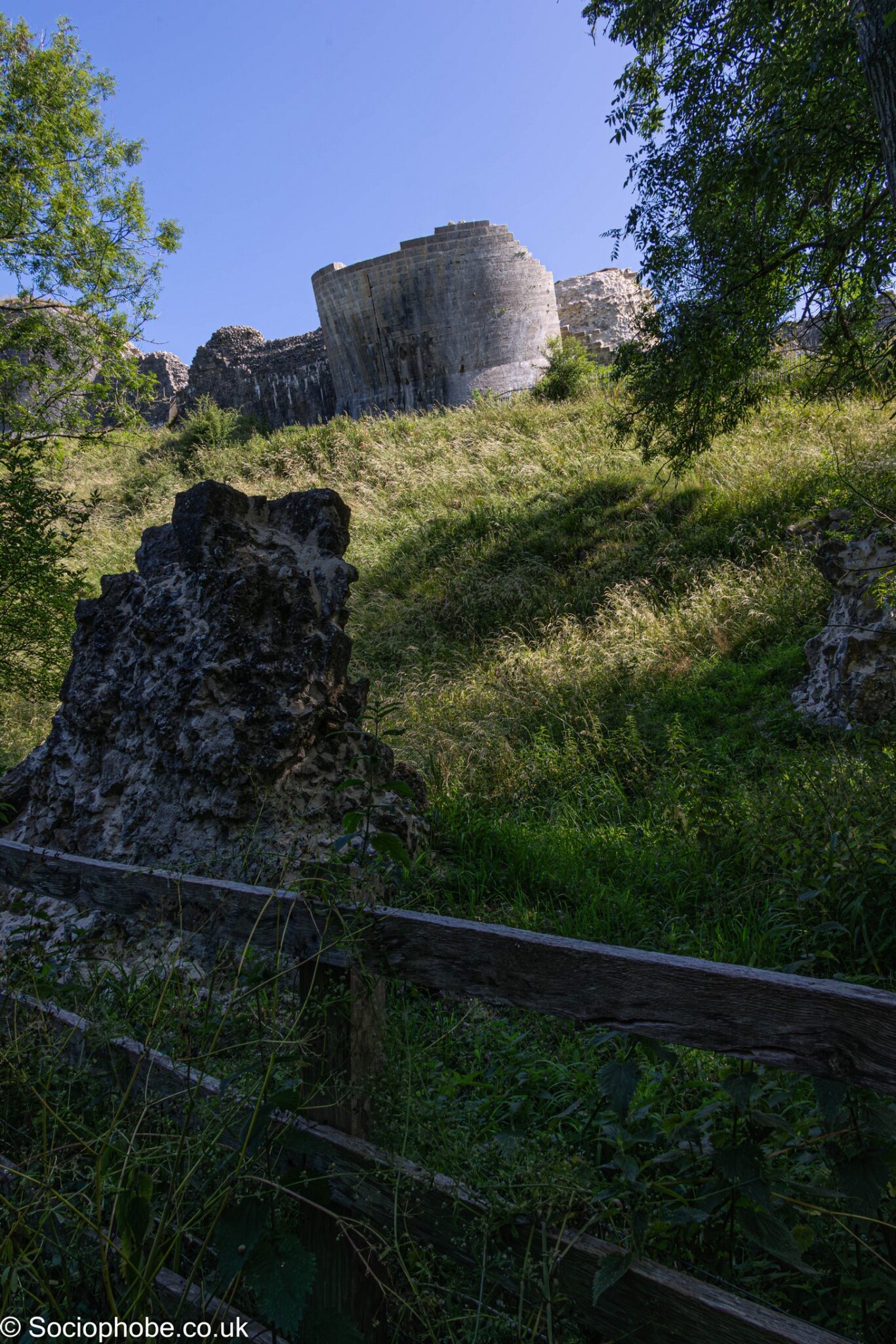
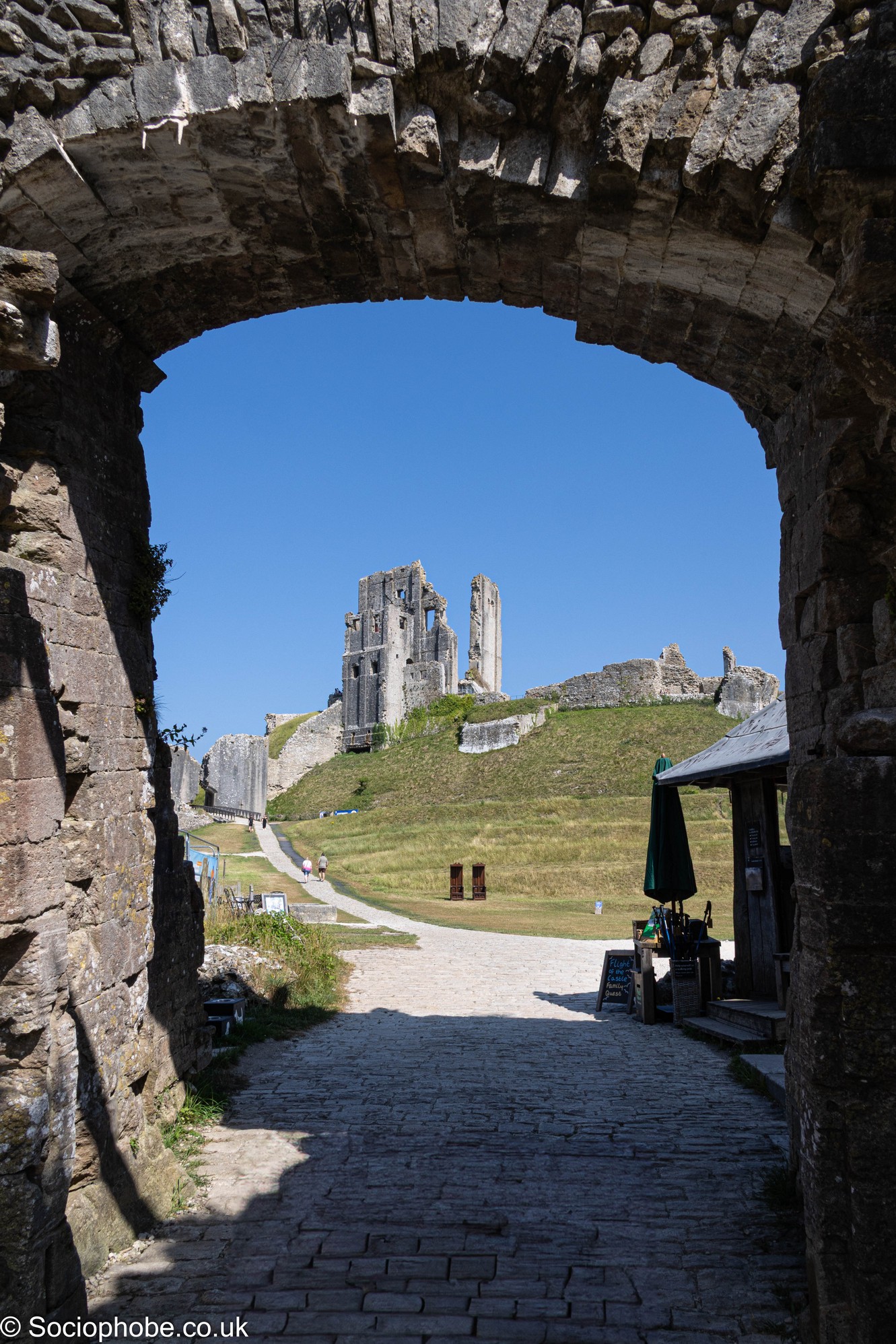
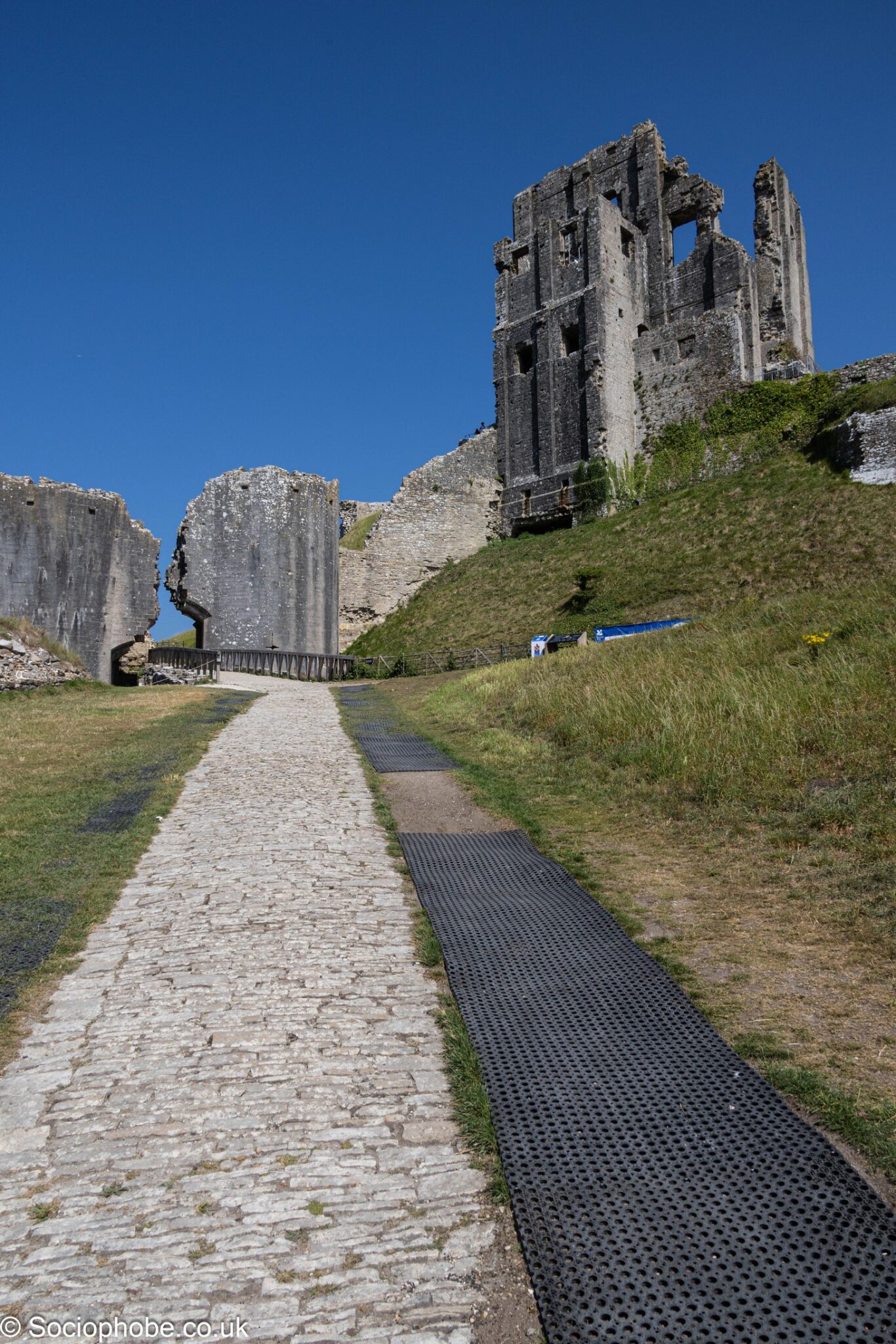
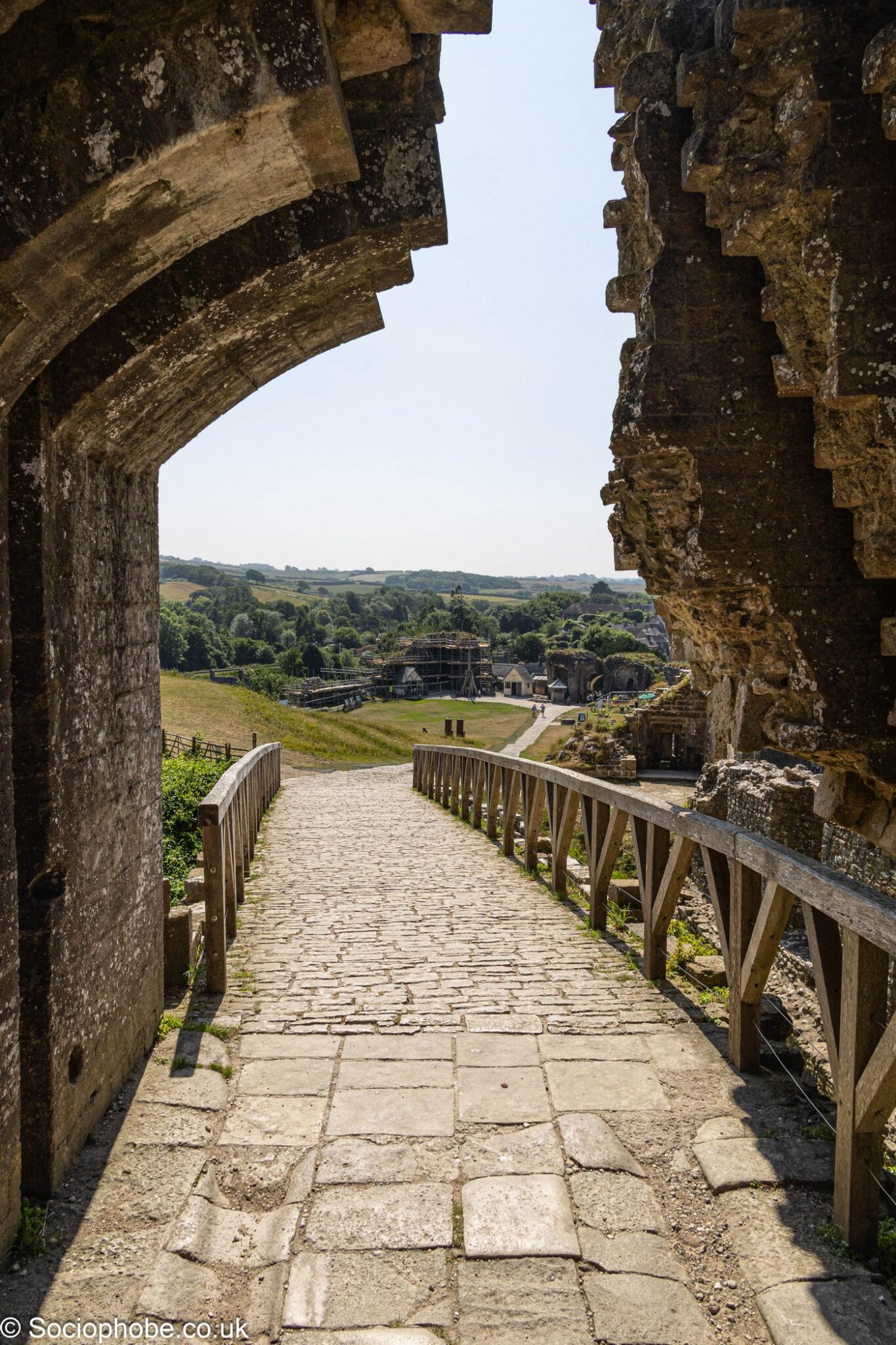
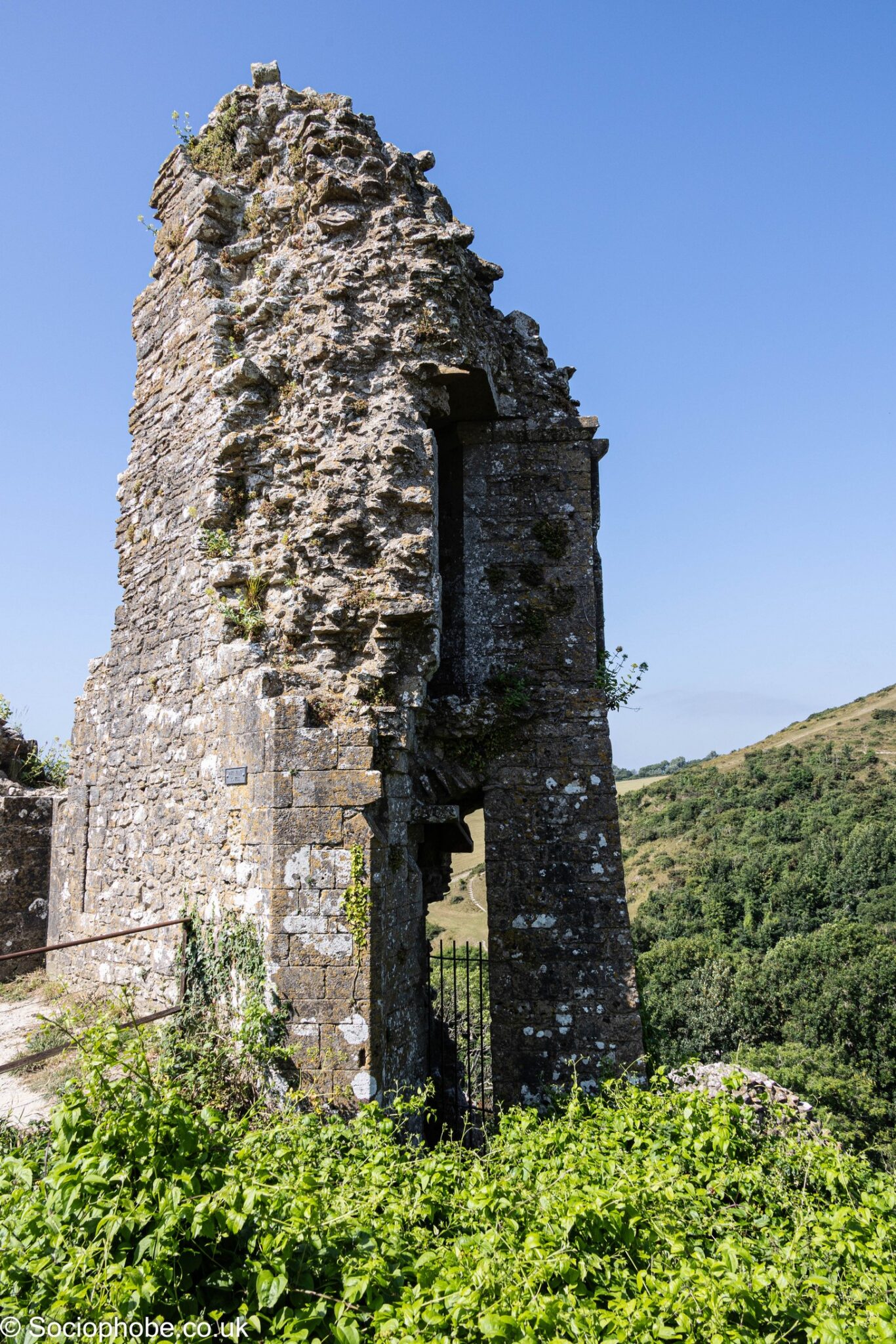
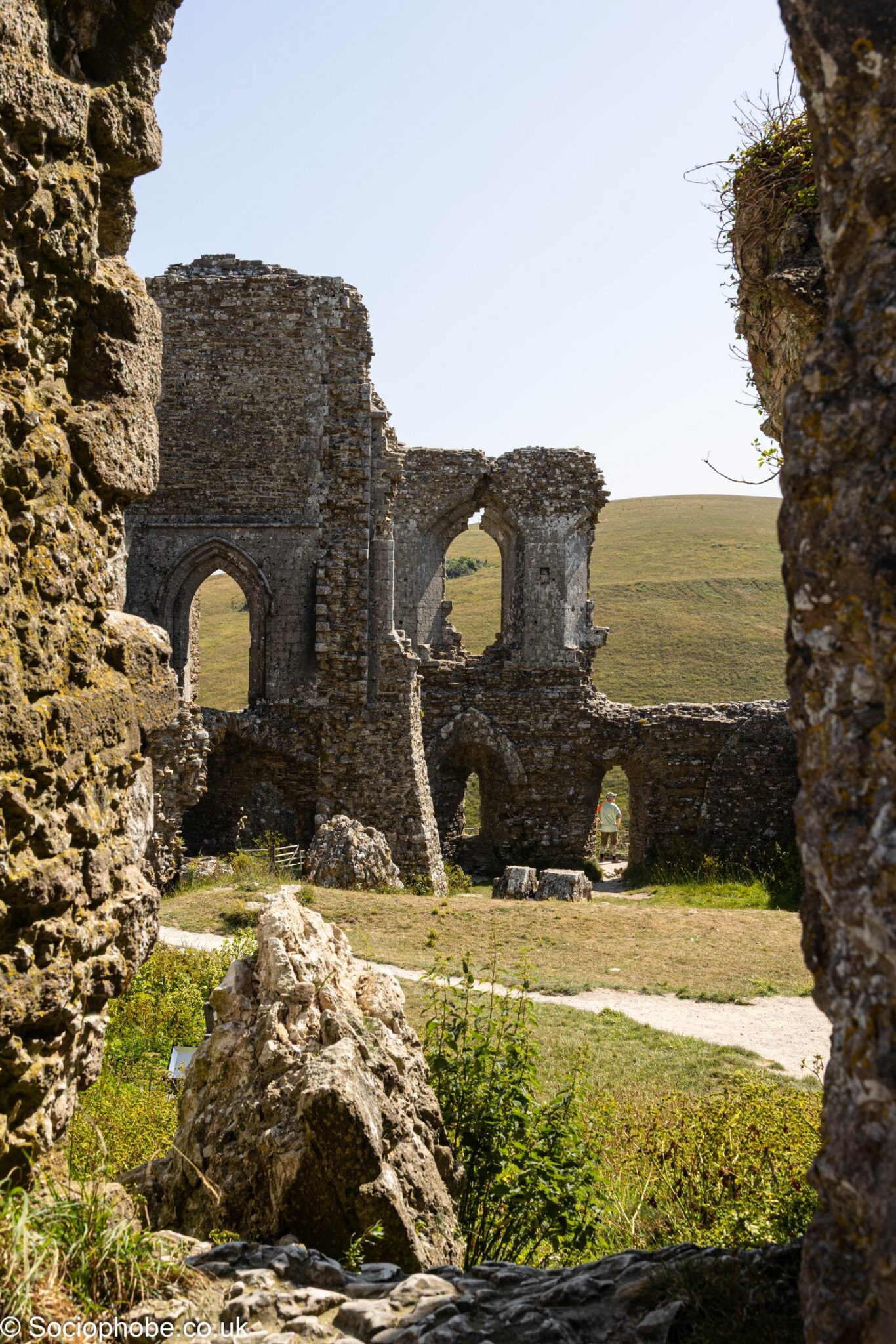


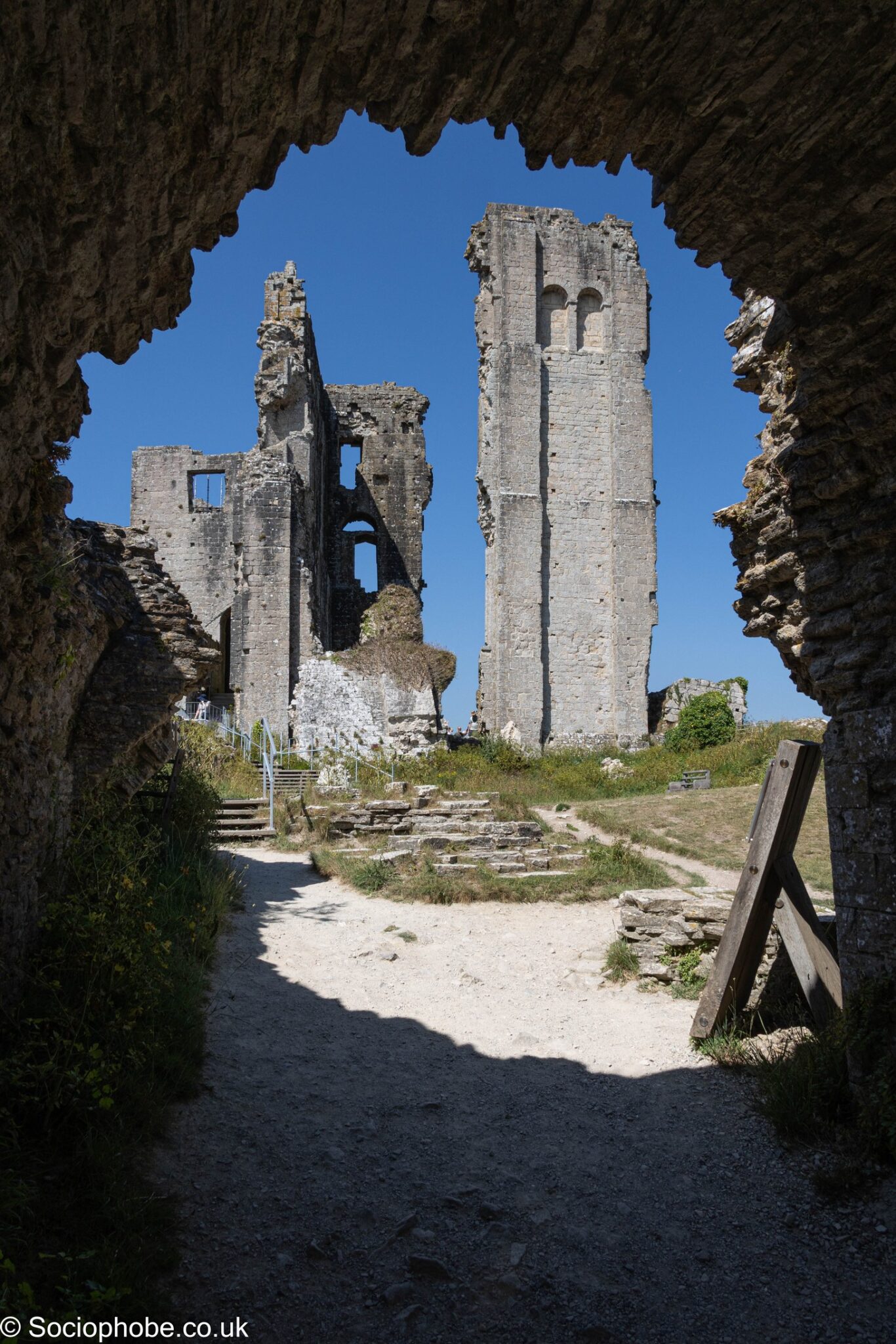

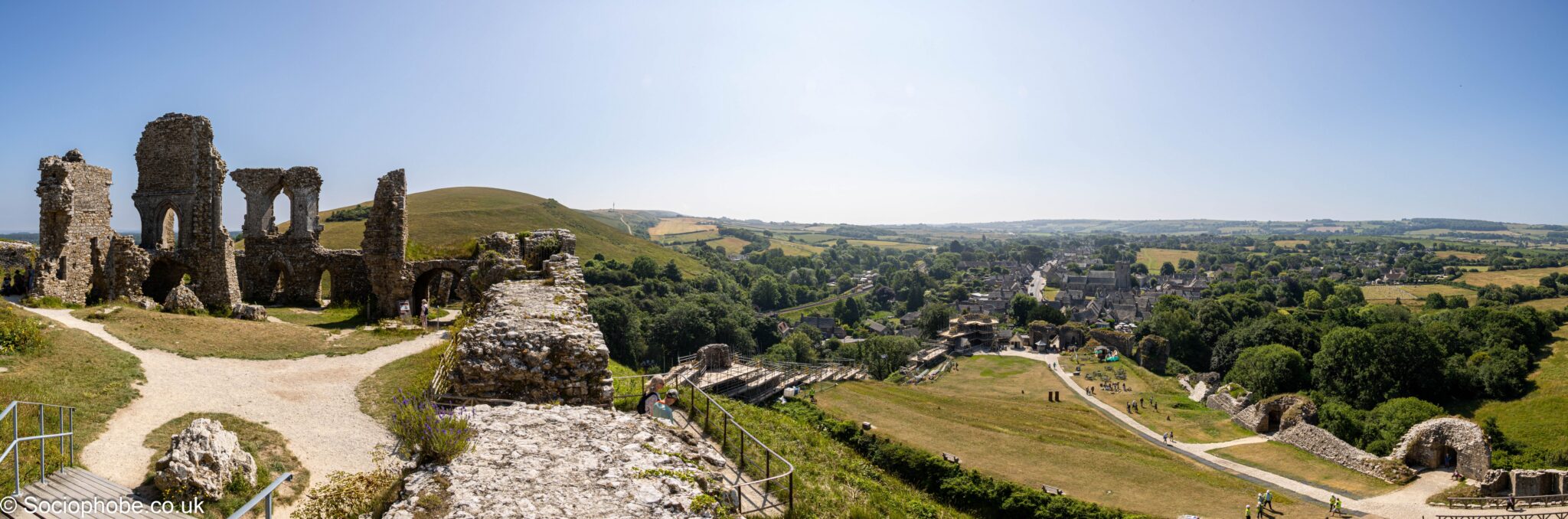
History
Corfe Castle is a fortification standing above the village of the same name on the Isle of Purbeck peninsula in the English county of Dorset. Built by William the Conqueror, the castle dates to the 11th century and commands a gap in the Purbeck Hills on the route between Wareham and Swanage. The first phase was one of the earliest castles in England to be built at least partly using stone when the majority were built with earth and timber. Corfe Castle underwent major structural changes in the 12th and 13th centuries.
In 1572, Corfe Castle left the Crown’s control when Elizabeth I sold it to Sir Christopher Hatton. Sir John Bankes bought the castle in 1635, and was the owner during the English Civil War. His wife, Lady Mary Bankes, led the defence of the castle when it was twice besieged by Parliamentarian forces. The first siege, in 1643, was unsuccessful, but by 1645 Corfe was one of the last remaining royalist strongholds in southern England and fell to a siege ending in an assault. In March that year Corfe Castle was slighted on Parliament’s orders. Owned by the National Trust, the castle is open to the public and in 2018 received around 237,000 visitors. It is protected as a Grade I listed building and a Scheduled Ancient Monument.
References
The National Trust site detailing opening times is here.
The Wiki site is here and the history above is copied from there.