

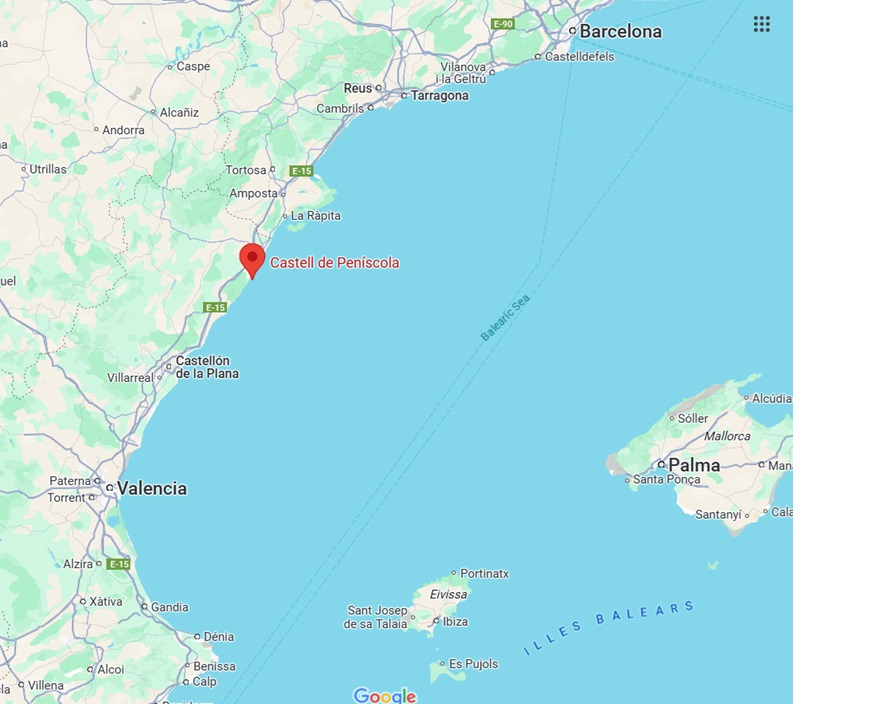
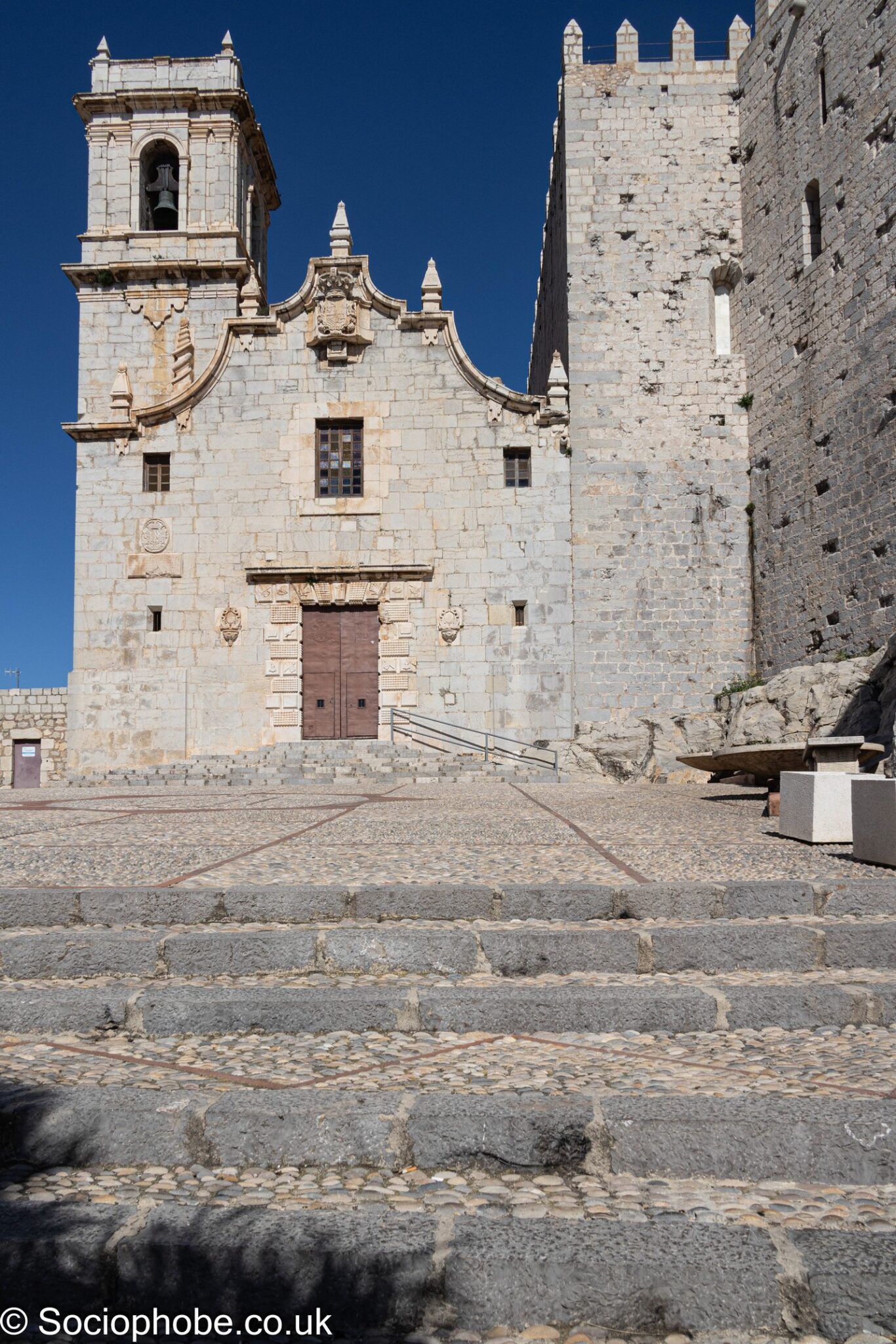
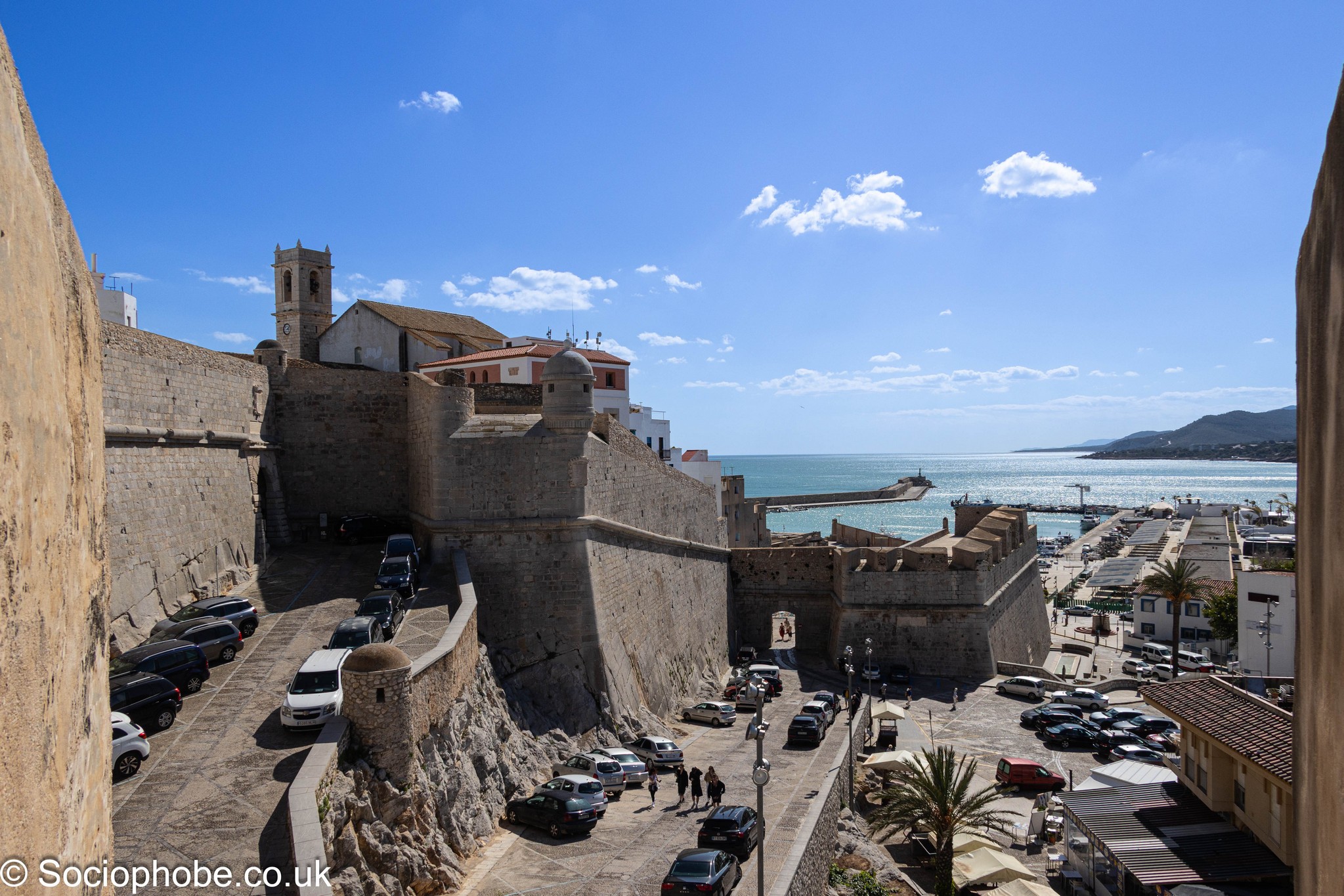
The restored coastal castle of Peniscola lies to the north of Valencia and was one of the last to be built by the Knights Templar. After the dissolution of the order the castle was home to a schismatic Pope (hence the alternative name of Papa Luna Castle) and then evolved to become an artillery fortress.

Visiting Pensicola Castle
We visited the castle after a morning exploring Morella town and castle, about an hour and a half inland. Our visit was in March so parking wasn’t a problem but I can imagine that in the summer you’d need to arrive early before all the beach goers arrive. There is a very small parking area on the ramp in front of the castle but the main car park is an underground one just behind the promenade, Empark I think, and is €2 per hour.
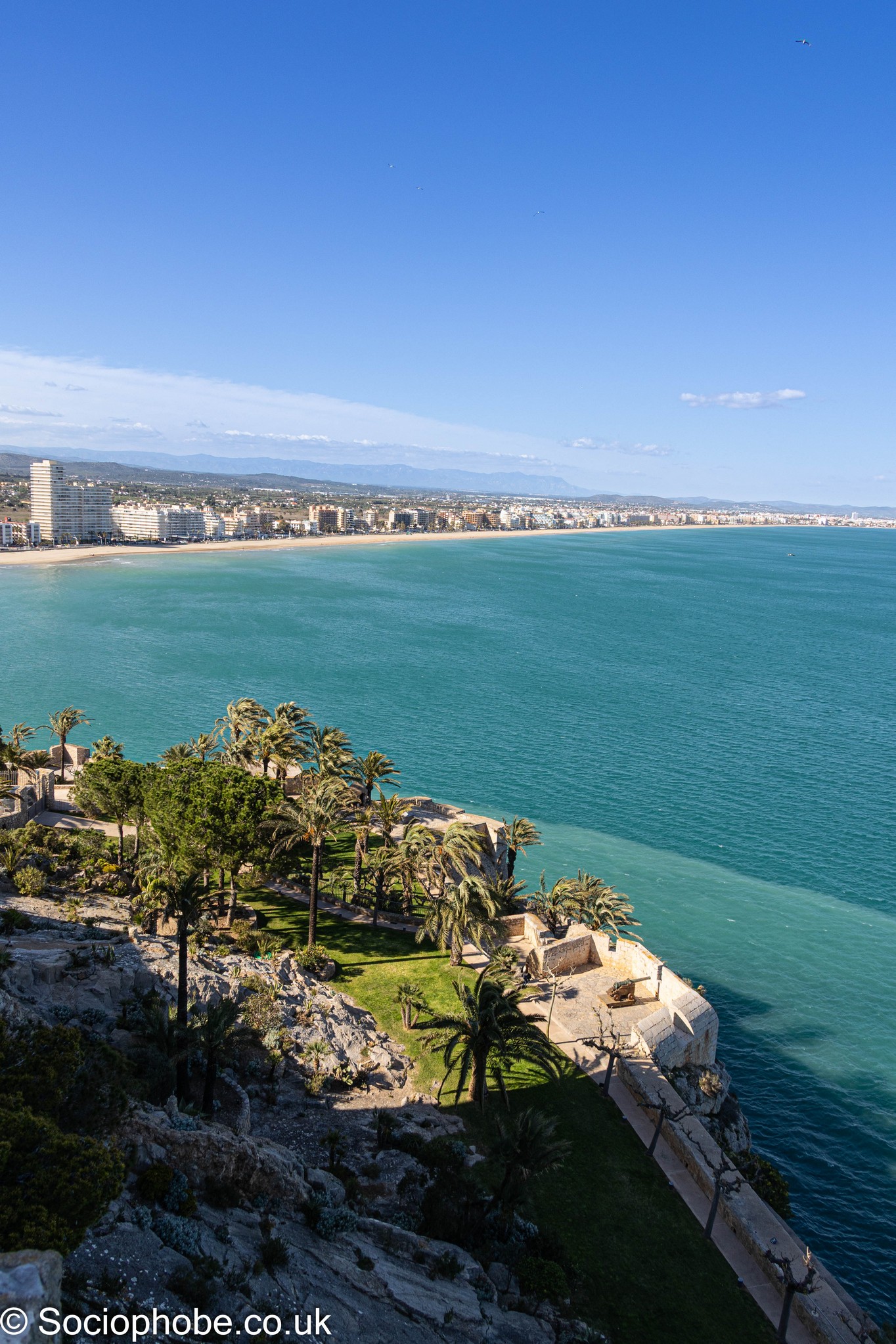
Peniscola was massively touristy compared to Morello! There were lots of cafes and a lovely prom which we walked along after parking the car. The sea was such a spectacular colour and the beach was almost deserted so it was lovely to meander before heading up the hill to the castle.
Castle admission was €5 and this included the artillery park below the gardens which had a small museum too. We spent around 90 minutes on the site in total. The castle starred as Velencia in the iconic 1960s El Cid film and has also been used in Game of Thrones.
My Experience
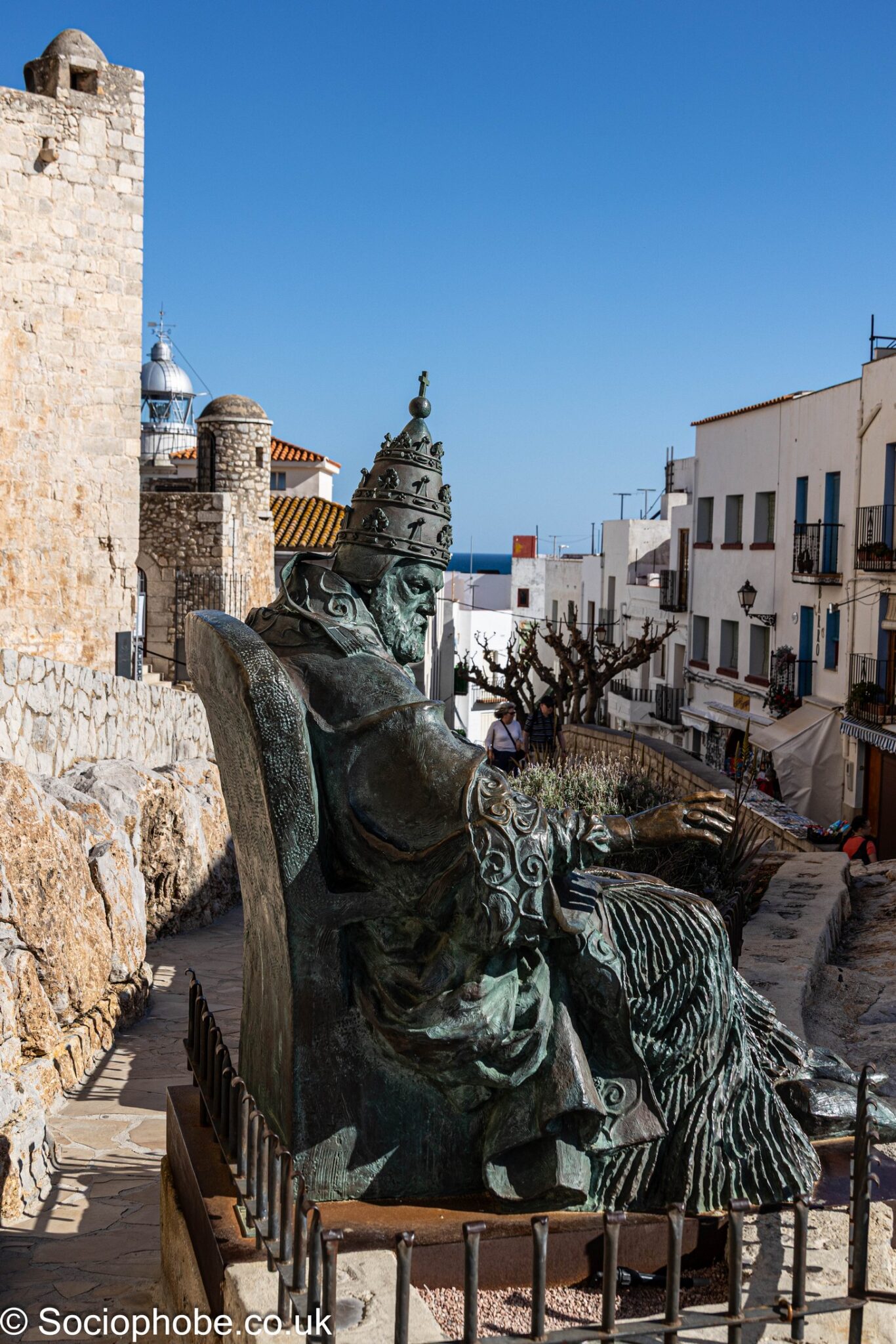
We visited the castle as part of a long weekend, touring the region around Valencia, detailed in my travel blog here. Originally an Arabic fortress, the castle at Peniscola was massively expanded by the Templars before their dissolution and was then the property of Pope Benedict XIII during the Great Schism. There is a statue of Pope Benedict XIII outside the castle.
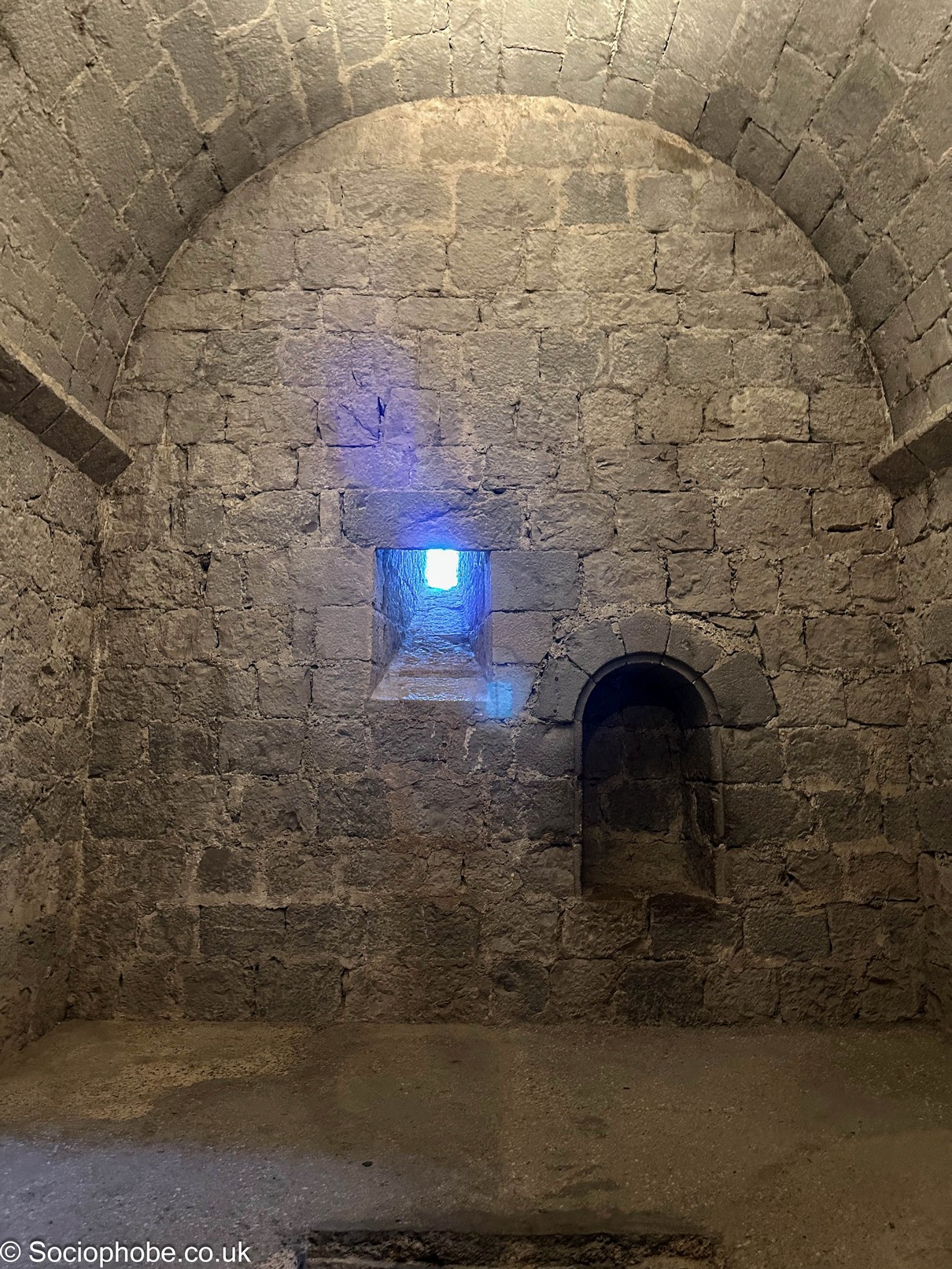
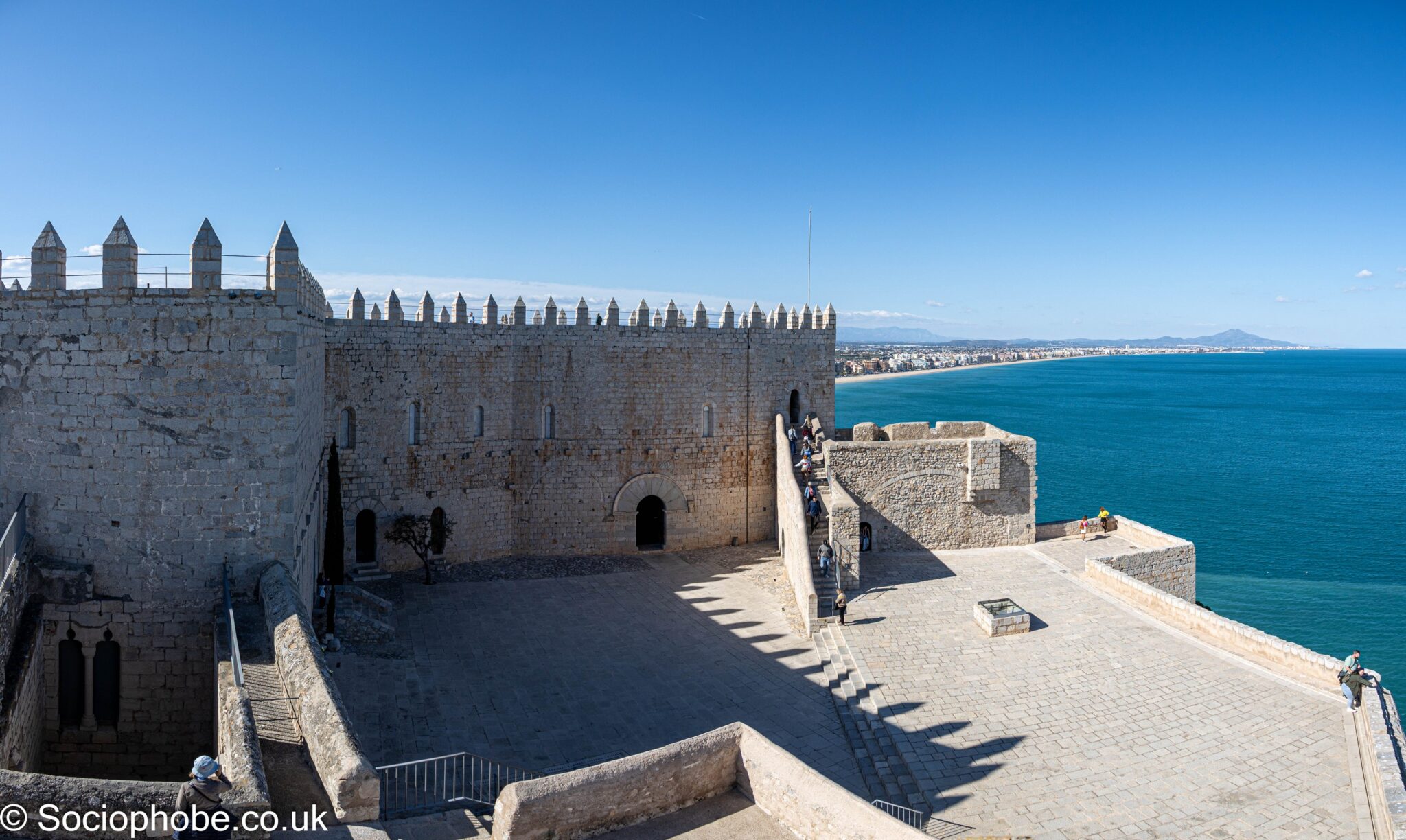
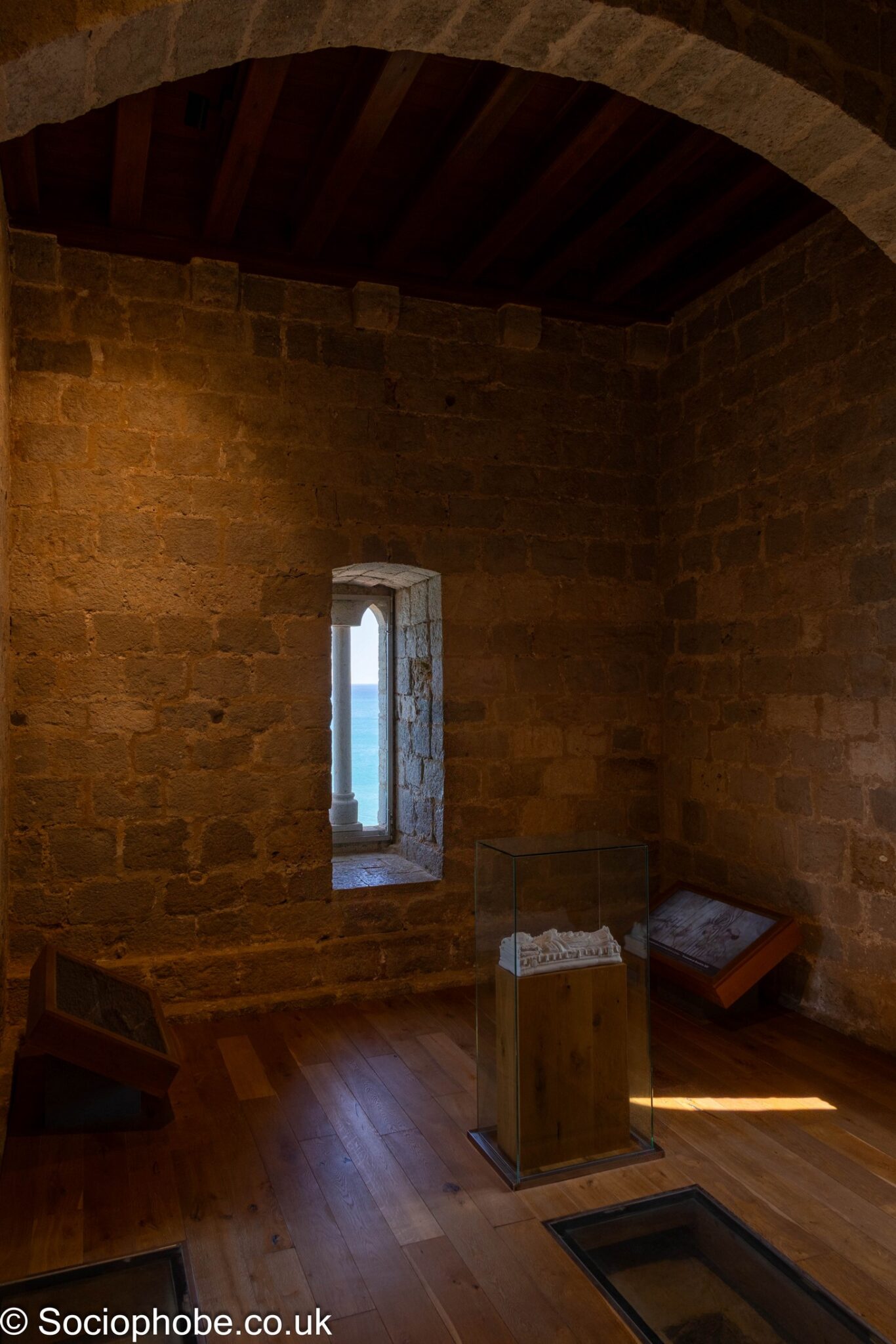
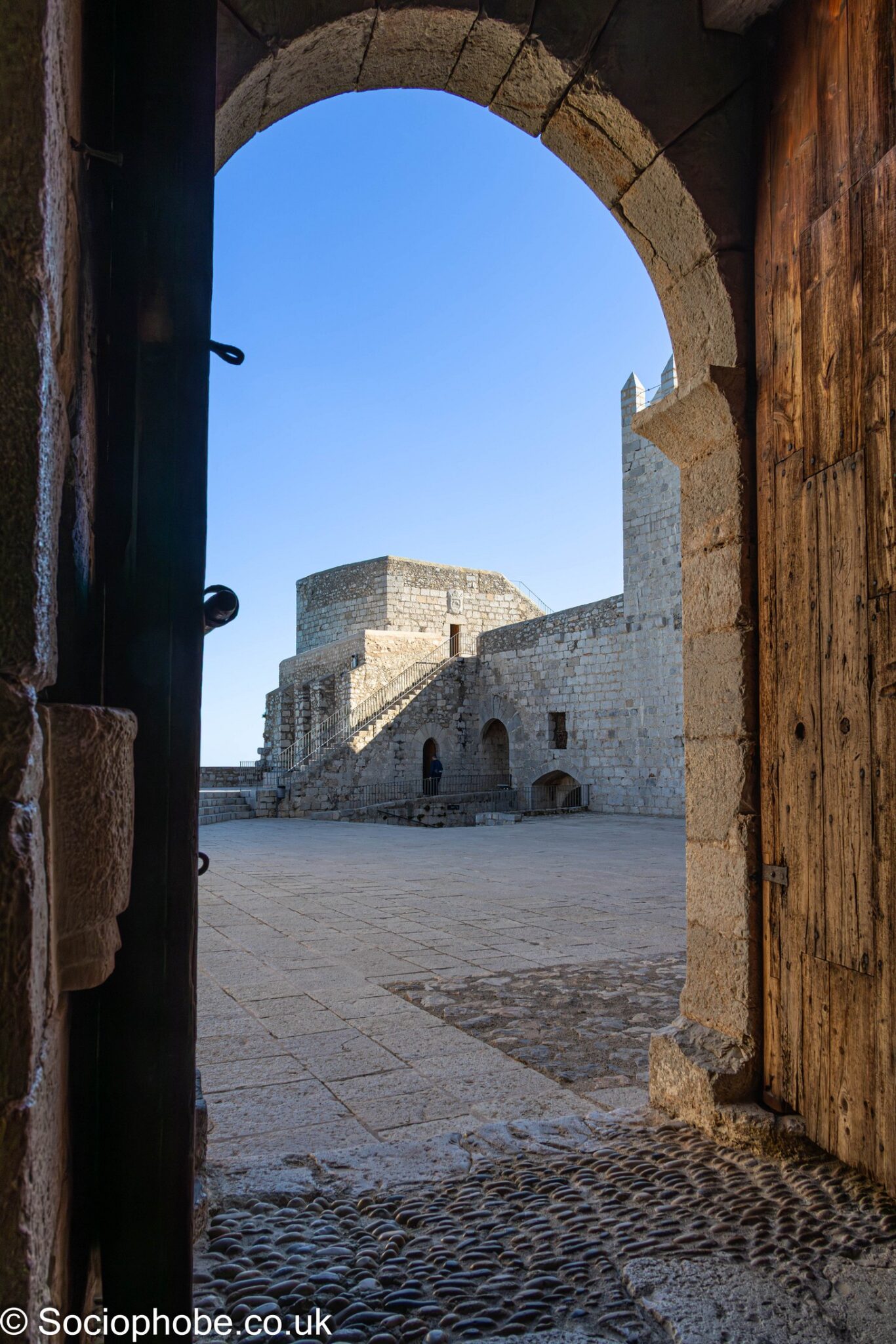
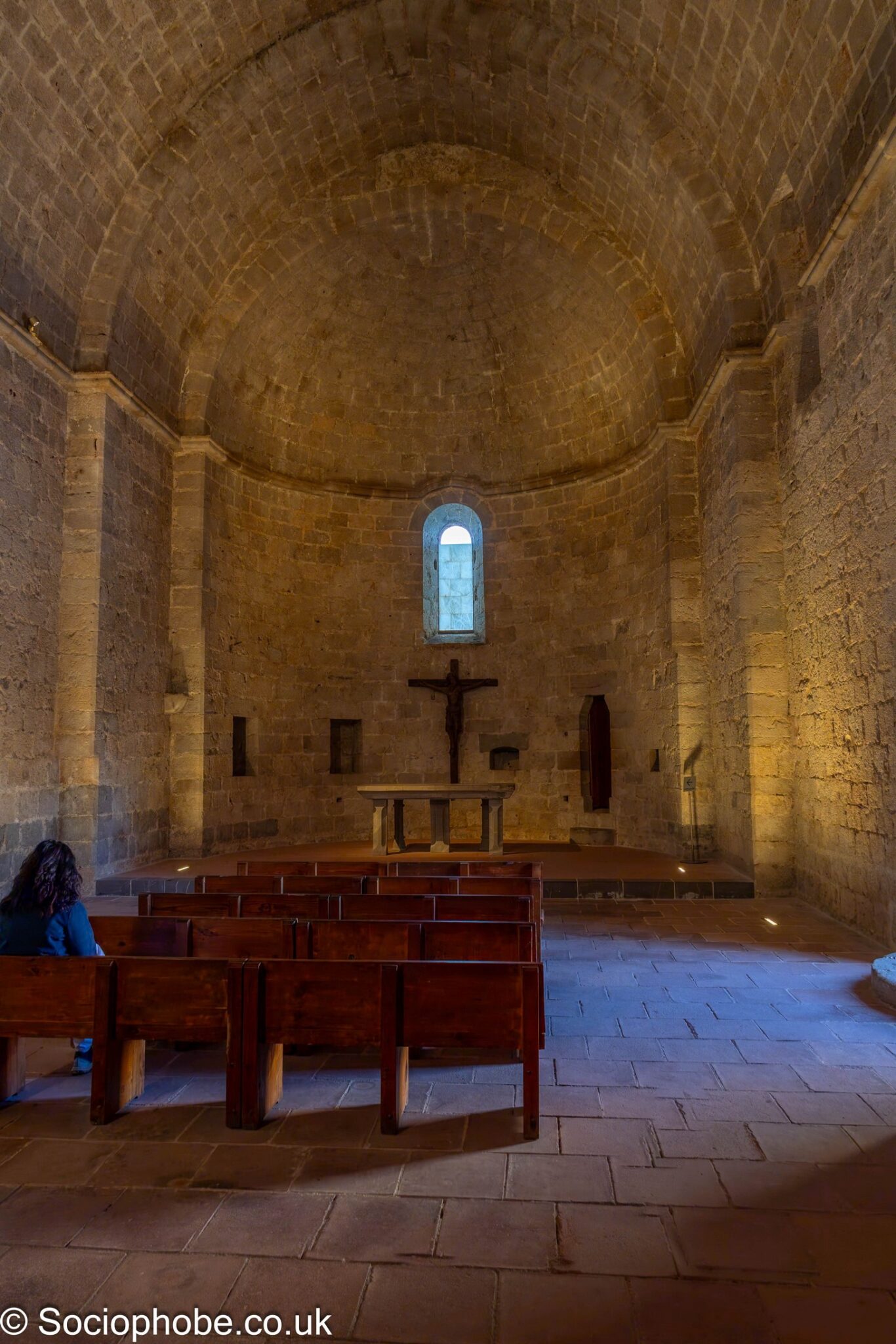
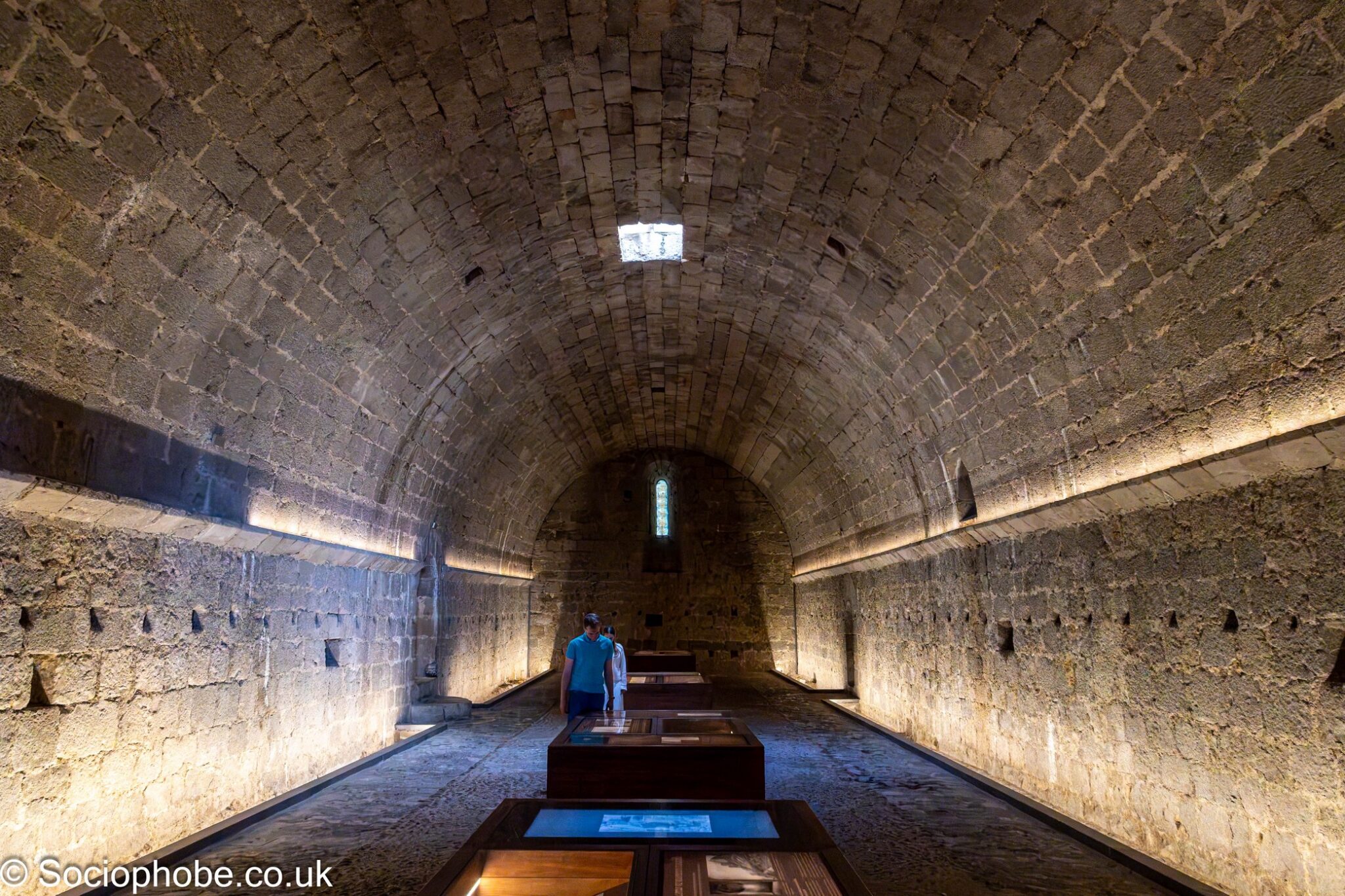
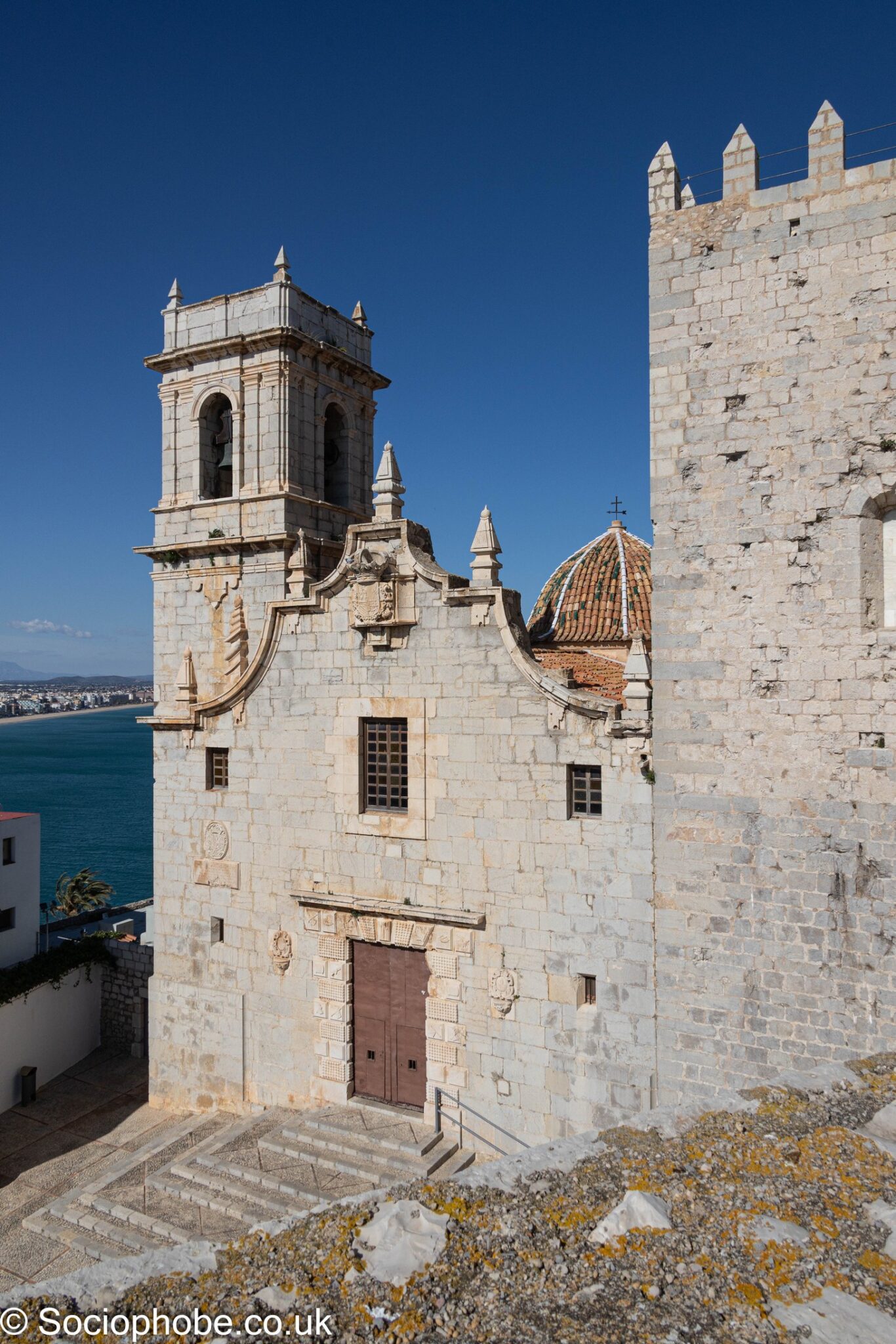
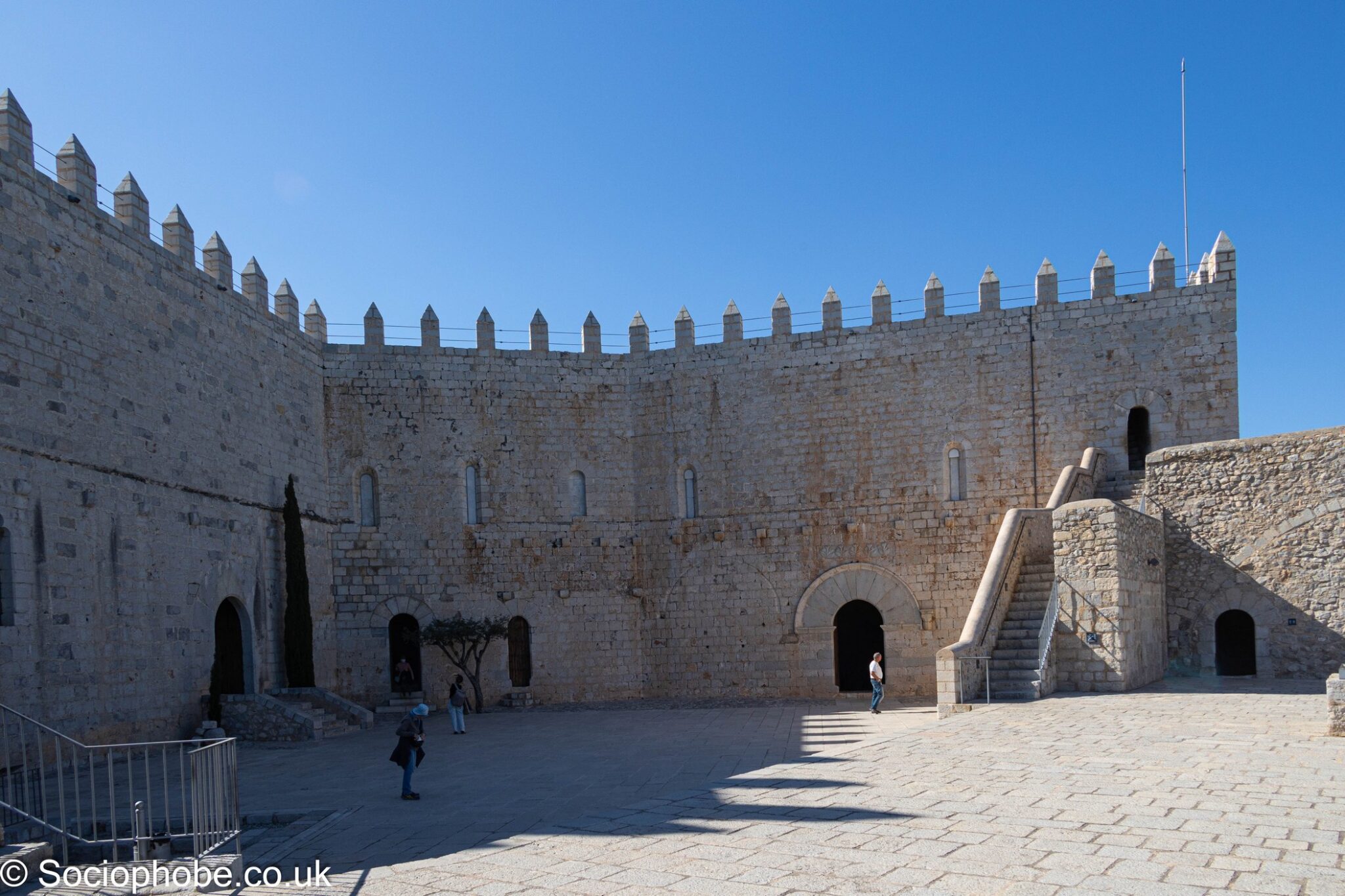
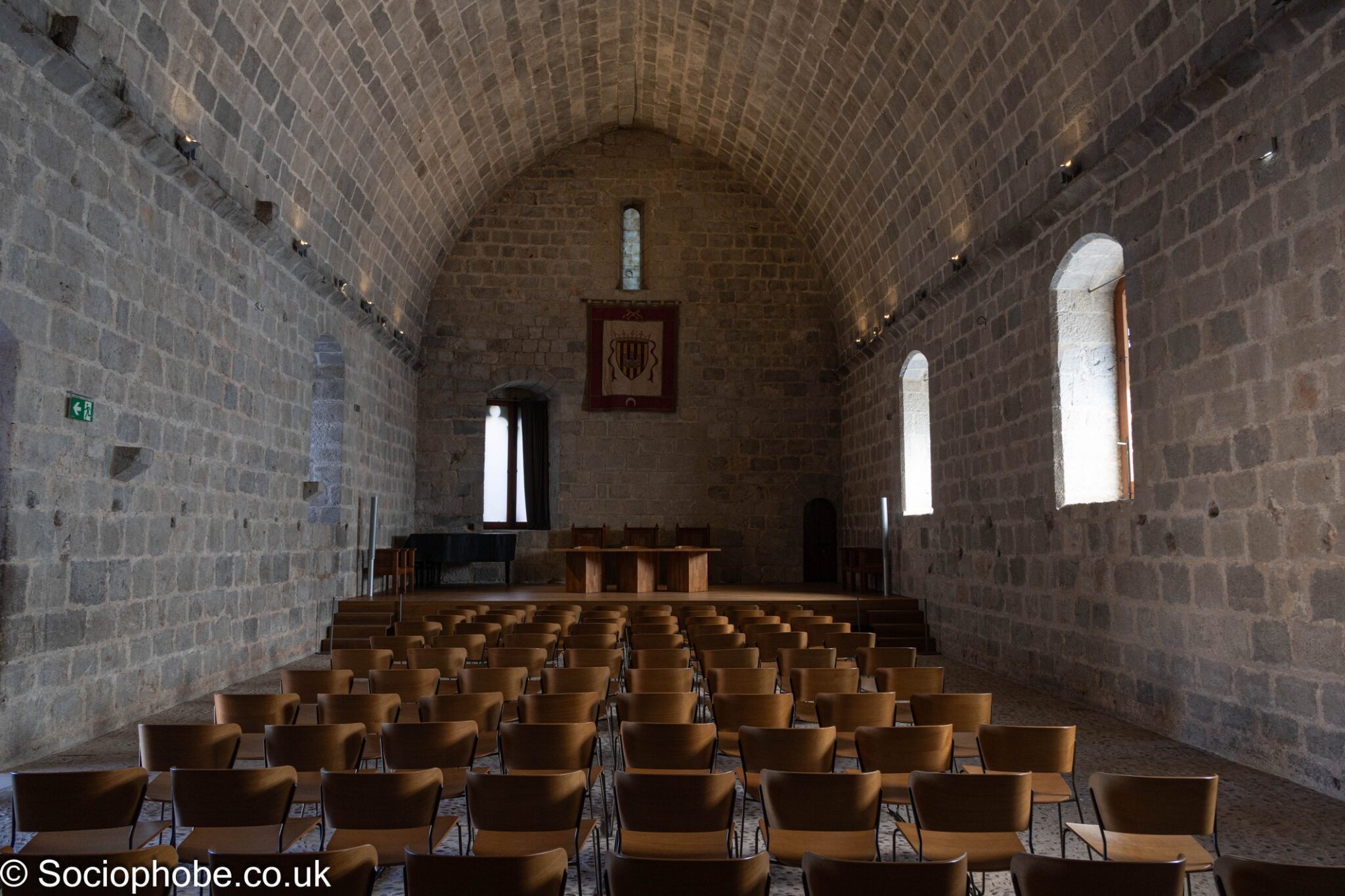
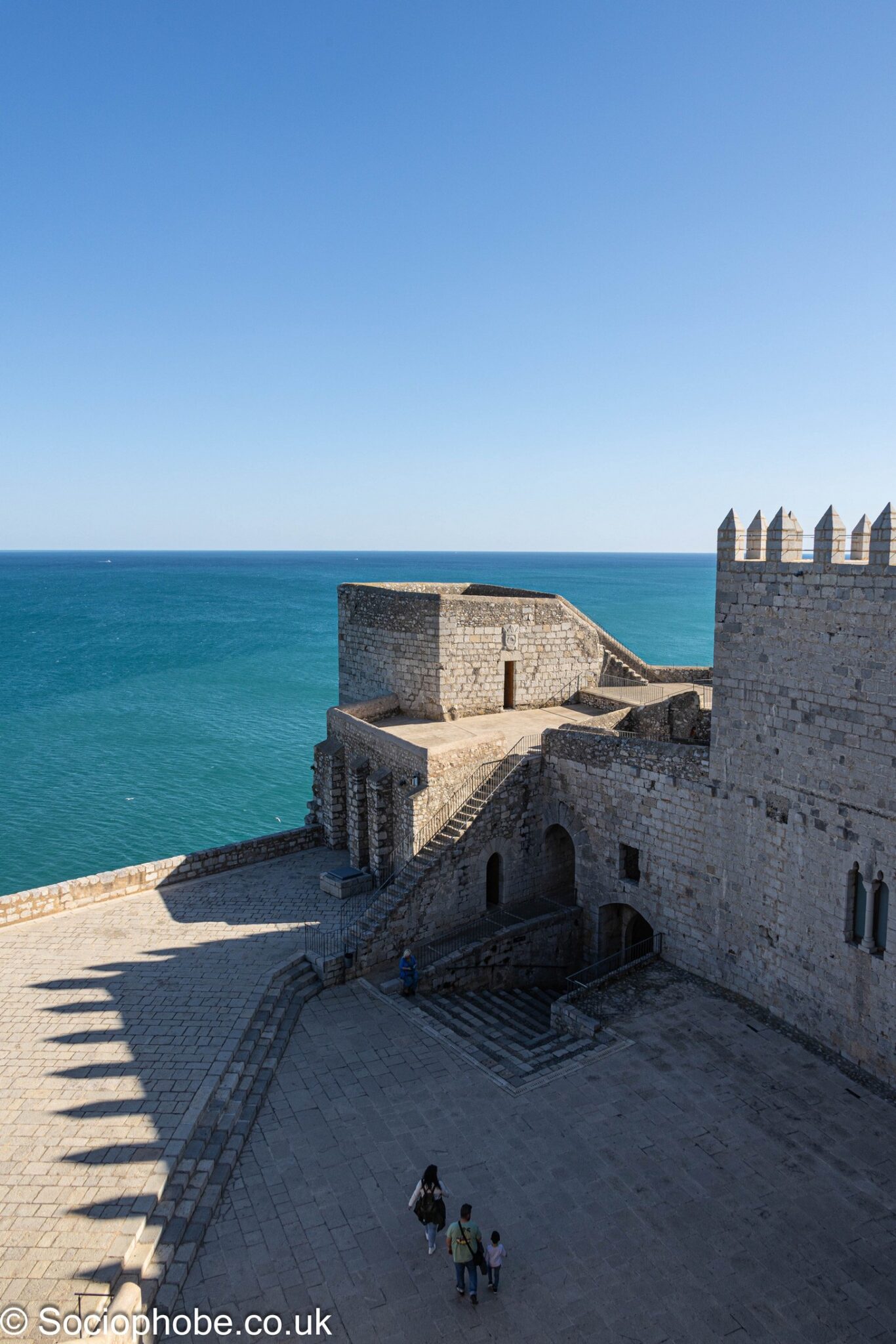
The castle was extremely well preserved and the displays were almost all in English too, which helped and detailed the activities of the temple as well as Papa Luna. The rooms changed purpose over time as the castle was remodelled to deal with new threats but we saw the stables, gothic hall, church, alchemical study and library amongst others, as well as being able to climb to the roof.
Included in the €5 entry was a visit to the Artillery Park, built in the 16th century to counter the continuing threat of Islamic attacks. It’s interesting to stand on the gun platforms and then look up at the medieval castle, to see the military technology changes in 200 years.
Pensicola Castle Photo Gallery




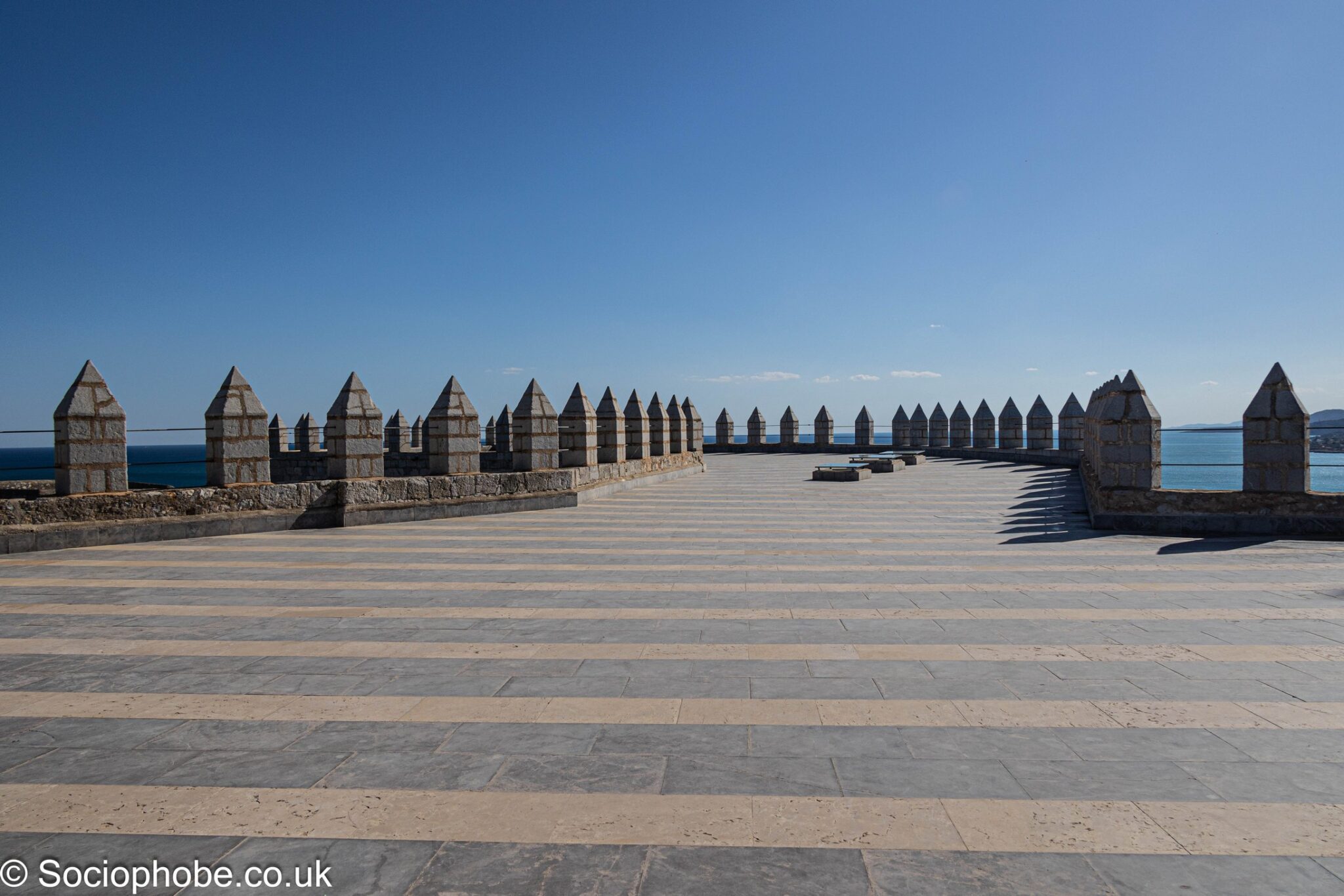
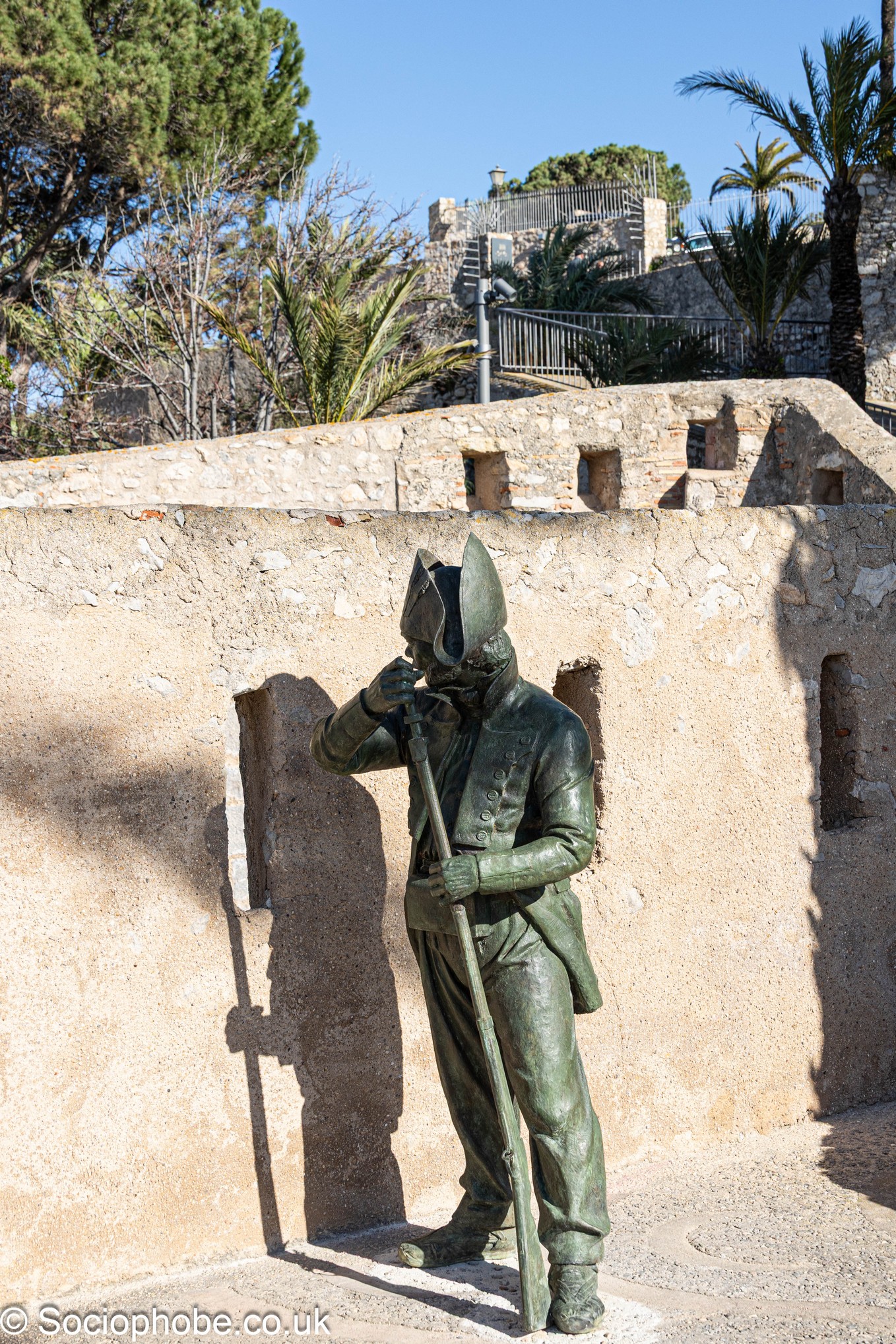
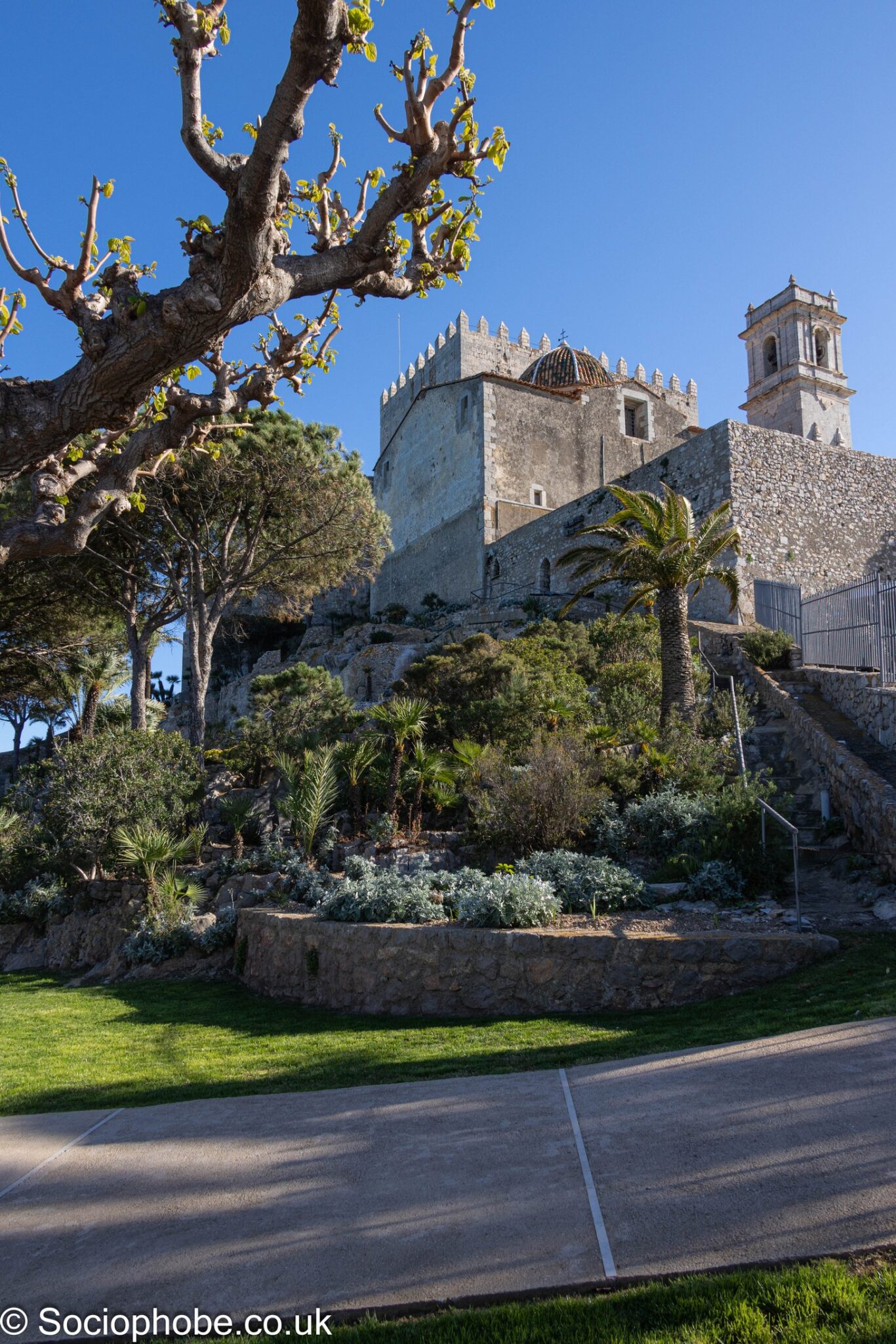
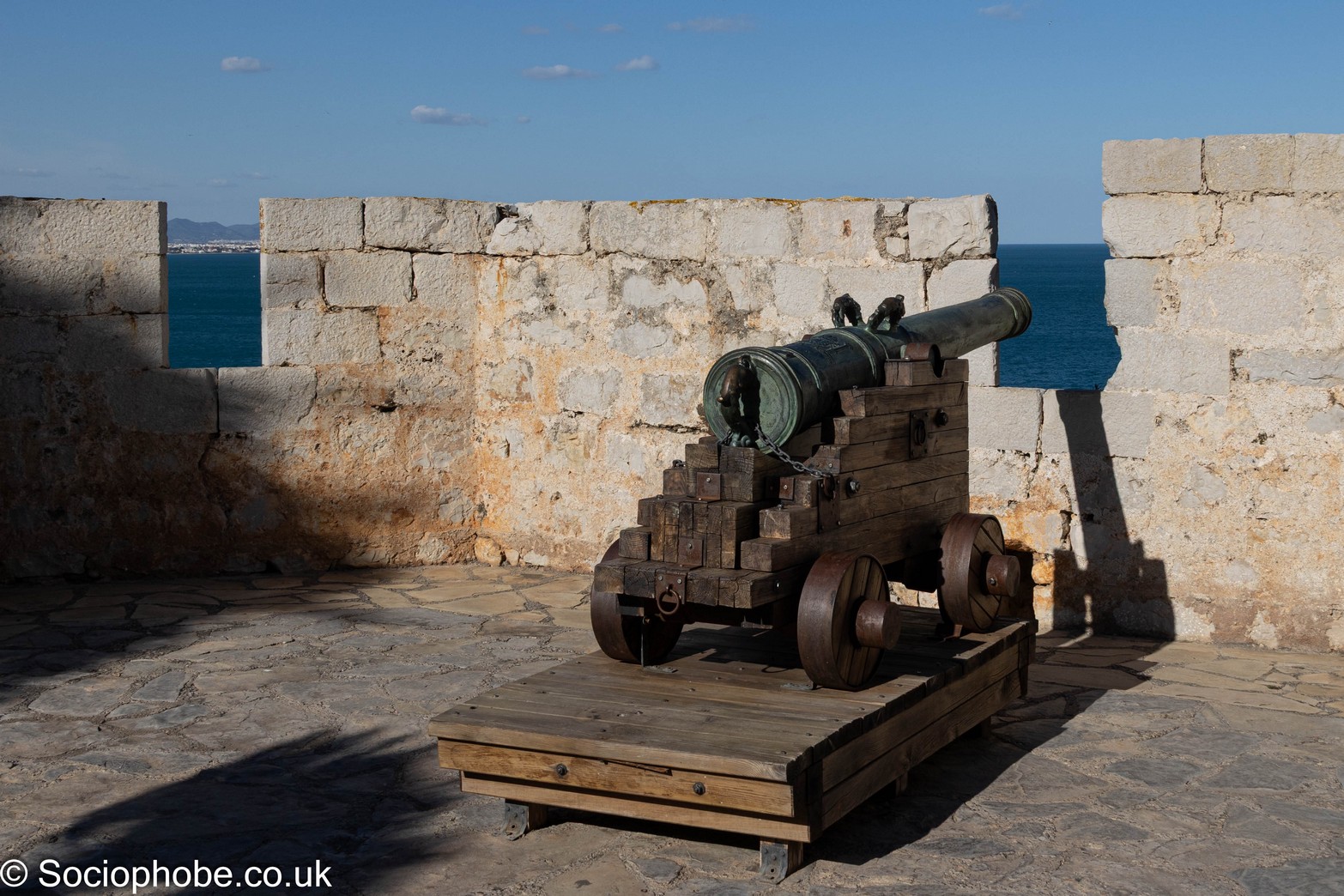
History
The earliest evidence of habitation in the area were Ibero-Roman remains excavated in the port of Peniscola; they date to the 1st–2nd centuries BC. Arab writer Al-Idrisi described Baniskula in the 11th century AD, and briefly described a Moorish castle overlooking the sea. There are no detailed descriptions until the 13th century, when James I of Aragon briefly summarised the Muslim defences. The castle was transferred to James’s control in April 1229, after the last Almohad governor of Valencia, Zayd Abu Zayd, signed an accord surrendering various castles in eastern Spain.
The current form of the castle is essentially that developed by the Knights Templar, who planned to develop a kingdom centered on Peniscola. James II of Aragon gave the castle to the Templars in 1294, together with the nearby castles of Pulpís and Xivert. The Templars began work that year, demolished the Muslim fortifications, and completely rebuilt the castle; the work was completed in 1307. In common with other Templar fortifications, the castle was laid out around an inner ward and possessed a chapel. Architectural features included barrel vaulting and round arches. The basic Templar core of the castle remains intact; some changes were made by Antipope Benedict XIII in order to modify it for use as a papal residence in the early 15th century. The castle defences and the associated town fortifications were significantly upgraded from the early 16th century onward, in line with advances in military technology. The castle was massively redeveloped by military engineer Giovanni Battista Antonelli in the 16th century.
The castle was involved in various military conflicts of the Kingdom of Aragon, and later in the War of the Spanish Succession in the early 18th century, the Peninsula War and civil conflicts in the early 19th century, each of which impacted upon the state of the castle defences in some form. The castle garrison was finally disbanded in 1890.
References
The official castle site here has ticket costs and opening times.
The history above is copied from the Wiki page for the castle.
Atlas Obscura has a nice general history of the castle here.