
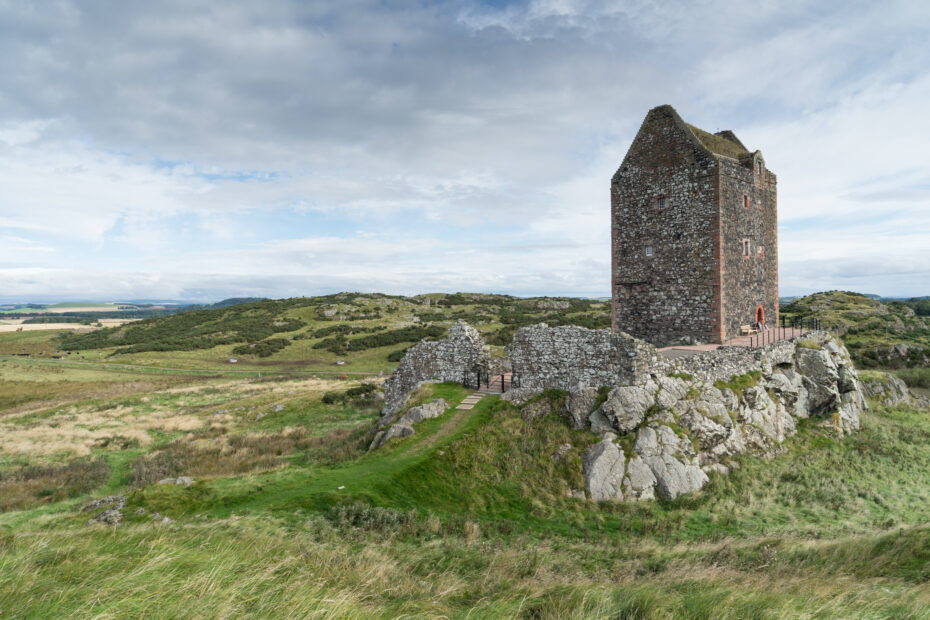
We were visiting Smailholm Tower as a quick stop off after Leaderfoot Viaduct and continuing on to Dryburgh Abbey. The Scottish Borders is a fantastically rich area for historic sites and my blog here covers this whole tour.

Visiting Smailholm Tower
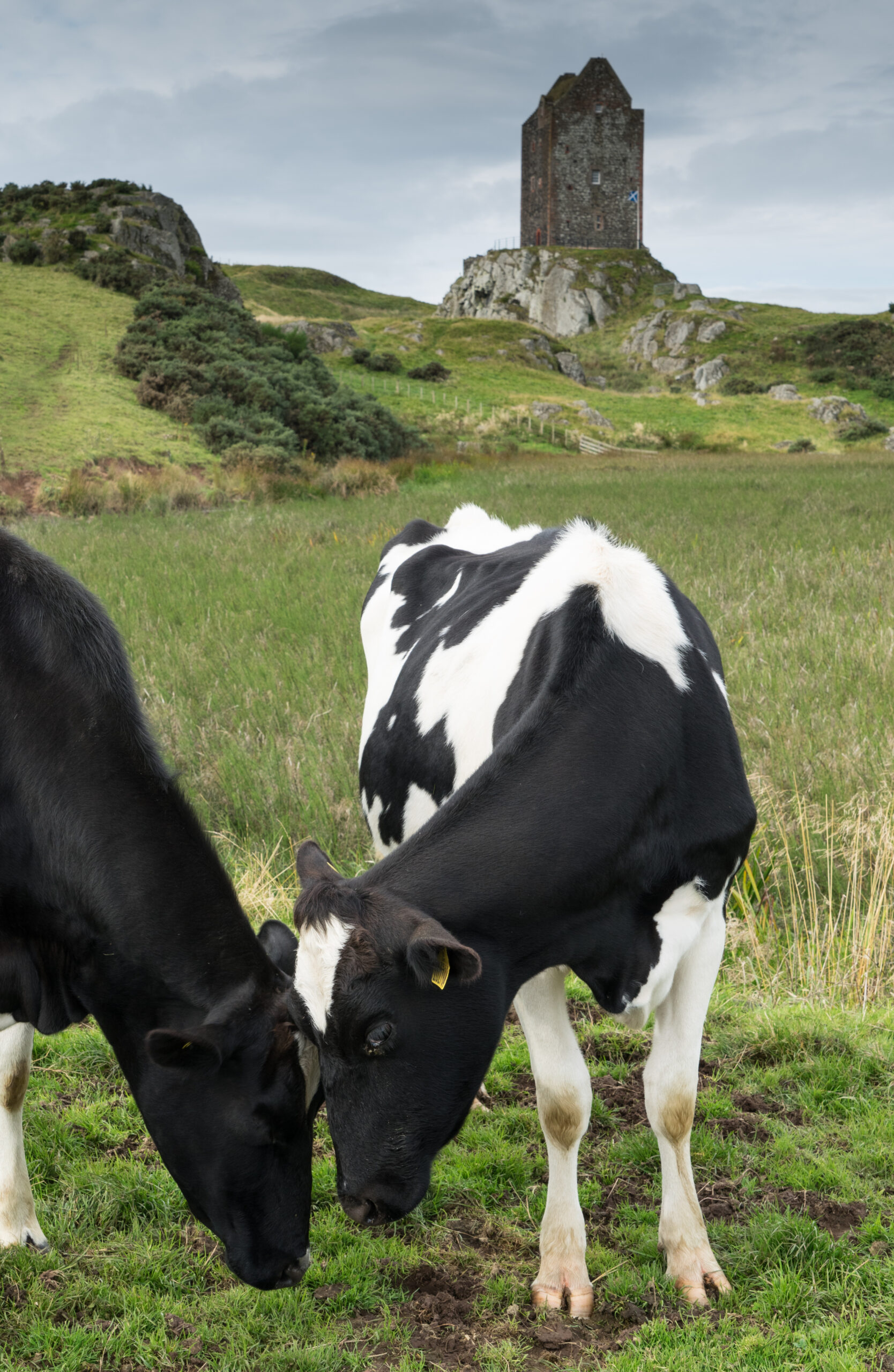
The tower is at the end of a series of small roads and has a surprisingly large parking area. There is an information board at the car park and then a small path through a field with cows to reach the tower.
My Experience
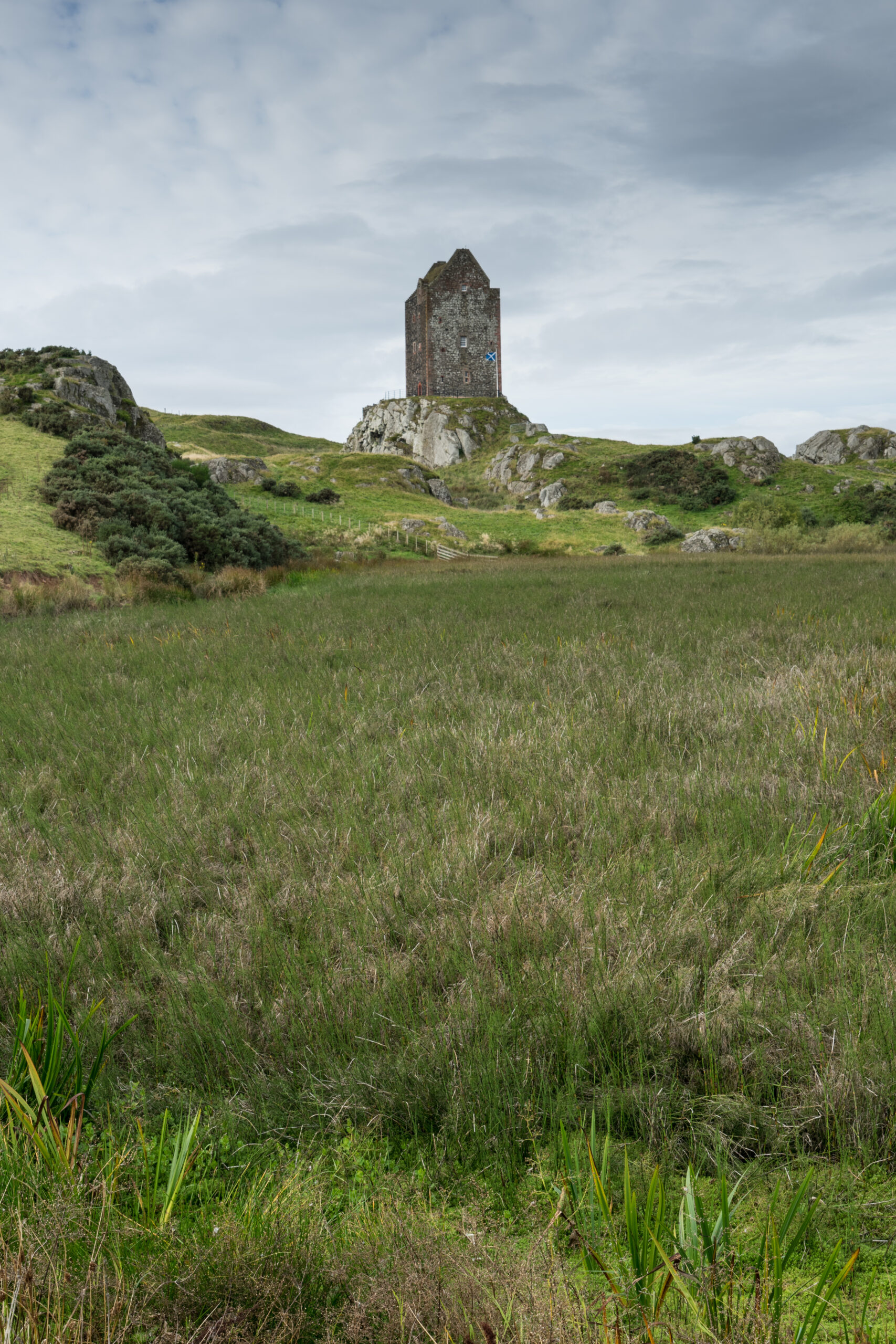
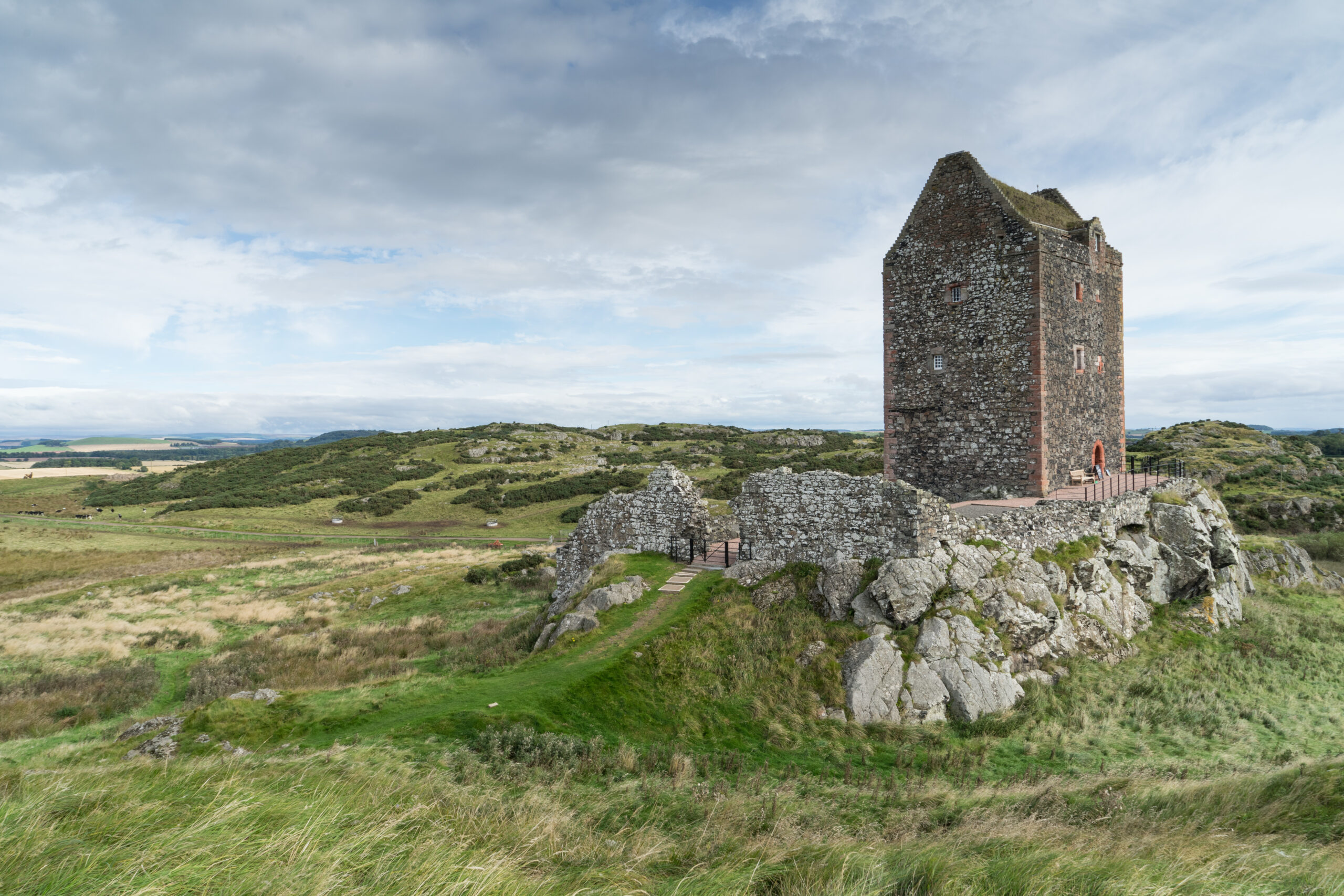
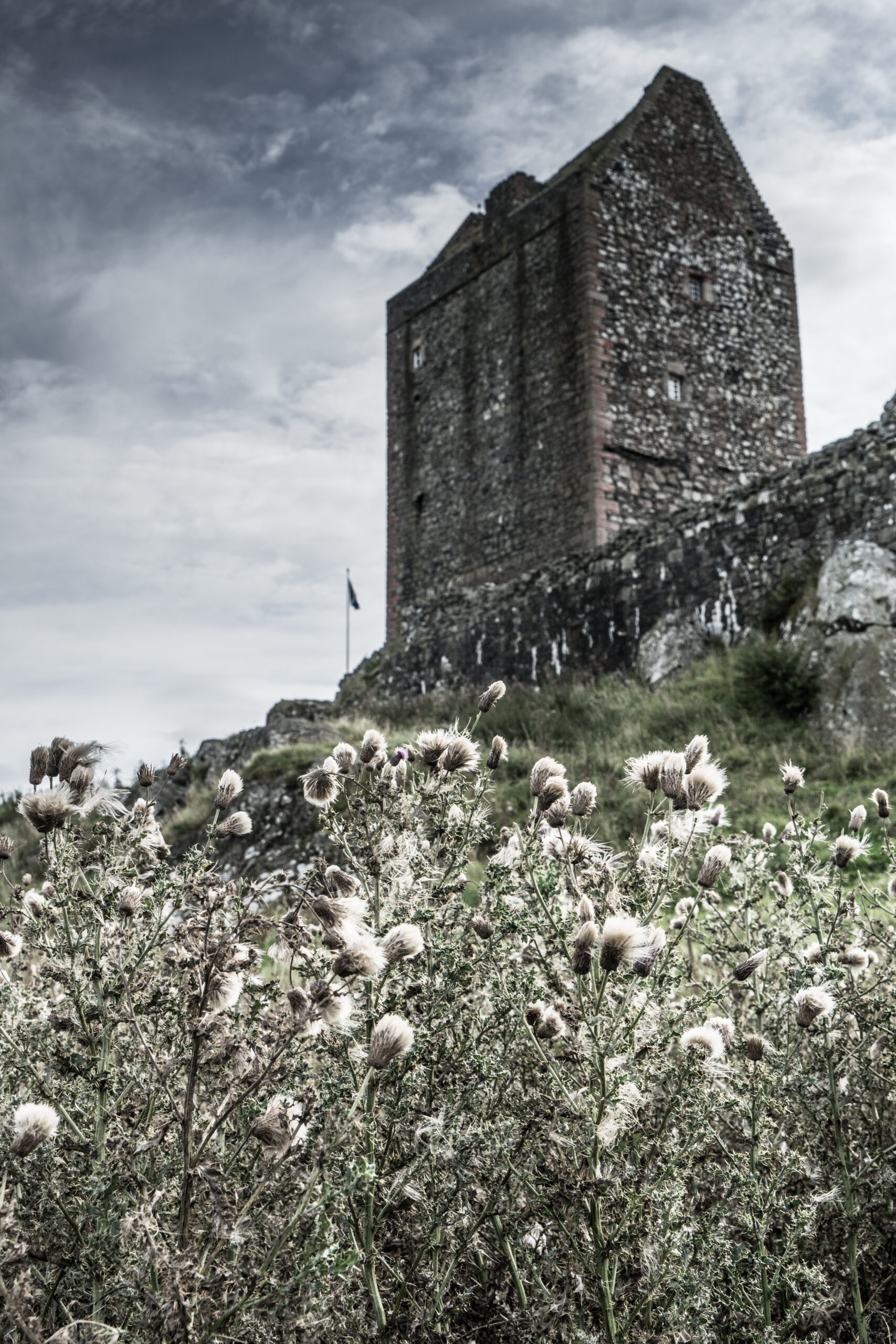
Once we had parked we had a short walk across the field to reach Smailholm Tower. It is an unusual survivor of the border peel towers and still has the roof and floors intact. Outside is the remains of the defensive walls and some buildings before you reach the tower itself.
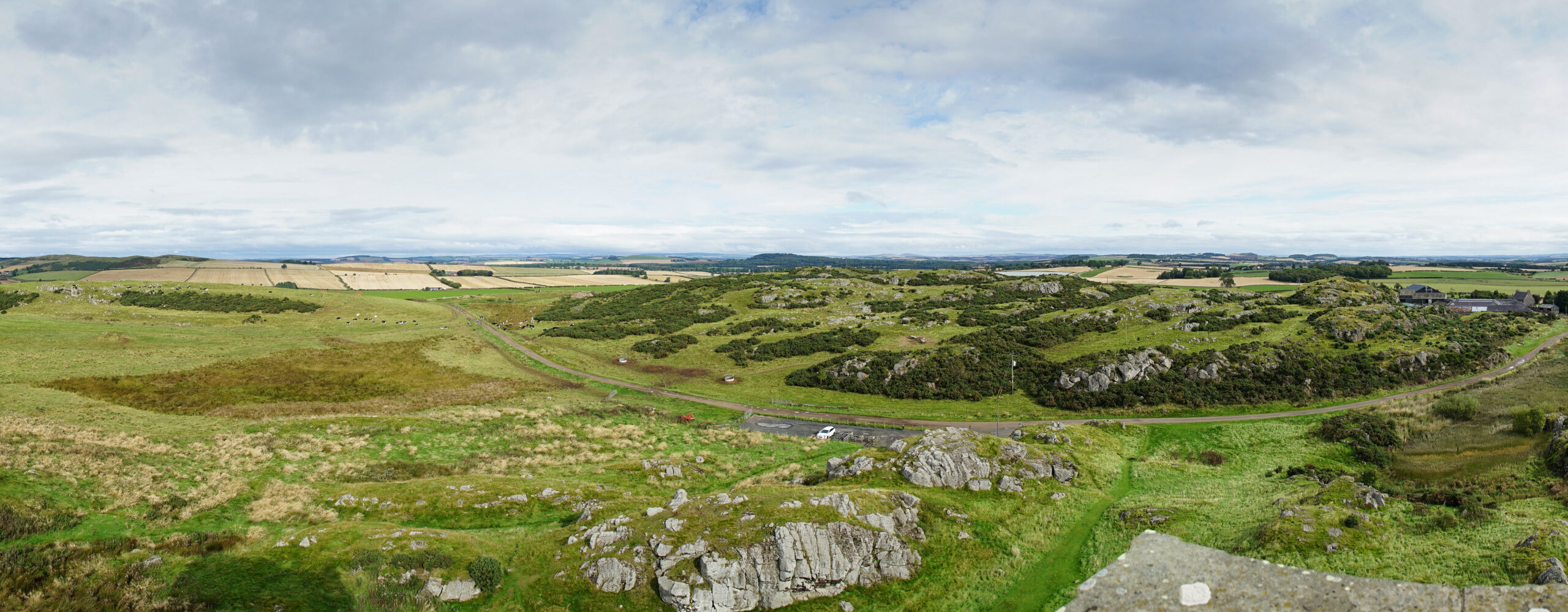
The stairs in the tower are a narrow spiral staircase for the three upper floors so that meant Deb stayed downstairs! There was an exhibition about Walter Scot and the Borders and also view across a desolate landscape. It was easy to see why cattle were so important, and hence cattle theft, as there really wasn’t much else to the economy!
Photo Gallery of Smailholm Tower
History
Smailholm’s 20m-tall tower house, its walls 2.5m deep, dominates a rocky craig. The Pringles, who built this border stronghold in the first half of the 1400s, were a prominent local family.
Views from the battlements are impressive: on a good day, you can see mighty Bamburgh Castle, 33 miles away in Northumberland.
The ruined foundations of an outer hall and kitchen block lie in the shadow of the tower. A stout defensive wall encloses the barmkin (courtyard).
As squires of the powerful earls of Douglas, the Pringles had the role of warden of the Ettrick Forest – a profitable position. But like everyone else either side of the border, they suffered at the hands of the reivers (cattle raiders).
During two raids in 1544, Northumberland reivers got away with more than 700 cattle and 100 horses. This may have prompted the family to relocate in the later 1500s to Galashiels (their burial vault was in Melrose Abbey).
In 1645, the Scotts of Harden, near Hawick, bought the tower and estate. They already had a fine house, so they leased Smailholm to a kinsman, Walter ‘Beardie’ Scott – better known as Sir Walter Scott’s great-grandfather.
Smailholm and Sir Walter Scott
Walter Scott was born in Edinburgh in 1771, but was sent by his parents to Smailholm as a sickly infant for the good of his health.
Scott was 18 months old when he came to Sandyknowe Farmhouse, the dwelling that replaced Smailholm as the Scott family home. There his grandmother and aunt told him tales of the border countryside.
In his old age, Scott described the powerful effect on his imagination of these border ballads and the sight of his ancestors’ ancient tower, “standing stark and upright like a warden”.
In 1802, Scott published his much acclaimed Minstrelsy of the Scottish Border. He paid an emotional visit to Smailholm shortly before his death in 1832.
References
The history above is taken from the Historic Scotland site here, which also details opening times and costs.
The Wiki page is here and gives a little more detail.