
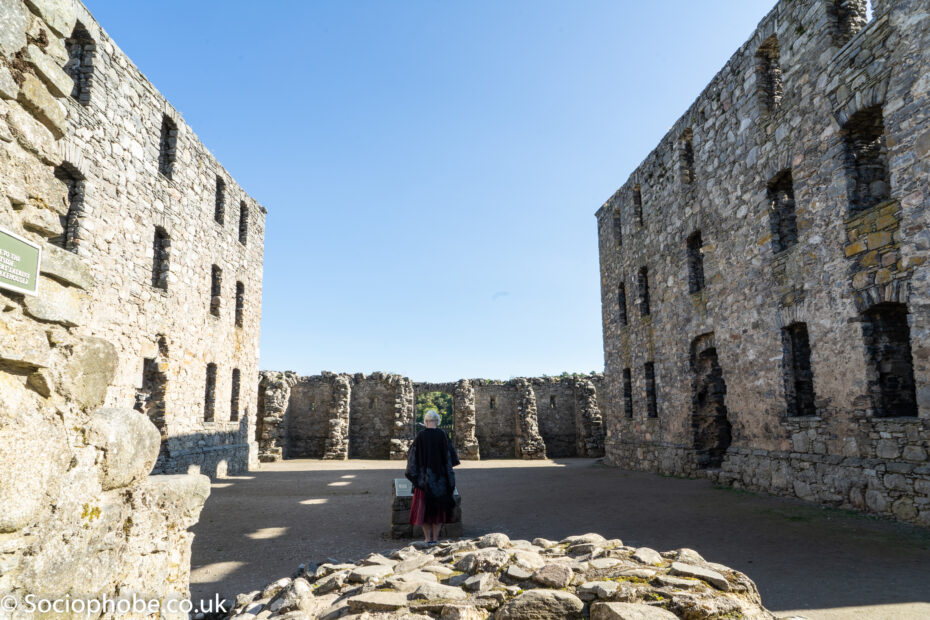
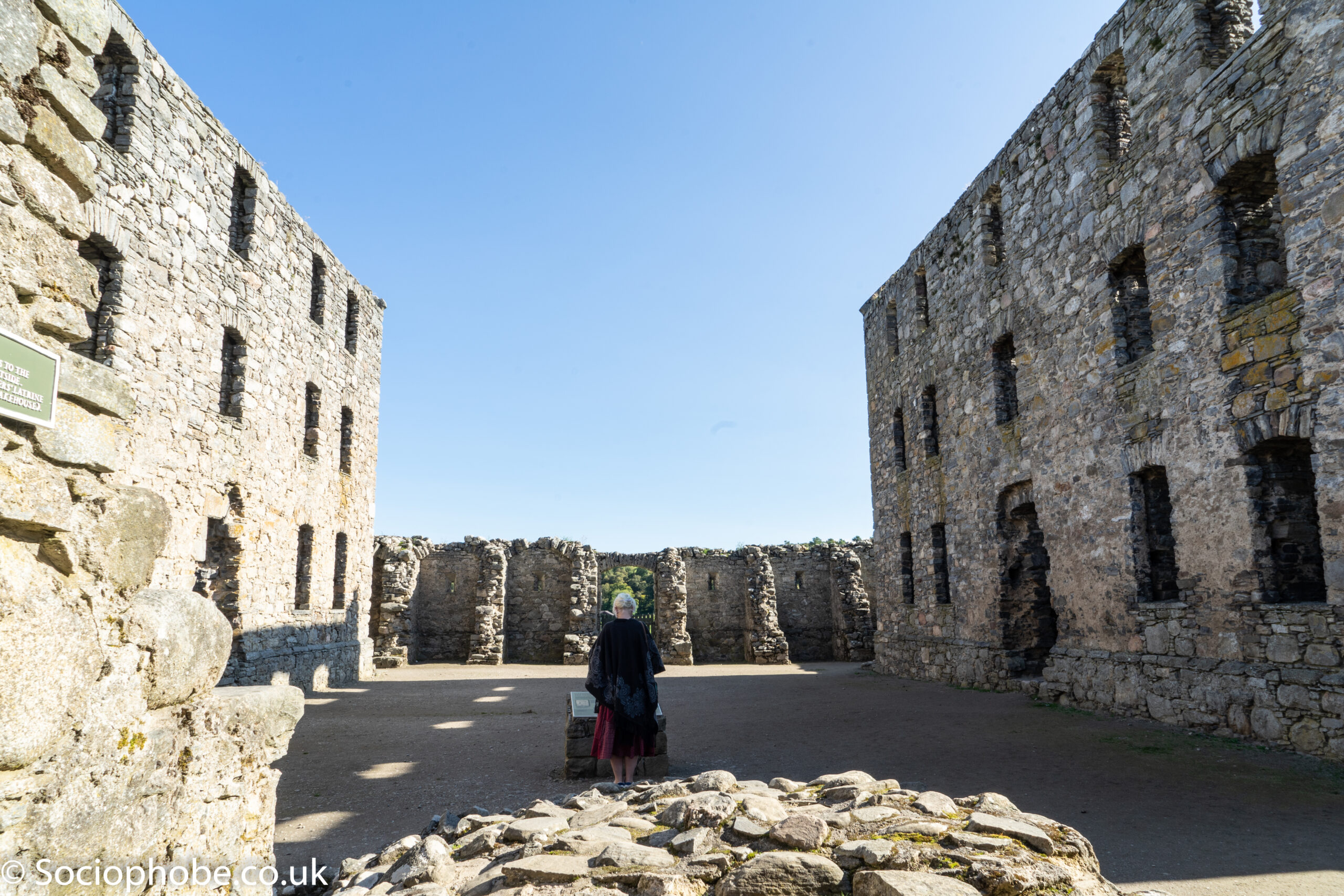
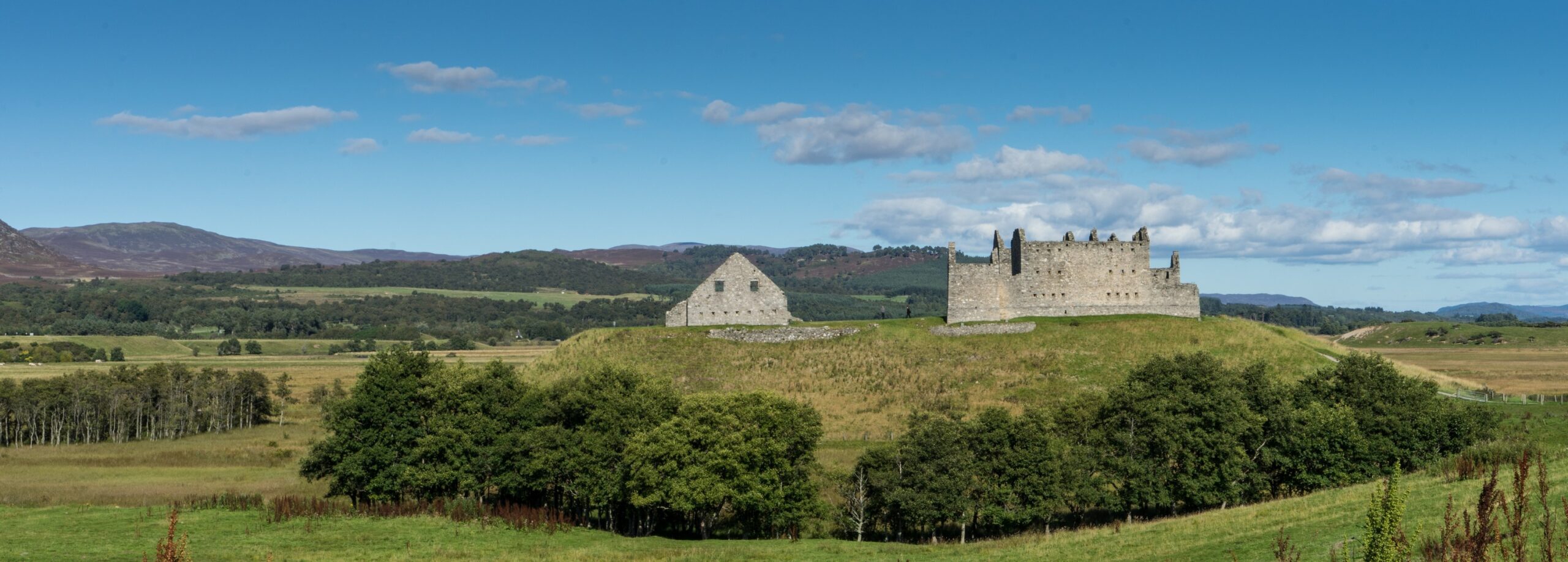
I had seen Ruthven Barracks many times as I was driving up and down the A9 and in September 2017 we finally got to visit the place. It is an imposing ruin that dominates the area as impressively as any castle.
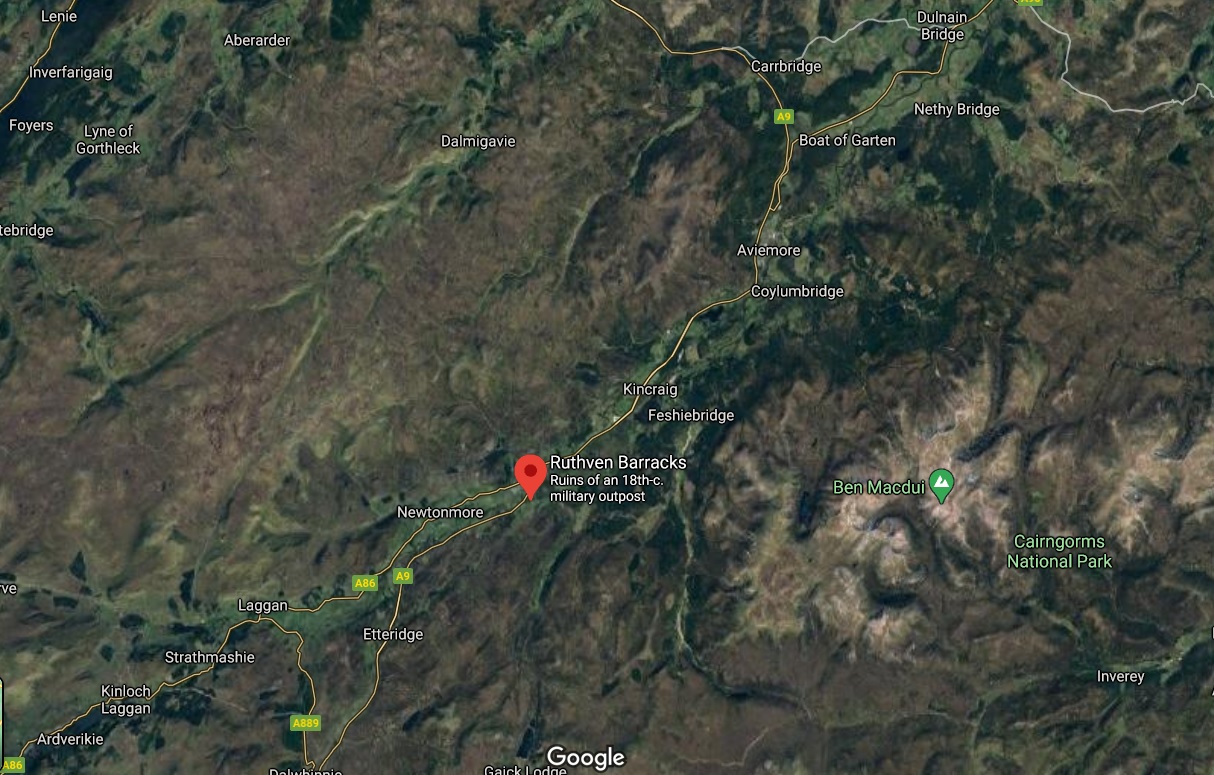
Visiting Ruthven Barracks
The barracks are well signposted and there is a small parking area nearby. The site is unmanned so has no facilities but there are information boards and a well maintained path.
My Experience
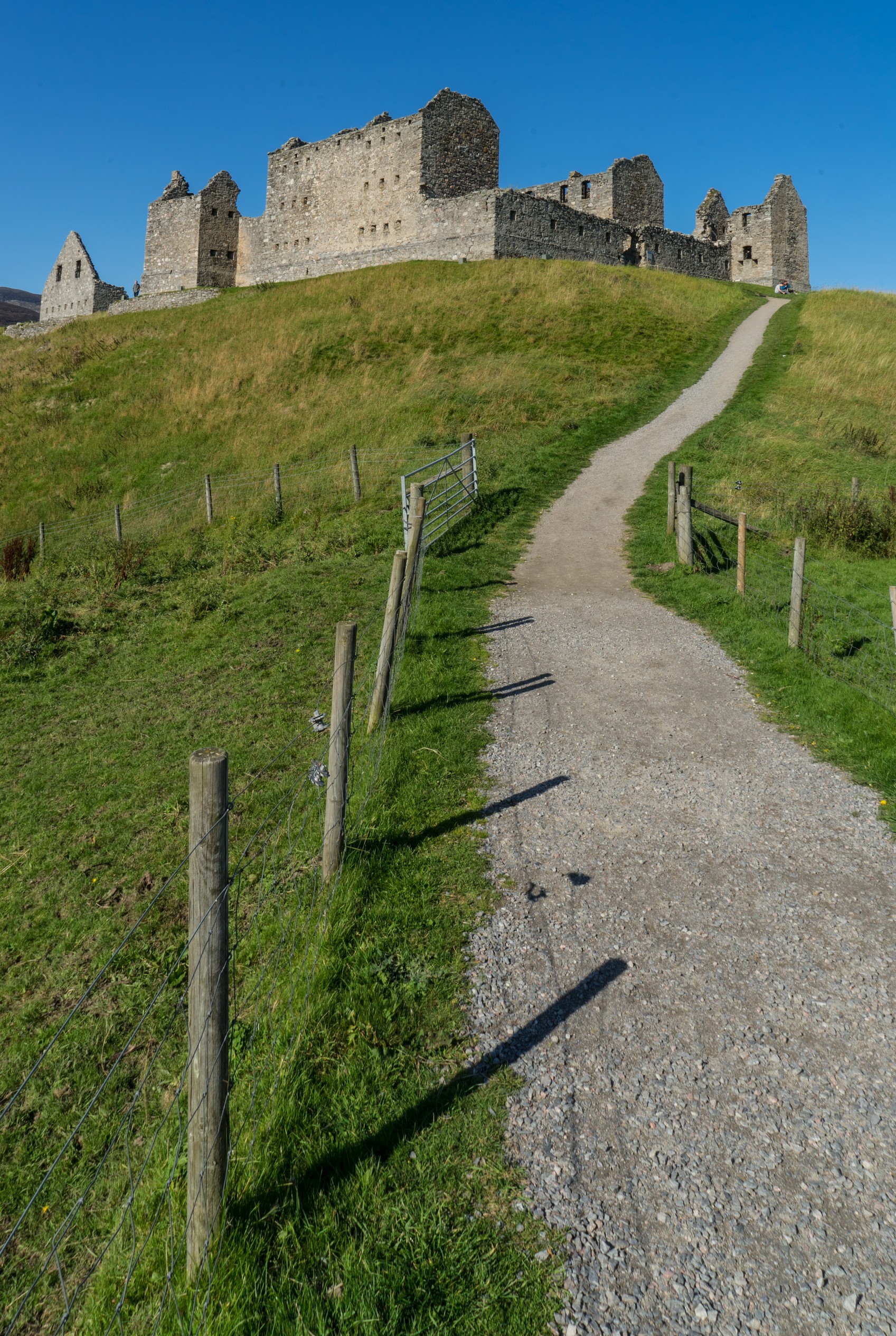
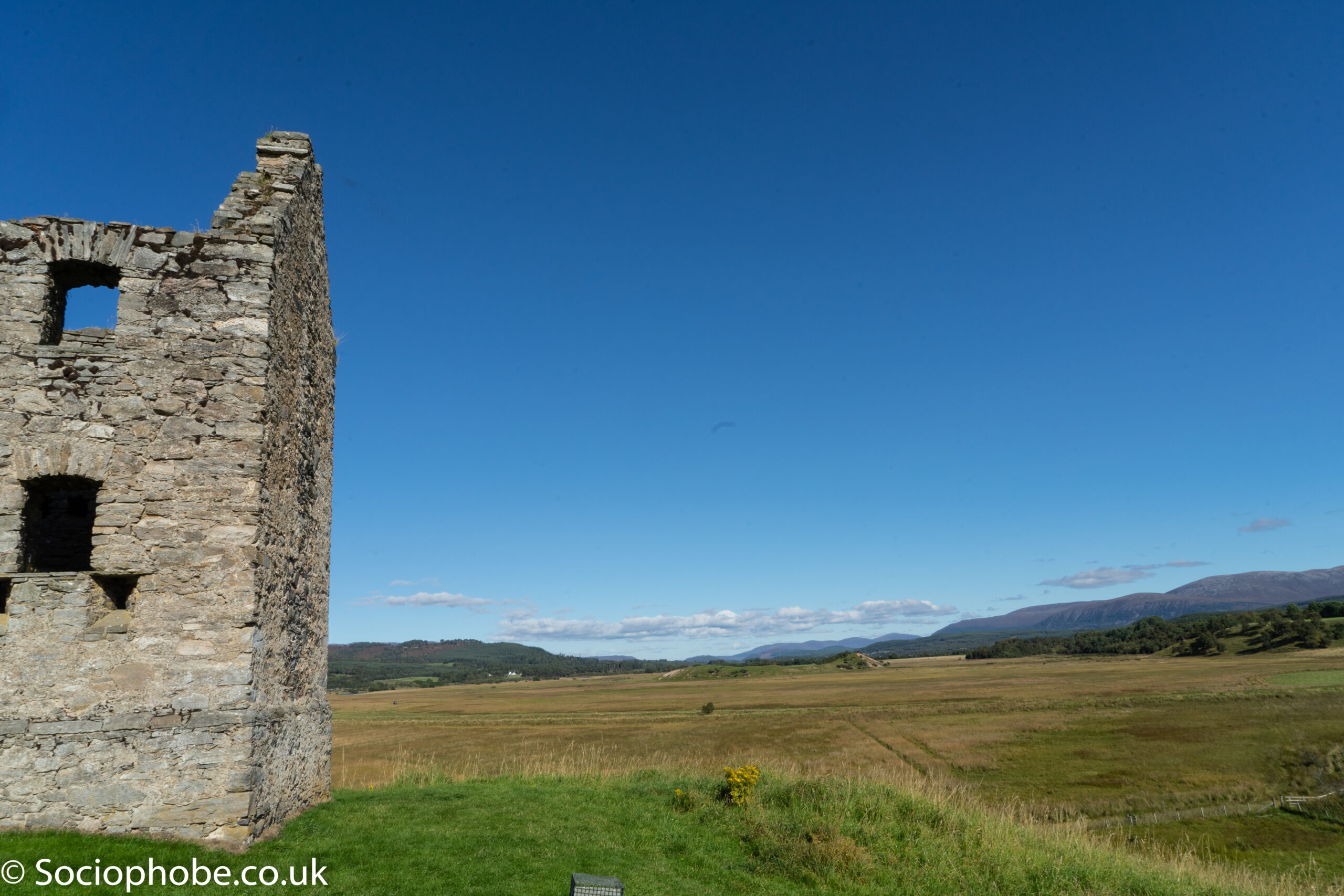
Our visit to Ruthven Barracks was part of our Grand Tour of Scotland and we stopped here whilst spending a few nights in Aviemore. It was an unusually gorgeous day and the view from the hill the barracks sat on was impressive. There were plenty of information boards showing the difference in officers and other ranks quarters and the history of the barracks.
As well as sleeping quarters the barracks held a brewhouse, a jail and a bakery so was designed to be self sufficient for a while. It could hold 120 men potentially although usually the garrison was far less.
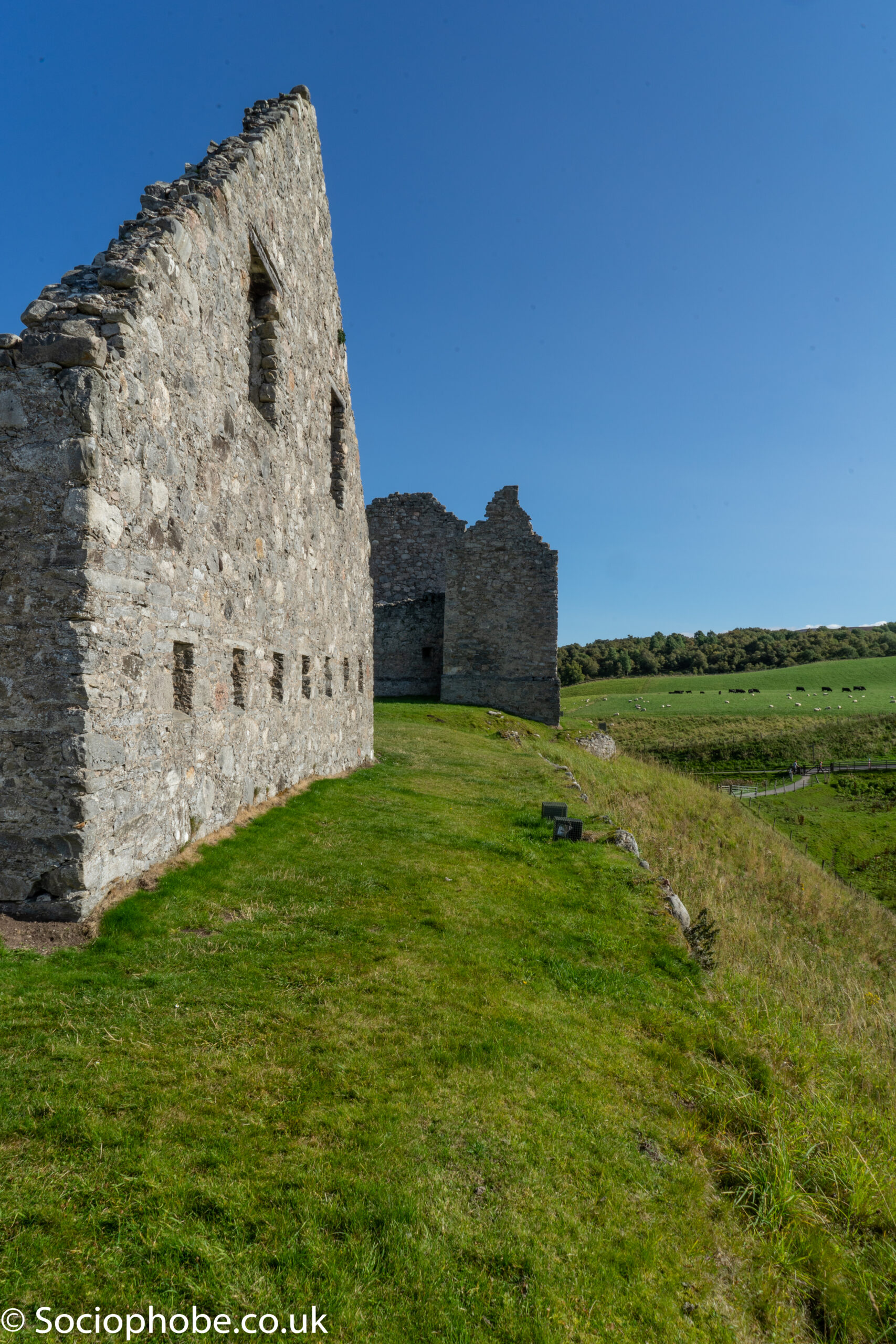
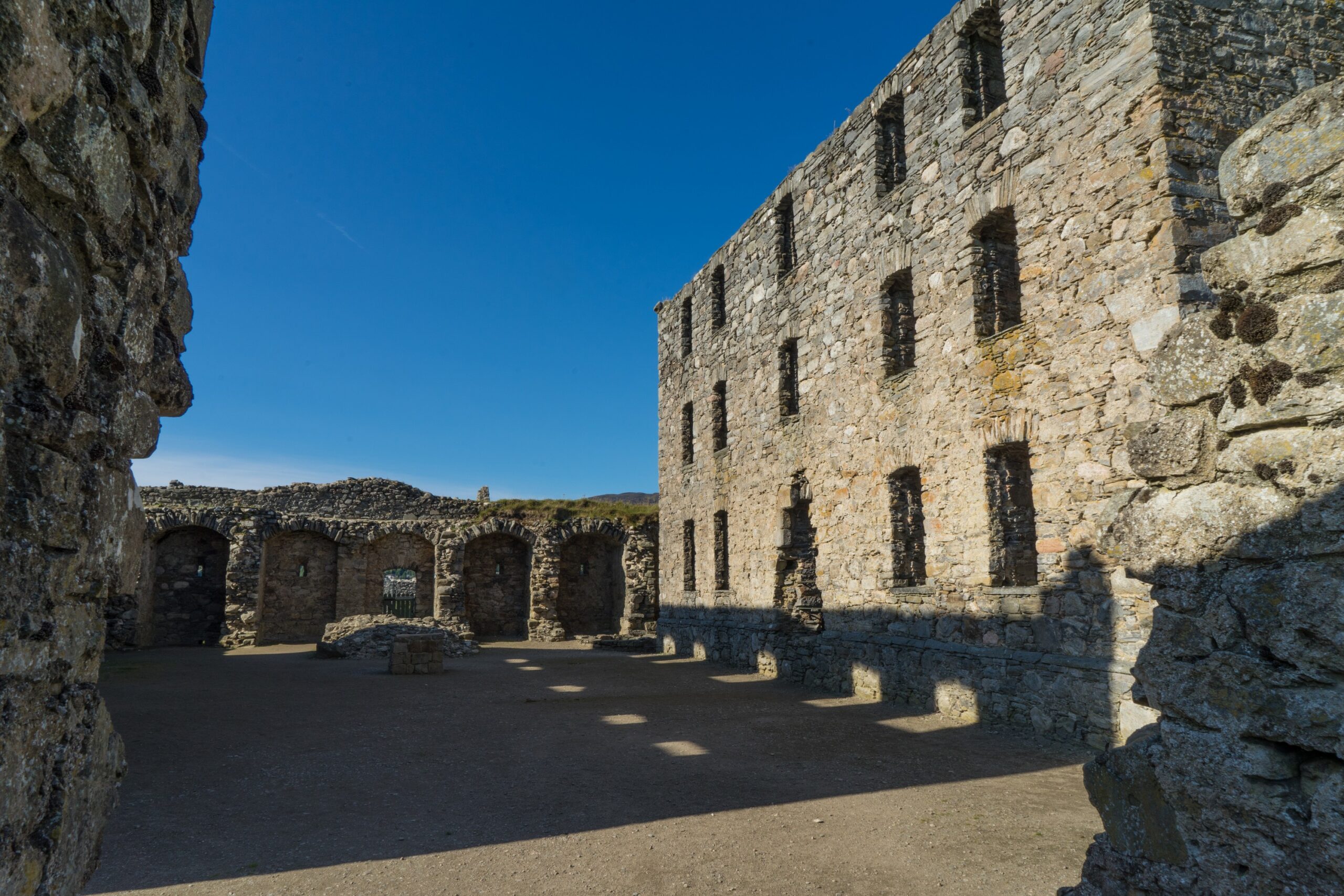
After destruction by the Jacobites all that is left is the outer framework of the buildings but it easy to envisage what it must have looked like when complete. The tall buildings would have made the courtyard very dark on the average highland day!
Ruthven Barracks Photo Gallery
History
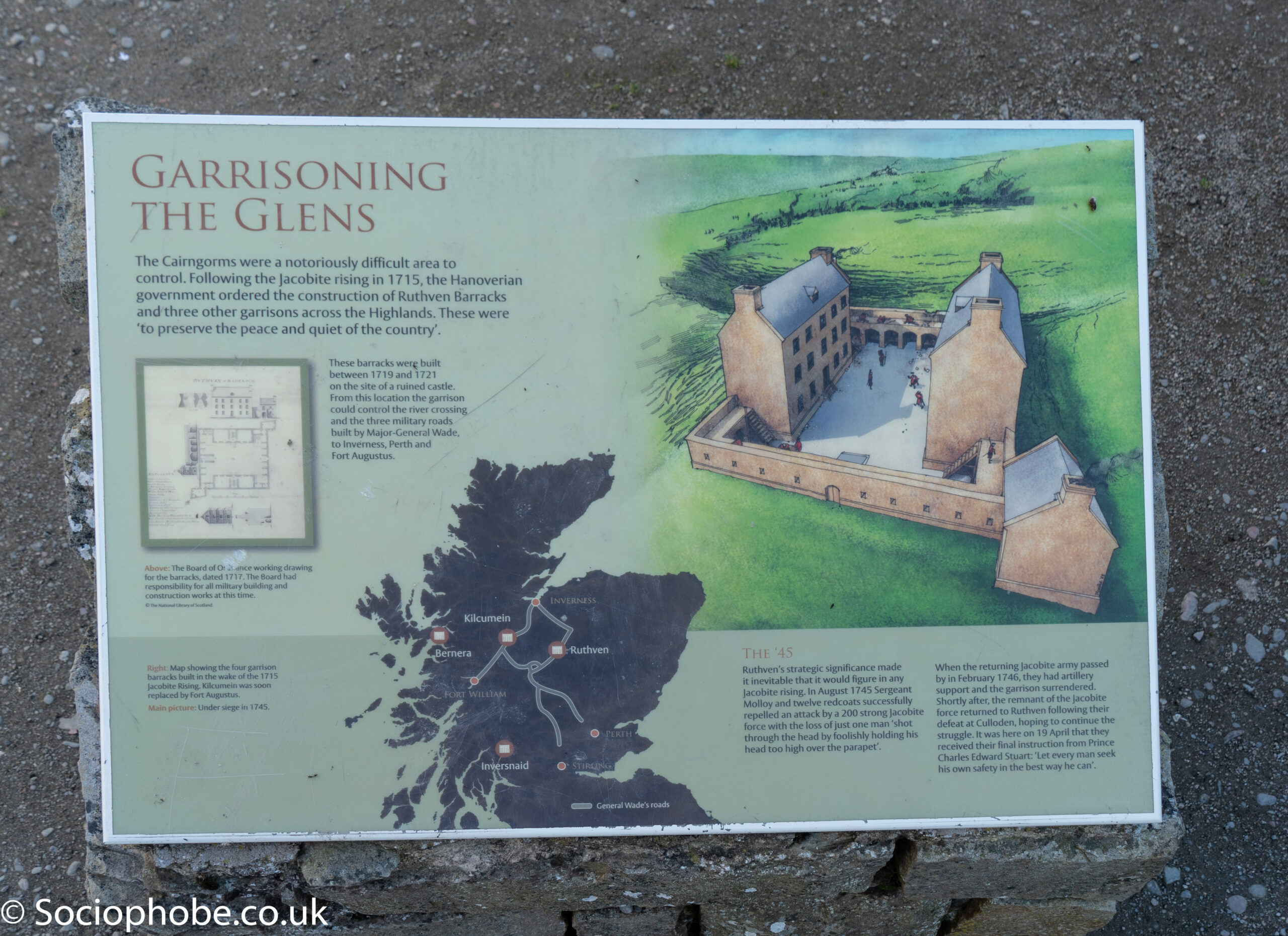
Ruthven Barracks were built by George II’s government between 1719 and 1721 following the Jacobite rising of 1715. They were to house garrison infantry to police the area and enforce the Disarming Act of 1716.
The barracks are situated on the site of the medieval castles of the Comyns and the Gordons, of which only the well still remains. The strategic importance of the site is obvious – visible from miles around, it dominates the head of the Spey valley.
Ruthven Barracks could hold two companies of soldiers – about 120 men – and their officers, but it’s unlikely it was ever fully garrisoned. They were housed in two piles of three-storey barracks with a parade ground between them. Each pile had six rooms, with men sleeping 10 to a room and two to a bed.
Towers projecting from opposite corners of the protective wall housed the officers’ quarters, as well as:
- a guardroom
- a prison
- a bakehouse
- a brewhouse
The stables beyond the barracks, added on orders of Major General Wade in 1734, could hold up to 30 horses. They were used by dragoons protecting troops marching along the military road.
The second rising
The garrison saw action 26 years after it was first built, during the 1745 Jacobite rising.
In late August of that year, 300 Jacobites besieged the barracks, but were held off by the 12 redcoats inside. Just one of the barracks’ troops died, ‘by foolishly holding his head high over the parapet’, according to his sergeant.
The Jacobites returned in February the next year, this time with heavy guns. The garrison soon surrendered to Gordon of Glenbuchat’s men.
The Jacobites were soundly defeated by the redcoats at the Battle of Culloden on April 16, 1746. The remainder of the army regrouped at Ruthven to await word from their leader, Bonnie Prince Charlie.
His message arrived on April 20, reading ‘Let every man seek his own safety in the best way he can’.
‘The answer, under existing circumstances, was as inconsiderate in Charles as it was heartbreaking to the brave men, who had sacrificed themselves in his cause,’ Chevalier Johnstone said.
References
The history above is taken from the Historic Scotland site here
The Wiki page is here