
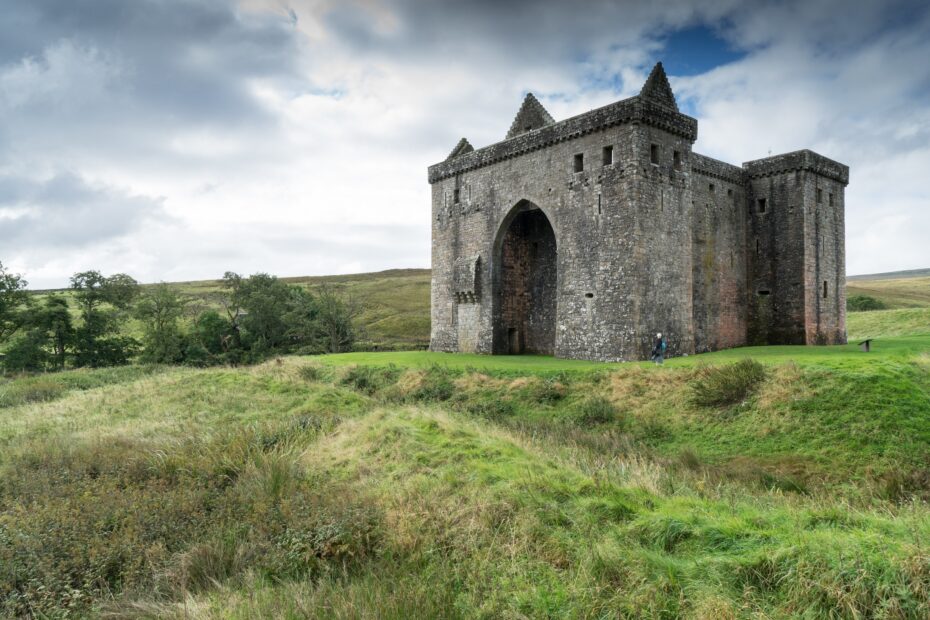
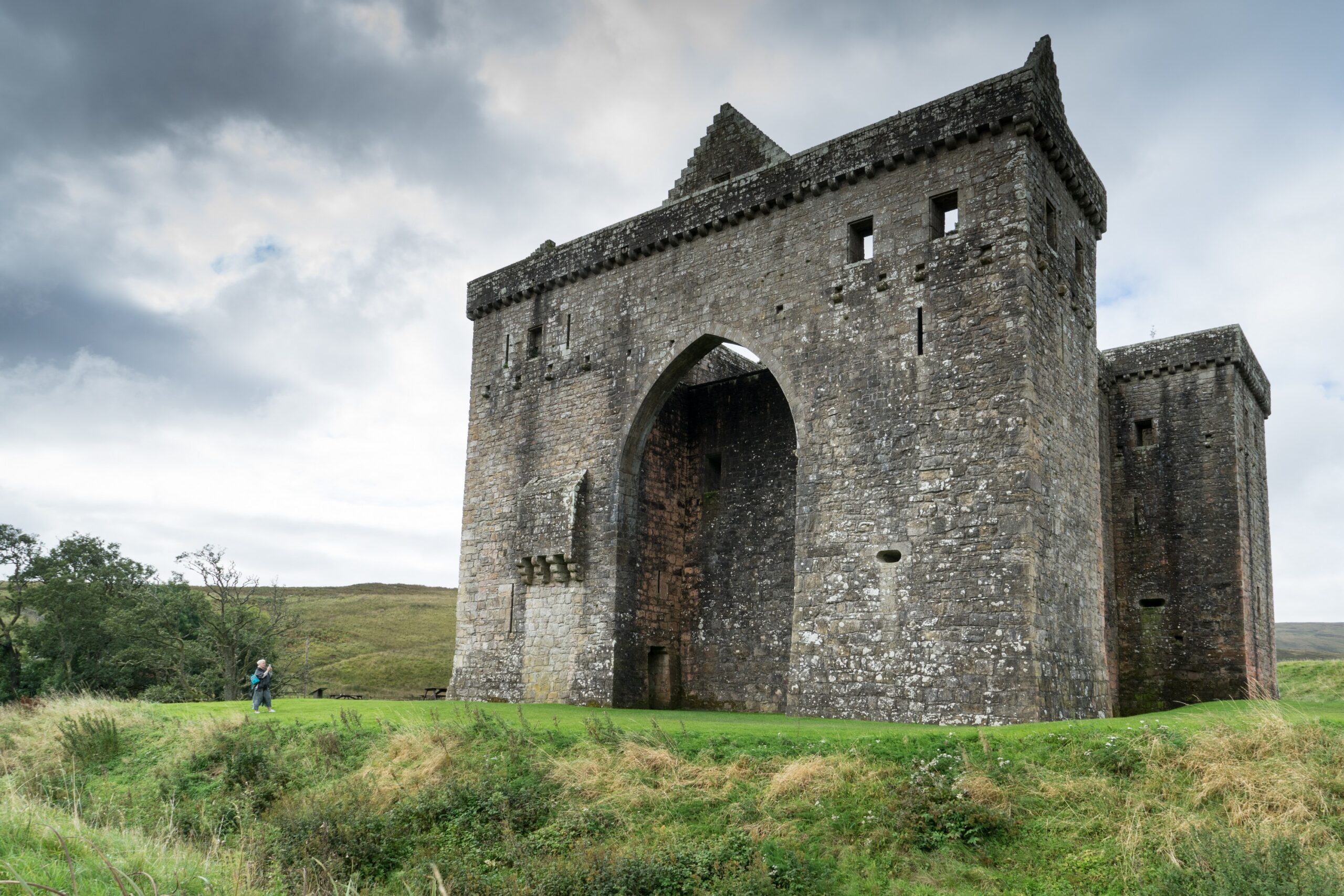
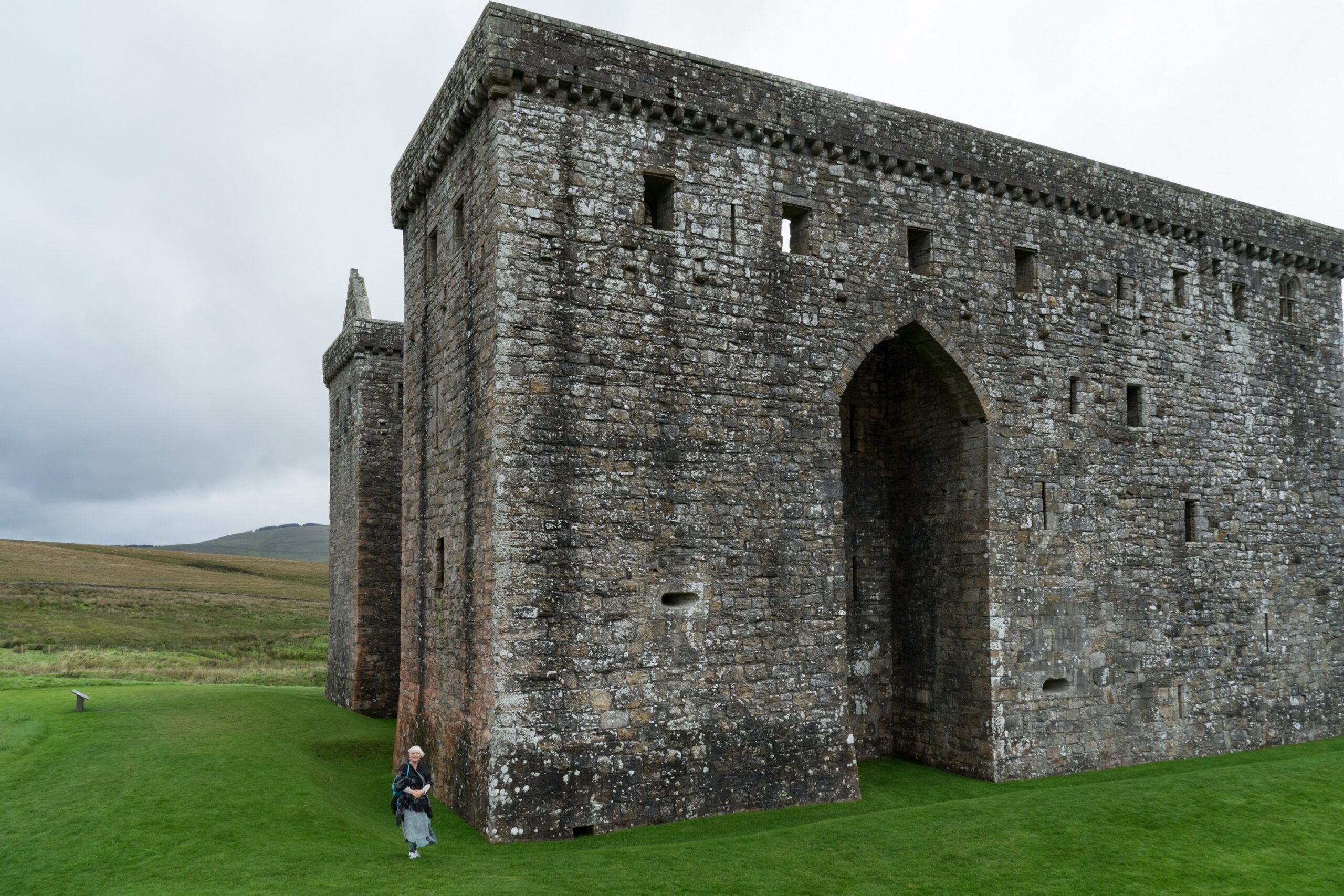
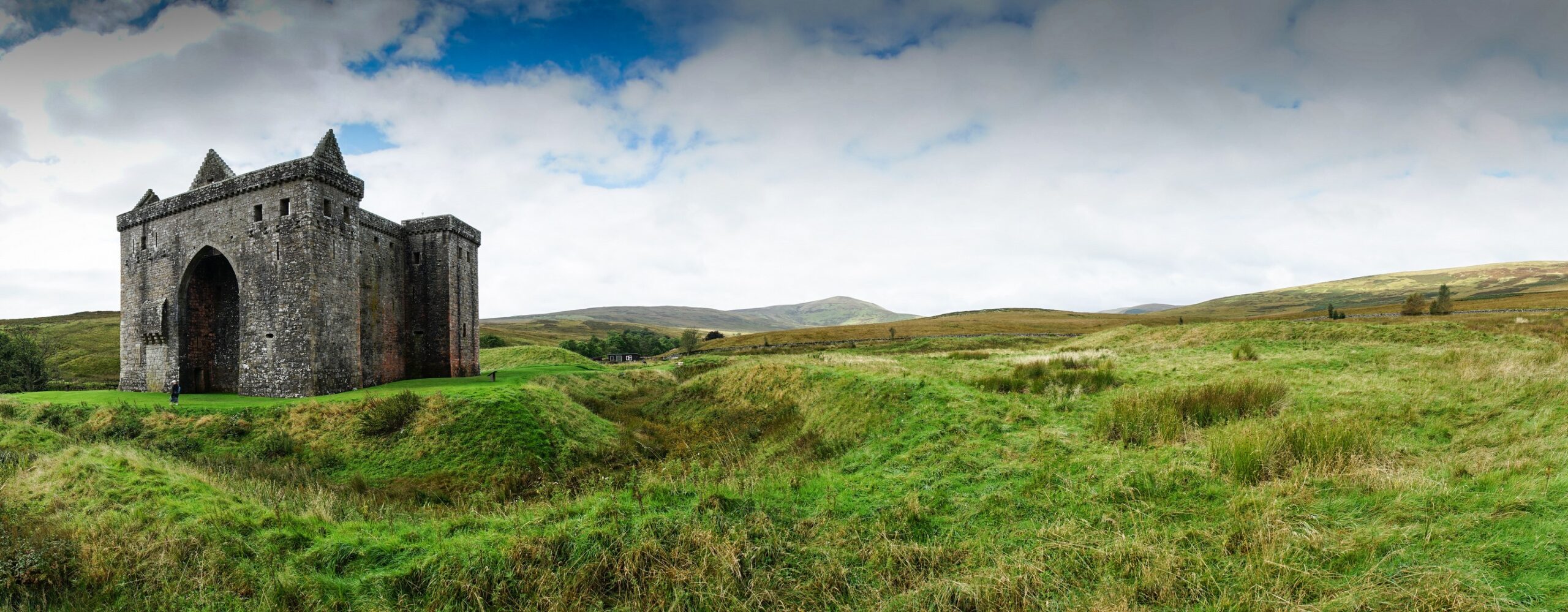
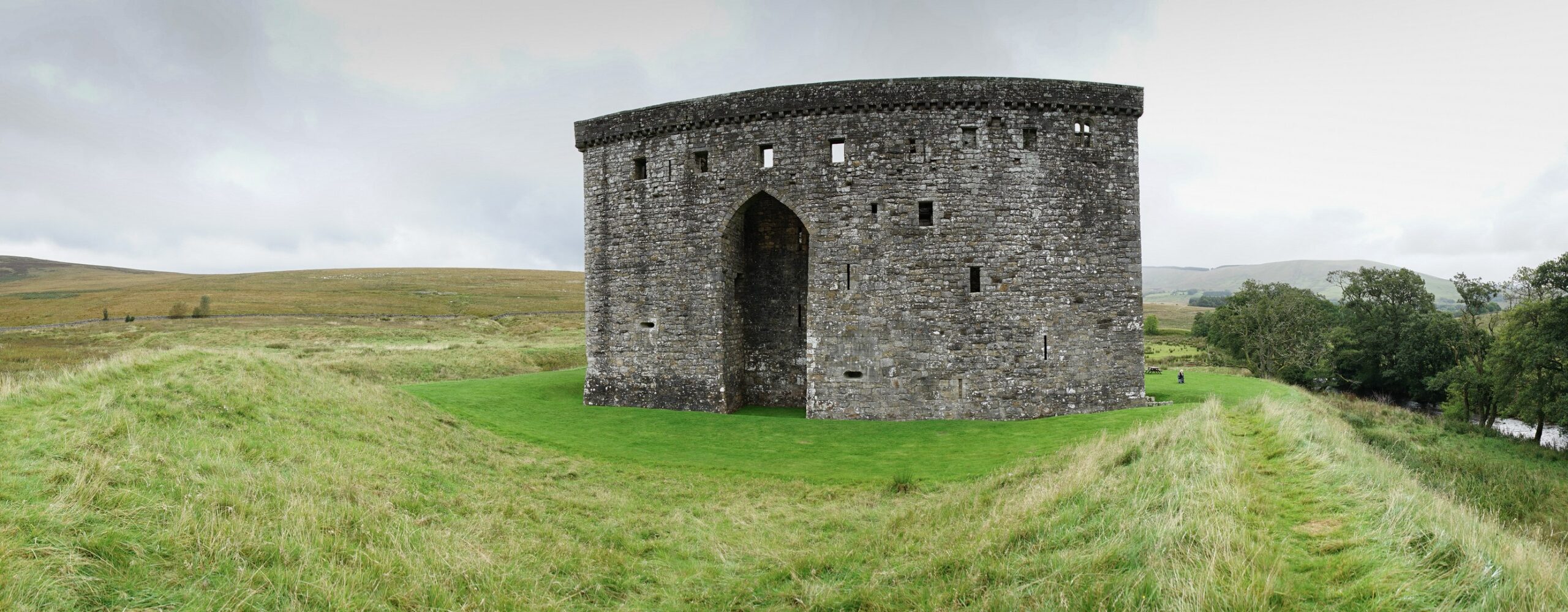
Visiting Hermitage Castle was a strange experience as I had never heard of the place and it was incredibly remote with no obvious strategic value. As we approached we could see this fantastic structure looming out of the drizzling rain, very imposing!
Visiting Hermitage Castle
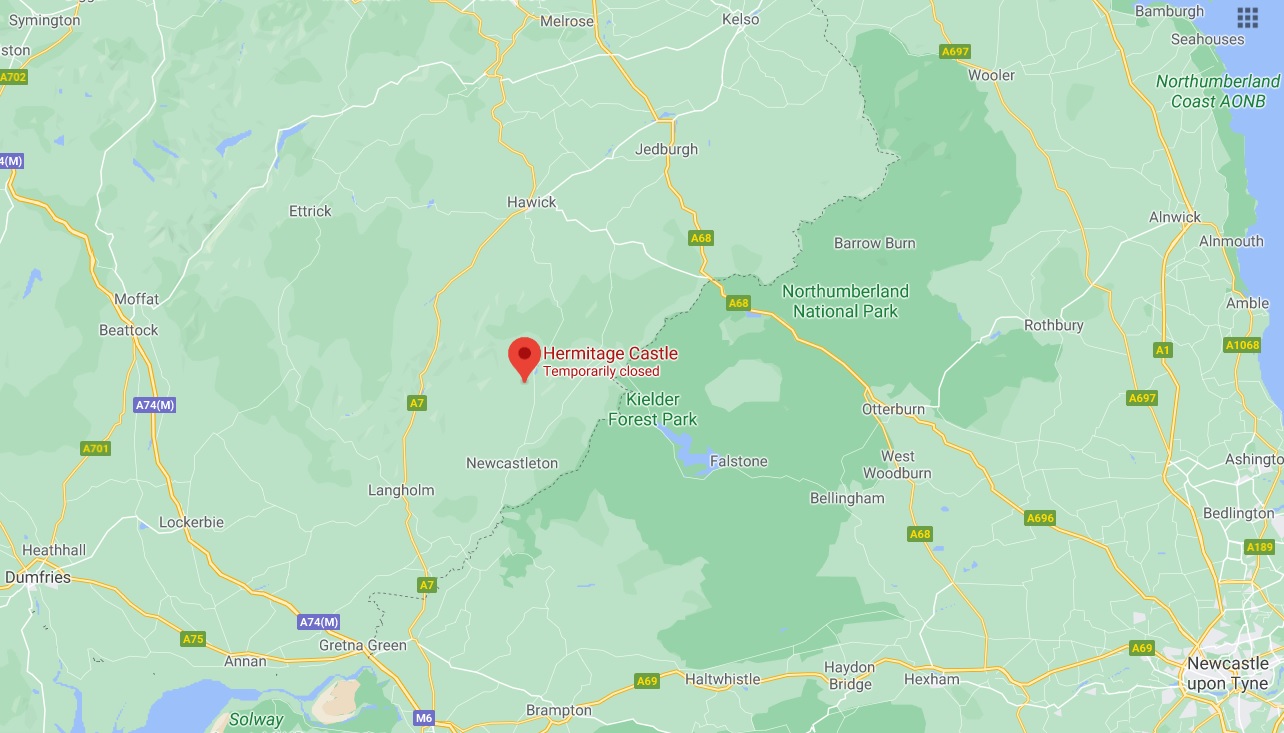
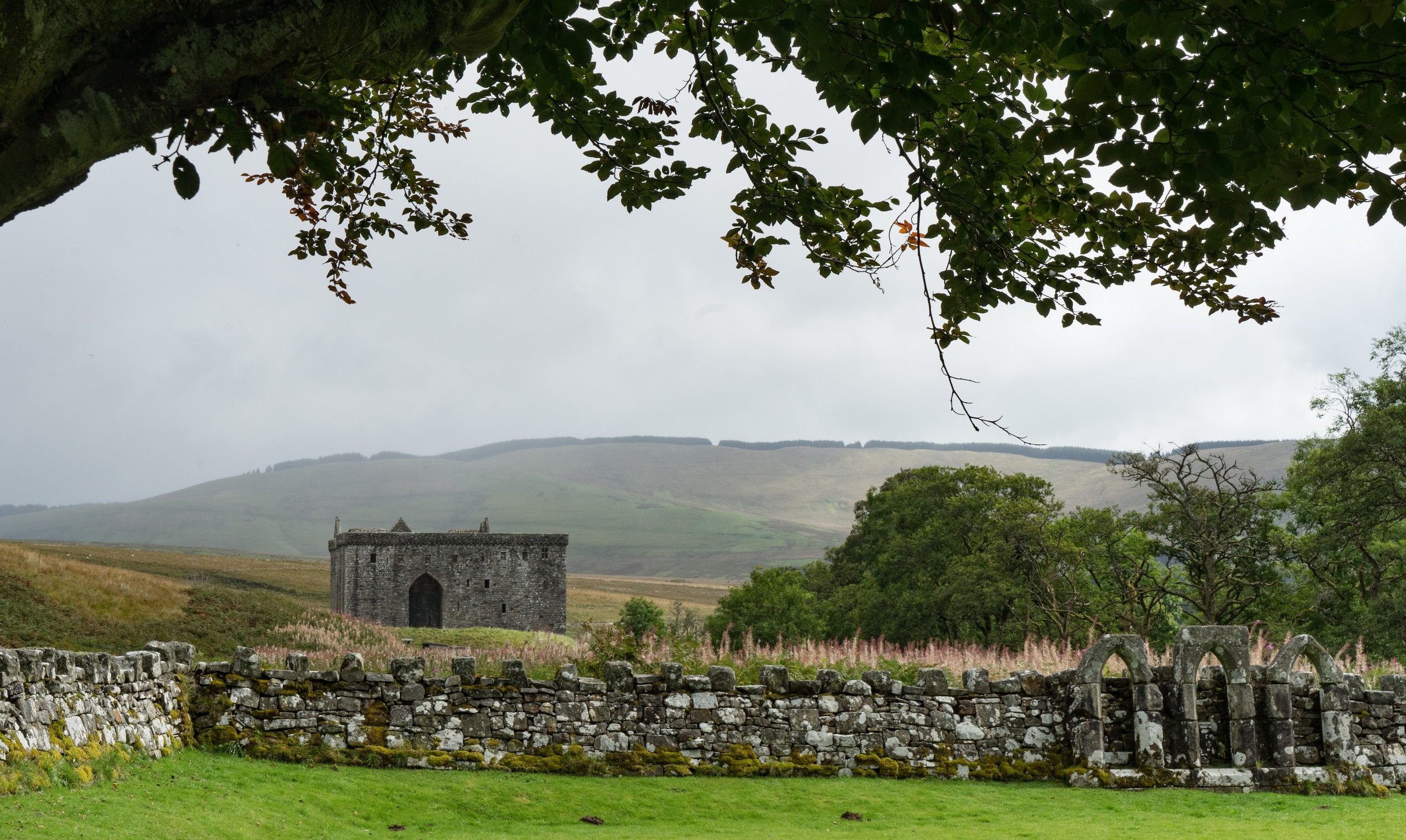
The castle is very isolated and is reached by various B or unrated roads. Surprisingly it is a manned location and has a small car park as well as toilets and a visitors centre. Optimistically, there are even picnic benches!
My Experience
After breakfast we left the hotel and headed for our first destination. This was a castle and actually chosen by Debbie, not me! The drive was pretty spectacular, single track roads with some impressive views, despite the rain. By the time we arrived there the rain had stopped and the castle did look quite amazing although it was in a valley rather than on a hill.
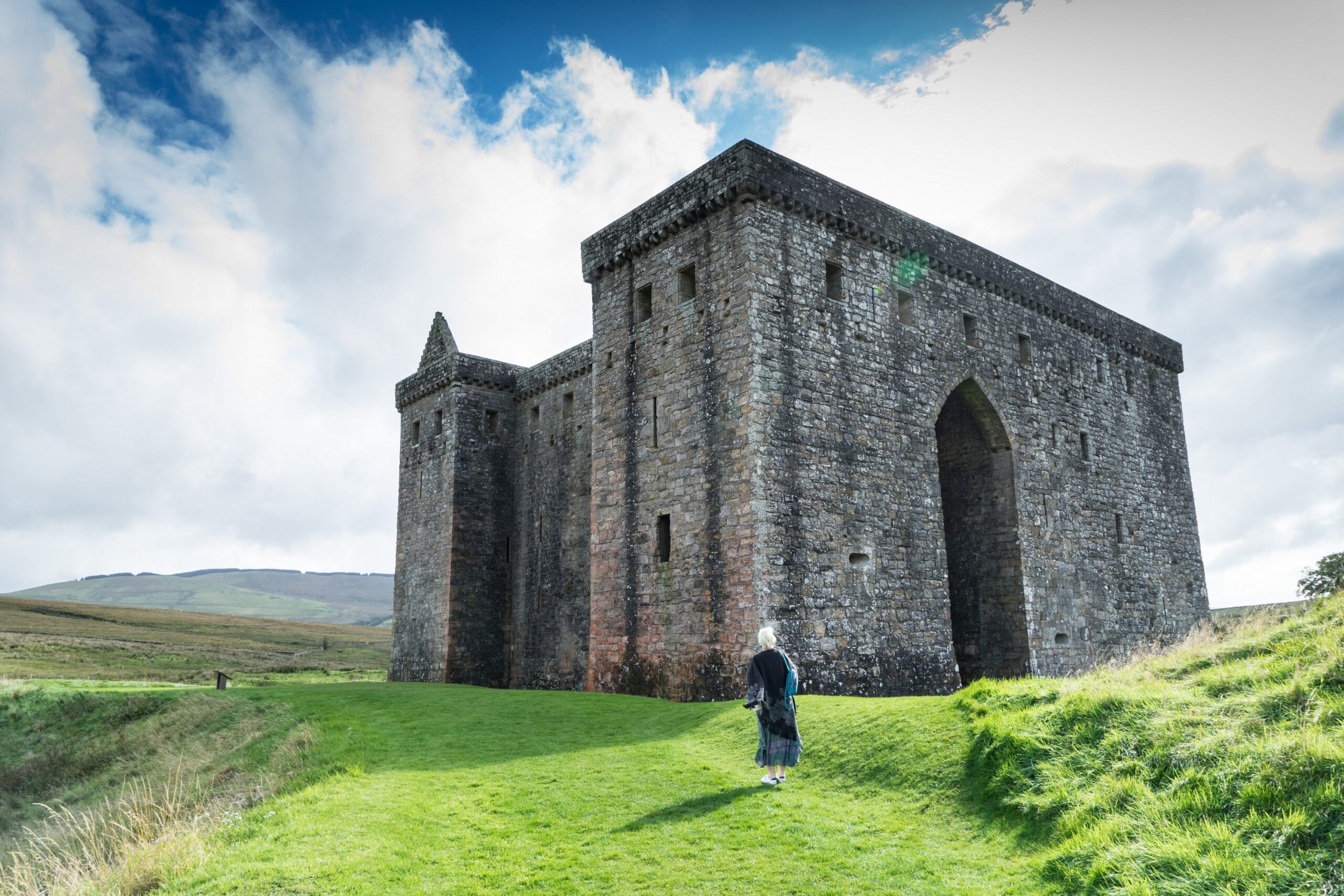
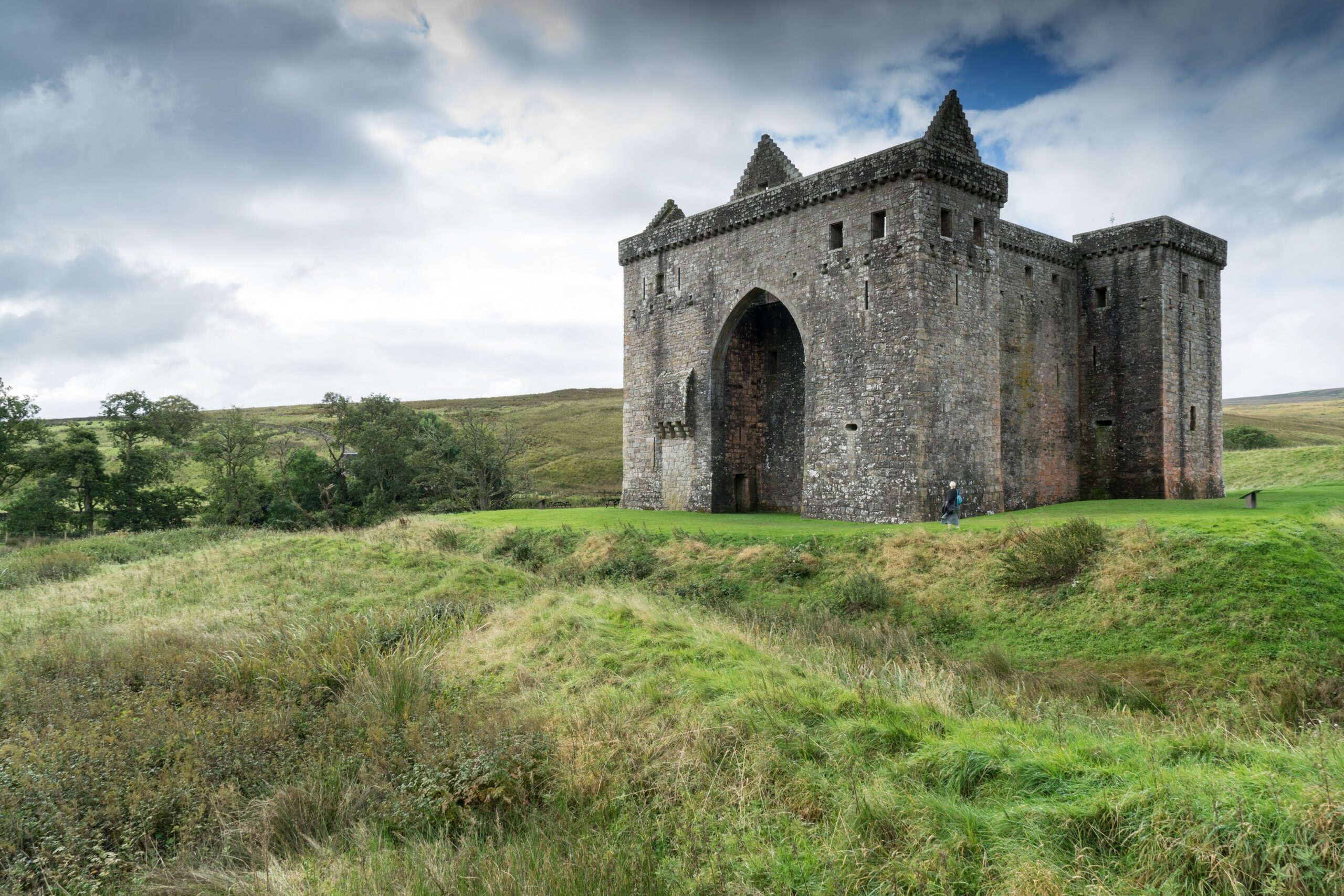
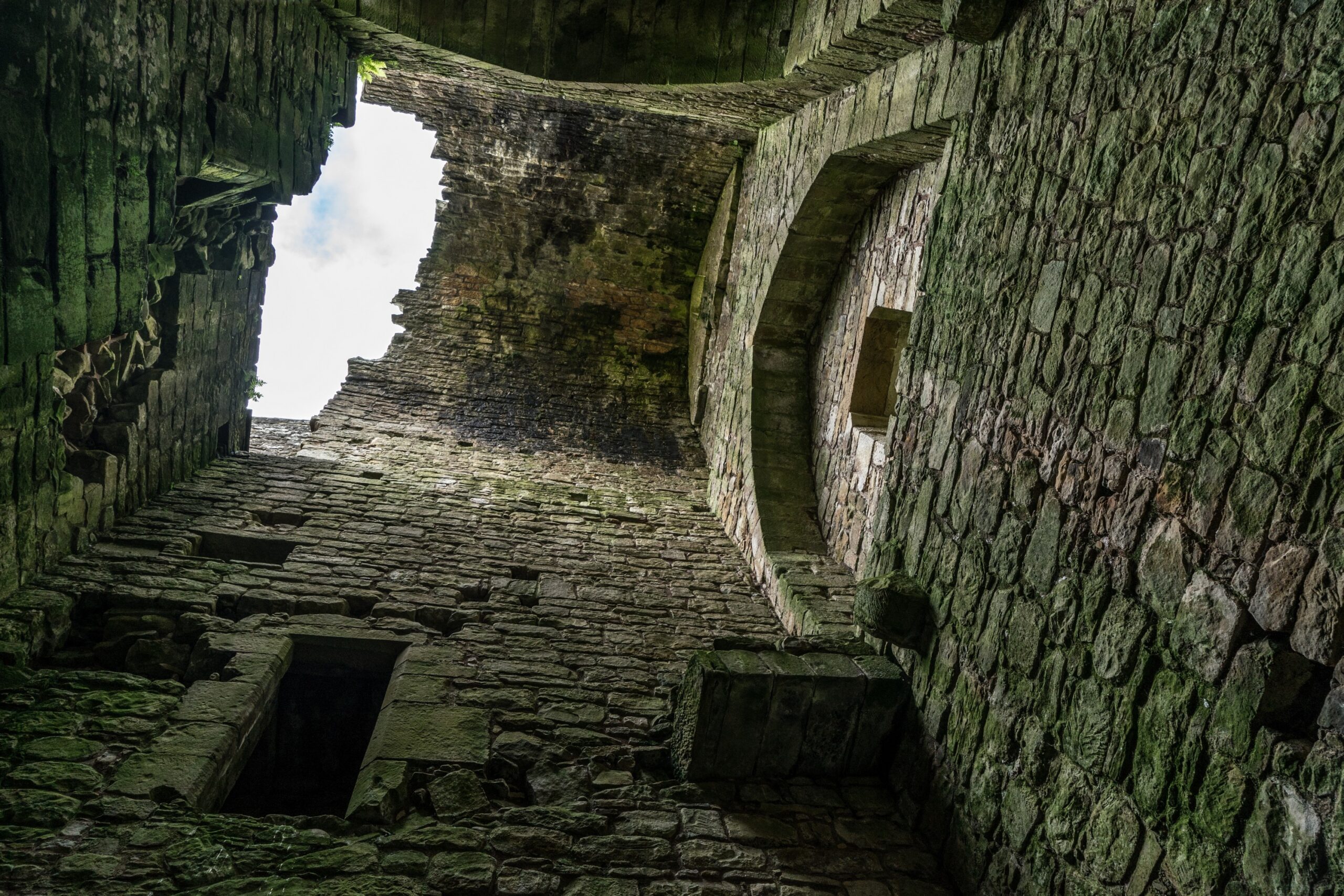
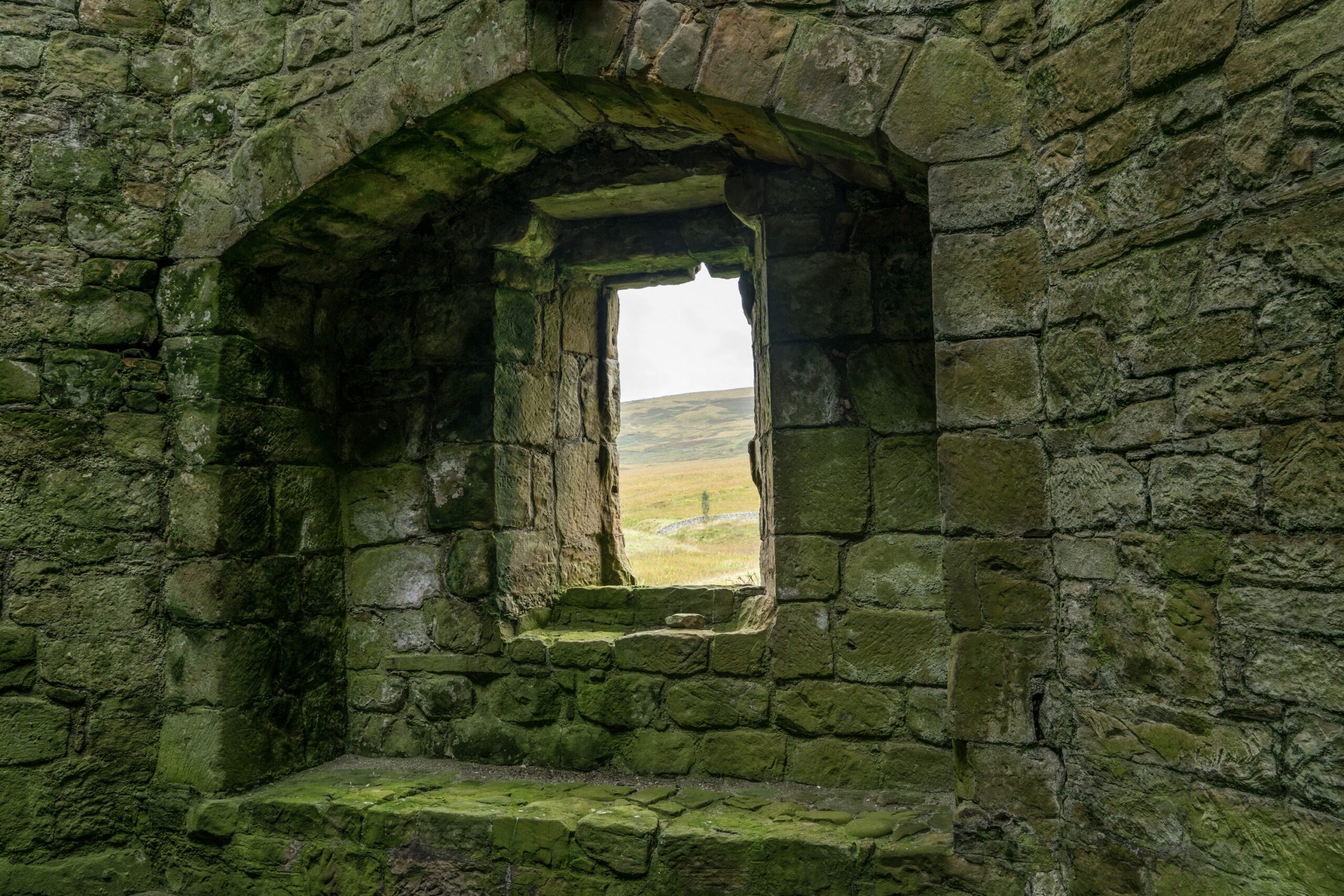
The guy in the ticket office was a mine of information and we chatted for a while before going for a wander. The outer walls had been restored in the 19th century but the lack of a roof combined with Scottish weather meant the stones were green tinged with moss and very slippery. The place was very austere and imposing – a suitable base for border reivers.
Photo Gallery of Hermitage Castle
History
For most of its 400-year life, the castle was the key to controlling the Scottish Middle March. In his book, The Steel Bonnets, George Macdonald Fraser describes Hermitage as “the guardhouse of the bloodiest valley in Britain”.
Known as ‘the strength of Liddesdale’, Hermitage was fought over time and again. Even the building of the castle in the 13th century brought Scotland and England to the brink of war.
The mighty stone castle is built on an impressive platform of earth, which may have been part of an earlier castle complex. The earliest records for Hermitage are for the de Soules residence in the 1240s, but this may have been situated to the west, near the chapel ruins.
English lord Sir Hugh de Dacre began the present castle around 1360. It was transformed beyond recognition by his successor, William, 1st Earl of Douglas, one of Scotland’s most powerful noblemen.
Hermitage was adapted in the 1500s to respond to the threat posed by gunpowder artillery. Gun holes were punched in its thick walls and a massive gun defence was built outside to protect the castle’s western approach.
Hermitage Castle was also the scene of a dramatic episode in the life of Mary Queen of Scots. In October 1566, her trusted noble James Hepburn, 4th Earl of Bothwell, was wounded in a skirmish with reivers (cattle thieves). On hearing the news, Mary rode out from Jedburgh, a 25-mile journey across difficult terrain.
It has been suggested that her two-hour visit was a secret lovers’ tryst with the man who later became her third husband. This was almost certainly malicious gossip. Their hasty courtship probably didn’t begin until the following year.
On the gruelling journey back to Jedburgh, Mary’s horse stumbled, throwing her into a bog, from which she contracted a fever. She was confined to bed in Jedburgh for a week, and it was said she was fortunate to recover from her ordeal.
Romantic ruin
Hermitage lost its strategic importance in 1603, when Mary’s son James VI of Scotland also became James I of England. Abandoned by its noble owners, the castle was left to decay.
In the 1800s, however, new owner the Duke of Buccleuch and Queensberry was inspired to preserve the haunting ruin for posterity. Romantic novelist Sir Walter Scott had roused a spirit of nostalgia among Scots through his writings.
References
The history above is copied from the Historic Scotland site here that also details opening times.
The Wiki page, that gives a little more detail, is here.