
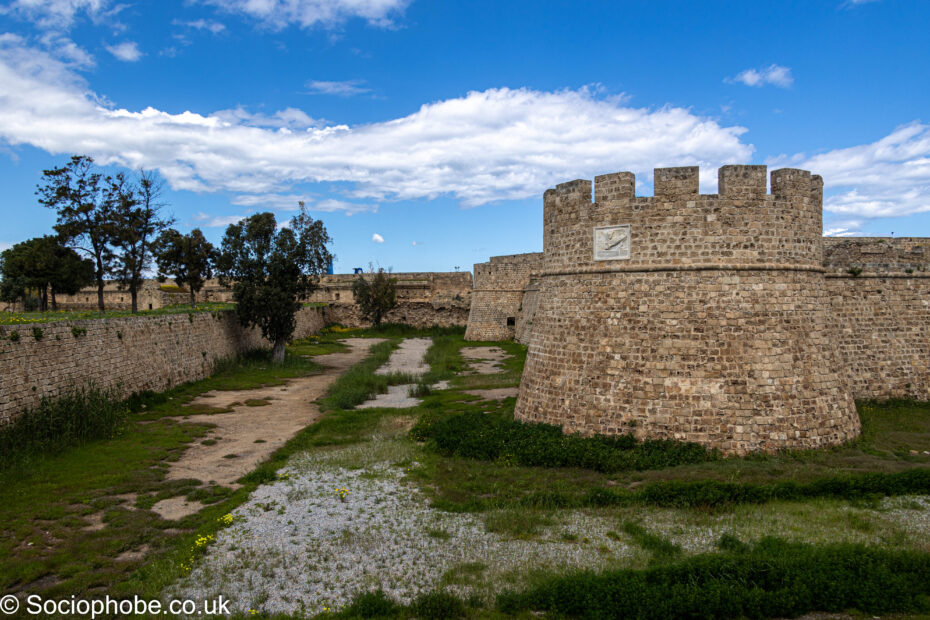
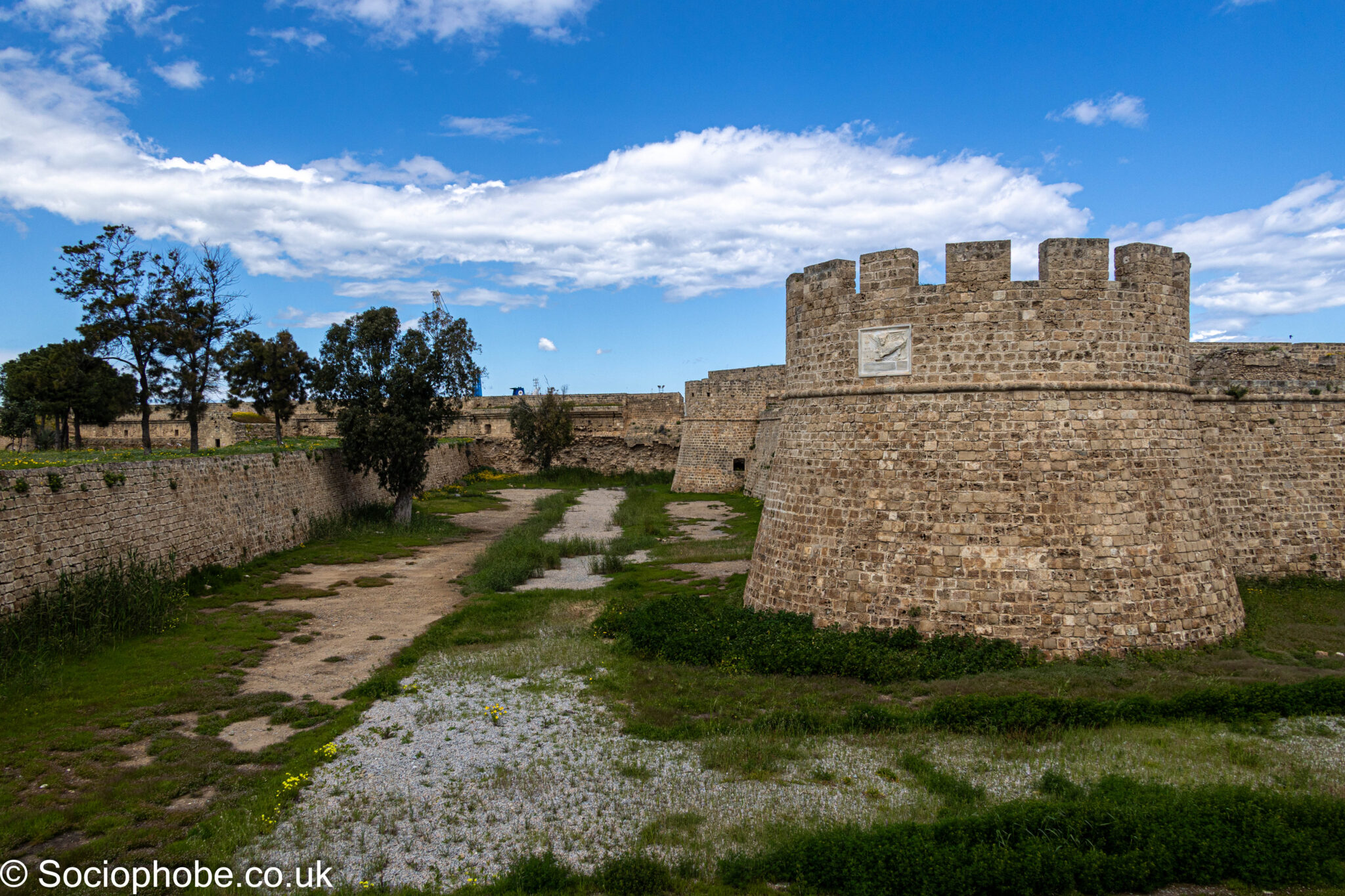
The 3km long city walls of Famagusta still encircle the city in a good state of repair and the rock cut ditch keeps modern development at bay. Built by the Cypriot Lusignan rulers in the 14th century and modernised by the Venetians in the 15th the walls defended a major port and one of the final Christian sanctuaries in the eastern Meditteranean.

Visiting Famagusta City Walls
Cyprus is a divided island so it’s worth having your passport on you at all times. If visiting from the south you’ll have to walk across the nearest border checkpoint, leaving your car in the south, then either meet your guide or your hire car as cars from the south do not have valid insurance to visit the north. If you are in the north then it’s an easy visit. There is plenty of parking in the city once you have driven through one of the land gates.
My Experience
Famagusta was one of the most important cities on the island, site of a bloody seige in 1571, ending in the Turkish capture of the city and flaying alive of the captured Venetian commander. The city is surrounded by 3 miles of well preserved Venetian walls and has a profusion of Gothic architecture inside the walls. We parked inside the city walls and the city was incredibly quiet, almost deserted.
We visited St Nicholas Cathedral, now, of course, a mosque. The building, built by the Lusignan kings in the 14th century, was beautifully impressive but all the interior decoration had again been whitewashed and the stained glass windows removed. The building must have looked magnificent in its heyday and was the coronation site of the Kings of Jerusalem after the city feel to the Moslems in 1187.
The guide then left us to wander for a couple of hours so we had a look at the ruined Venetian Palace and another church (mosque) and playing with assorted dogs before stopping at Petek for lunch – a very healthy salmon salad, aided by a ferocious cat who devoured the skin before it hit the floor. We followed this with pistacchio cake and Oreo cheesecake, possibly not as healthy.
After our sugar overload we crossed the road for one of the main attractions of Famagusta, the Venetian walls. These survived nearly a year of siege, 8000 Venetian defenders holding out against around 100,000 Turkish troops and marines. After a breach of the walls was repulsed with heavy losses for both sides the Venetian commander asked for terms, the garrison being reduced to 900 starving men. The Turks agreed the defenders and citizens could leave for Crete unmolested but then turned on the Christians as they left the city, murdering them all and flaying the commander, Bragadin, alive in the city’s main square.
We didn’t have enough time to properly explore the walls or the dungeons or the Knights Templar Castle but we saw enough to decide it is a place to revisit and spend a couple of days.
Famagusta City Walls Photo Gallery



History
Medieval period
In the 13th century, Famagusta’s harbour was defended by a tower, and it is possible that some form of fortification existed earlier. In the 14th century, the Lusignans built the Othello Castle to defend both the harbour and the town. Famagusta fell to the Genoese in 1373, and in 1489 it was taken over by the Republic of Venice along with the rest of Cyprus.
Venetian rule
While Famagusta was under Venetian rule, the city was essentially a military base. The Othello Castle was modernized, and fortifications surrounding the entire city began to be built. The fortifications were designed by a number of military engineers, including Michele Sanmicheli and his nephew Giovanni Girolamo Sammichele. The latter arrived in Famagusta in around 1550, and he designed the Martinengo Bastion, which served as a prototype for various other fortifications in Europe and America. He died in Famagusta in 1559, while the fortifications were still under construction.
The Fourth Ottoman–Venetian War broke out in 1570, when an Ottoman force invaded Cyprus and took control of most of the island including Nicosia within a few months. On 15 September, Ottomans surrounded Famagusta, which was the last Venetian stronghold on the island, and began the Siege of Famagusta. The city held out until August 1571, when the Venetians asked for terms of surrender. Although terms were agreed and the inhabitants began to evacuate the city, at the surrender ceremony Lala Mustafa Pasha learned that some Muslim prisoners had been killed and he had the Venetian commander Marco Antonio Bragadin mutilated and flayed alive, and the remaining Christians in the city were massacred.
Ottoman rule to present day
The Ottomans repaired the damaged parts of the walls, but did not make any major alterations. The city began to expand outside its walls in the late Ottoman period, and this increased after Cyprus fell under British rule.
Although many buildings within the old city of Famagusta is in a state of disrepair, the fortifications are still in relatively good condition.
Layout
The fortifications of Famagusta consist of an Enceinte which is surrounded by a rock-hewn ditch on the landward side, and the harbour on the seaward side. Like the fortifications of Rhodes, which were built by the Knights Hospitaller between the 14th and 16th centuries, the walls of Famagusta show the transition between medieval fortification and the bastioned fortifications of the early modern period.
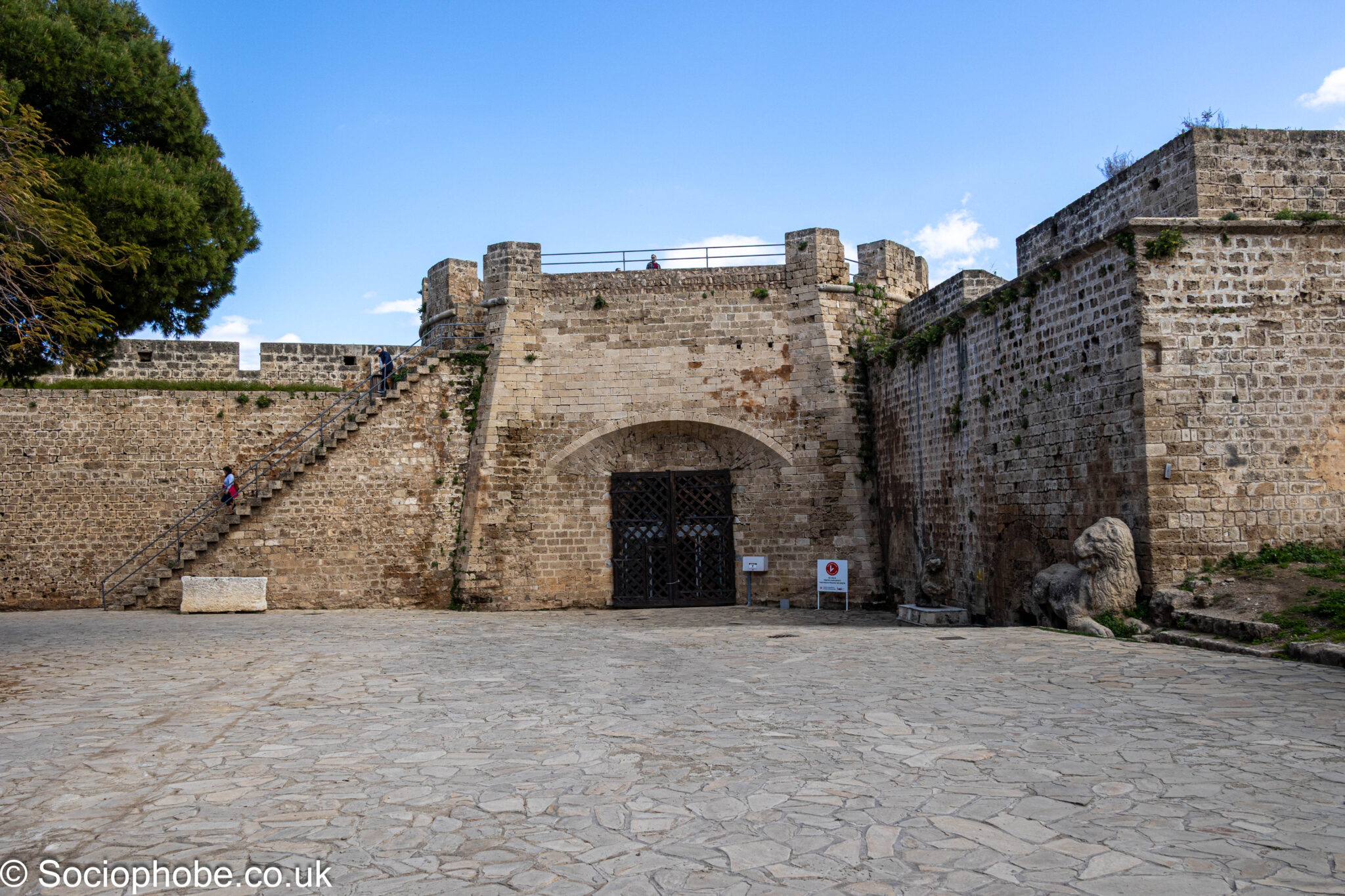
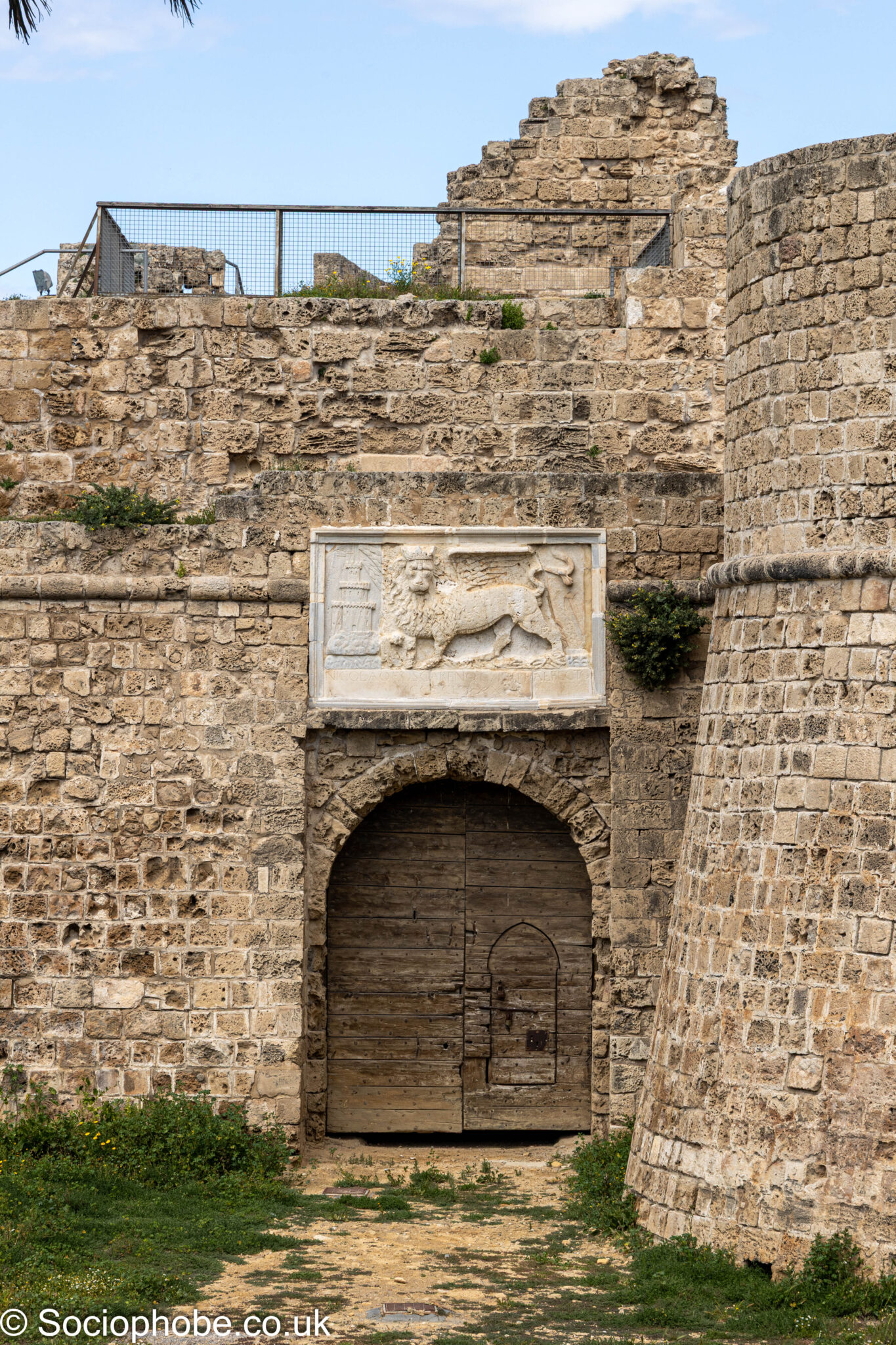
Famagusta’s city walls feature 14 bastions, two gates and the Othello Castle. There were originally two gates into the city through the fortifications, the Land Gate in the south-west corner and the Sea Gate (Porta del mare) by the port. The 14 bastions were named after Venetian families and are part of the Venetian fortifications that encircle the historic city center.
References
There is a fascinating article on the state of cultural heritage in Famagusta here.
There is a wonderful guide to the old walled city on the Nomadic Backpacker site here.
Wiki has a nice history of the walls here and the history above is copied from there.
Lovely photos-what a brutal lot these people were-that flaying alive is horrendous-especially after suffering the siege for so long 🙁