
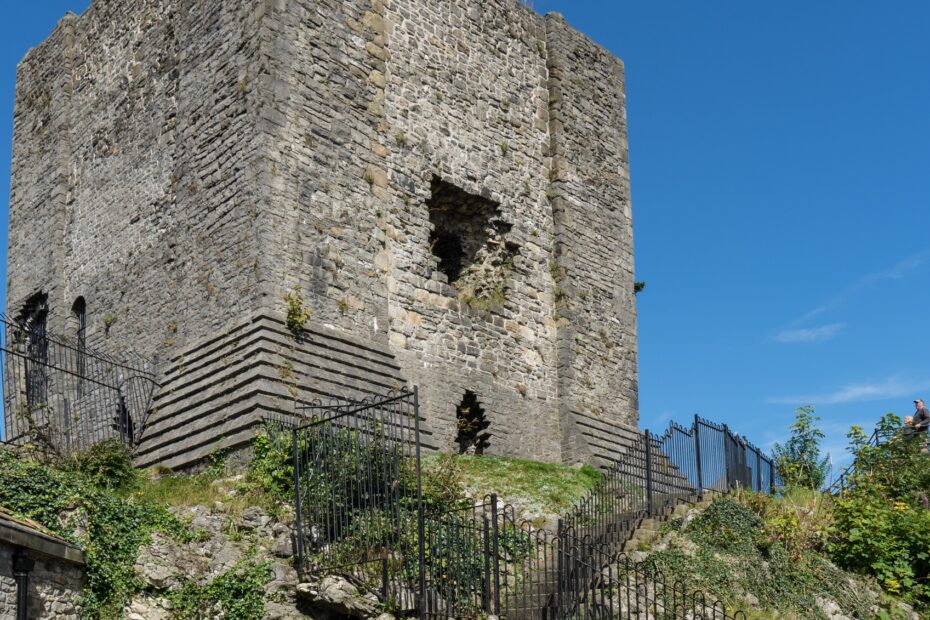
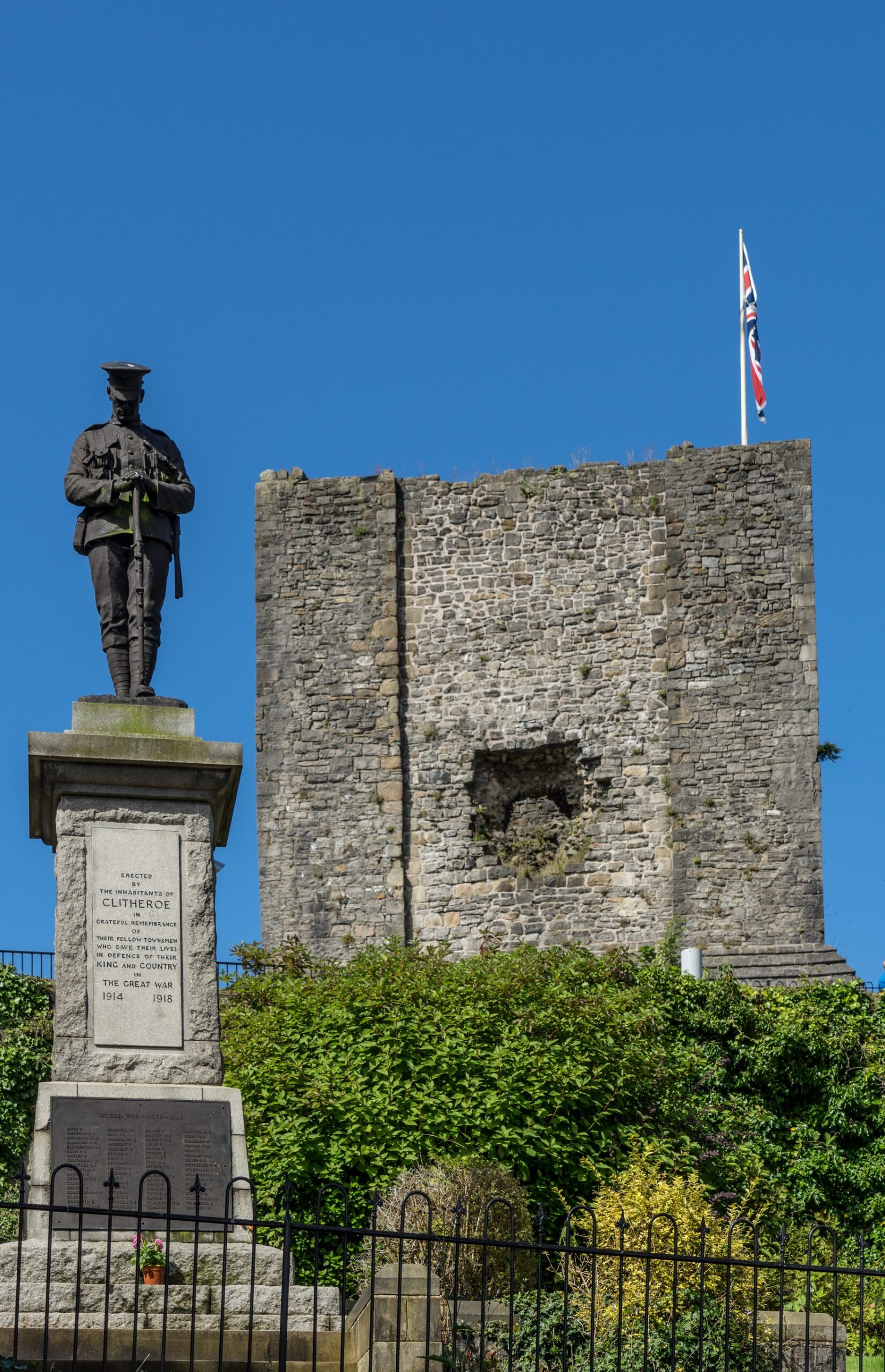
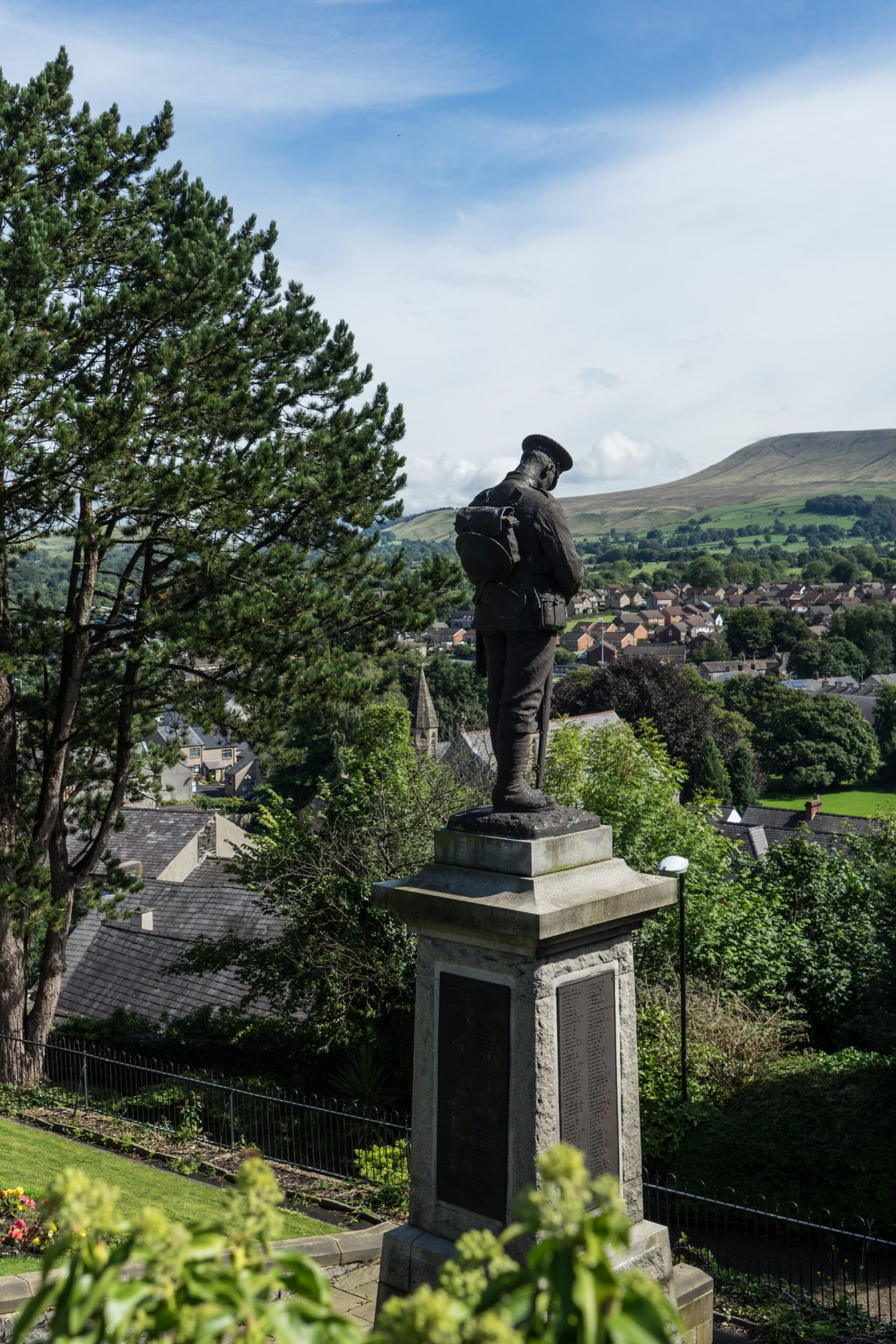
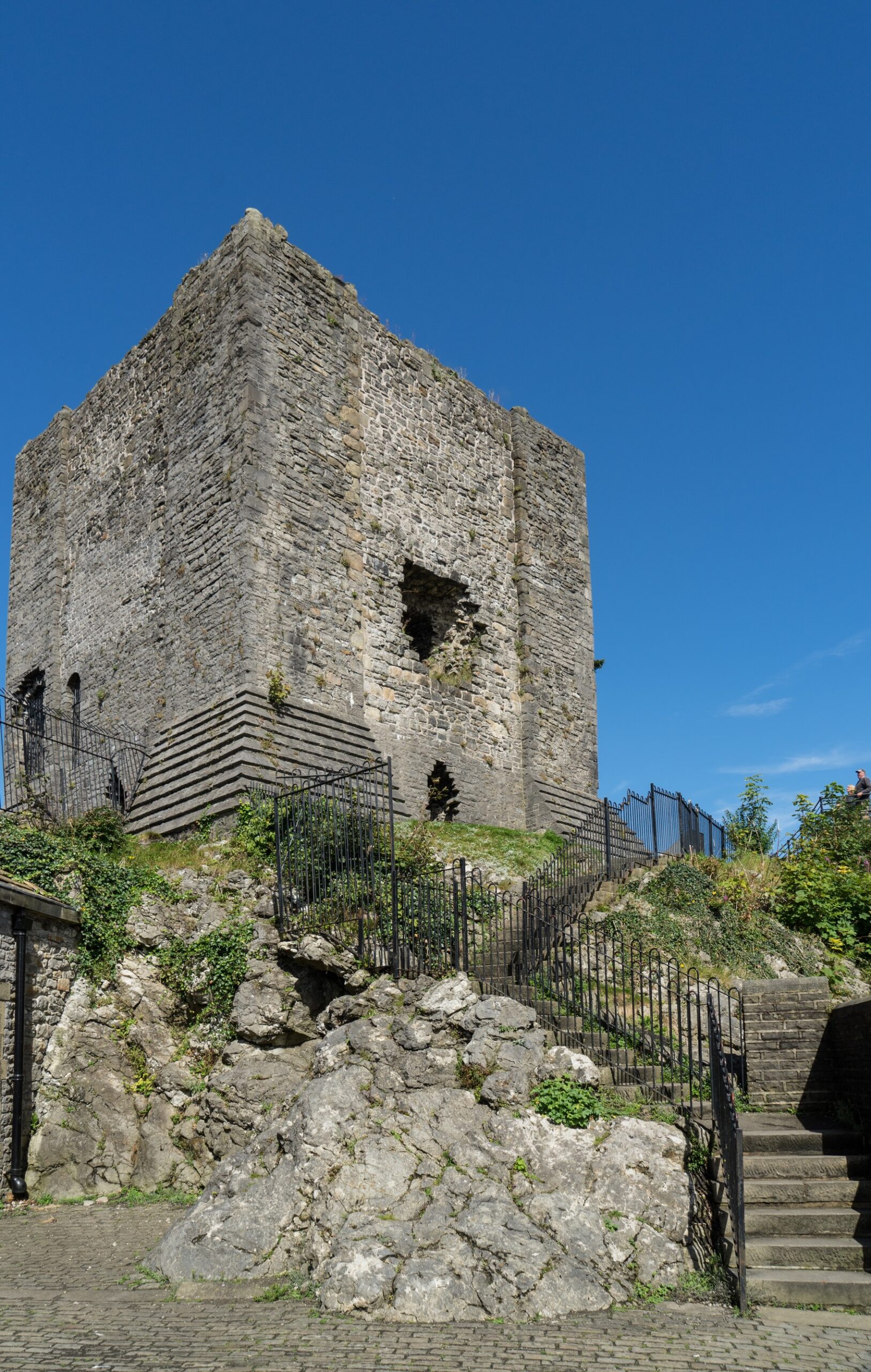
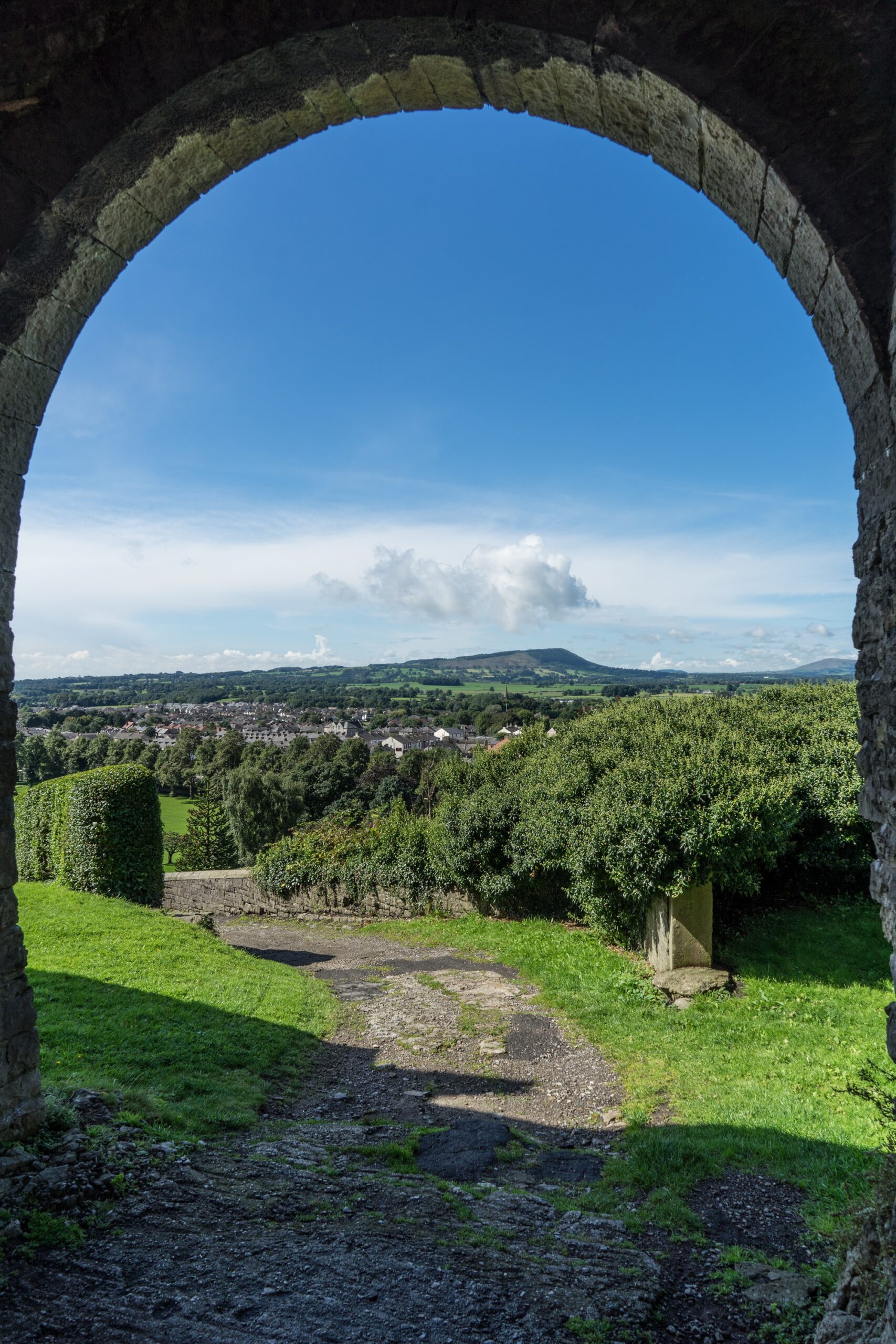
Clitheroe Castle is basically a small tower keep and any visit should include the museum and war memorial. There are also nice views overlooking the Lancashire countryside.
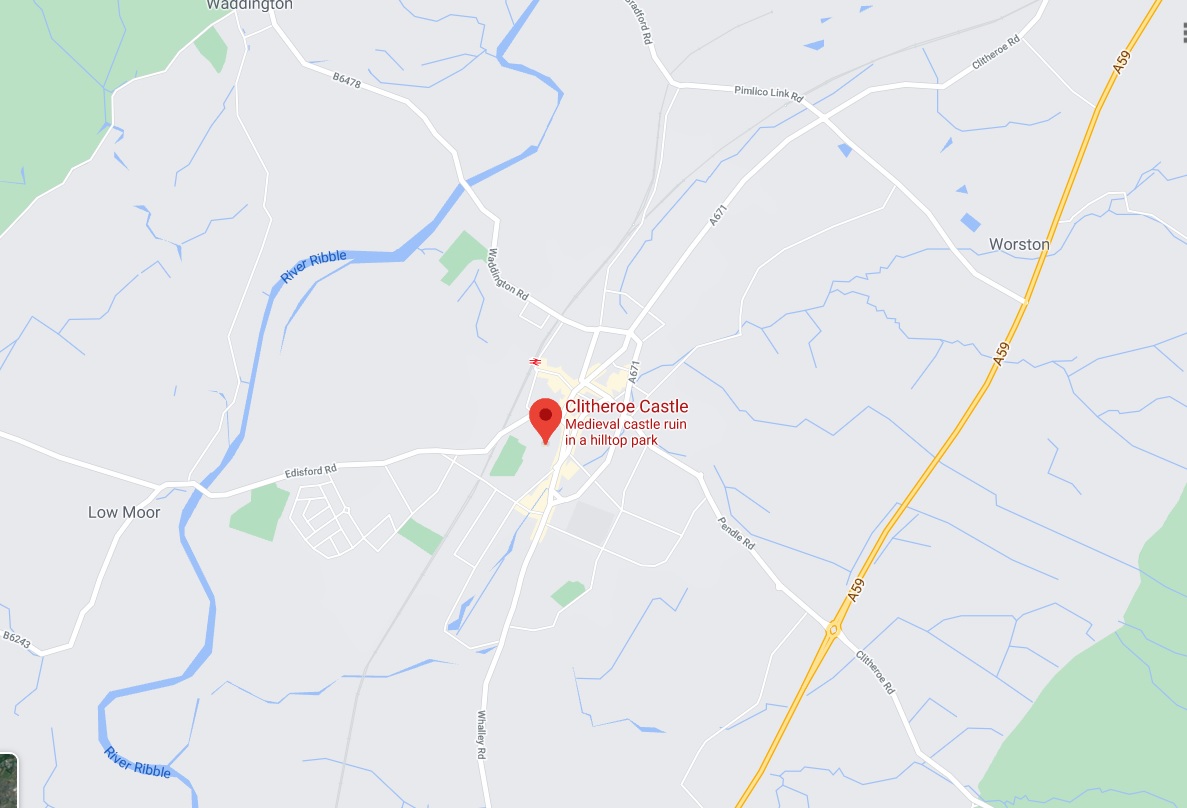
Visiting Clitheroe Castle
Any visit to Clitheroe Castle should include a visit to the Council run museum as it really is an excellent local history resource. The website, showing costs and opening times, is given in the Reference section below. There is plenty of parking in the town and also cafes.
My Experience
We walked into Clitherhoe and saw the castle and museum, although to be honest, all that is left of the castle is really the keep. The museum was good though and helped fit the castle into local perspective. There are nice views from the castle grounds and it is easy to see why the location was chosen. I’d also recommend a look at the war memorial and contemplate the sacrifices made by previous generations, something difficult to comprehend in our current society.
The castle and grounds are free to enter but there is a charge for the museum. Once we’d done visiting we sat in the museum cafe and indulged in some fudge cake.
Photo Gallery of Clitheroe Castle
History
Clitheroe Castle is a ruined early medieval castle in Clitheroe in Lancashire, England. It was the caput of the Honour of Clitheroe, a vast estate stretching along the western side of the Pennines.
Its earliest history is debated but it is thought to be of Norman origin, probably built in the twelfth century. Property of the de Lacy family, the honour later merged with the earldom and then Duchy of Lancaster. Given to George Monck, 1st Duke of Albemarle in 1660, the castle site remained in private ownership until 1920, when it was sold to the people of Clitheroe to create a war memorial. Today the buildings on the site are the home of Clitheroe Castle Museum.
The keep is the second smallest surviving stone-built keep in England. The castle was listed as a Scheduled Monument on 10 April 1915 (and later, under the Ancient Monuments and Archaeological Areas Act 1979 law). It was Grade I listed on 19 May 1950.
References
The Wiki site, where the history above is copied from, is here.
The castle museum website is here.
There is further information on the excellent Castles, forts and battles resource here.