
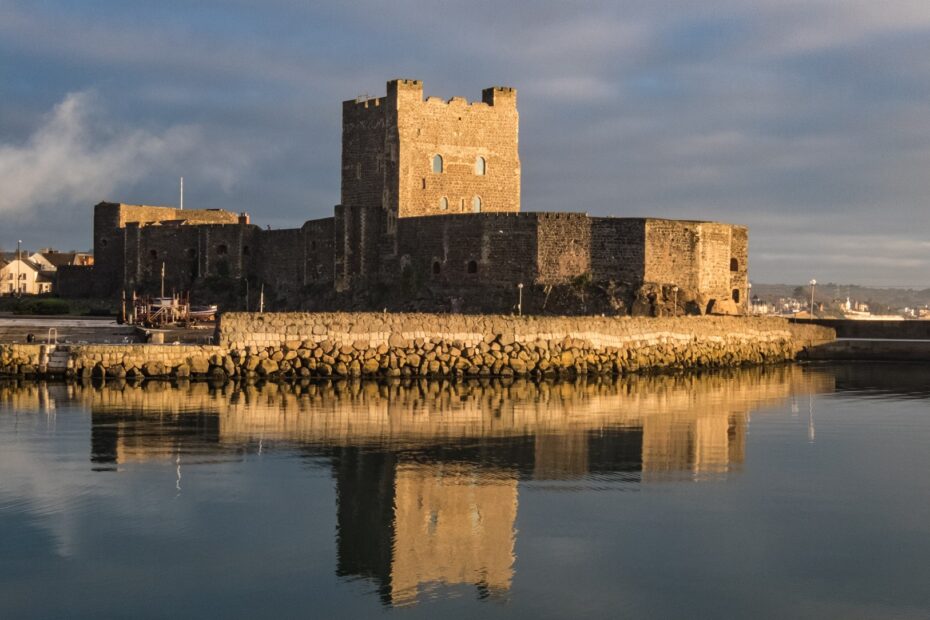
Carrickfergus Castle is a fabulously intact site to visit, set in a town steeped in history. One look at the map below and you can see the strategic significance of this eight hundred year old castle’s location and why it was besieged by the Irish, English, French and Scots at various times. The quayside next to the castle has a statue of ‘King Billy’, who landed here before the Boyne campaign of 1690.

Visiting Carrickfergus Castle
Carrickfergus is an important tourist destination and also situated in a town centre. As such there is plenty of parking and a plethora of cafes nearby. The castle is well signposted and let’s be honest, not exactly easy to miss. When visiting it is worth spending some time exploring the town as there are some fantastic murals and even a Churchill tank.
My Experience
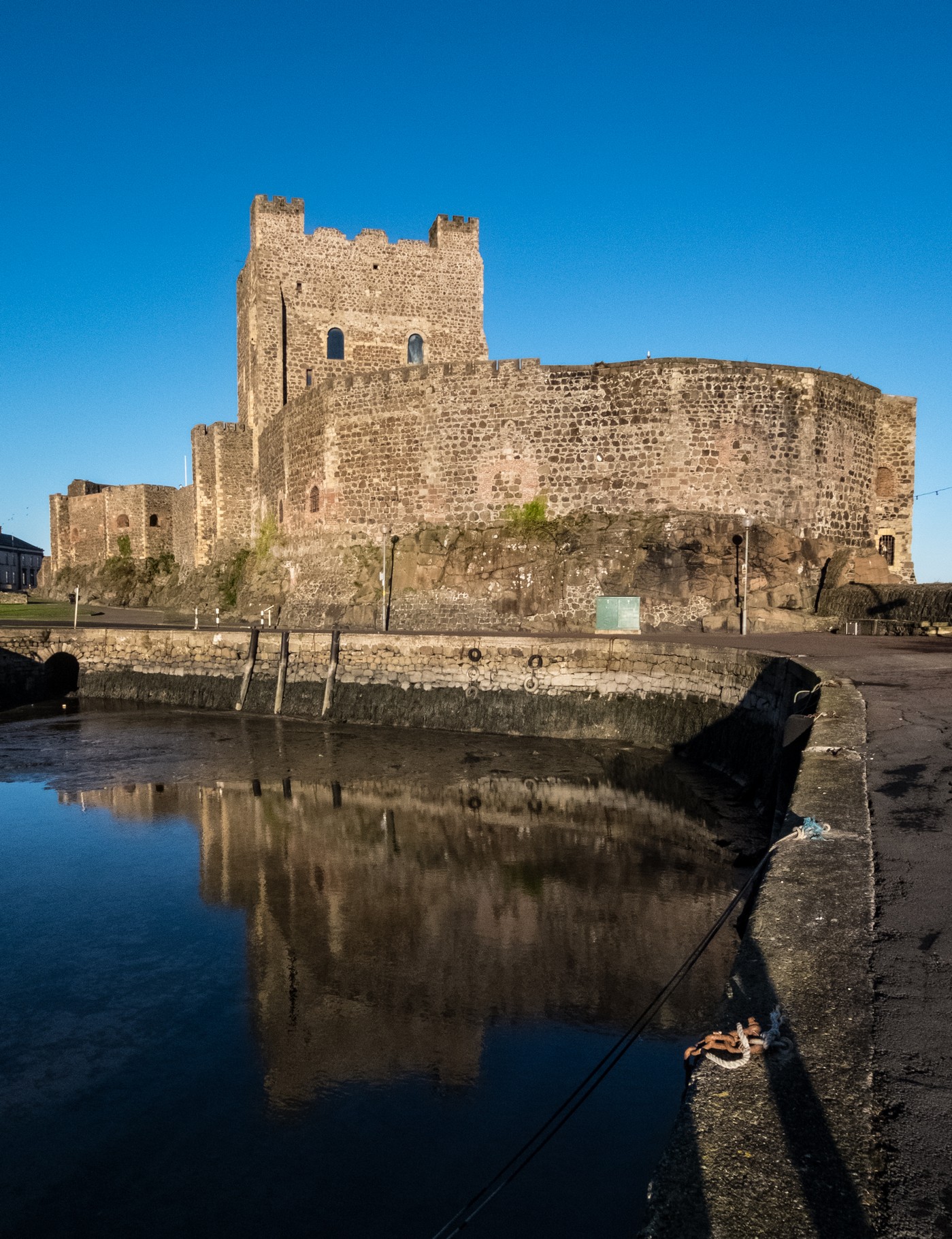
I have visited the castle a few times but the first bunch of photos are from a very early morning visit in 2016 before working nearby so I didn’t actually go in. The second batch include pictures of the interior.
You can walk along the shore and quayside to get various views of the castle and its defences. It’s a nice area to walk and the walls and Norman keep are certainly imposing.
My visit to Carrickfergus Castle that included a tour of the inside is covered in my blog here.
Carrickfergus Castle Photo Gallery


History
The core of the castle was built in 1177 by John de Courcy, after he conquered the east of Ulster and ruled as a petty king until 1204, when he was ousted by another Norman adventurer, Hugh de Lacy.
Initially de Courcy built the inner ward, a small bailey at the end of the promontory with a high polygonal curtain wall and east gate. It had a number of buildings, including the great hall. From its strategic position on a rocky promontory, the castle commanded Belfast Lough, and the land approaches into the walled town that developed beneath its shadows.
Some years later in 1778, a small but significant event in the American War of Independence began at Carrickfergus, when John Paul Jones, in the face of reluctance by his crew to approach too close to the Castle, lured a Royal Navy vessel from its moorings into the North Channel, and won an hour-long battle.
In 1797 the castle, which had on various occasions been used to house prisoners of war, became a prison and it was heavily defended during the Napoleonic Wars; six guns on the east battery remain of the 22 that were used in 1811.
For a century it remained a magazine and armory. During the First World War it was used as a garrison and ordnance store and during the Second World War as an air raid shelter.
It was garrisoned continuously until 1928, when its ownership was transferred to the government for preservation as an ancient monument. The banqueting hall has been fully restored and there are many exhibits to show what life was like in medieval times.
References
The history above is copied from the Antrim tourist website here.
The castle site here gives information on opening times.
The Wiki site is here.