
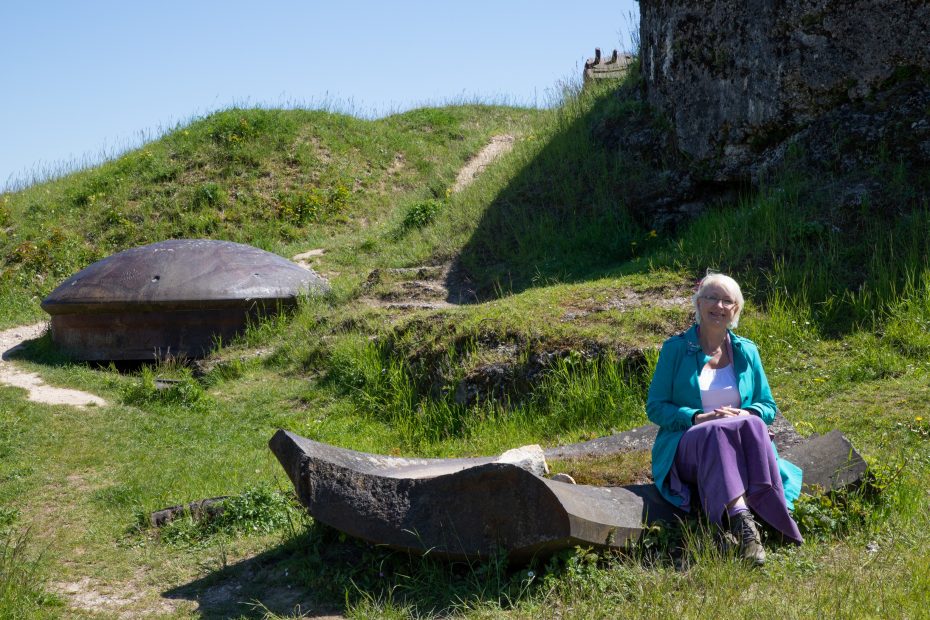
De Vaux Fort is the shattered remains of one of the ring of defences surrounding the city of Verdun. The city was the site of one of the most bloody battles of the First World War, lasting nearly the whole of 1916 and costing over six hundred thousand casualties.
After initial successes the German offensive bogged down and the next ten months were a stalemate with local successes for each side at a huge cost in manpower. Fort Vaux was captured by the Germans after a fierce fight.
My Experience
My notes from our tour of this area are:
“We then continued along quiet roads to the ossuary at Douaumont, a massive 1920’s building to hold the bones of the French dead and a military cemetary for those that could be identified. The graveyard was quite ridiculous, I think there were 130,000 bodies interred or buried there.
If you’re interested: https://en.wikipedia.org/wiki/Douaumont_Ossuary
We then visited the two nearby forts of Douaumont and De Vaux – both were captured by the Germans, both utterly devastated on the outside with damaged and destroyed turrets, shell pocked landscapes, smashed blockhouses but inside they were almost untouched. I can’t imagine being inside in peacetime yet alone under shelling and the corridors were damp and dark but they survived the bombardment. De Veux was captured after the Germans broke into the tunnels and fought for nearly a day to clear the defenders using flame throwers. Quite horrendous. It was quite strange walking around inside and then emerging into blue skies, birdsong and sunshine.”
Photo Gallery


History
Fort Vaux was built in the 1880’s and then updated in 1914, just in time to resist the huge German bombardment in 1916. Even today the landscape of the fort is cratered and massively damaged and the concrete bunkers and casements bear the scars of the artillery.
References
The Wikipedia page detailing the history of the fort is here.