

A visit to Edinburgh Castle allows a glimpse into a medieval world, with the castle being a short walk from the cathedral and assorted courtiers and merchants dwellings. The concentration of important buildings and also the small size of the settlement (by modern standards) give an idea of the social stratification and agrarian bias of that period.
The castle is a fantastic survivor, still in use after eight hundred years. It is a symbol of the city and still dominates the skyline.

Visiting Edinburgh Castle
Run jointly by the National Trust and Historic Scotland entry is free for those bodies and associated organisations. This is a city centre location so there is plenty of parking around and an abundance of cafes. There is plenty to do within 10 minute walk too and the city is a superb weekend break destination, with everything in walking distance, if the weather is good!
My Experience
This is an amalgamation of a few visits to Edinburgh and the surrounding area, some of which are detailed in my blog here. The castle is one of those fantastic tourist destinations where you can easily spend a whole day and enjoy lunch on site too.
Before your visit to Edinburgh Castle I can recommend downloading the map from the castle website here. The castle is a huge and rambling structure and each time we have visited we have discovered new locations so a planned visit would really help!
Mons Meg is certainly worth including on your tour – this massive fifteenth century cannon gives an idea of the technology of the era in the transition to gunpowder weapons. The Royal Palace shows the relative comfort and opulence enjoyed by Renaissance monarchs.
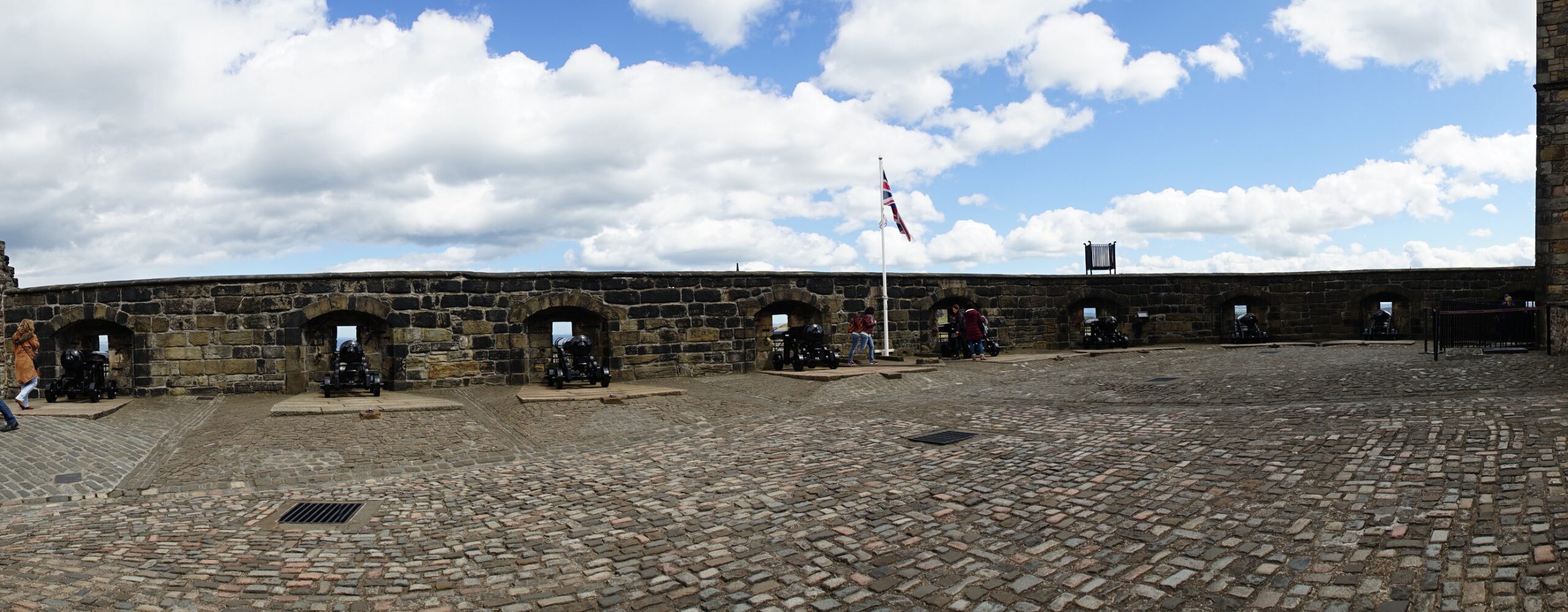
The Half Moon Battery is a superb example of a late medieval gunnery fortification, although the guns that are now in place are Napoleonic. The Regimental Museums and National War Museum of Scotland are also excellent. Combined with a cafe that actually offers decent food it’s easy to see how a day would pass quickly in the castle.
Edinburgh Castle Photo Gallery




History
Edinburgh Castle is a historic fortress which dominates the skyline of Edinburgh, the capital city of Scotland, from its position on the Castle Rock. Archaeologists have established human occupation of the rock since at least the Iron Age (2nd century AD), although the nature of the early settlement is unclear. There has been a royal castle on the rock since at least the reign of David I in the 12th century, and the site continued at times to be a royal residence until 1633. From the 15th century, the castle’s residential role declined, and by the 17th century it was principally used as military barracks with a large garrison. Its importance as a part of Scotland’s national heritage was recognised increasingly from the early 19th century onwards, and various restoration programmes have been carried out over the past century and a half. As one of the most important strongholds in the Kingdom of Scotland, Edinburgh Castle was involved in many historical conflicts from the Wars of Scottish Independence in the 14th century to the Jacobite rising of 1745. Research undertaken in 2014 identified 26 sieges in its 1100-year-old history, giving it a claim to having been “the most besieged place in Great Britain and one of the most attacked in the world”.
Few of the present buildings pre-date the Lang Siege of the 16th century when the medieval defences were largely destroyed by artillery bombardment. The most notable exceptions are St Margaret’s Chapel from the early 12th century, which is regarded as the oldest building in Edinburgh, the Royal Palace and the early-16th-century Great Hall, although the interiors have been much altered from the mid-Victorian period onwards. The castle also houses the Scottish regalia, known as the Honours of Scotland and is the site of the Scottish National War Memorial and the National War Museum of Scotland. The British Army is still responsible for some parts of the castle, although its presence is now largely ceremonial and administrative. Some of the castle buildings house regimental museums which contribute to its presentation as a tourist attraction.
The castle, in the care of Historic Environment Scotland, is Scotland’s most and the United Kingdom’s second most-visited paid tourist attraction, with over 2.2 million visitors in 2019 and over 70 percent of leisure visitors to Edinburgh visiting the castle. As the backdrop to the Edinburgh Military Tattoo during the annual Edinburgh Festival, the castle has become a recognisable symbol of Edinburgh and Scotland.
References
The castle website here is superb, with planned itineraries and details on attractions.
The Wiki page is here and the historical summary above is copied from that site.