
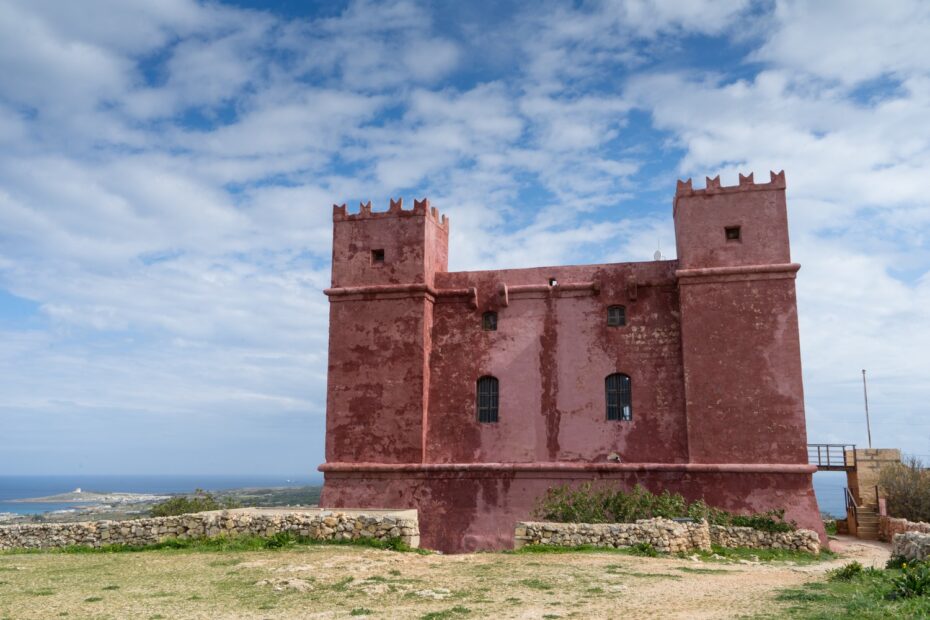
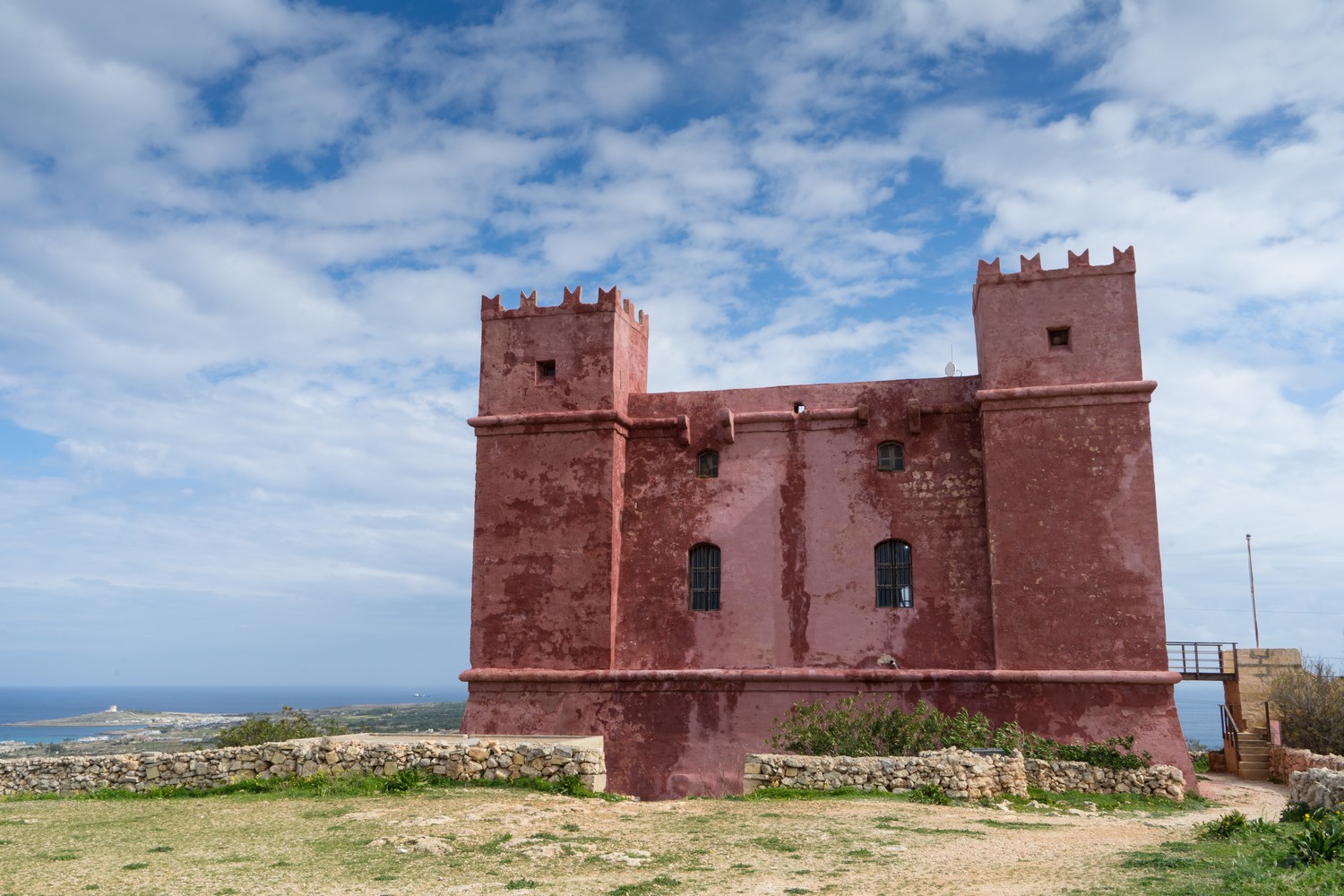
St Agatha’s Tower, also cunningly called the Red Tower, is a seventeenth century watchtower in Malta. It is rather larger than a normal watchtower, more like a small medieval keep with the addition of earthwork bastions around it.
Visiting St Agatha’s Tower
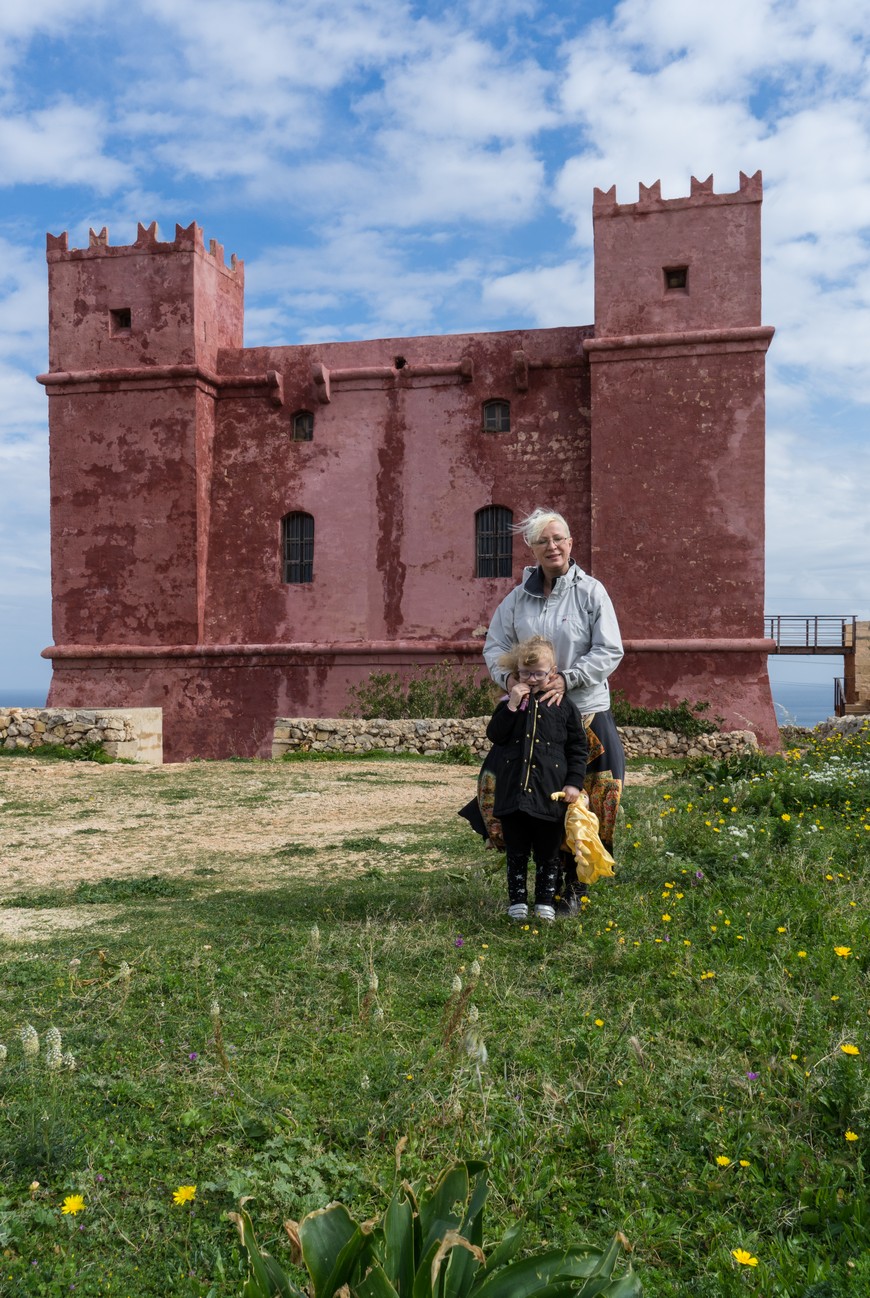
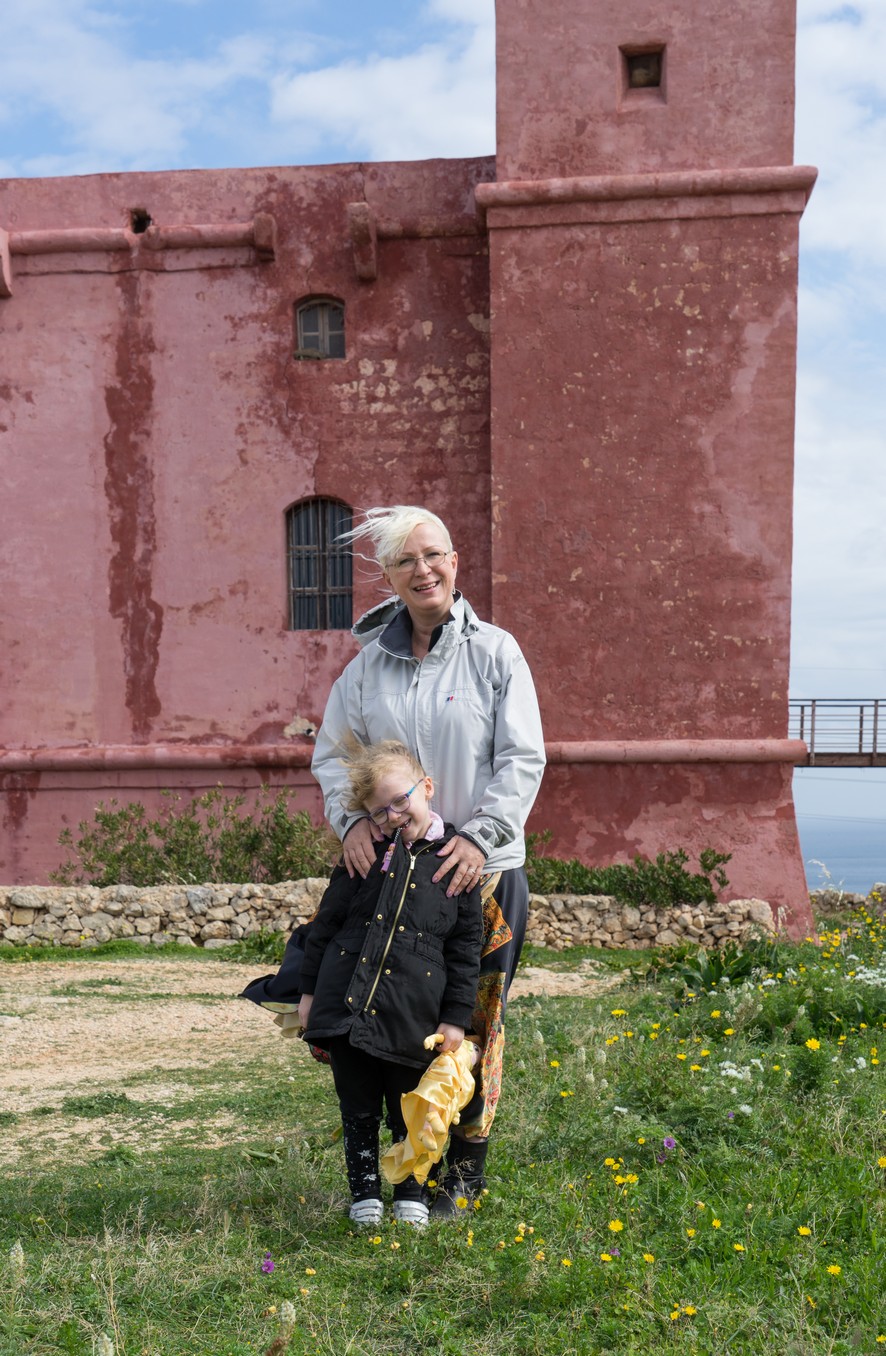
Our visit to St Agatha’s Tower was on a windy day in February, taking our seven year old grand-daughter on her first trip to the island. The tower is easy to spot as it’s a huge red building on the ridgeline so not really easy to miss. There is parking outside and the site is run by Din-l-Art-Helwa, the National Trust of Malta. There is a minimal entry fee and helpful guides as well as plenty of information boards.
My Experience at St Agatha’s Tower
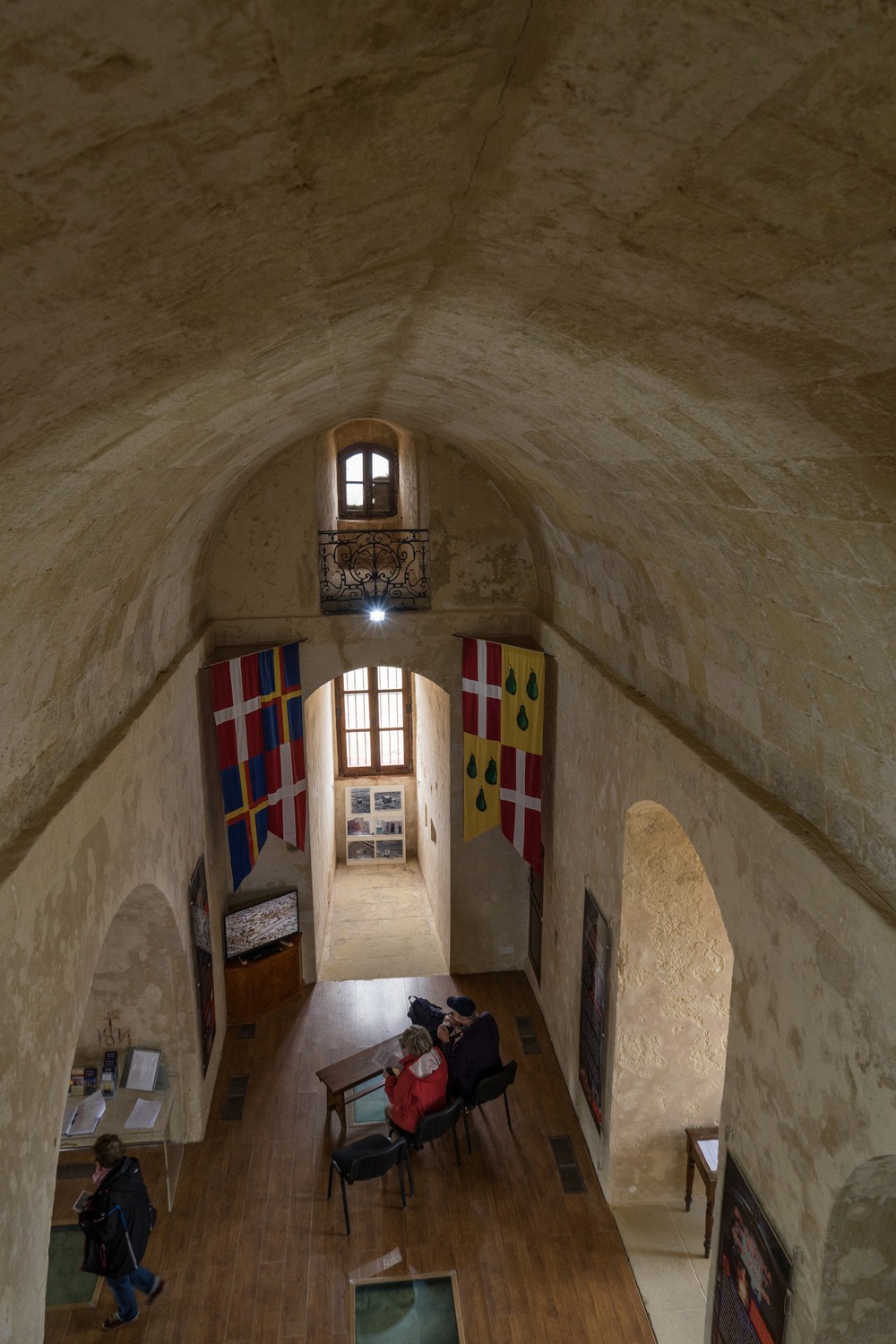
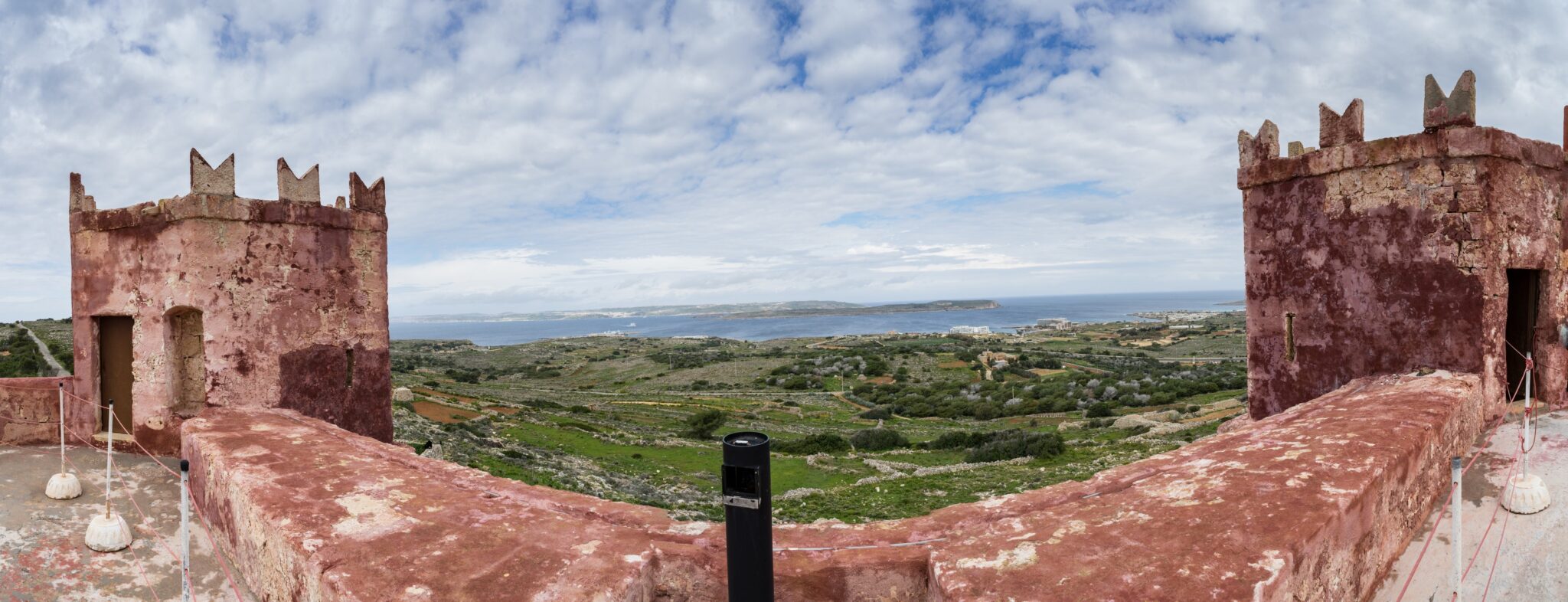
St Agatha’s Tower – a 17th century watchtower that has recently been restored. Kirsty and I climbed to the roof and the views were spectacular although it was incredibly windy! The castle is staffed by volunteers and has a single floor with two double vaulted rooms inside. One has a chapel to St Agatha and there is a small exhibition here. There are also stairs up to a small gallery overlooking the floor area which continues to the roof.
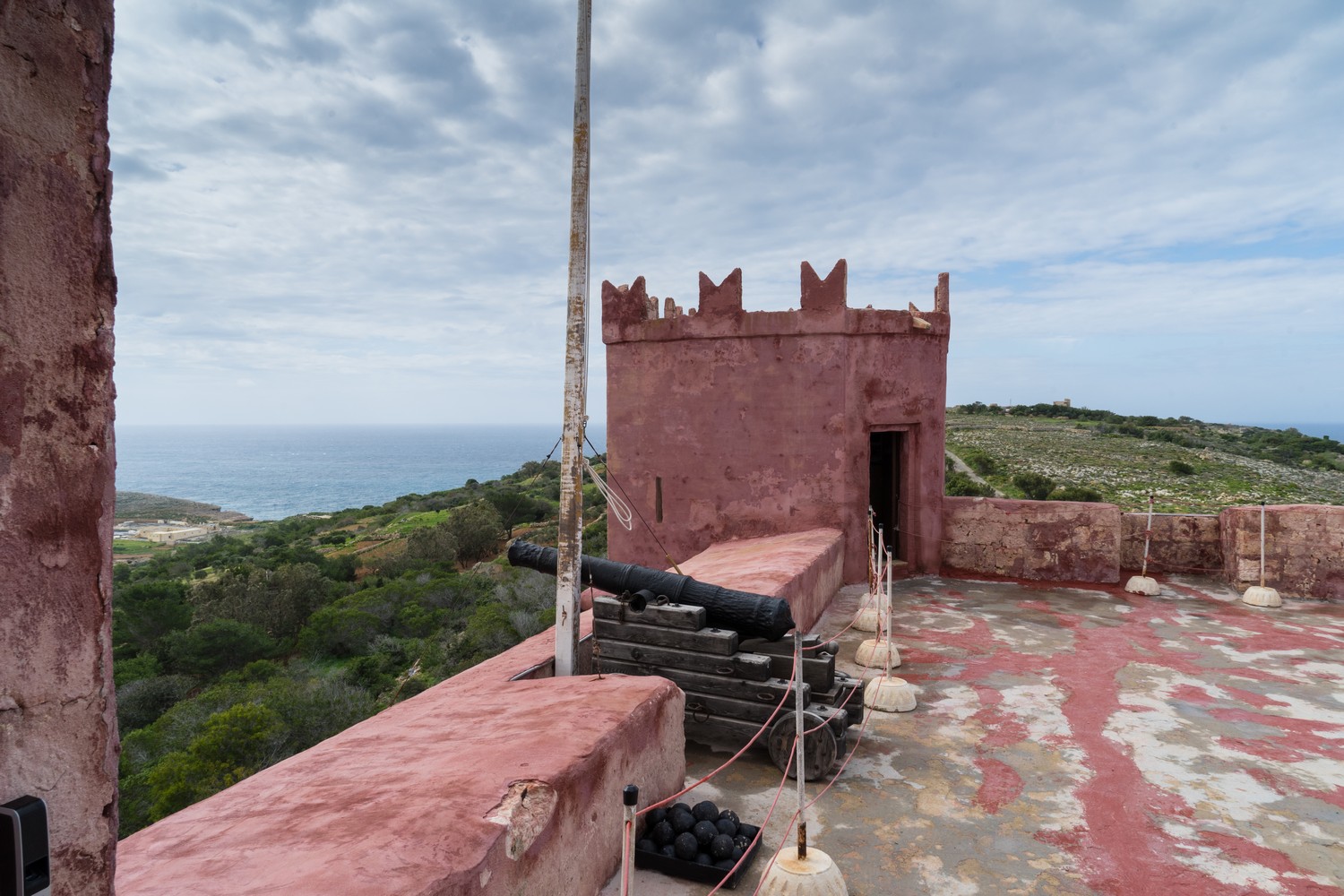
The views from the roof were impressive, which I guess was the point of the place. Originally there would have been cannon and a signal fire here for notifying other forts of any potential threat from Muslim pirates. We had a quick walk around the outside too but there’s only so much castle a seven year old can absorb so we then headed to the nearby aquarium.
Photo Gallery
History of St Agatha’s Tower
This tower, also known as the Red Tower was built in 1649 and was manned during both World Wars. It provides excellent all round views of Gozo, Comino and the Ghadira Nature Reserve.
This Tower is situated on the crest of Marfa Ridge. A shallow alcove within the Tower housed a chapel dedicated to St Agatha. It is also known as the Red Tower due to the colour it was painted and this colour was retained on restoration. It was completed in 1649 during the rule of Grand Master Jean Paul Lascaris Castellar.
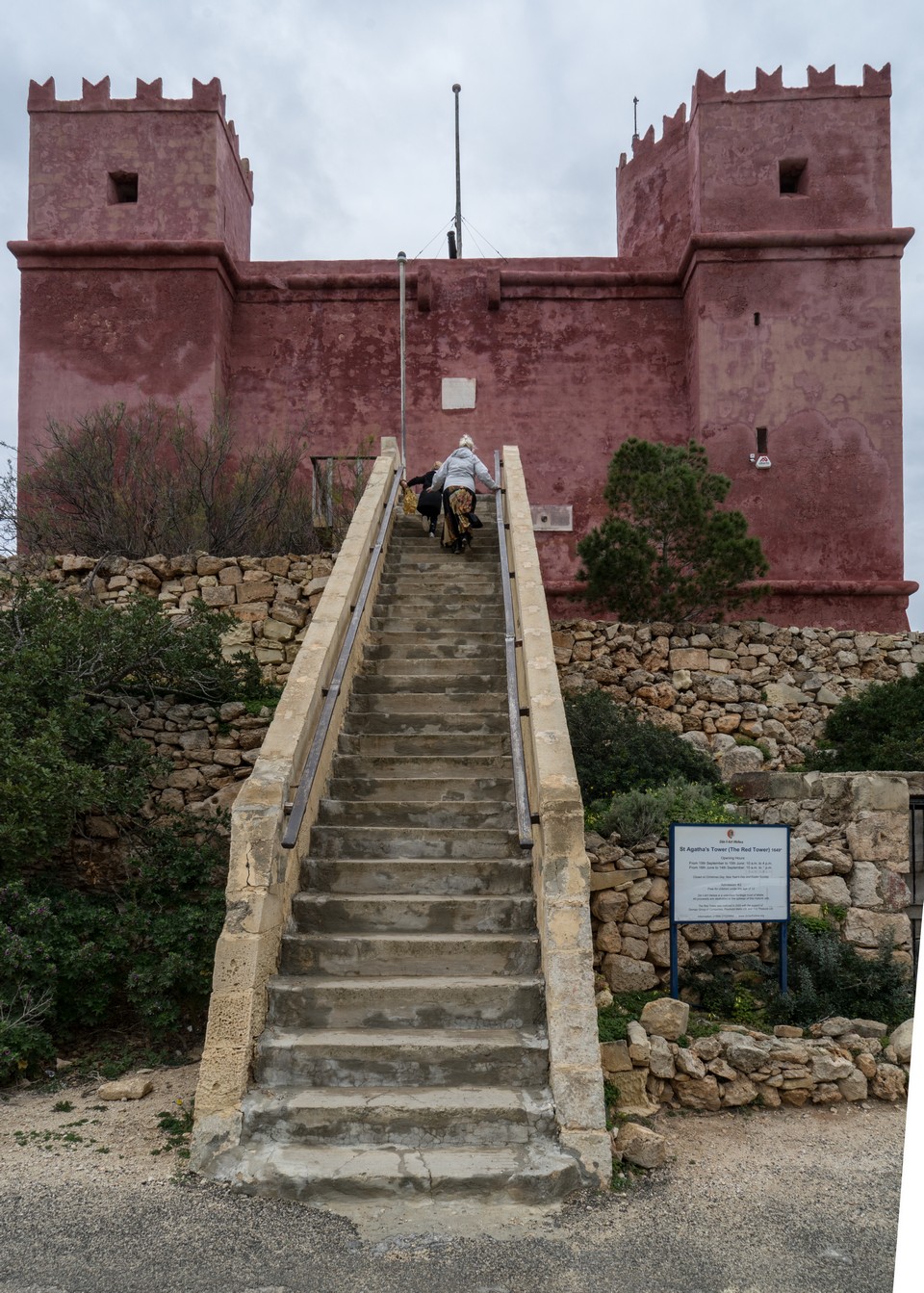
This Tower was one of the main defensive positions during the time of the Knights of St John and was equipped with cannon and a garrison of 30 men, and supplied with enough food and ammunition to withstand a siege of 40 days. The entrance to the Tower is approached by a flight of steps originally separated from the door by a drawbridge. It is square in plan with four corner towers rising from the base.
The outer walls are about four metres thick through which small windows were cut. A low star-shaped entrenchment serving as a gun platform built in the rear flanks of the Tower is an eighteenth century addition. During the British period it was used for defence purposes and was manned during both World wars.
In recent times it was equipped as a radar station by the Armed Forces of Malta. The first phase of the restoration of the Tower was sponsored by Toly Products, the Demajo Group and Playmobil, and commenced in 1999 and was completed in 2001. One turret was missing and another turret severely damaged and its walls and roof were rebuilt and eroded stone replaced.
The interior walls were scraped and painted and the original floor was uncovered. Due to the extreme unevenness of the floor, this was covered by a wooden surface with glass apertures through which it is possible to view the original slabs. An interior wooden spiral staircase was also constructed replacing a stone staircase which led to the flat roof and which had been removed. The roof commands magnificent views of Malta, Gozo and Comino.
References
The history above is copied verbatim from the Din l-Art Helwa page here.
The Wikipedia page here also gives more information.